Innovation
Inside Aramco’s global network: exploring new possibilities in F1, transport, and mobility
by Raceteq
8min read
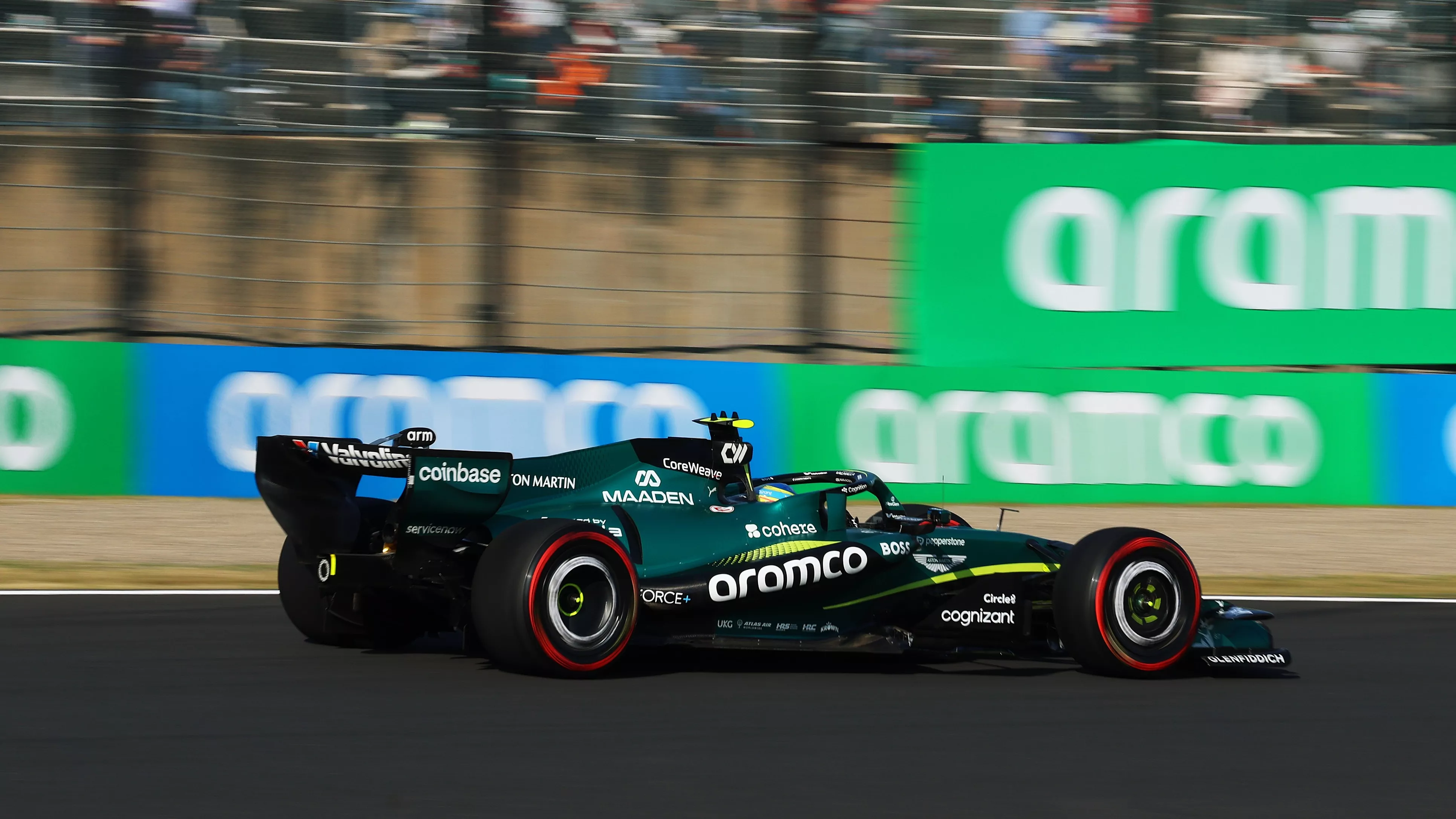
How do you uncover the new potential solutions of transport and energy? Aramco's global research network works around the clock, behind the scenes, to do exactly that.
Sign up for a newsletter and we'll make sure you're fully up-to-date in the world of race technology
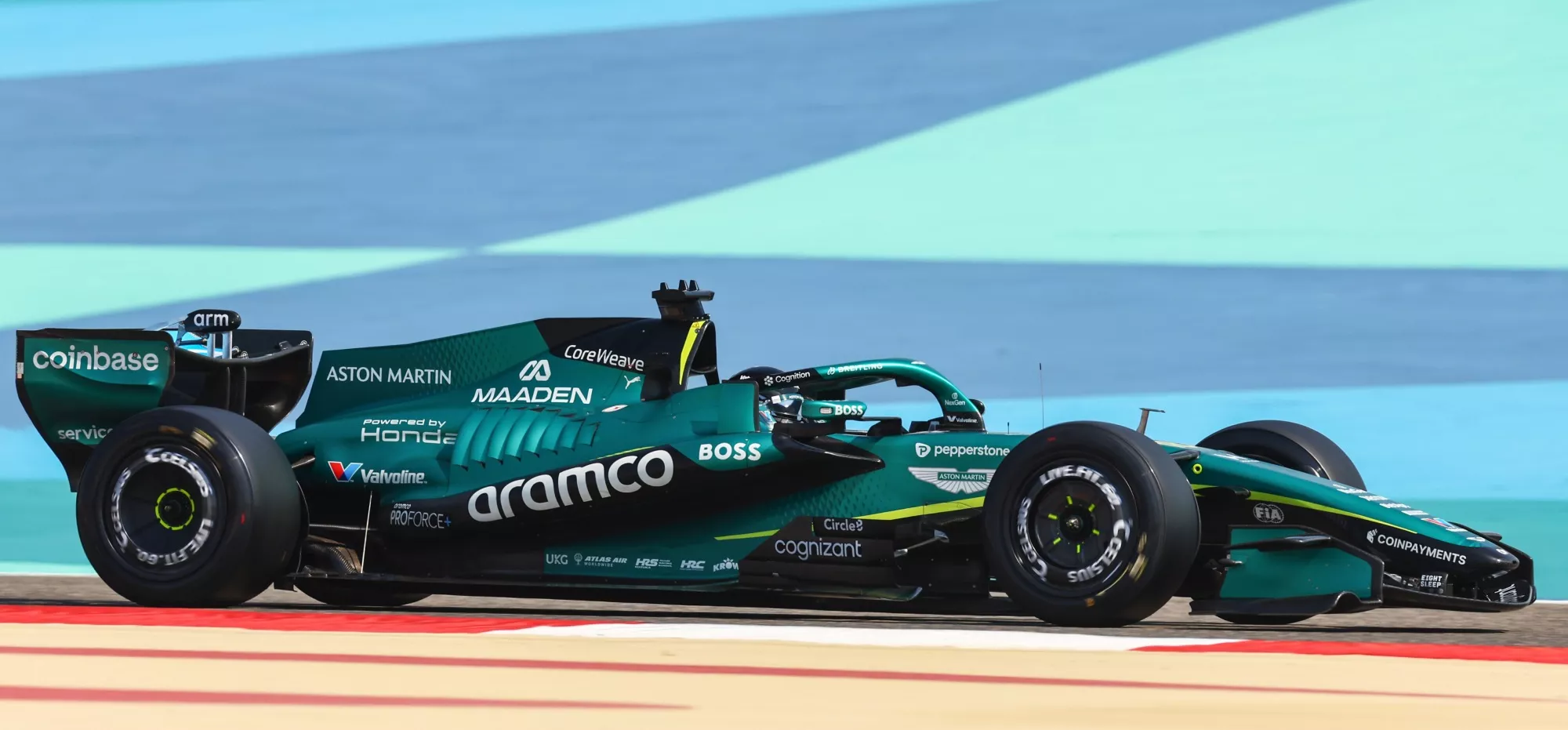
Formula 1 is one space in which Aramco is leading the way in using motorsport as a test bed to explore lower-carbon solutions, learning how they perform which could inform the potential development of lower-carbon fuels for passenger vehicles in the future. Those efforts have been supercharged in 2026 as the Aston Martin Aramco F1 Team campaigns in the world championship as a works team.
The team in racing green uses Honda power units, lubricants supplied by Valvoline, FIA-compliant 100% Advanced Sustainable Fuel supplied by Aramco, and F1 cars built at the Aston Martin Racing Technology Campus in the United Kingdom.
Raceteq delves into Aramco’s research network of engineers, researchers and scientists to explore the potential frontiers of fuel, transport, and mobility.
F1 2026: an opportunity for closer collaboration
This new era of F1 presents not only a huge challenge for F1 teams, but also a test bed for Aramco to further its research into lower-carbon fuel.
Before the start of the season, Aston Martin Aramco chief strategy officer Andy Cowell explained exactly why Aston Martin Aramco's work is "critical," as the F1 team seeks to extract the most from its partnership with fuel supplier Aramco, lubricant supplier Valvoline, and engine supplier Honda.
"With the new power unit regulations and the new aerodynamic regulations, the harmony between creating power within the engine, but also managing the losses, the heat rejection on water and oil and transmission losses, all of that needs to work hand in glove.
"So having all those teams working closely together, working out what is the best for laptime in qualifying and the best in the race is critical.
"Aramco is providing the FIA-compliant 100% Advanced Sustainable Fuel , which is right at the heart of the power creation in the engine and working closely with Honda to make sure that we've got the most efficient engine."

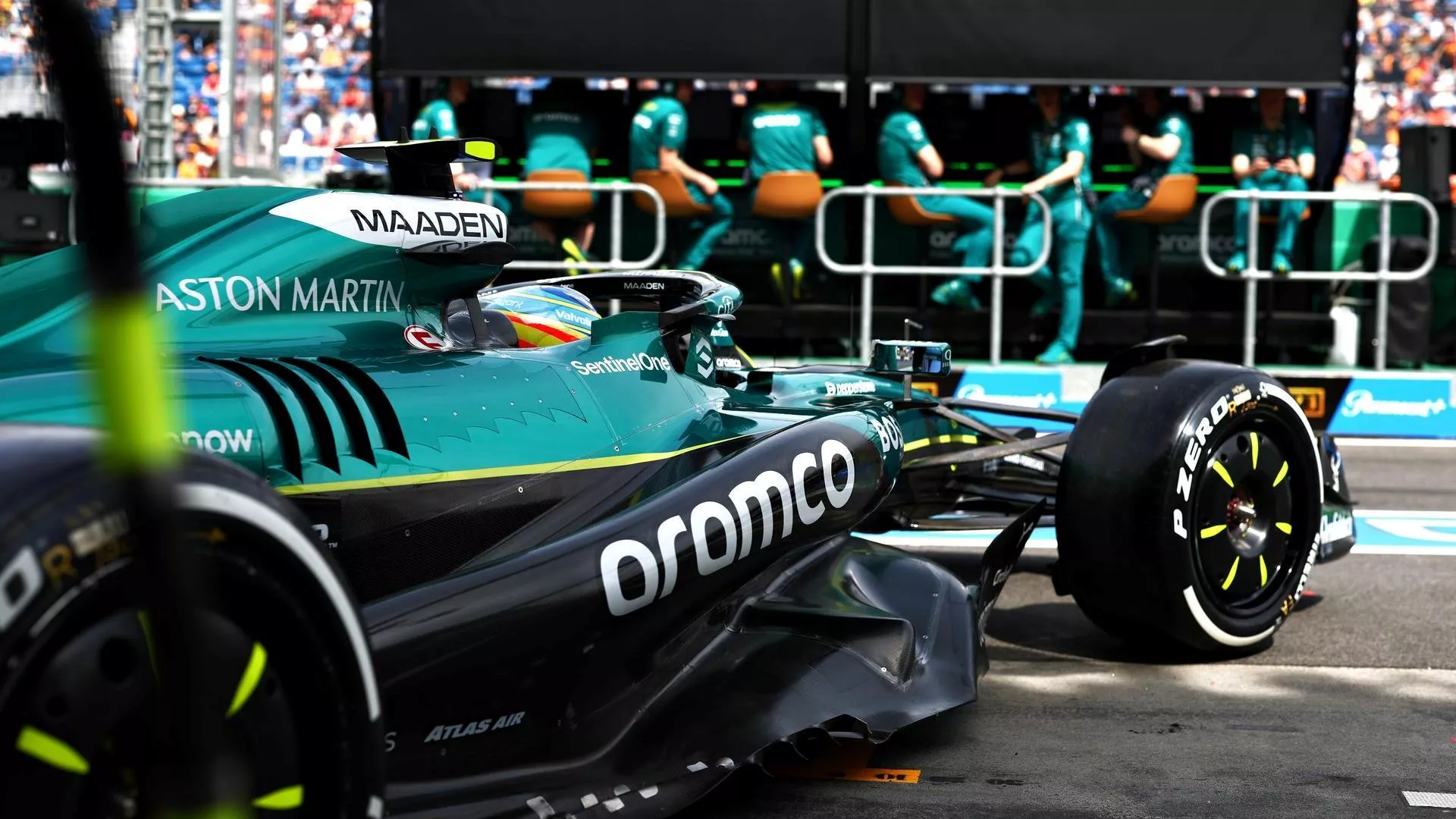
Aston Martin Aramco’s 2026 F1 car uses FIA-compliant 100% Advanced Sustainable Fuel

While F1 serves as a dynamic, high-performance testbed, it is just one aspect of Aramco’s broader research program focused around the future of mobility. Leveraging a global network of research centres and strategic partnerships, Aramco is exploring the potential of lower-carbon pathways for future transport through cutting-edge research into fuels and engine technologies.
Aramco Fuel Research Centre in Paris: the nucleus of Aramco’s F1 development
Much of Aramco’s pivotal work on fuels and lubricants for motorsport is conducted at the Aramco Fuel Research Centre (AFRC) in Paris, France.
The AFRC, which was established in 2013 within the premises of IFP Energie Nouvelles, has developed an impressive network of collaborations and partnerships across the European automotive industry, with the goal of accelerating the development of advanced transport technologies.
Francois Maire, Fuel Expert and Project Leader in fuel formulation at the AFRC, explains why F1 fuels are a demanding and rewarding space for innovation and exploration.
“Built for the extreme, Formula 1 fuel withstands immense heat, pressure and constant stress while delivering unmatched performance. Every molecule is engineered for maximum efficiency and reliability - far beyond the standards of everyday fuels.
“Racing serves as the ultimate proving ground. In Formula 1, we have the freedom to experiment in ways that aren't possible under normal conditions. It's a vast laboratory where technology is pushed to its limits. The expertise gained from this process can then be applied to developing everyday fuels, bringing genuine innovation for regular users.”
“Motorsport is the ultimate testing ground,” agrees Modestino De Feo, AFRC’s Lubricant Expert and Project Leader.
“While in Paris we develop and test a wide range of innovative lubricant solutions, our main activity is working in close partnership with Valvoline to study and improve oils for Aston Martin Formula 1. Over the past three years, this collaboration has been essential, giving us access to world-class expertise and technology.”
Formula 1 fuel is built for ultimate performance - a challenge that is tackled in the Aramco Fuel Research Centre in Paris
In neighbouring Spain, AFRC and Repsol are jointly building a demonstration plant for the production of synthetic diesel for road transport (automobiles & trucks), and jet fuels for aviation.
The facility – named Synkedia – will be a first-of-a-kind installation, with a production capacity of 50 barrels/day of synthetic fuels. Victor Gordillo, Project Leader of the CO2-to-Middle Distillates project overseeing the facility’s construction and operation, explains why this plant represents a strategic milestone for the company.
“Through Synkedia, we are sending a clear message to the market, to regulators and to our industrial partners: we aim to support the addition of lower-carbon energy sources to the energy mix, and we continue striving to play a role in supporting the energy transition..”
Lower-carbon solutions beyond the track in Detroit
The Aramco Research Center (ARC) in Detroit, United States, also plays a vital role in Aramco’s global research programme by focusing on the co-optimization of fuels and engines for higher performance and lower emissions.
Testing capacity at ARC Detroit ranges from a single-cylinder research engine to 1,000-horsepower heavy-duty on-road and stationary engines.
Andy Baur, Integration and Controls Team Lead at ARC Detroit, explains: "There's a tremendous need for affordable, lower-carbon transportation solutions, solutions that work with our existing infrastructure. There's a significant number of vehicles on the road today powered by internal combustion engines, and this will likely continue to be the case into the future."
The ARC Detroit was inaugurated in 2015 as part of Aramco's larger global research network.
"Our work here in Detroit focuses on transportation innovation, where we look to improve engine efficiency, reduce the environmental impact, and reduce the cost and complexity of engines," continues Baur.
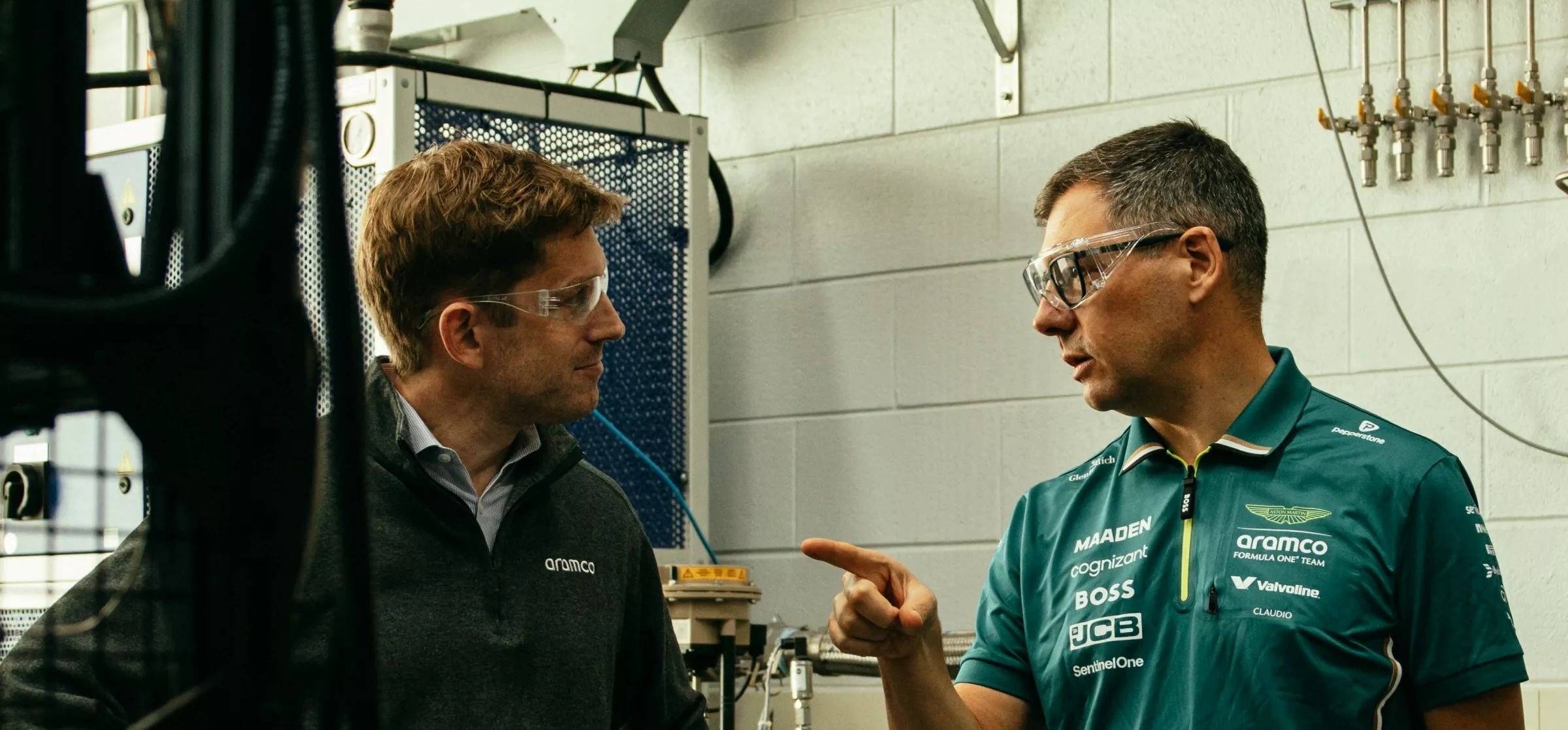
Integration and Controls Team lead Andrew Baur (L) with Claudio Santoni, Aston Martin Performance Technologies Managing Director (R)
"We look to understand the technology at a core level, to understand the physics that drive the performance of that, and that helps us to advance the commercialisation of the technology."
Rafael Lago Sari, senior researcher at ARC Detroit, adds: "We also collaborate with universities, research centres and automotive companies that are located around this area.
"Far beyond passenger cars, internal combustion engines are likely going to make up for a significant share of heavy-duty transport on land, on sea and in the sky for many more years."
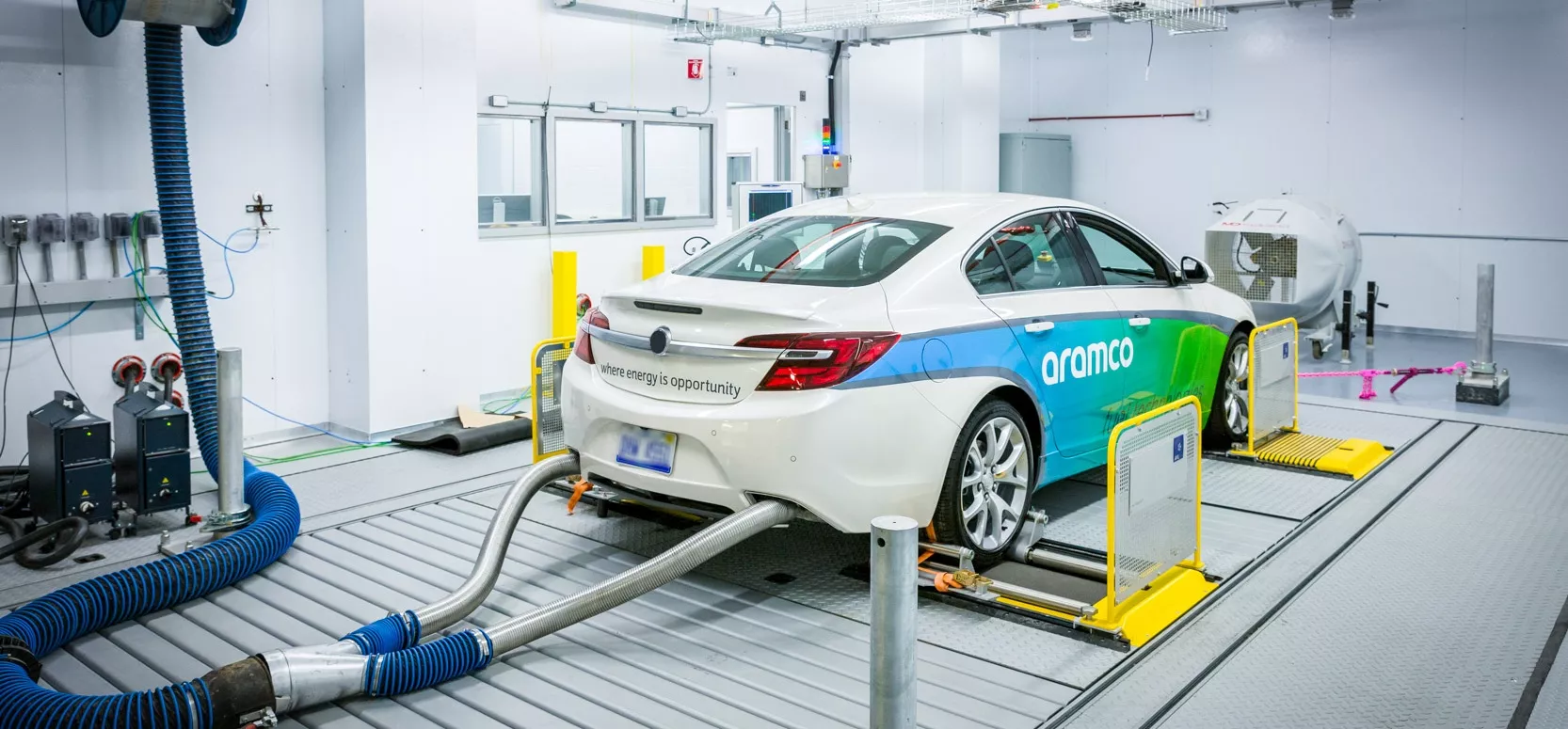
A testing vehicle with emissions measuring equipment attached to its exhausts
An all-round approach to supporting mobility in Saudi Arabia
Beyond research centres, Aramco leverages its strategic partnerships with automotive manufacturers and academic institutions. One such partnership focuses on combustion technology design taking place at KAUST, the King Abdullah University of Science and Technology in Saudi Arabia.
At KAUST’s Clean Energy Research Platform (CERP), where Aramco and KAUST scientists aim to support mobility, Nawaf M Alghamdi, a transport researcher at Aramco, says the Aramco-CERP partnership takes a "holistic approach" to this task.
"We look at what comes into the engine, which is the formulation of the fuel, we look at the operation of the engine itself, and we look at what comes out of the engine. We leverage the capabilities of many research groups from CERP, with each group bringing their unique expertise, be it simulations, experimental work, or advanced characterisation equipment..." he says.
"Aramco is leveraging its scale, global network and expertise to develop smarter transport solutions, including lower-carbon fuels."
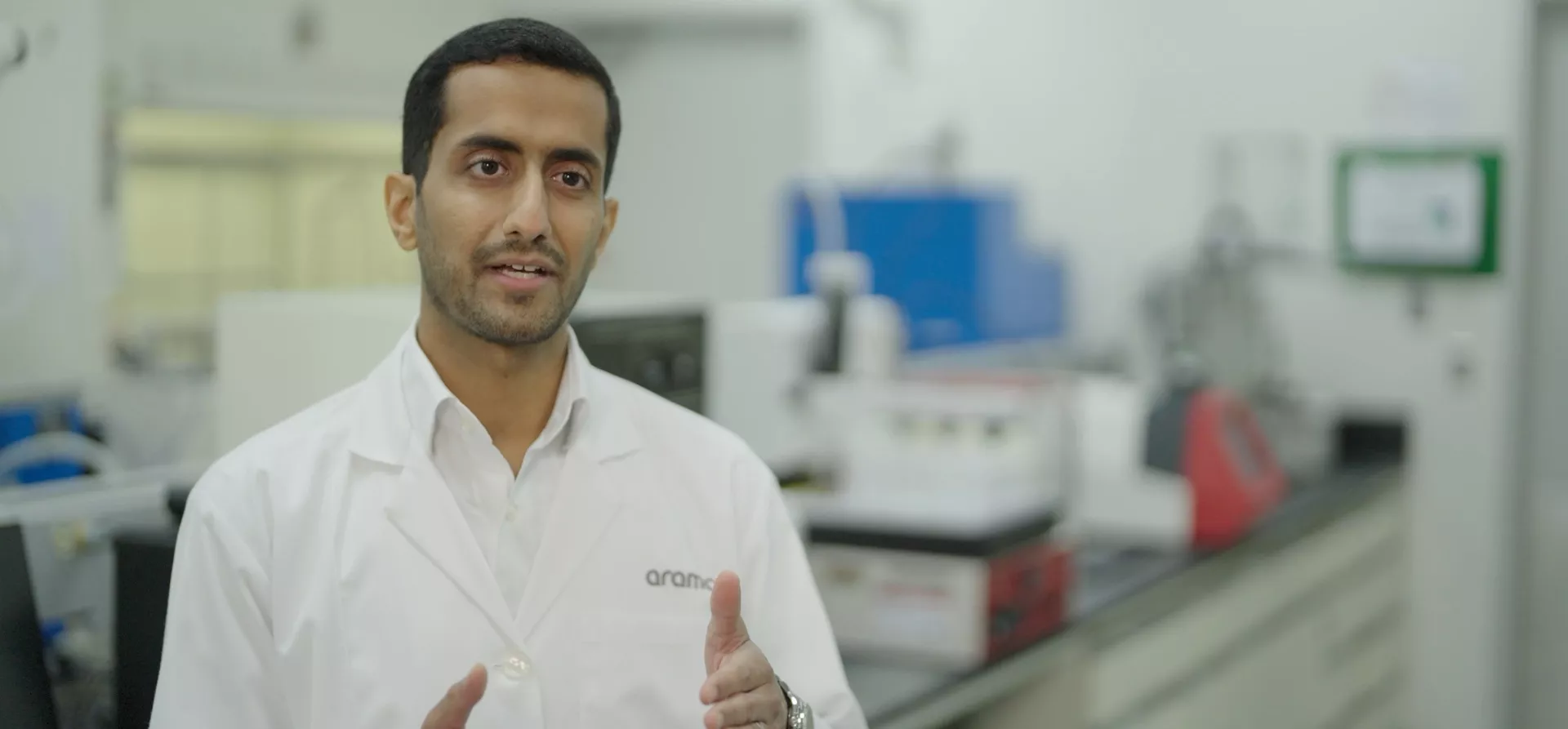
Nawaf M Alghamdi, researcher at Aramco
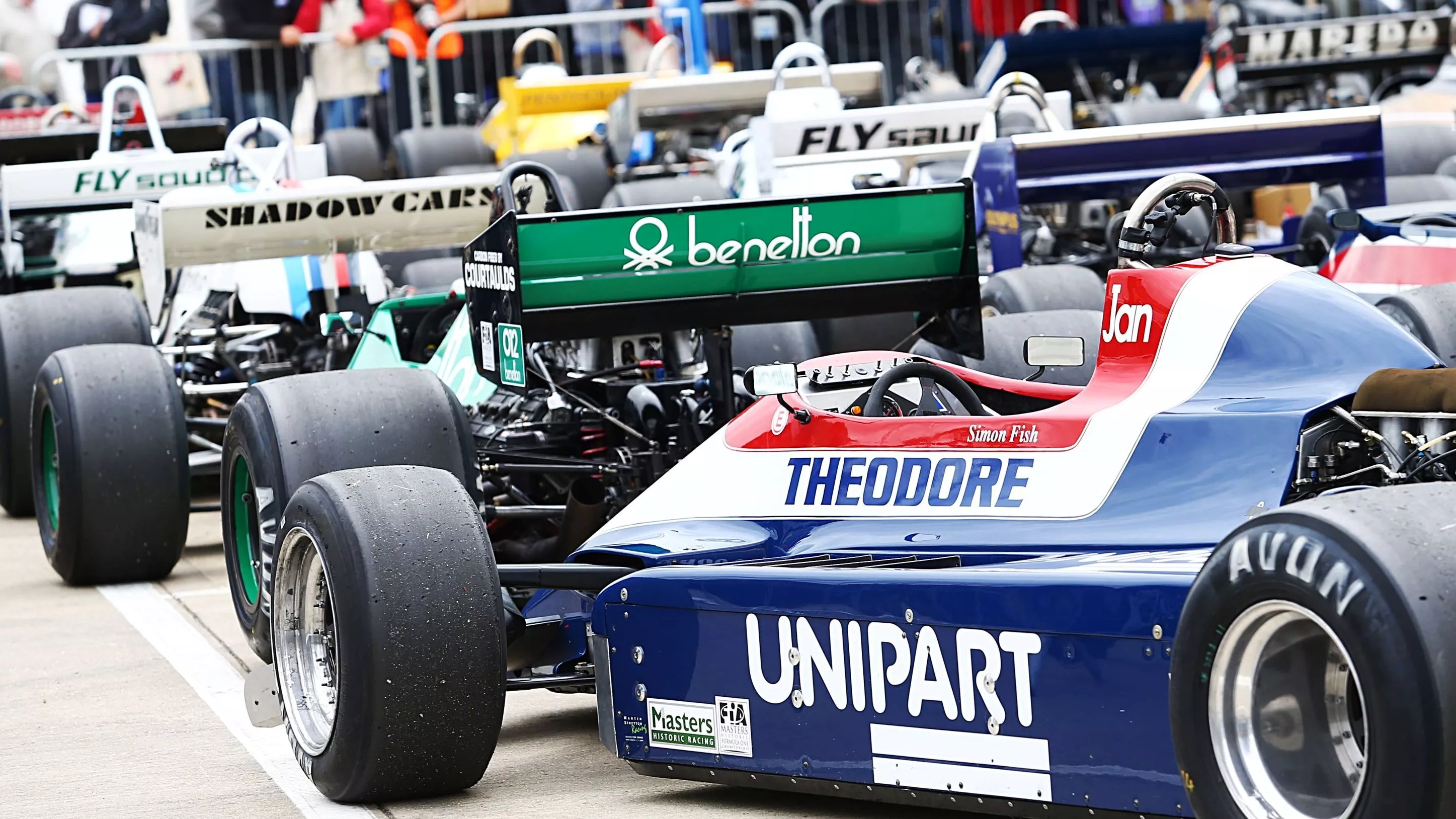
Car, Event, Future, Motor
How Aramco helped bridge the past and present in a historic F1 race
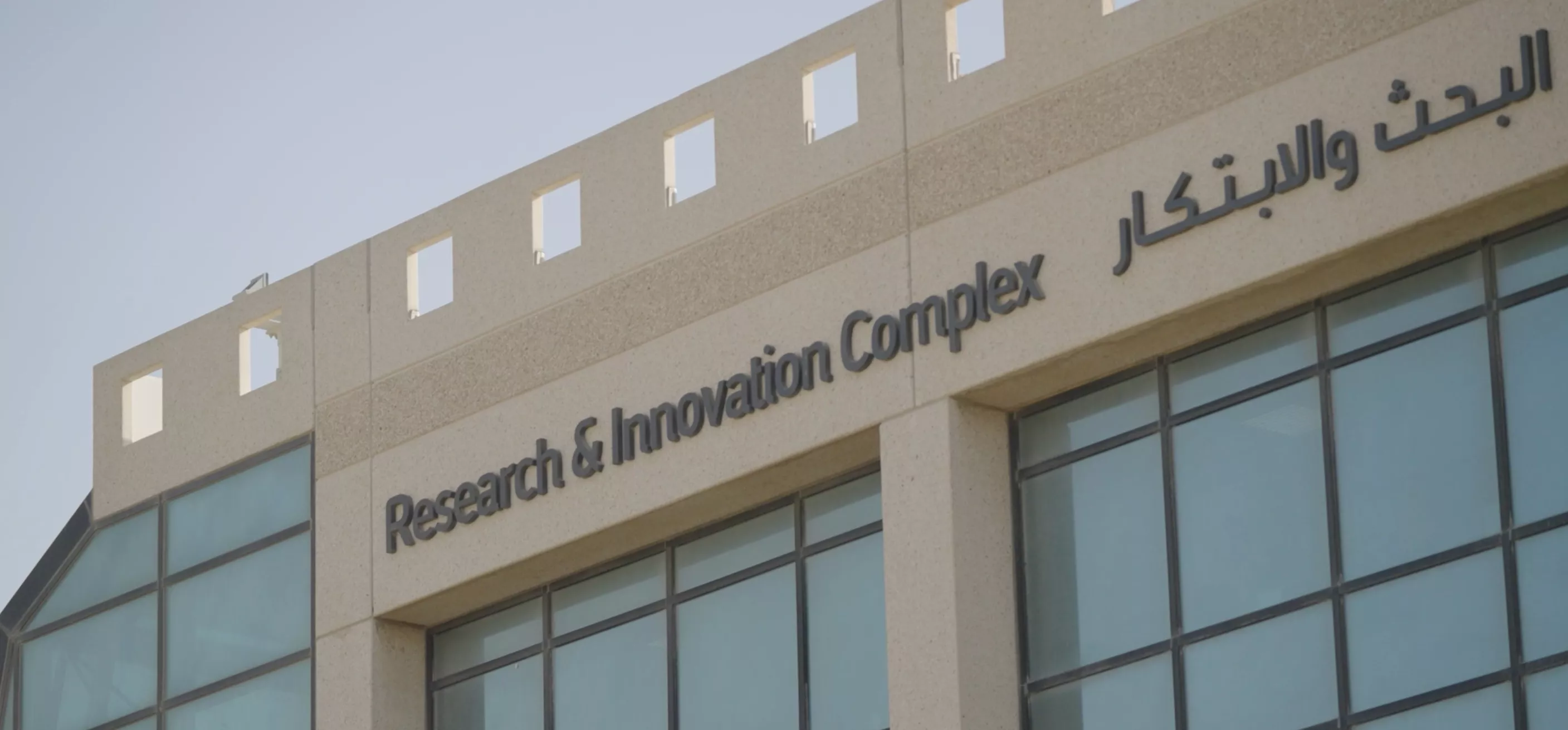
The Aramco Research and Innovation Complex at Dhahran, Saudi Arabia
Work with partners such as Horse Powertrain, which develops, produces and sells advanced internal combustion engines and hybrid powertrains, extends the reach and scope of Aramco's projects.
Fay Idrees, who works on transport research at Aramco’s Research and Development Center in Dhahran, Saudi Arabia, explains her work on developing lower-carbon fuels and furthering carbon dioxide capture.
"We have a global footprint of leading R&D centres covering three continents. In 2000, we opened our first research centre in Dhahran. This grew into a network of 12 research and technology facilities worldwide, collaborating with international scientists to help solve energy challenges and grow our business sustainably.
"Our culture of innovation enables employees to explore both their creative and inventive potential to the fullest. We also harness the power of partnerships."
Idrees weaves Aramco's F1 work back into the picture.
"Aramco is working with partners such as F1 as a testbed to learn how lower-carbon fuels perform and how they could inform the potential development of lower-carbon fuels for passenger vehicles in the future.
"And of course, we are excited to exclusively supply the Aston Martin Aramco Formula 1 Team with Aramco's FIA-compliant 100% Advanced Sustainable Fuel for the 2026 season."
It’s clear, therefore, that there isn't just one way to explore the possibilities for mobility in the future, with potential pathways including developing lower-carbon fuels in the laboratory, testing more efficient engines, uncovering the efficacy of alternative energy sources, or using F1 as the ultimate high-speed laboratory.