Motor

How Andy Green and JCB are going for glory with the Hydromax hydrogen landspeed record contender

by Samarth Kanal

9min read
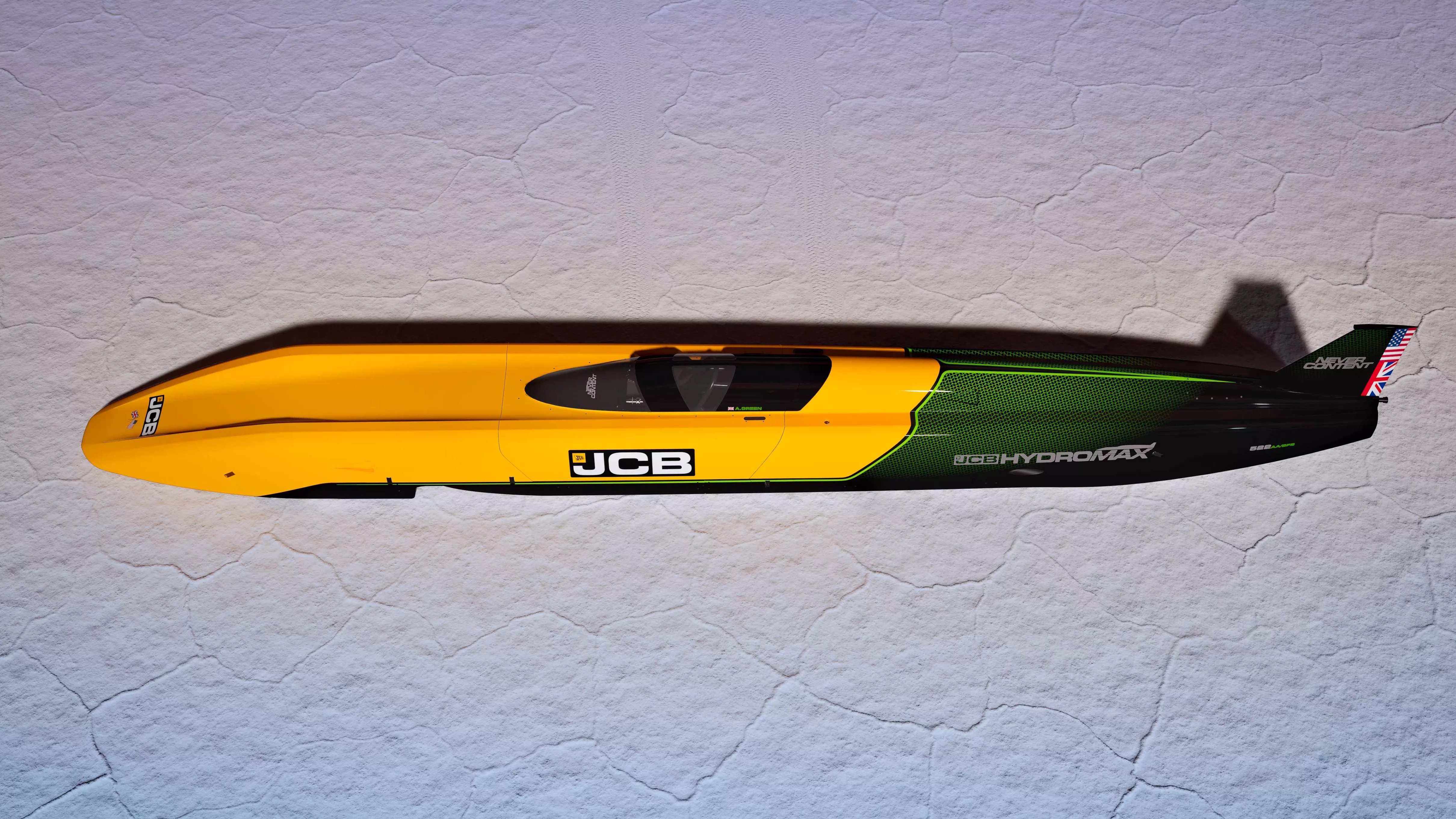
JCB Hydromax

Landspeed record cars are rare, inspiring, and ethereal machines. Prime examples include the Fiat Mephistopheles with its hulking frame, the Bluebird with its gaping maw and broad silhouette, and the Thrust SSC with its sharp nose and huge pair of jet engines.
Aston Martin F1 car exiting garage

Sign up for a newsletter and we'll make sure you're fully up-to-date in the world of race technology
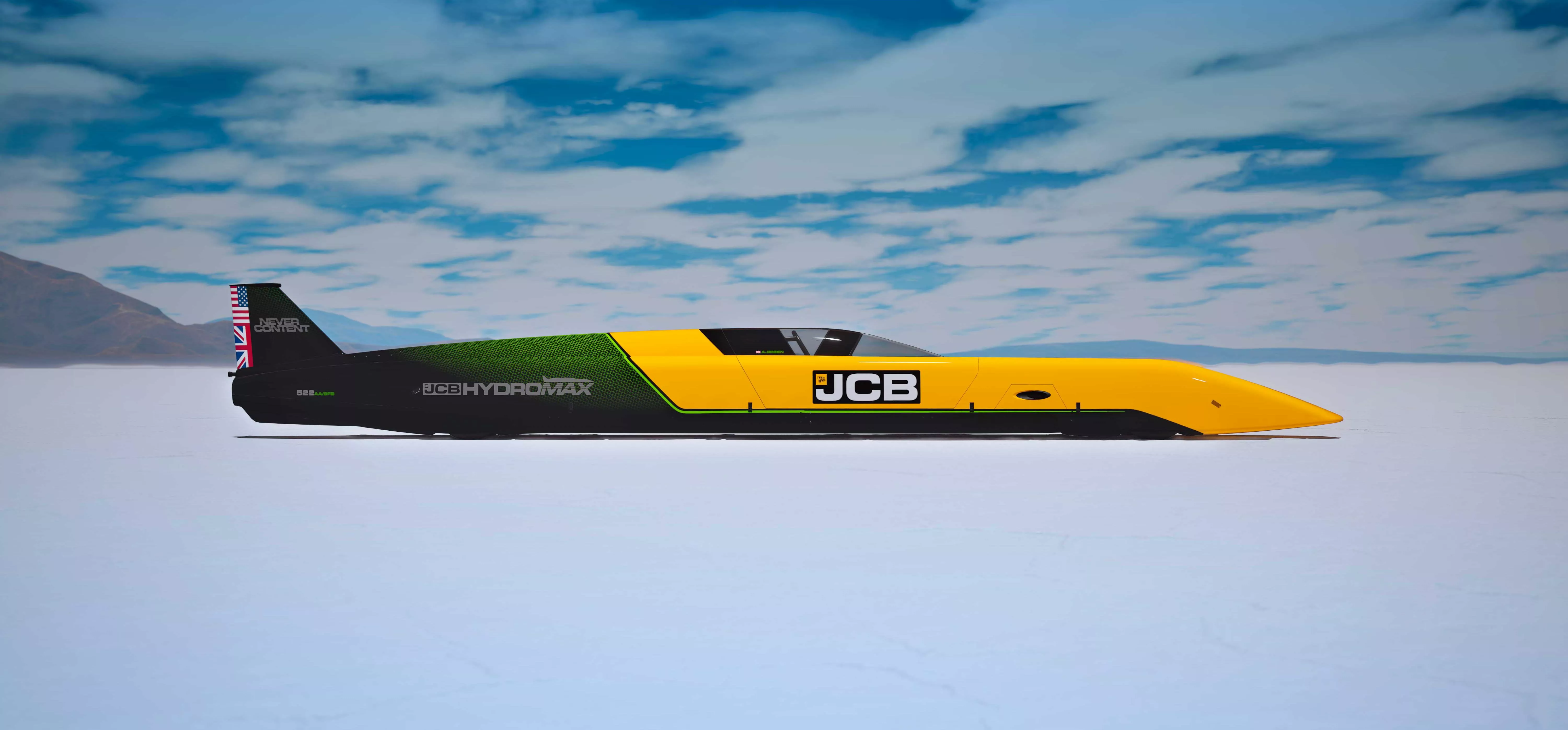
Enter the JCB Hydromax. 
The yellow-and-black JCB is an icon, just not a motorsport one. JCB's machines are set up to carry, to excavate, to move earth.

The JCB Hydromax is something entirely new: a bold venture into the world of landspeed records - with two hydrogen engines. 

Raceteq ventured to a Royal Air Force base in the United Kingdom to witness the Hydromax undergoing testing.

In June 2026, at RAF Wittering in the United Kingdom, the Hydromax went through its gears and ultimately hit 208mph in a show of reliability. 
JCB Hydromax

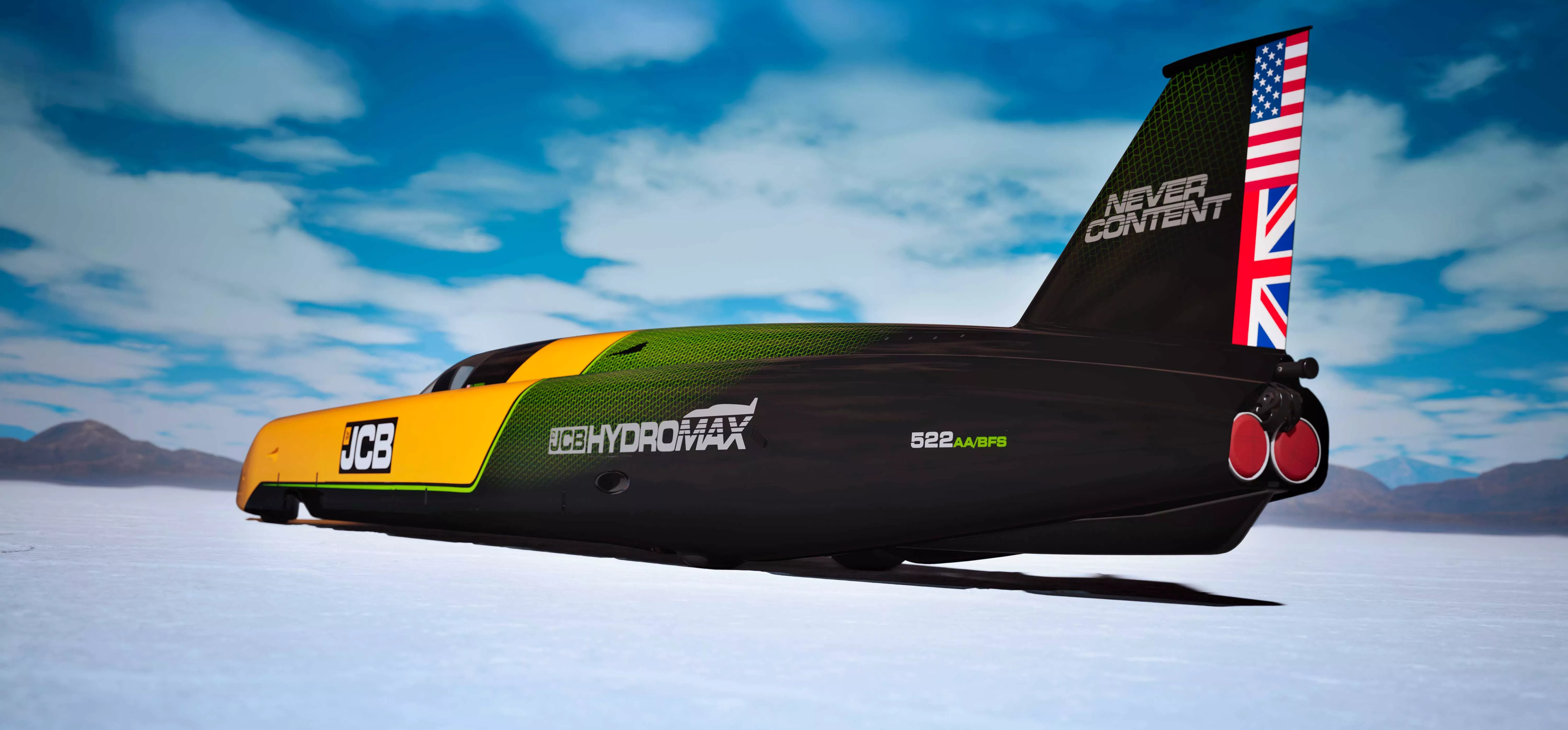
The JCB Hydromax on the Bonneville Salt Flats

In August 2026, at the Bonneville Salt Flats in the United States, the Hydromax will attempt to break the speed record for a hydrogen powered combustion car.

Why is JCB attempting a landspeed record?

This isn’t JCB’s first foray into the world of landspeed records - but it is 20 years since it first made headlines with its Dieselmax car. 

JCB's landspeed record attempts


Year Vehicle Speed Record
2006 JCB Dieselmax 350.092mph Fastest diesel-powered car
2014 JCB GT 72.58mph Fastest backhoe loader
2019 JCB Fastrac 135.191mph Fastest tractor
2026* JCB Hydromax 350mph+ Fastest hydrogen-engined car
JCB already produces hydrogen engines for its vehicles, but, as it did with the Dieselmax two decades ago, it is setting out to demonstrate them in the fastest - and most engaging - manner.
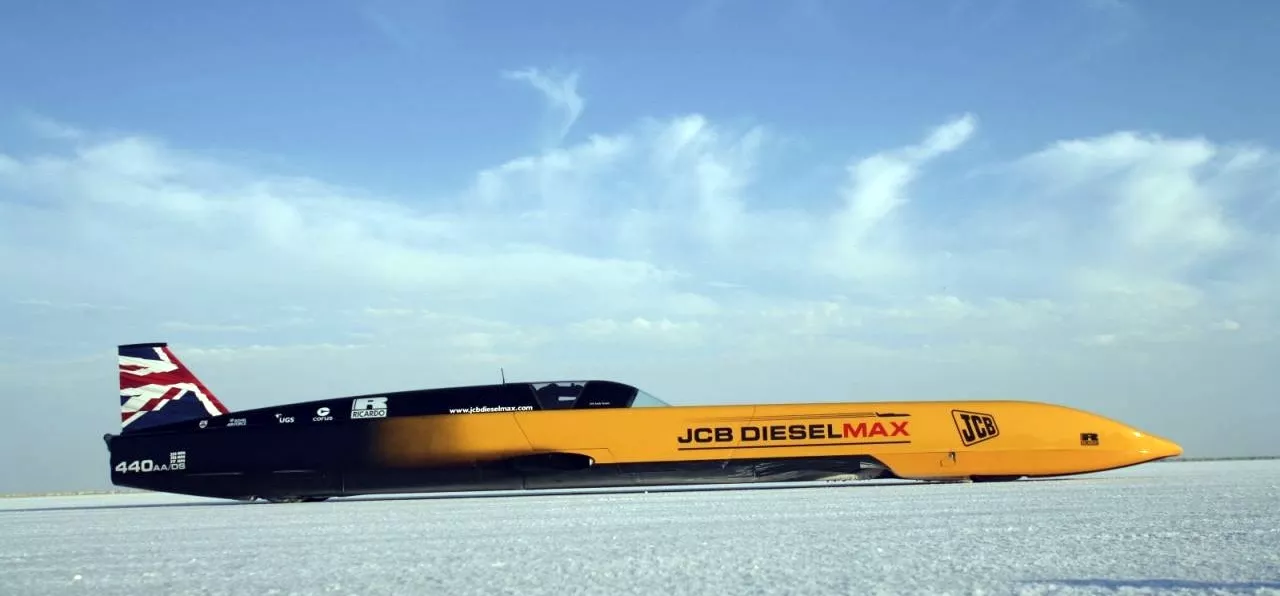
JCB DieselMax

The JCB Dieselmax set the diesel-powered record in 2006 at the Bonneville Salt Flats

Dakar 2026

Innovation, Motor, Event

Dacia’s 2026 Dakar-winning car has something in common with F2 and F3

How do you drive a landspeed record car? 
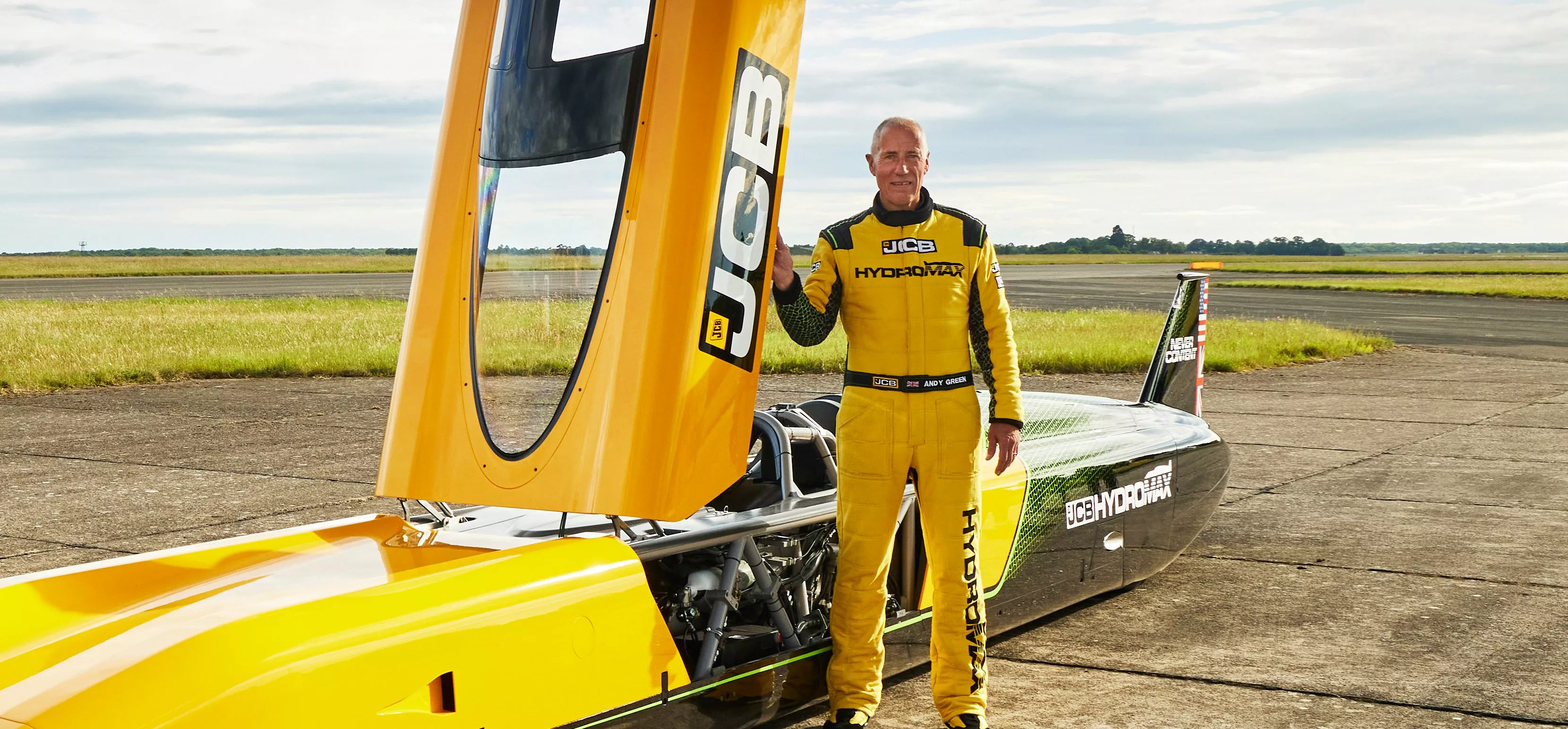
In Andy Green, JCB has enlisted the most experienced driver possible. 
 
The retired RAF pilot (callsign: ‘Dead Dog’) took Thrust SSC to the overall landspeed record of 763mph in 1997 and broke the diesel record with JCB back in 2006.
 
“The challenge, from an operating and driving point of view, is [not just] controlling an awful lot of power… but an immense amount of torque,” he says.
 
Green will make minute adjustments to the car’s steering as it hurtles across the nine-to-10-mile-long Salt Flats, to keep it going straight. The Salt Flats themselves vary in size due to the climate, and local mining activities, so only in August will the team know exactly how long the ‘track’ is.
JCB Hydromax and driver Andy green

Andy Green standing next to the JCB Hydromax car at RAF Wittering, UK
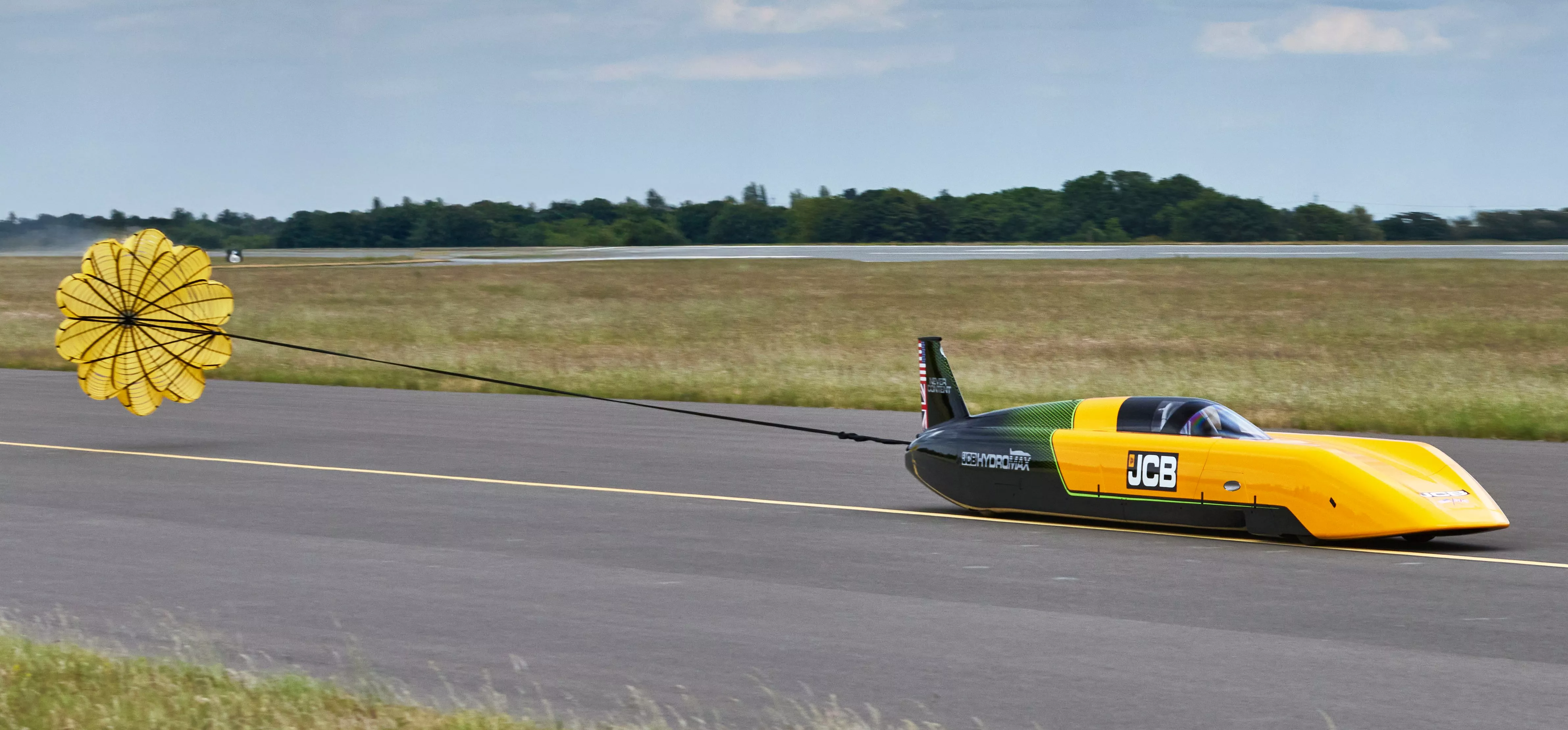
The Hydromax’s steering angle is extremely acute - “about plus or minus five degrees” according to Green, and the car will primarily be unsettled by gusts of wind across the Salt Flats. Once he sees the finish line, he will deploy parachutes - often packed by himself - and use the brakes to stop the car.
 
He’s almost nonchalant about the task ahead. 
 
“Yes, it's a racecar, and yes, it's going to go very fast, but if we do it right, the driving task is almost secondary in terms of pointing the car down the line and pressing the [brake] pedal until we get to the end of the timing line and then using… the aerodynamics of the drag parachutes, principally to slow down, and then the wheel brakes.”
 
The G-forces are lower than expected given the car isn’t generating copious amounts of downforce, but cutting through the air.
 
Green says that the car will “never generate much more than half a G”, given it will barely be gripping the salt underneath. 
JCB Hydromax with parachute deployed

The parachute deployed on the rear of the JCB Hydromax during a test run

“The thing that very few people have done is design a car that can actually sustain half a G for that long a period to get up to that kind of speed,” he adds, in praise of the car’s mechanical and aerodynamic grip.

The ex-pilot adds that he worked with the engineering team to replace the gear change lights - like those in an F1 car - to arrows on the dashboard that denote the exact time he needs to change gear, while a beeping sound also plays in his headset as a prompt.

“And, you know, joining the Royal Air Force and flying fighters for 20 years is a brilliant way of understanding the technology, and also the personal, physical and mental preparation of getting in and delivering on something like that.

“So, I'm lucky to have had the world's best day job,” he adds.
 

How do the Hydromax’s hydrogen engines work?

The JCB Hydromax is powered by two inline-four-cylinder 4.8-litre turbocharged hydrogen engines that combine for 1,600 horsepower. The engines themselves are built in conjunction with Ricardo - a British powertrain company. 

These engines themselves are surprisingly simple, which is crucial to demonstrate the viability of JCB’s existing fleet of hydrogen engines. 
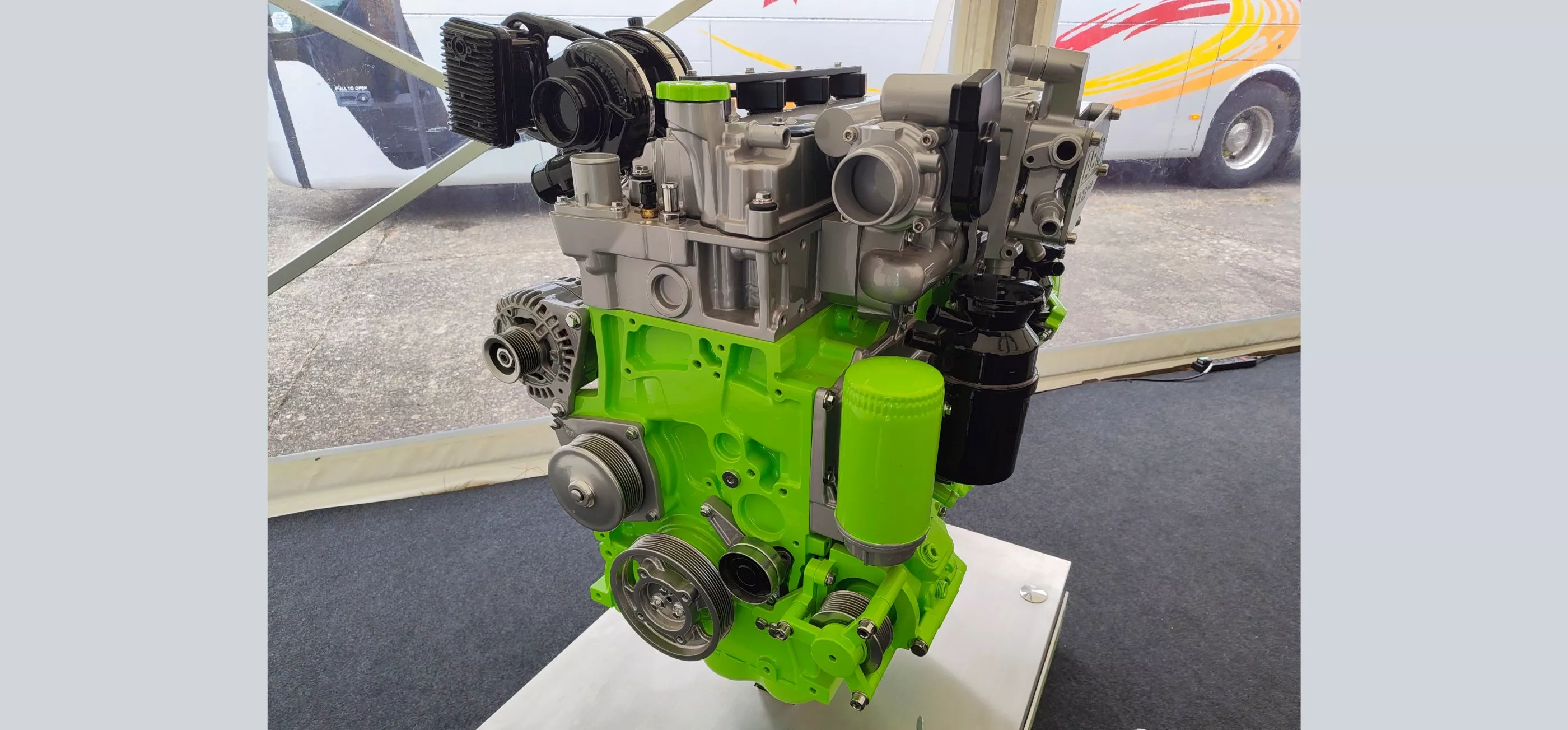
JCB Hydromax engine

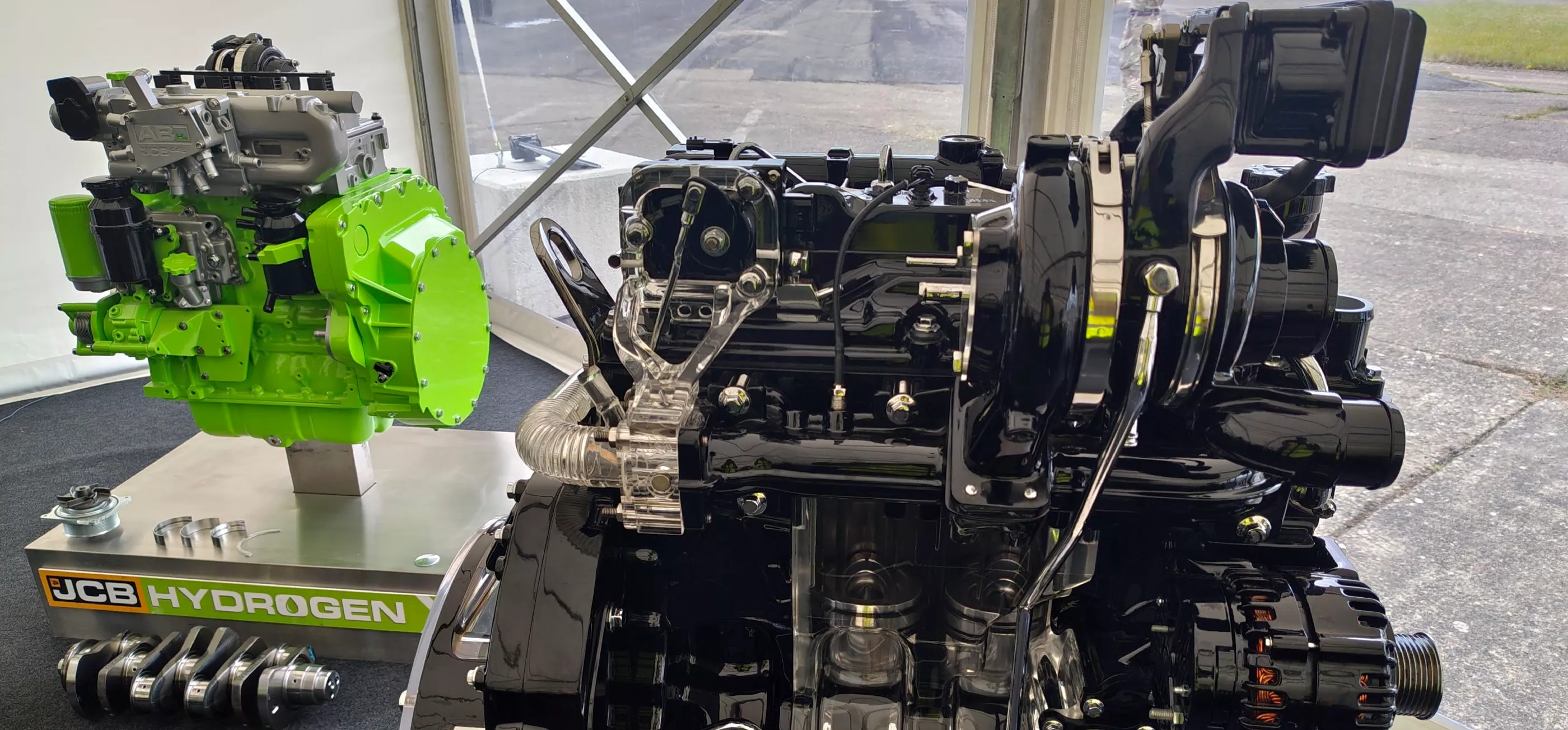
A Hydromax engine (L) next to the JCB production hydrogen engine (R)

The equation here really is as simple as inputting hydrogen into the engine’s combustion chambers that produce power and then output steam (with oxygen added to the hydrogen to make water: H2O).

JCB already deploys hydrogen engines in its equipment, and those engines can be built on existing production lines. They look similar to the Hydromax’s race engine, but the differences are vast.
JCB Hydrogen production engine JCB Hydromax race engine
Power (bhp) 75 800
Speed of peak power (RPM) 2,200 4,500
Torque (lb-ft) 325 1,300
Peak fuel flow rate (kg/hour) 4 50
Weight 500 405
Coolant flow race at max power (litres/minute) 240 550
The Hydromax’s engine uses a motorsport-specification high-speed turbocharger to compress, and therefore get more hydrogen molecules into the next part of the engine. The hydrogen is then directly injected into the intake manifold, mixed with oxygen, and then combusted in the cylinder.

Unlike the production engine, the Hydromax engine is a dual overhead camshaft (DOHC) pushrod engine. Ricardo and JCB opted for this for better control over valve timing as the Hydromax engine operates at a higher speed than the production engine. These are all common design decisions made in four-cylinder sports cars - but the Hydromax’s engine is far larger than usual given its cavernous 4.8-litre capacity.

Whether built for a tractor or landspeed car, the engines focus on low-temperature combustion to keep emissions low; higher-temperature combustion runs the risk of emitting more nitrogen oxide. 

Given the combustibility of hydrogen, JCB says the hydrogen engine is more efficient than a diesel engine: for one kilogramme of hydrogen, three litres of diesel would be needed.

Weight reduction was also key for the Hydromax - components have been shaved and different materials including aluminium and titanium have been used instead of steel within the Hydromax’s engine block and moving components.

Another angle of the JCB Hydromax engine

Lewis Hamilton and Charles Leclerc at Shell F1 trackside lab

Car, Motor, Innovation, Future

Formula 1 oils and lubricants: Their critical role in boosting F1 performance and reliability

The Hydromax’s engines are also mounted at 90 degrees to keep the centre of gravity low. This means that oil is stored in a separate pump (this method being known as a dry sump) and then pumped through the engine to cool it - with a litre of oil pumped through the engine per second - before being filtered and repumped.

Although there are air intakes, the engine and turbo rely on a charge cooler that uses ice, stored in two pumps - one front and one rear - to cool the engines. Of course, the ice melts, and after every run the tanks must be emptied and refilled.

As for the hydrogen fuel, 4kg of it is stored on board at 700bar of pressure, in aluminium cylinders covered in carbon fibre. The Hydromax’s tank is filled up exactly how your road car is - using a conventional ‘pump’ - from an external mobile tank, in around 10 minutes.

The two engines are synchronised to produce the same amount of power at the same time, and to provide 50% of the power to the front wheels, and 50% to the rear wheels.

The gearbox meanwhile is derived from a Le Mans Prototype (LMP) car, and so immense is the torque from the JCB Hydromax’s engines, it needs to be slowed down by the gearbox to control the torque and prevent the gears from shearing themselves off. 
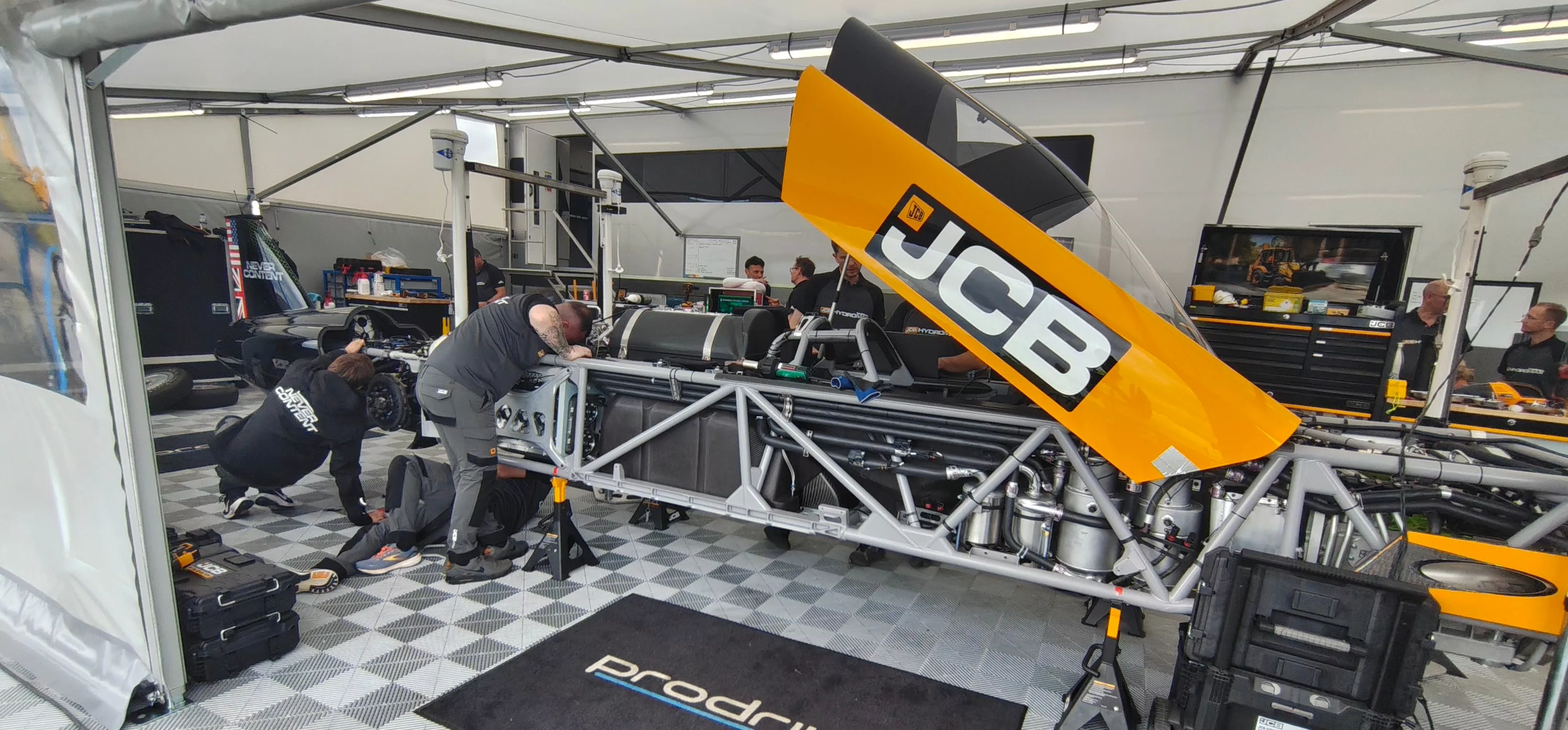
JCB Hydromax opened up

An exposed view of the JCB Hydromax showing the hydrogen tank behind the cockpit and the space frame of the car
Aston Martin in windtunnel

Car, Innovation

Motorsport aerodynamics explained: the role of wings, stalling and diffusers

The bodywork and aerodynamics of Hydromax 
The Hydromax’s aerodynamics take some cues from the Dieselmax, but this car has been built from the ground up in conjunction with Prodrive - the company that boasts building the 2026 Dakar Rally-winning Dacia Sandrider among its illustrious list of motorsport achievements. 
 
The car itself is chiselled and sharp for a low drag coefficient, although its nose is raised to accommodate two tunnels that channel salt through the bottom of the car and expel it behind the front wheels, reducing drag.
 
At 32-feet in length, there’s plenty of room for aerodynamic features that were primarily developed using CFD (computational fluid dynamics), with NACA ducts (efficient, low-drag air inlets designed by the National Advisory Committee for Aeronautics in the 1940s) supplying air to the turbochargers without the usual drag penalty of a cooling duct, and a large fin on the back to control yaw.
JCB Hydromax

Underneath the rear bodywork sits another fin that stabilises the car
Hot batteries header image

Innovation, Future

From pole to pole: the hot battery revolution

The tyres themselves were developed specifically for this car and they hide under large wheel arches - to account for growth. That’s because, during a high-speed run, centrifugal forces will push the tyres outwards with such might that they will actually expand.

Brakes - a key stopping component that will hopefully be superseded by the parachute - are aircraft-spec, and built by AP Racing, who supply high-level motorsport teams including F1 teams. 

“This is only the second [landspeed record] car in history, as far as I'm aware, to be able to stop from its maximum speed purely on wheel brakes,” says Green.

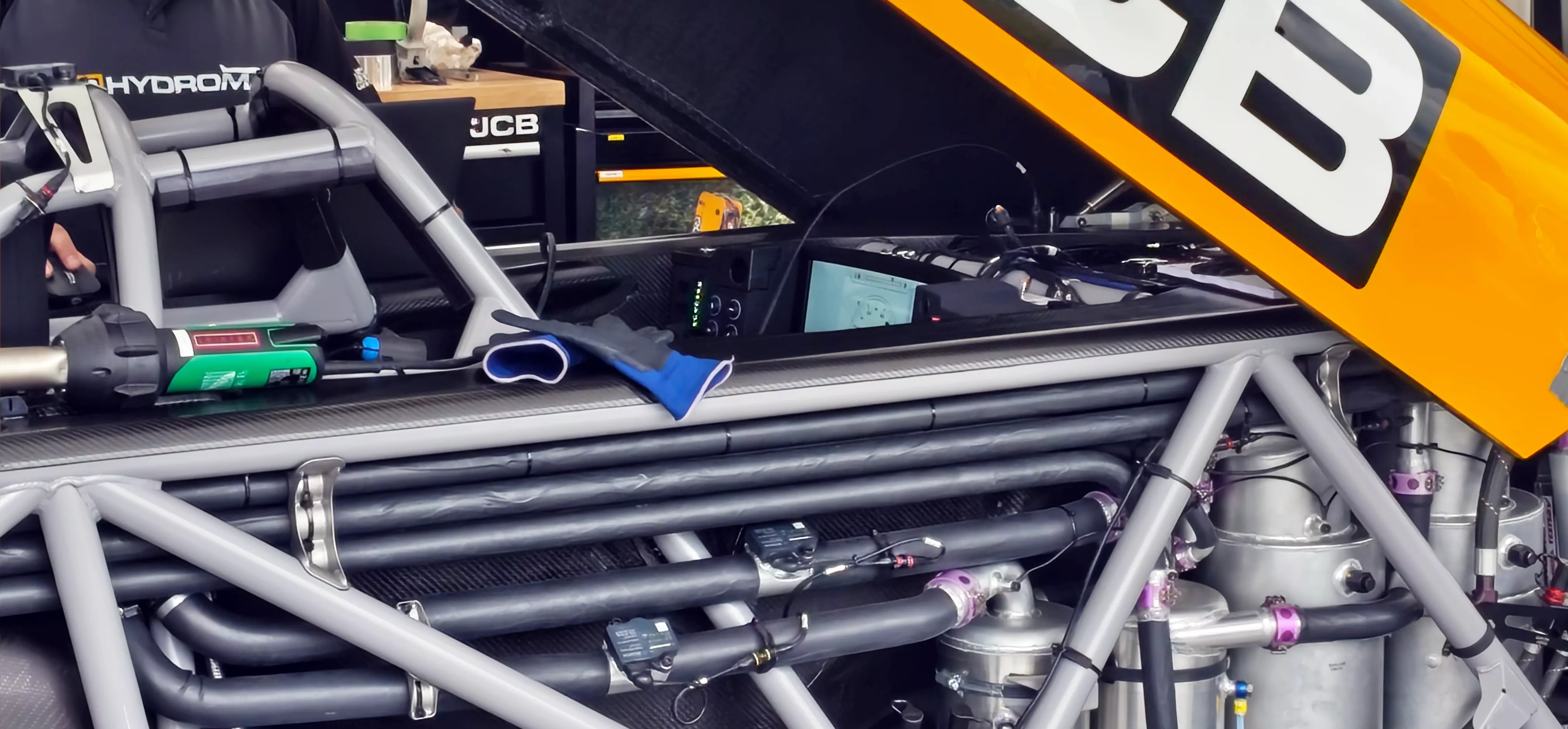
He will sit in a carbon fibre monocoque mounted to a space frame, in a chassis built around him - from a seat moulded to him, a steering wheel tailored to his hands, and a rollcage sculpted deliberately to give him optimal sightlines. 
JCB Hydromax cockpit

The carbon monocoque cockpit of the JCB Hydromax features a huge LCD screen that gives Andy Green data - and cues to switch gears
Soon, on the hallowed saline flats, Green will seek to set a new benchmark for hydrogen power.
“This is about showcasing the next-generation of technology, the future of the internal combustion engine,” says Green. 

“It’s showcasing great British engineering and technology on a global stage at an absolute world-class level.”

Related articles

Car, Motor, Innovation, Career

Forze Hydrogen Racing: Inside the 800hp hydrogen racing car created by students

F1 start

Car, Event

Introducing the Aramco Speed Master Award - championing speed in F1 2026

Sign up to receive regular newsletters and ensure you stay ahead with exclusive articles on technological innovations and valuable insights into the world of motorsport

Make sure you're fully up-to-date in the world of race technology

By signing up, I acknowledge that I have read and understood the content of the Terms and Conditions