Car
A brand-new grid of F1 cars: the 2026 Miami GP upgrade rush
by Samarth Kanal
7min read
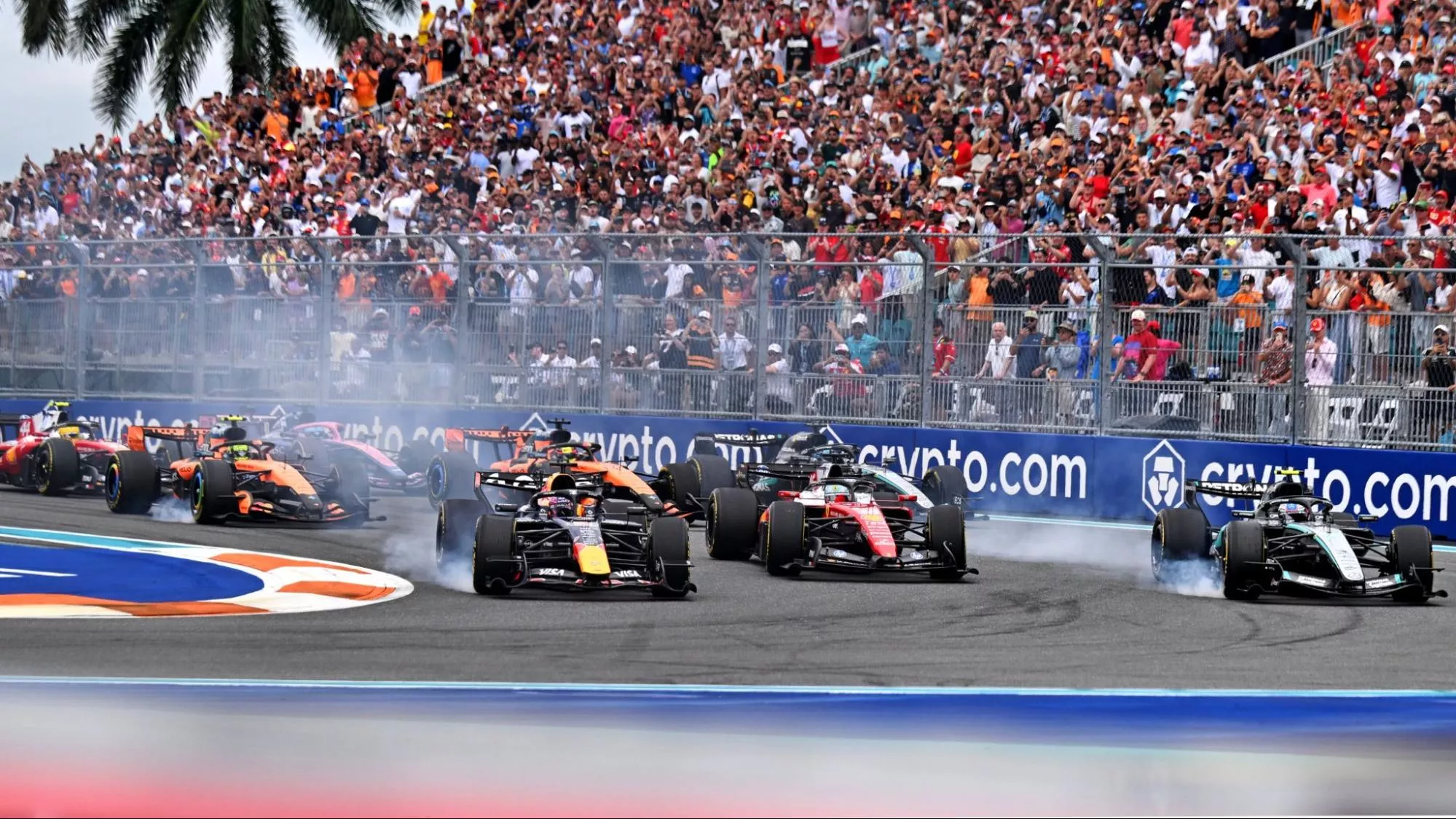
The grid of Formula 1 cars in Miami told a story of radical mid-season transformation - with McLaren, Ferrari, and Red Bull leading the charge.
Sign up for a newsletter and we'll make sure you're fully up-to-date in the world of race technology
It's only May, but the Formula 1 cars in the pitlane at the Miami International Autodrome barely resembled those that turned a wheel in pre-season testing in February.
Some teams declared seven - even 11 - individual component updates in Miami. It’ll take some time to evaluate the efficacy of those upgrades, but there are some surprising and intriguing details from Miami.
Here are the pertinent upgrades from the race that refreshed the F1 grid.
McLaren: A new car in all but name
McLaren’s submission lists seven updated components, and, taken together, they amount to something close to a comprehensive re-engineering of the car's aerodynamic philosophy.
The headline piece is an entirely new floor and front floorboard geometry - McLaren describes it as working "in conjunction with the aforementioned geometrical changes, resulting in an increase in aerodynamic load and efficiency across all conditions." That phrase, "across all conditions," is significant.
It signals a floor designed to be robust across the varied ride heights and attitudes a car experiences through a lap. Pairing this with revised front and rear corner furniture, a new rear wing, and a reworked sidepod inlet means almost every surface of the car has been touched.
The cooling louvres entry is the only circuit-specific update in its package, introduced to manage Miami's notoriously high thermal demands. Everything else is pure performance development - a rolling upgrade programme that suggests McLaren's factory in Woking has been working flat-out since the season opened.
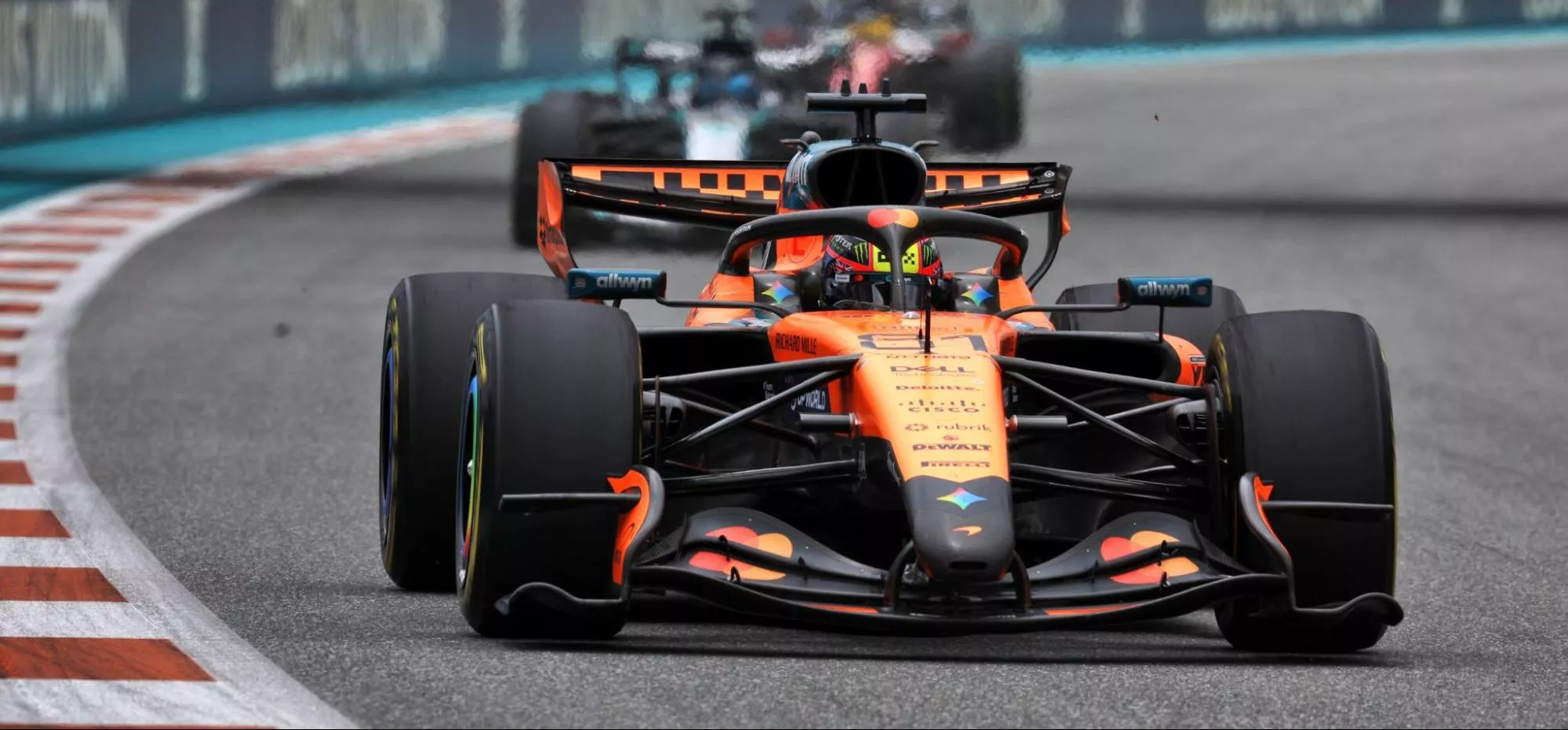
McLaren’s swathe of upgrades seemed to put it closer to the competition in Miami as it won the sprint race with Lando Norris and completed the podium in the grand prix
Ferrari: The biggest update
Ferrari submitted the longest list of any team - 11 distinct updates - and reading through them reveals a coherent philosophy rather than a scattergun approach. The Italian team has focused heavily on the entire underfloor region, from the front floor leading edge all the way through to a heavily reworked diffuser.
The rear trackrod fairing reprofiling, the revised tail devices, the beam wing's updated inboard connection - all of these exist to create what Ferrari describes as "a favourable pressure gradient for the diffuser, in an efficient manner."
The rear wing is a particularly interesting entry. Ferrari has gone hunting for both cornering downforce and drag reduction in straight mode, adding a central bracket flap, reworking the pylon-to-mainplane junction, and increasing upwashing volumes on the endplate.
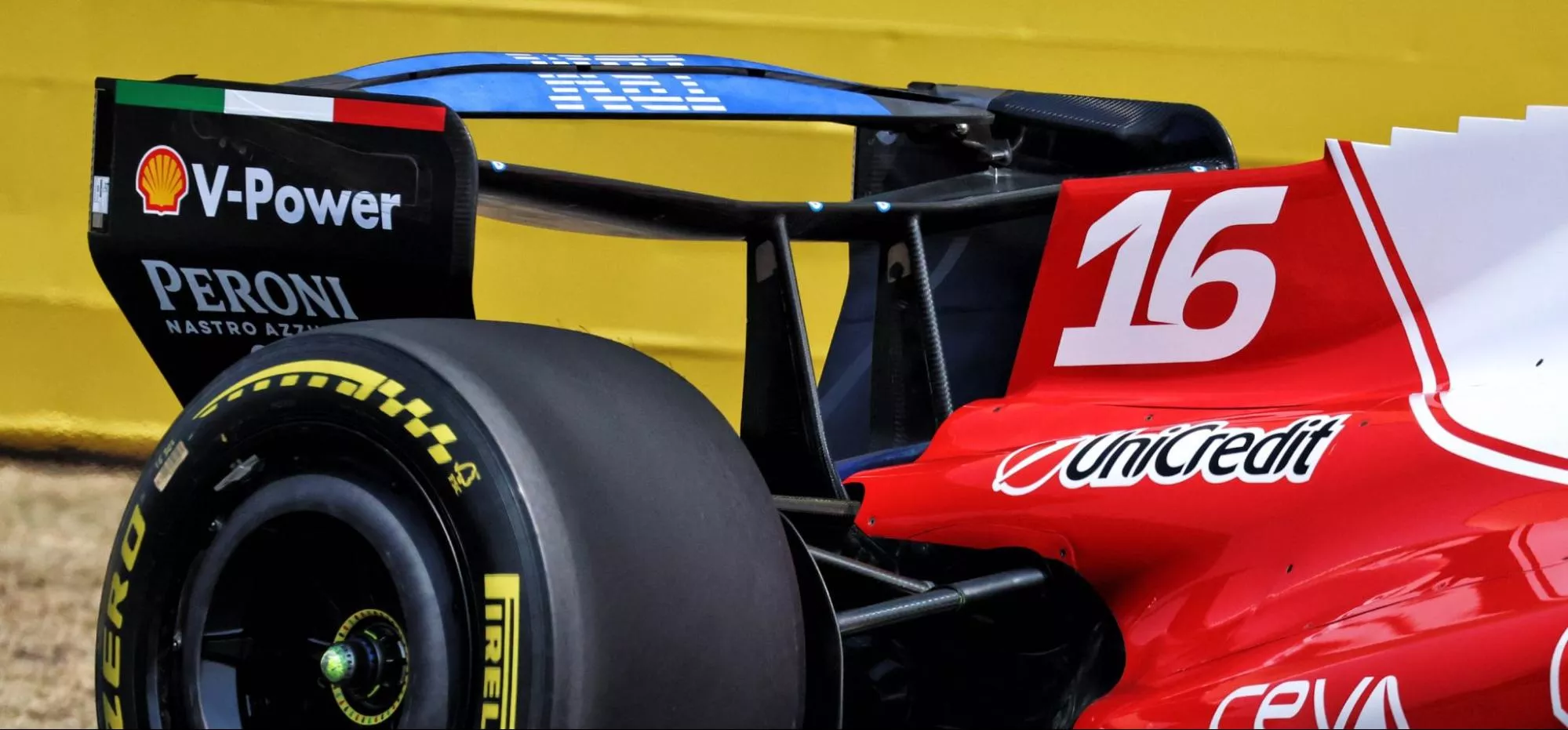
Ferrari’s rear wing - a genuine eye-catching innovation - is proving performant. And other teams are eyeing up similar solutions…
Red Bull: A holistic approach
Red Bull Racing's seven-component submission reads differently from Ferrari's. Where Ferrari built its updates around the floor, Red Bull has taken a more holistic approach, with changes that cascade from the front wing all the way to a revised rear wing deployment mechanism.
The front wing update includes the now-permitted diveplane - a small but telling detail about how teams are pushing the boundaries of this year's regulations. The engine cover, floor bib, and sidepod inlet have all been revised as a connected package, with Red Bull describing the bib geometry as accommodating changes to the forward floor structure and then blending through to the engine cover.
Most intriguingly, Red Bull's rear wing update involves revisions to the mechanism that deploys the straight-mode wing stall. It needed more travel in the system, which necessitated subtle changes to the wing profile near the centreline. It's a reminder that in 2026, the rear wing is not just an aerodynamic component - it's a mechanical system, and developing it means developing both dimensions simultaneously.
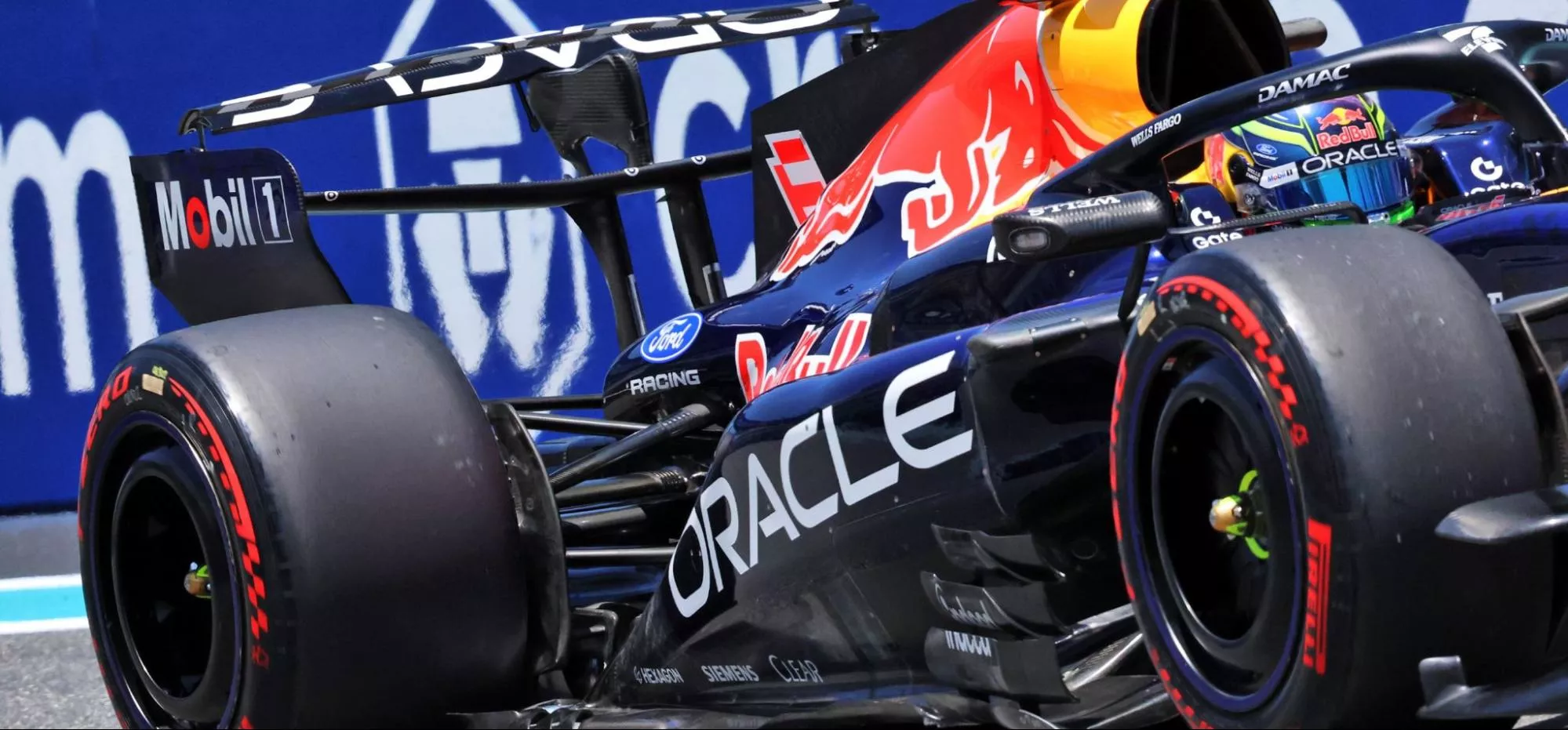
Red Bull’s rear wing mirrors that of Ferrari with a rear wing that opens upside down. In this case, it reveals a huge, drag-slashing, chasm
The midfield and hidden details
Further down the grid, the updates tell their own stories.
Alpine brought what may be the most strategically significant single update in the document: a completely new rear wing assembly. Describing it simply as part of "in-season development," the team clearly believes this is a meaningful step. Paired with a reprofiled endplate and updates to the rear impact structure and suspension legs, it looks like Alpine is attempting to unlock a new performance level at the rear of the car that earlier configurations couldn't access.
Williams submitted seven updates, but with a notably different flavour. Its language - "more repeatable aerodynamic load over a wider operating window," "more consistent rear flow versus cooling demand" - emphasises robustness over peak numbers. Furthermore, the team is still working to bring down the overall weight of its car.

Mercedes didn’t provide the same list of upgrades as its competitors, and yet it won the Miami GP
Mercedes, meanwhile, arrived with just two changes - a tailpipe repositioned tail-down to improve local drag and downforce response, and an increased front drum lip chord to reduce losses and improve rear downforce. Two surgical, carefully targeted modifications from a team that knows exactly what it needs.
And it was Mercedes that won the Miami GP.