Event
Logistics, last-minute paddock, and the Herta effect: how Formula 2 finally made it to the US
by Samarth Kanal, Jon Noble
7min read
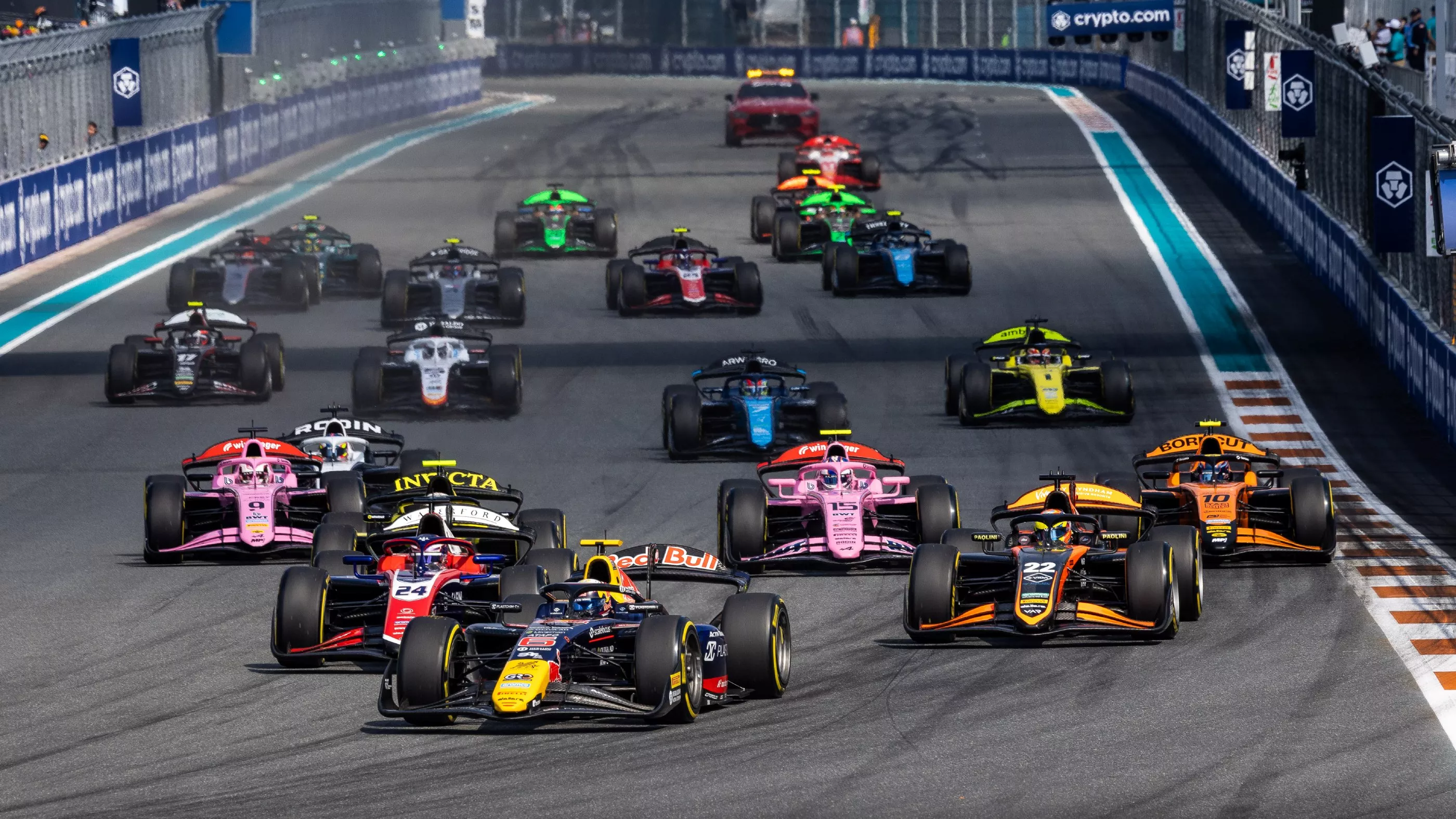
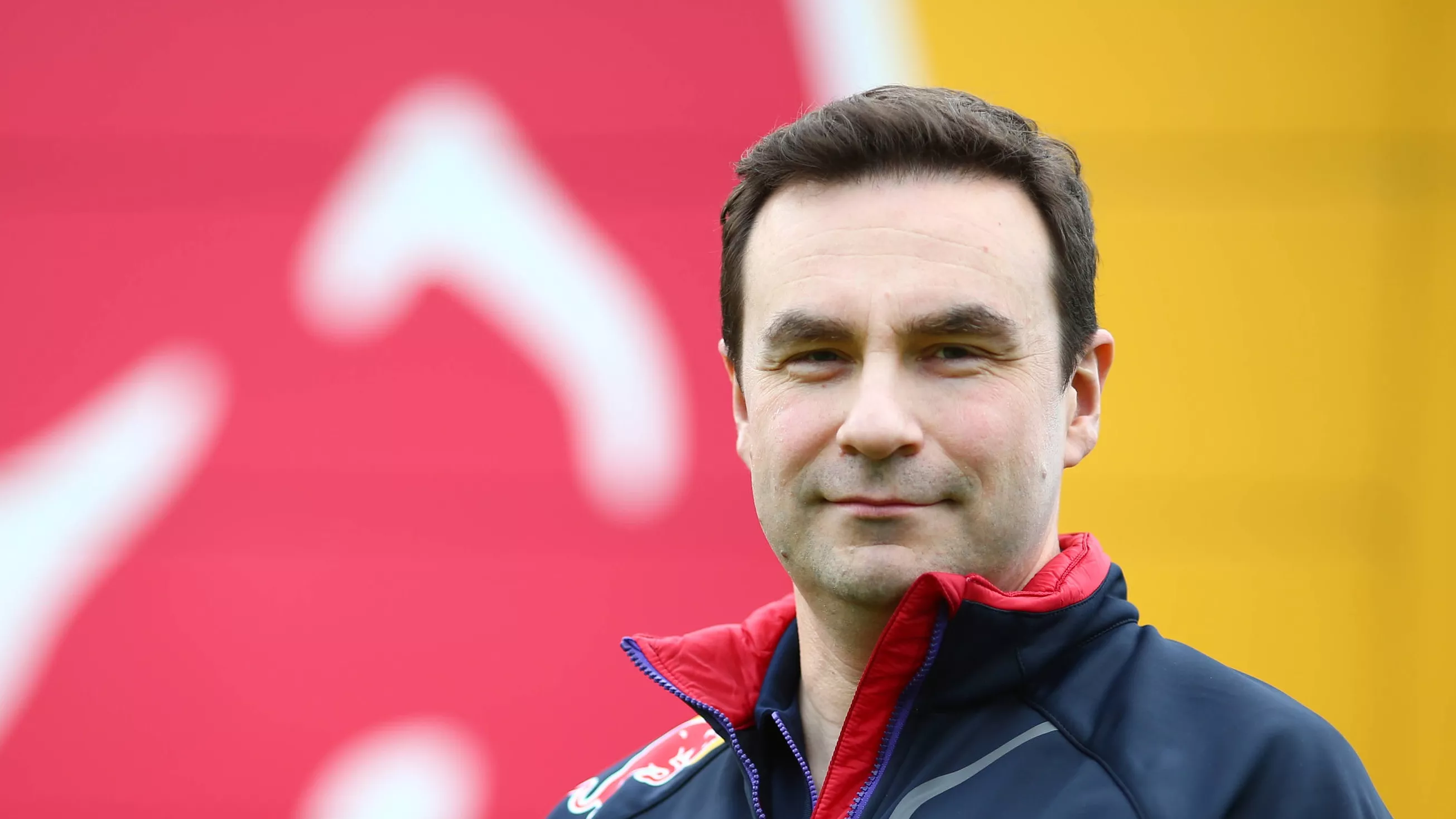
When Bahrain and Jeddah dropped off the Formula 2 calendar, the series pivoted rapidly to Miami and Montreal in May. Formula 2 and Formula 3 CEO Bruno Michel reveals why this decision wasn’t easy at all - shining a light on what goes into making the F2 calendar.
Sign up for a newsletter and we'll make sure you're fully up-to-date in the world of race technology
A conversation that started in Melbourne
The seeds of Formula 2's first North American campaign were planted before the calendar disruption made headlines.
According to Michel, the idea began to take shape at March 2026’s Australian Grand Prix, even before it was clear that Bahrain and Jeddah would not proceed - because F2 had been looking to race Stateside at some point in the future.
"We started to look at different plans. The interesting thing is that I had been talking to Montreal a bit earlier - but about the future, not about '26. And Montreal had asked me, ‘Would you come for '26?’ And I said, ‘No, guys, my calendar is already finished’."
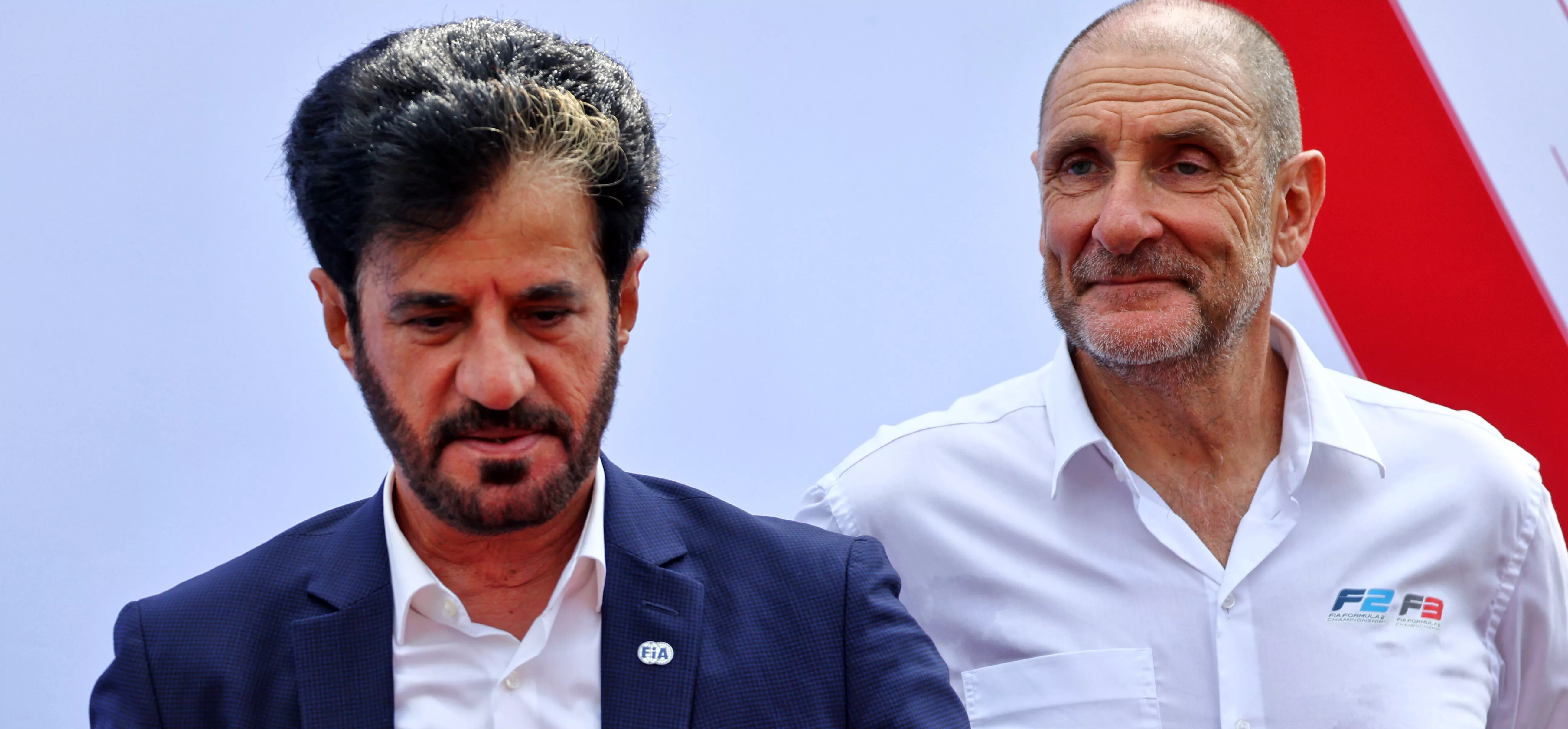
F2 and F3 CEO Bruno Michel (R) with FIA President Mohammed Ben Sulayem (L)
The circumstances that followed changed that calculation. With two rounds in genuine jeopardy and an opportunity to consolidate freight costs by routing everything through North America, Michel began to see a compelling logistical and commercial case for making the trip west.
The logic was relatively straightforward: bring all the freight to America, then move it from Miami to Montreal by road, eliminating the need for multiple long-haul air shipments.
Simple in concept, complicated in practice
The elegance of the idea, however, masked the sheer complexity of making it work in a compressed timeframe. Miami presented an immediate infrastructure problem.
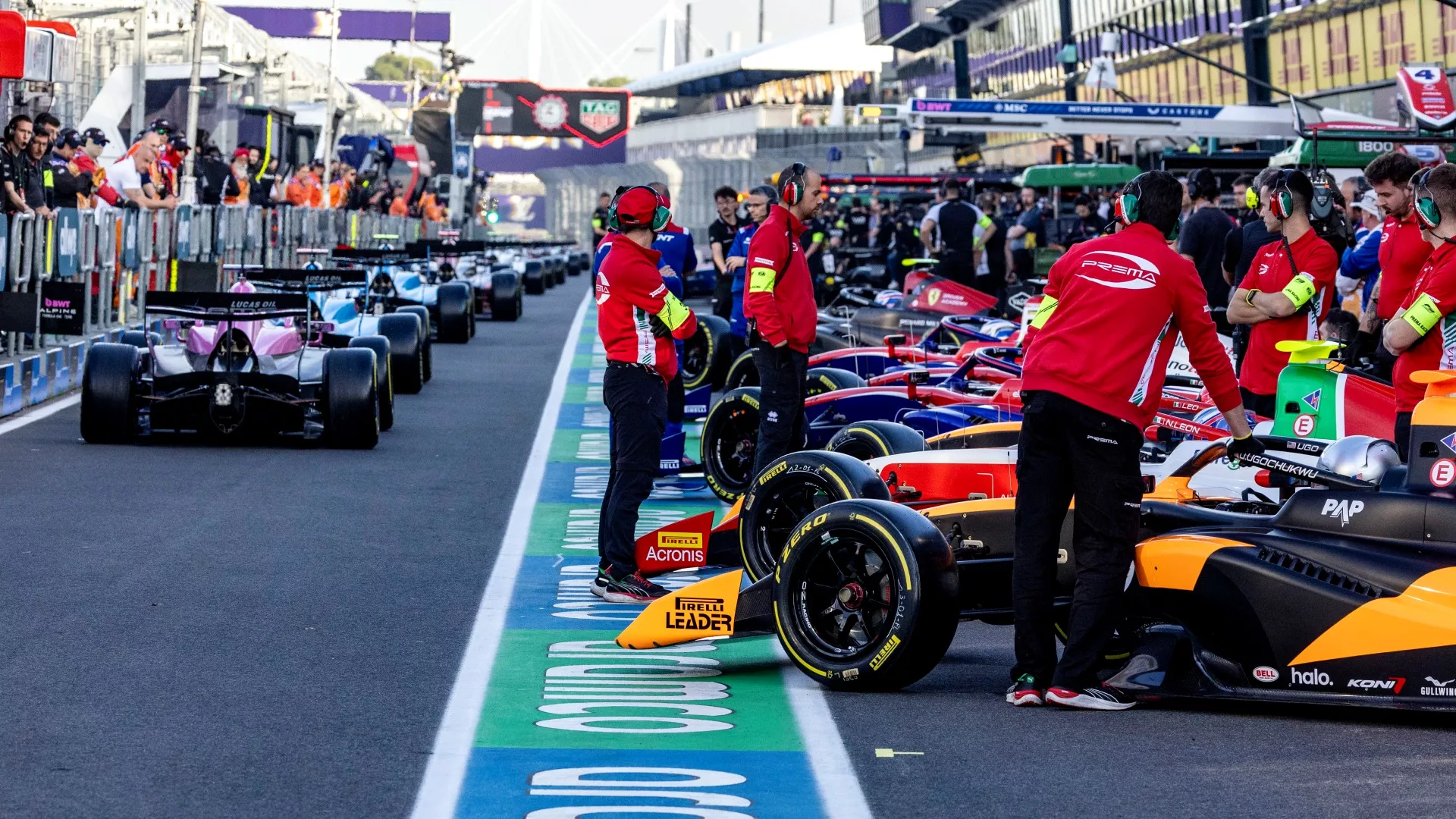
"Miami immediately said, we're interested, but we have no paddock. So we had to create one from zero - quite far away [from the F1 paddock]."
The Miami International Autodrome already had a well-established roster of support races, including Porsche and McLaren Trophy events, which meant that F2 was not slotting into a ready-made vacancy.
Building a temporary paddock from scratch, coordinating with the promoter, securing FIA calendar approval, and confirming the organisation in Montreal all had to happen in parallel - and quickly, before the rumours that were already circulating forced a premature announcement.
"I wanted to be sure," Michel said. "I wanted, before we make a proper announcement, [to ensure] that we were completely clear with the organisation."
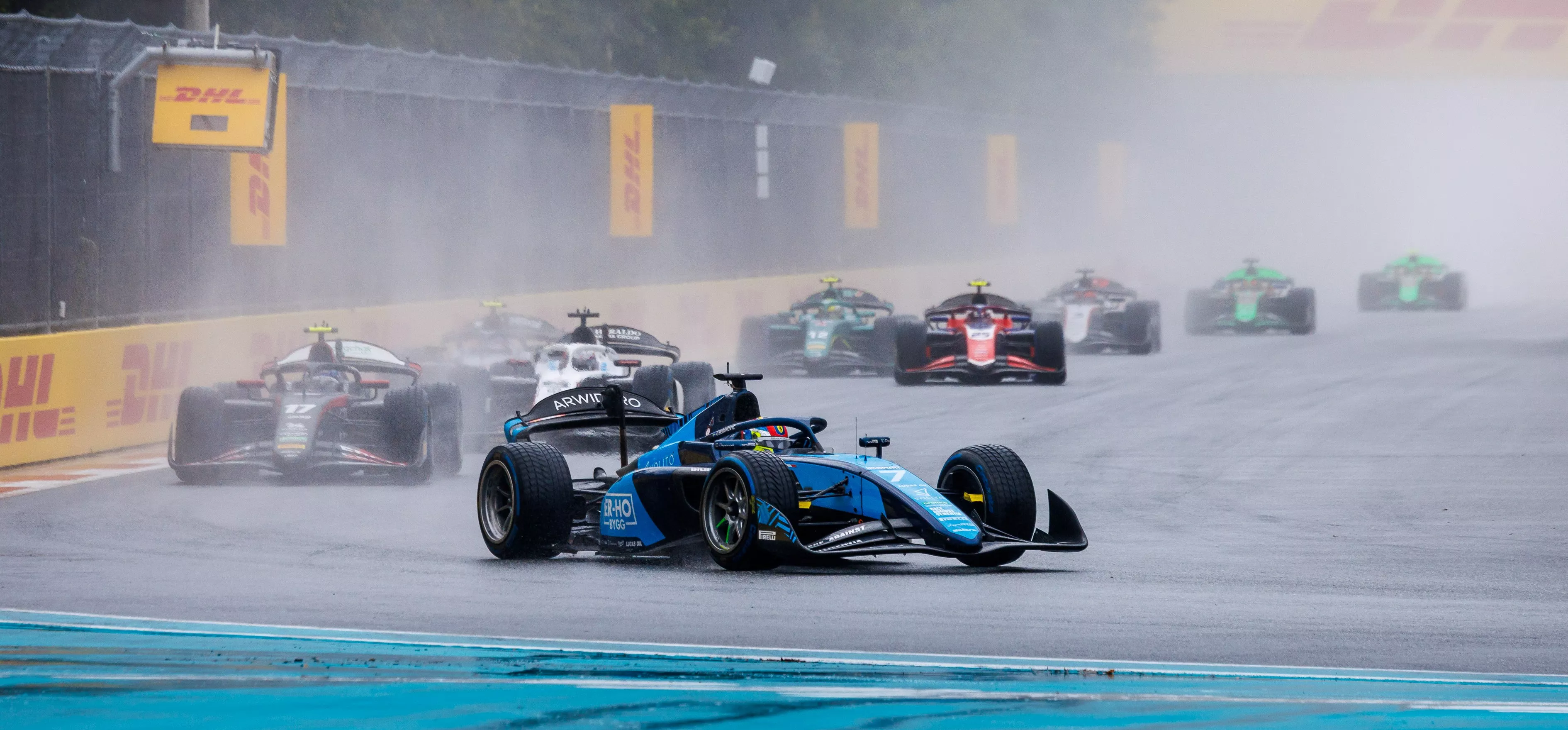
Changing conditions made for a dramatic weekend for F2 in Miami and Sunday’s feature race was a wet-dry affair
No standalone F2 - and what about F3’s replacement rounds?
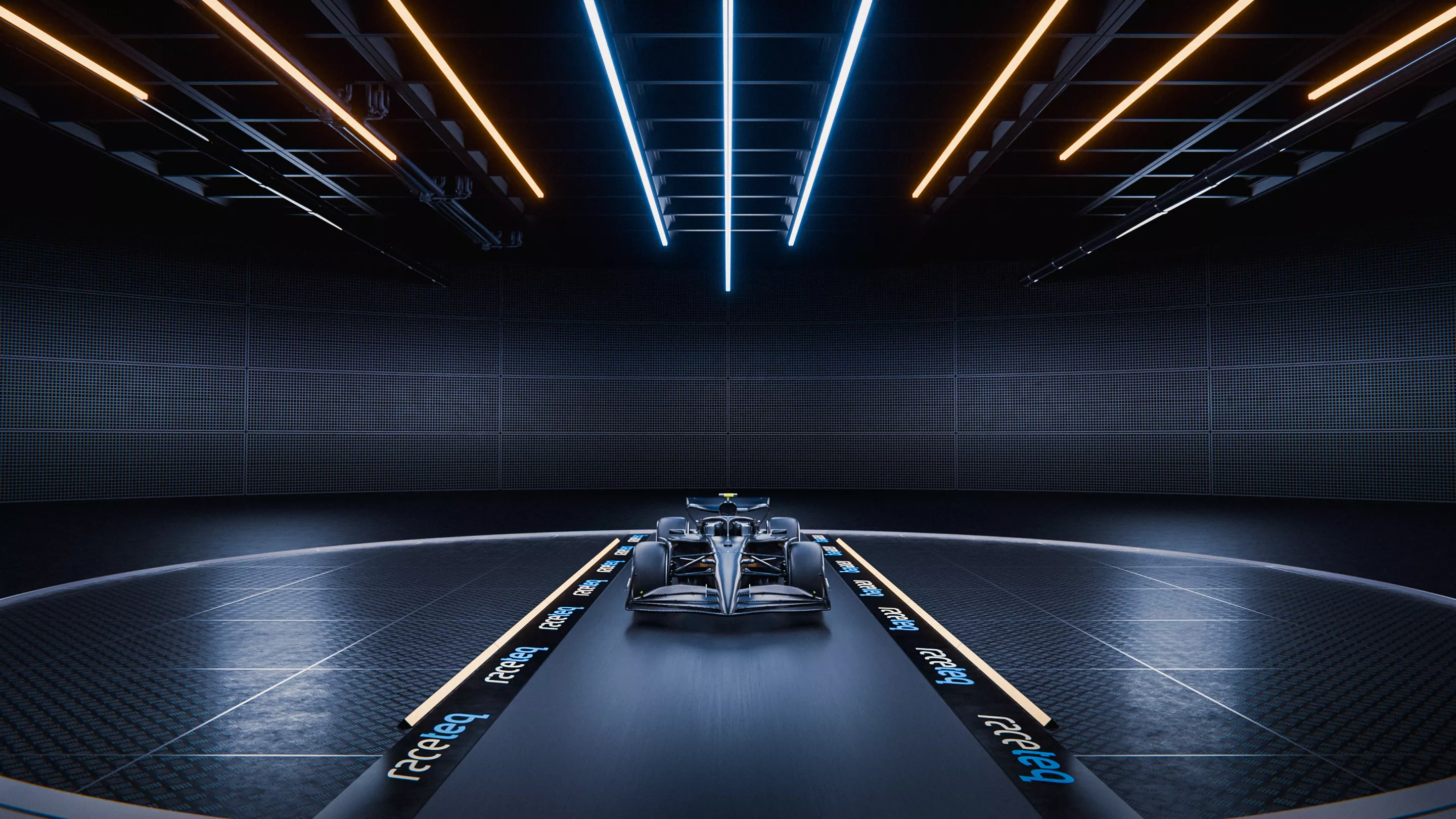
One question that inevitably arose was whether F2 could have inserted itself as a standalone event rather than waiting for F1 support slots to become available. Michel was categorical on the point: that era is over.
"We're so much [embedded] into the systems of Formula 1 - the FIA, the marshalling system, the DRS, the race control system - that it would be almost impossible."
In practical terms, that means DRS, the drag reduction system that is no longer used in F1 but is in F2 and F3, is tied directly to co-running with Formula 1.
The series’ infrastructure, safety protocols, and race control operations have become so deeply integrated with the wider F1 ecosystem that operating outside it would mean running a materially different - and lesser - product.
That interdependence cuts both ways: F1 promoters are equally keen to have F2 and F3 on the bill to give fans more excitement over a race weekend.
In Miami, fans were indeed treated to an excellent show of racing from F2, with Michel calling that morning’s sprint race a “fantastic” example.
"More and more circuits would like us to come,” he adds.
F3, of course, also lost the scheduled April Bahrain round - and Michael says that will be replaced in due course.
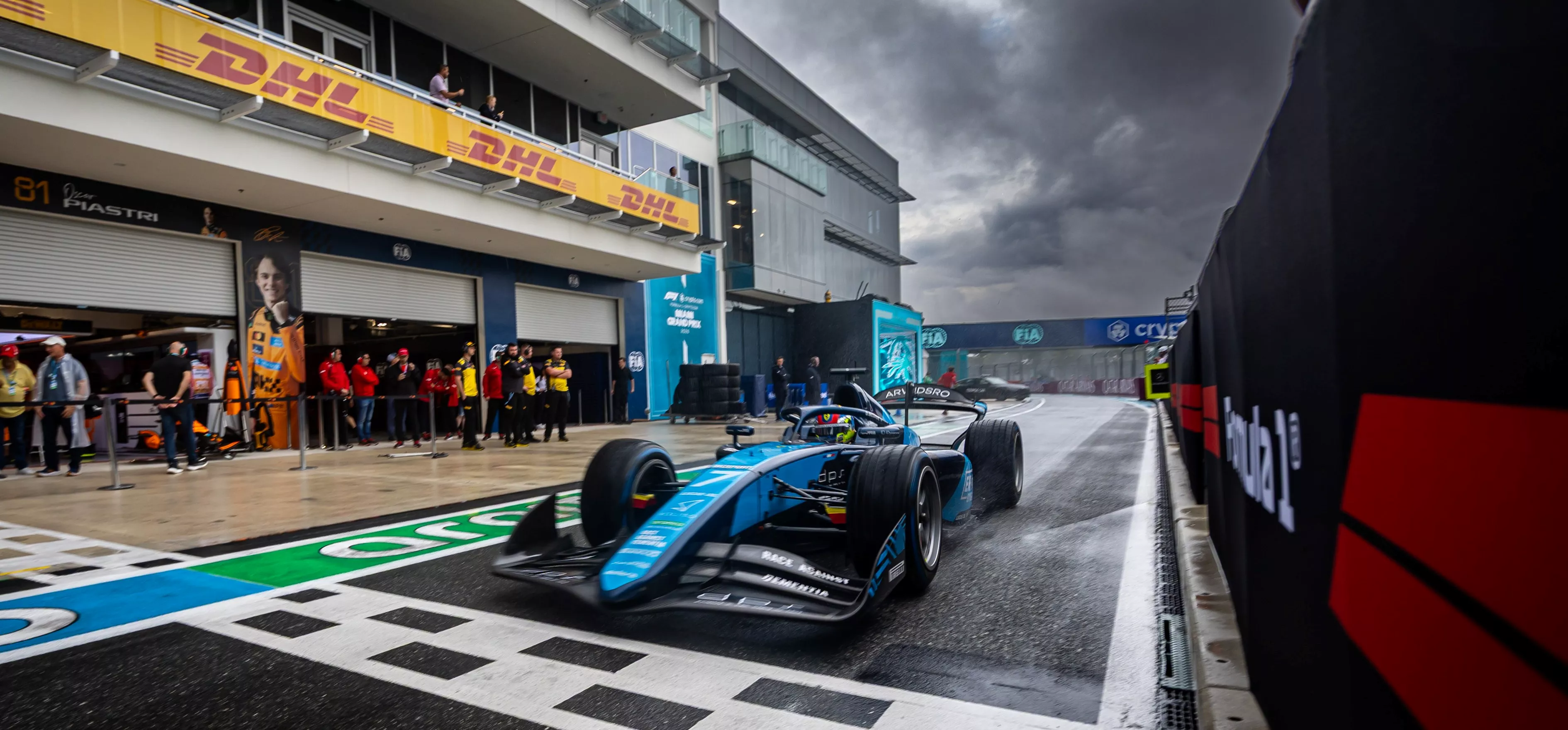
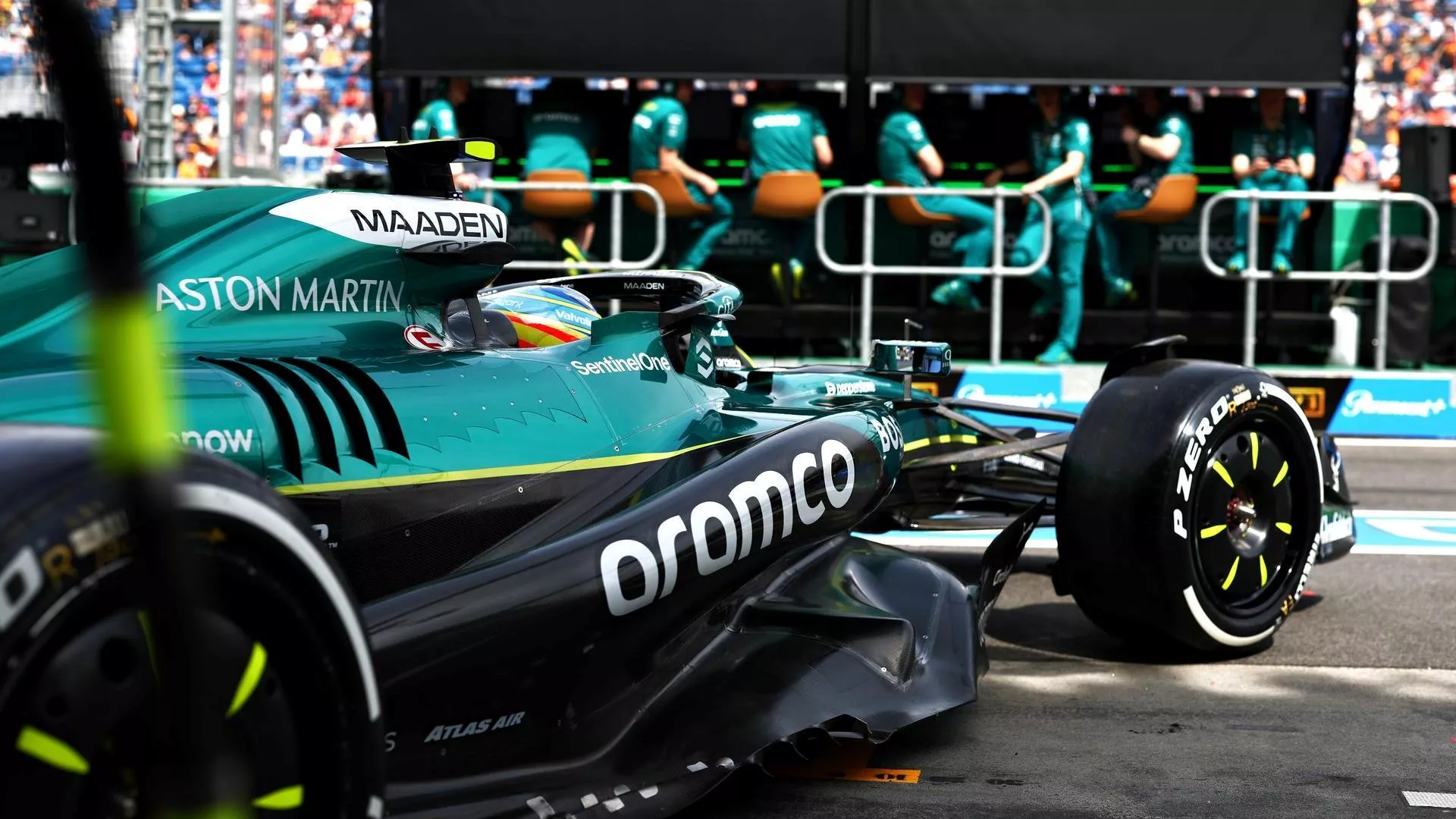
F2 uses much of the F1 infrastructure. Not just garages, and pitwall arrays, but telemetry and safety equipment too
The Herta effect
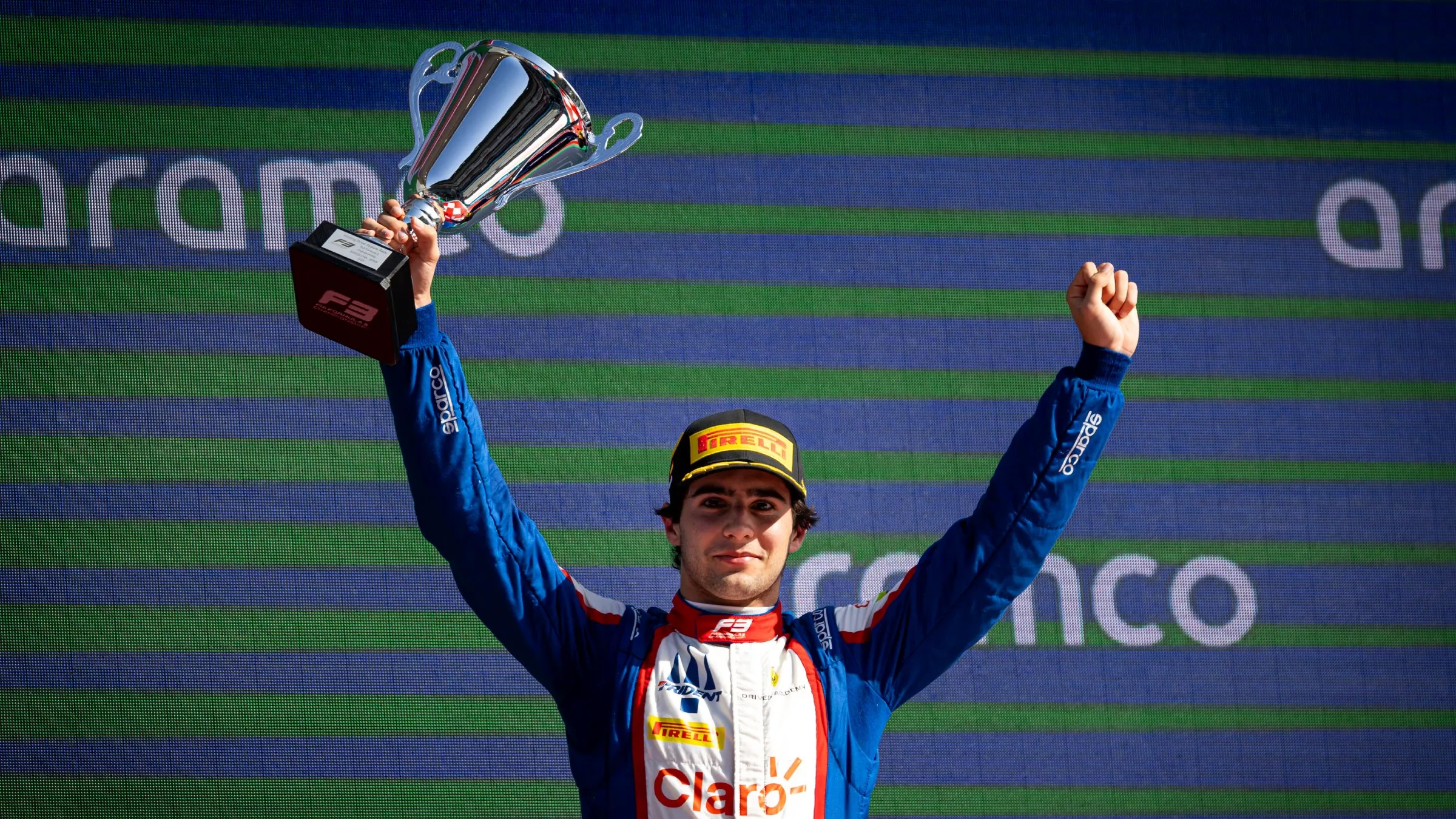
Timing proved fortuitous in one respect. F2 happened to arrive in North America with two drivers who could genuinely play to a home crowd: Sebastian Montoya, already part of the F2 grid in 2025, and Colton Herta, the IndyCar race winner who made the switch to F2 this season.
For the promoters in both Miami and Montreal, Michel described it as an unplanned bonus - and it was the same for both Herta and Montoya.
For Herta specifically, people are watching F2 with closer interest - acknowledging the culture shift involved in moving from IndyCar to the tightly formatted, F1-adjacent world of F2, and Herta’s eventual goal of earning the Cadillac F1 seat.
The broader ambition is clear, however. Michel sees F2's North American presence as important not just commercially, but structurally, as a pathway for American drivers to race in F2 and F1, just as many F2 drivers gravitate to IndyCar.
"There are as many drivers in America as there are in Europe," he said. "At the moment, it doesn't pass very much from one to the other. And that's what we want to improve."
"We had never been in North America before. It's very important for F2 to be there, to be seen - and for American drivers to be willing to come to F2 and try to reach F1 after that."
“I hope Colton is going to… set an example. I really, really hope that he's going to do well this year, and I'm confident about it because he’s a very, very strong driver. He’s a very talented driver.”
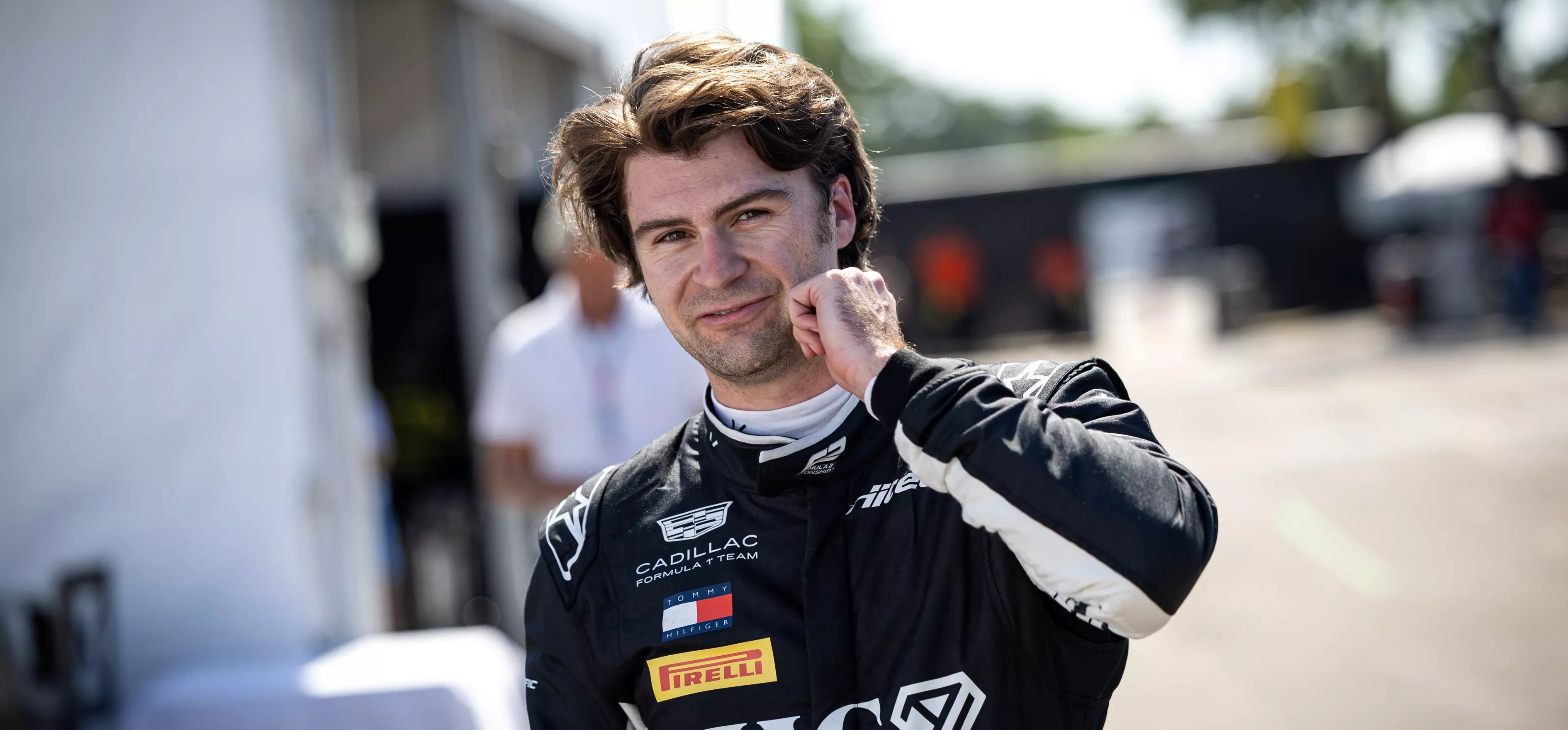
Colton Herta is looking to earn a full-time Cadillac F1 race seat with a strong debut F2 season with Hitech
Will North America become a fixture for F2?
Michel was careful to distinguish between the two venues of Miami and Montreal when discussing the future.
Montreal is actively in discussion for a more permanent place on the calendar. Miami is a more complicated proposition: the support-race congestion that made this year's arrangement logistically difficult would persist, and no formal talks about future appearances have yet begun.
The disruption that forced F2's hand may, in hindsight, have accelerated an expansion that was always on the horizon.
As Michel put it: "We had to be against the wall to do it - but it was in the plans anyway. Let's say, we anticipated it slightly."
What began as a crisis-management exercise - two cancelled rounds, a calendar to salvage, and a paddock insert into an already bustling complex - has ended up as something more significant.
F2 arrived in North America as another support race to F1 - and has ended up telling its own, compelling story.
.webp?cx=0.5&cy=0.5)