Event
Nurburgring 24 Hours: How Race Control manages the world’s longest racetrack
by Shanna Lutgert
7min read
.jpg?cx=0.5&cy=0.5)
The Nurburgring is the world's longest racetrack. Set a fast lap time there and you've got bragging rights. Complete the Nurburgring 24 Hours, and your ability is unquestionable.
Sign up for a newsletter and we'll make sure you're fully up-to-date in the world of race technology
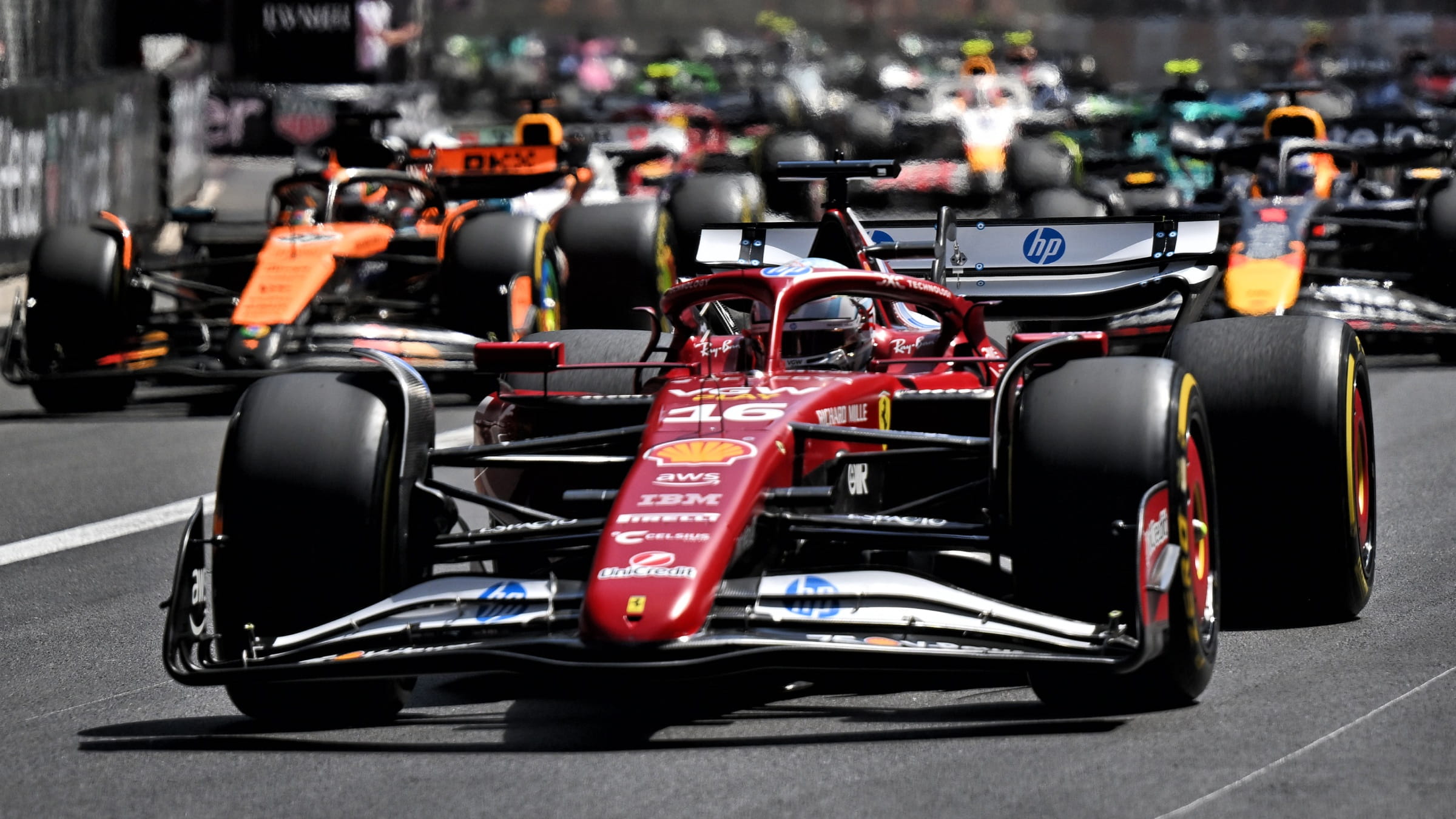
Red Bull Formula 1 driver Max Verstappen made headlines in May, bringing record crowds to the famous circuit as he attempted the gruelling 24-hour race - before a driveshaft failure ended his team's bid.
But beyond the celebrity storyline, the race itself deserved its moment in the sun. A monumental layout of 170 corners over 25.4 kilometres of tarmac, it's no wonder the Nurburgring is nicknamed 'The Green Hell'.
Which raises an obvious question: how do you referee and control a race that spans such a distance?
The Nurburgring 24 Hours - a race unlike any other
This year, rain hung over the Nordschleife the whole weekend - through preparations, qualifying and into the night stints. The weather had a typical local flair: unpredictable, damp, and capable of changing the complexion of the race within minutes.
For race director Walter Hornung, the conditions are only one part of managing an event that stretches across the world's most complex and demanding circuit.
.jpg?cx=0.5&cy=0.5)
Nurburgring 24 Hours race director Walter Hornung in front of the bank of screens that monitor 80 cameras across the Nordschliefe and GP track
The scale of the operation he oversees is enormous. The Nurburgring 24 Hours operates differently from almost any other major endurance event, as accidents are managed through intervention zones, GPS monitoring and marshals stationed around the circuit.
"We have around 80 cameras around the Nordschleife and also here on the GP track," Hornung explains. "We have, in summary, a thousand marshals."
Those marshals work in two shifts, meaning around 500 are active trackside at any given moment. Inside race control, a wall of 91 screens displays different camera angles, GPS data and onboard feeds.
Between 30 and 40 people are present in the main control room at all times, including the chief safety officer and members of the medical and fire response teams - part of a wider group of 50 to 60 who rotate throughout the event.
How Nurburgring race control deals with big crashes
When something goes wrong on track, the response is swift and layered. The first signal comes from a marshal post.
"We get a signal in race control by radio. Then we look at the camera to have an overview," Hornung explains. From there, the decision on how to respond rests with him. "A red flag is only [enforced] by me. If we have a big accident, they call me directly. I'll take a look at the situation and then decide to stop it or not."
A full red flag is rare. The field is only completely neutralised in the case of a severe crash, a guardrail requiring repair, or extreme weather conditions - as happened in 2024, when heavy fog brought the race to a halt. More commonly, race control manages incidents through targeted intervention.
"We do have intervention cars, which are able to drive in traffic during the race. If we have the info from the marshal that there is a problem on the track with a driver or a car, we send the intervention car."
Specialised response units are stationed at different points around the circuit, including extraction teams at Breidscheid (towards the north end of the track) and the GP circuit, along with a dedicated vehicle capable of extinguishing fires and cleaning oil from the track while racing continues around it.
.jpg?cx=0.5&cy=0.5)
Race control monitors a bank of 91 screens
To protect marshals and recovery crews working in those areas, race control activates localised speed-controlled zones.
"We make the area a Code 60 zone. The driver is only allowed to drive at 60 kilometres per hour, to make the area safe for working." Ahead of that zone, drivers encounter a Code 120 area under double yellow flags, permitting 120 kilometres per hour.
The consequences of breaching either limit are serious: former F1 driver Timo Glock lost his Nordschleife licence after driving at 112 kilometres per hour through a Code 60 zone.
Enforcement is immediate. Each car carries a GPS transponder that monitors both position and speed. "There's an automatic function in the software to detect cars that are faster," Hornung says.
The system flags infringements in real time, leaving drivers nowhere to hide.
.jpg?cx=0.5&cy=0.5)
Cars enter a ‘Code 60’ zone as a recovery truck deals with the aftermath of an accident at the Nurburgring 24 Hours
New technology in the 2026 edition of the Nurburgring 24 Hours
For this year's race, race control added another layer of visibility: live onboard cameras from every competing car.
"That way, we have live access to each car and we can watch or replay this - we can see the footage from a day before, or whatever we want," Hornung explains. "Therefore we can react very fast and see what has happened on track, and very quickly send the rescue and medical teams to the incident area."
The same system accelerates penalty decisions. Whether two cars have made contact or a driver has committed a procedural breach - a false start, for instance - race control can review footage and issue a ruling promptly. "It can take maybe a couple of minutes, maybe half an hour, but not longer."
That speed matters, because the Nurburgring presents logistical challenges on a scale that has no parallel in other series. "We have 160 cars and that is a complete difference," Hornung says. "We have a big distance to cover, with huge height differences. Breidscheid is the lowest point and Hohe Acht [on the north-eastern point of the track] is one of the highest - that's very complicated."
Track limits, now heavily monitored in Formula 1 through automated systems and AI-assisted analysis, are largely irrelevant here. "We have no track limits. The Nordschleife is very small and there are no gravel traps - besides one or two. The rest is grass and then the barriers."
The environment polices itself: transgress the edge of the circuit, and the punishment is immediate.
.jpg?cx=0.5&cy=0.5)
Day or night, race control keeps a close watch on everything going on at the Nurburgring. Track limits aren’t an issue, however - the looming barriers are punishment enough
Artificial intelligence and its role in stewarding at the Nurburgring
Race control is experimenting with artificial intelligence, though not yet during competitive events. Currently, AI-assisted systems are being trialled during touristen fahrten - the public sessions where visitors can buy access to the circuit and drive or ride with a professional.
"They do this with AI to see if the car leaves the track," Hornung explains. With fewer marshals deployed during those sessions than on race weekends, the automated detection fills a gap that human eyes alone cannot cover. The next development builds on that foundation. "The next steps are to make a form of a 'campus network' - then all the people who are involved, the cars and the marshals and the drivers, all are members of this network."
The long-term vision is a fully connected infrastructure built around fibre optics and a dedicated network linking cars, marshals and race control in real time. Hornung estimates it will take "maybe four, five years" before AI is properly active on the Nordschleife during racing conditions.
For now, the backbone remains human judgement supported by increasingly sophisticated tools. After nearly two decades as race director, Hornung says he welcomes that evolution. "We develop the rules every year and see where we can adjust a little bit more."
A circuit with history running through its veins - still moving forward behind the scenes to protect the greatest race it hosts.