Career
Xevi Pujolar: The race engineer - what you don’t see on TV
by Xevi Pujolar
6min read

/xpb_1418541_hires-(1).webp?cx=0.5&cy=0.5)
People who follow Formula 1 think they understand the role of the race engineer.
Sign up for a newsletter and we'll make sure you're fully up-to-date in the world of race technology
They hear the radio messages broadcast during the race. They watch the pitwall. They see an engineer guiding the driver through strategy calls, tyre management, or difficult situations in the final laps. That exchange, transmitted live to millions, has become the public image of the role.
In reality, what the public sees is only the visible surface of something far deeper.
What actually happens inside the relationship between a driver and race engineer, across the full arc of a race weekend, is far more complex and far more human than anything that reaches television coverage. After more than two decades operating in Formula 1, one thing becomes very clear: the race engineer sits at the centre of race operations not because of what they know about the car, but because of what they understand about the person driving it.
That distinction is where everything begins.
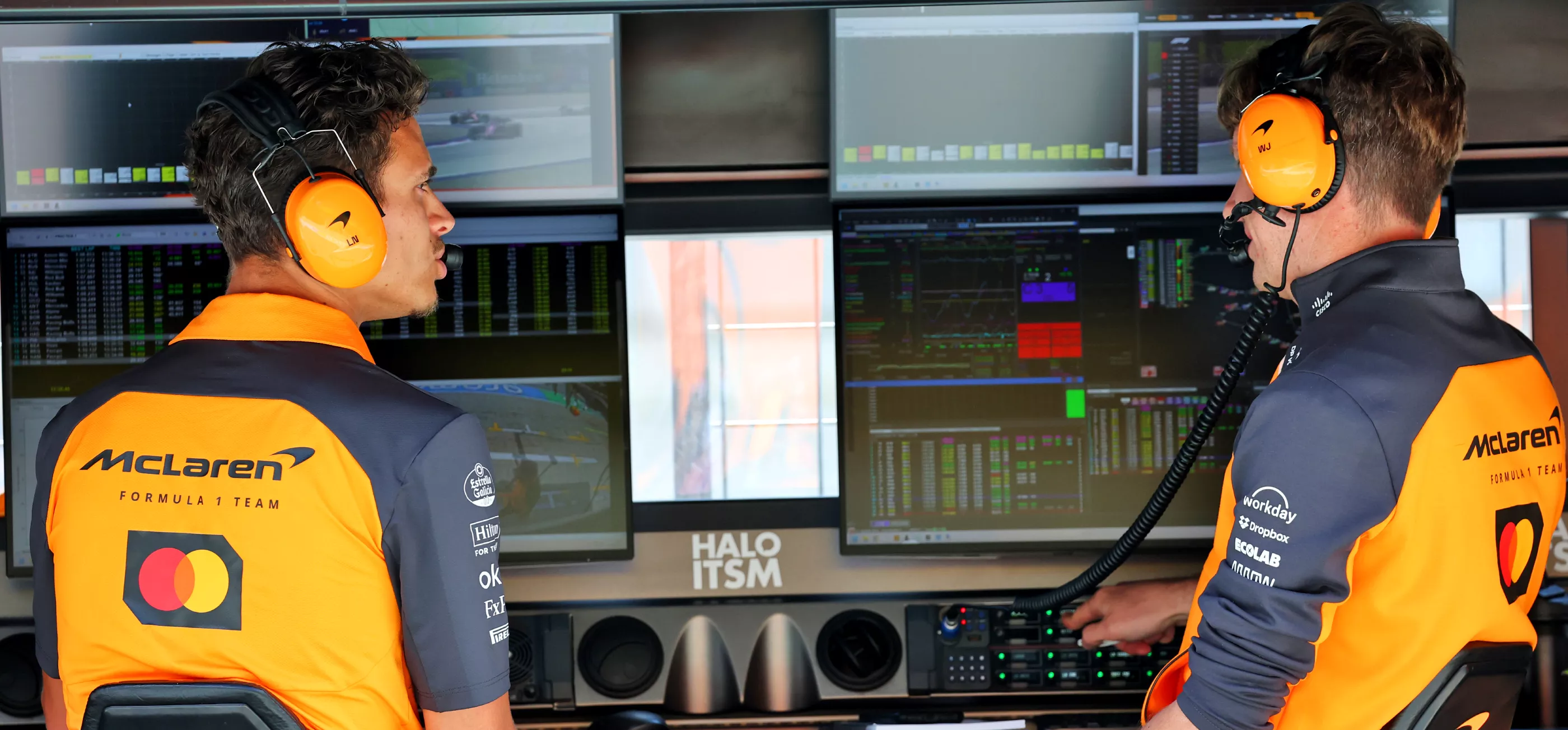
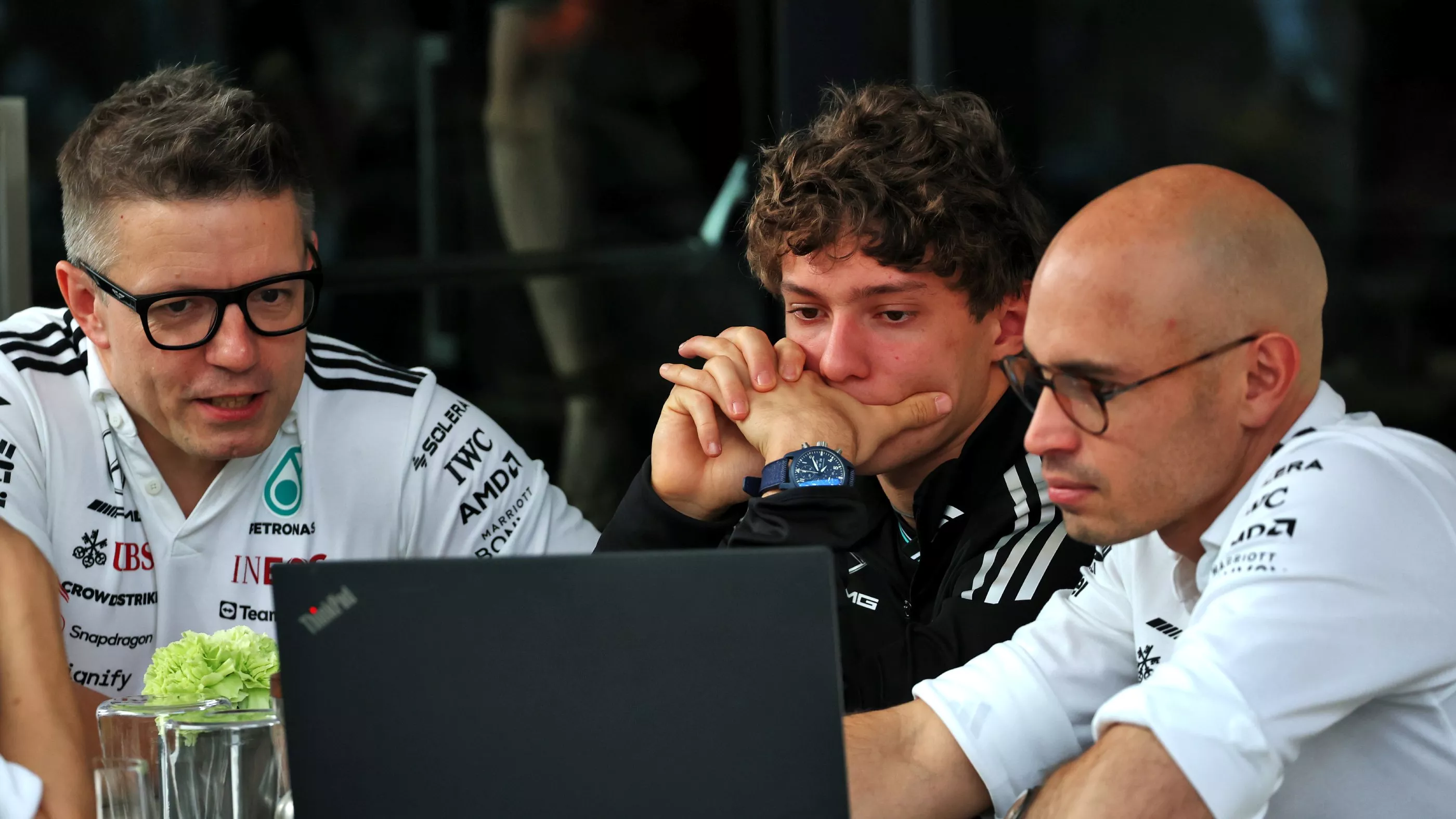
Lando Norris (L) with race engineer Will Joseph (R) studying data on the pitwall
The race engineer role
The race engineer is responsible for the full preparation and execution of the car across the entire race weekend.
That means ensuring the car is built to the correct specification, operating within FIA sporting and technical regulations, and executing the agreed run plans through free practice, qualifying, and the race. It means coordinating mechanics, systems engineers, tyre technicians, fuel and composite specialists.
It means receiving continuous input from aerodynamic performance groups, vehicle dynamics engineers, strategy departments, simulation teams, reliability groups, and power unit specialists, then integrating all of it into one coherent operational direction.
The race engineer is the orchestrator.
The person who takes an enormous volume of specialist information and translates it into something the driver can actually use.
That word, translate, is the one I keep returning to. Because the fundamental skill of a race engineer is not analysis alone. It is translation. Between what the driver feels and what the data shows. Between what the engineering departments recommend and what the driver actually needs.
The better the translation, the faster the car goes.
Modern Formula 1 is technically extraordinary. Before the car even arrives at a circuit, teams have already simulated countless setup permutations, aerodynamic balances, tyre scenarios, energy deployment models, and race strategies.
But despite all of that sophistication, race engineering ultimately remains a human role operating inside a technical environment.
The race engineer must constantly prioritise information under pressure. The race engineer becomes the final filter.
At the highest level, race engineering becomes less about managing the car itself and more about managing the interface between the car, the driver, and the organisation operating behind both.
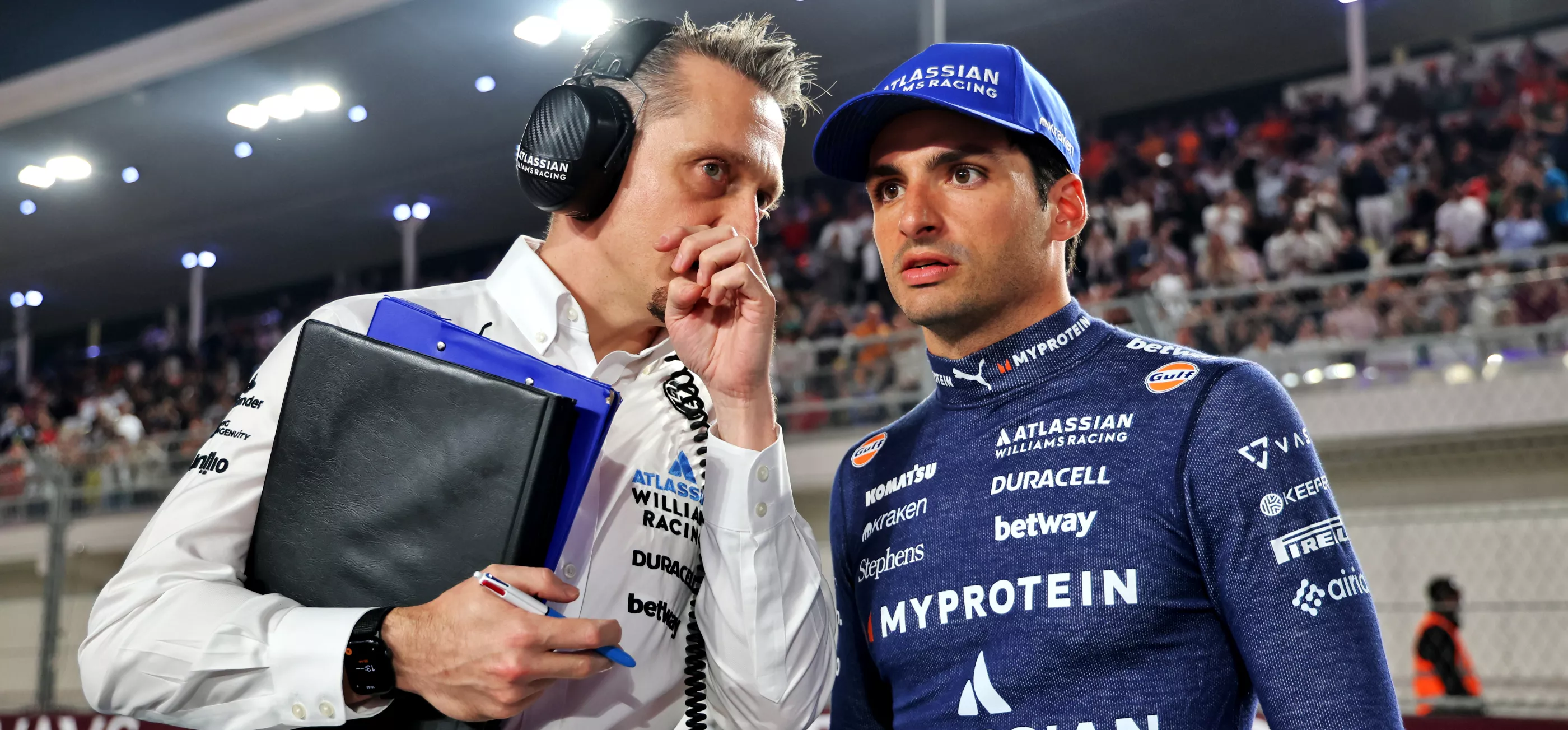
Carlos Sainz (R) with his race engineer, Gaetan Jago (L), on the grid before the 2025 Qatar GP
The driver is the focal point
Modern F1 runs through enormous volumes of interconnected data.
And yet, the driver is still the only sensor capable of fully interpreting the interaction between grip, balance, confidence, and risk while operating at the limit.
Data tells you what happened. The driver tells you what it felt like. Both are necessary. Neither is sufficient without the other.
This is where the role becomes genuinely difficult, because useful feedback is not automatic. It has to be developed.
Good driver feedback is precise, repeatable, and connected to the actual behaviour of the car in the most performance-sensitive phases of the lap. Grip limitation. Balance migration. Braking stability. Mid-corner rotation. Traction phase behaviour. Tyre evolution across a stint.
That type of information creates a clear direction for the engineering group.
When feedback becomes excessively influenced by laptime comparisons, frustration, or the psychological impact of a difficult session, it rapidly loses engineering value. One of the most difficult situations for engineers is when the same car, under nearly identical conditions, suddenly receives completely opposite feedback between runs.
When a car goes from “excellent” to “undriveable” with minimal changes, engineers must work carefully to separate signal from emotion.
The race engineer’s responsibility is to create the conditions where accurate feedback can exist consistently. That requires trust, emotional stability, and communication discipline.
Trust is the foundation
Every driver I worked with across all my years in F1 was different, from Juan Pablo Montoya to Max Verstappen.
Not just in driving style, but in personality, emotional response, communication preference, and how they processed pressure.
Some drivers were highly technical. Others operated far more intuitively, relying primarily on feel and confidence. With those drivers, the same technical information had to be framed differently in order to become useful.
The communication style had to adapt for each individual. The content could not.
One of the biggest mistakes a race engineer can make is becoming a ‘yes-man’. In the short term it may feel like relationship-building. In reality it destroys trust.
When the engineer recommends a set-up direction, it is based on conviction and evidence.
When a difficult debrief happens after a poor session, the message will not be softened simply to preserve the atmosphere.
Directness, maintained consistently and professionally, is what builds the respect that allows the relationship to perform under pressure.
Without trust, even the most talented driver begins operating behind a psychological filter. That hesitation always costs performance.
To build that trust, the race engineer must understand more than the driver’s engineering profile. They must understand the person.
F1 drivers today operate under enormous external pressure. Around them sit trainers, managers, sponsors, psychologists, media obligations, and commercial commitments.
Yet despite all of that, the primary operational connection around the car still remains the race engineer.
That relationship is still the central human link inside race operations.
.webp?cx=0.5&cy=0.5)
Kimi Antonelli (L) and race engineer Pete Bonnington smile for the cameras in Montreal
.webp?cx=0.5&cy=0.5)
Protecting that performance
One responsibility of the race engineer that rarely gets discussed publicly is the role of the operational shield.
Modern F1 drivers carry significant obligations outside pure performance. Media appearances, sponsor activities, and commercial commitments constantly surround the race weekend.
Those obligations are legitimate and necessary.
But when critical performance windows arrive, the driver needs to be mentally present.
Part of the race engineer’s role is creating a protected operational space around those moments. Building a rhythm across the weekend that allows the driver to arrive at qualifying or the race in the correct mental state.
That is not soft management.
It is performance engineering applied to the human variable instead of the mechanical one.
The wider organisational environment matters equally.
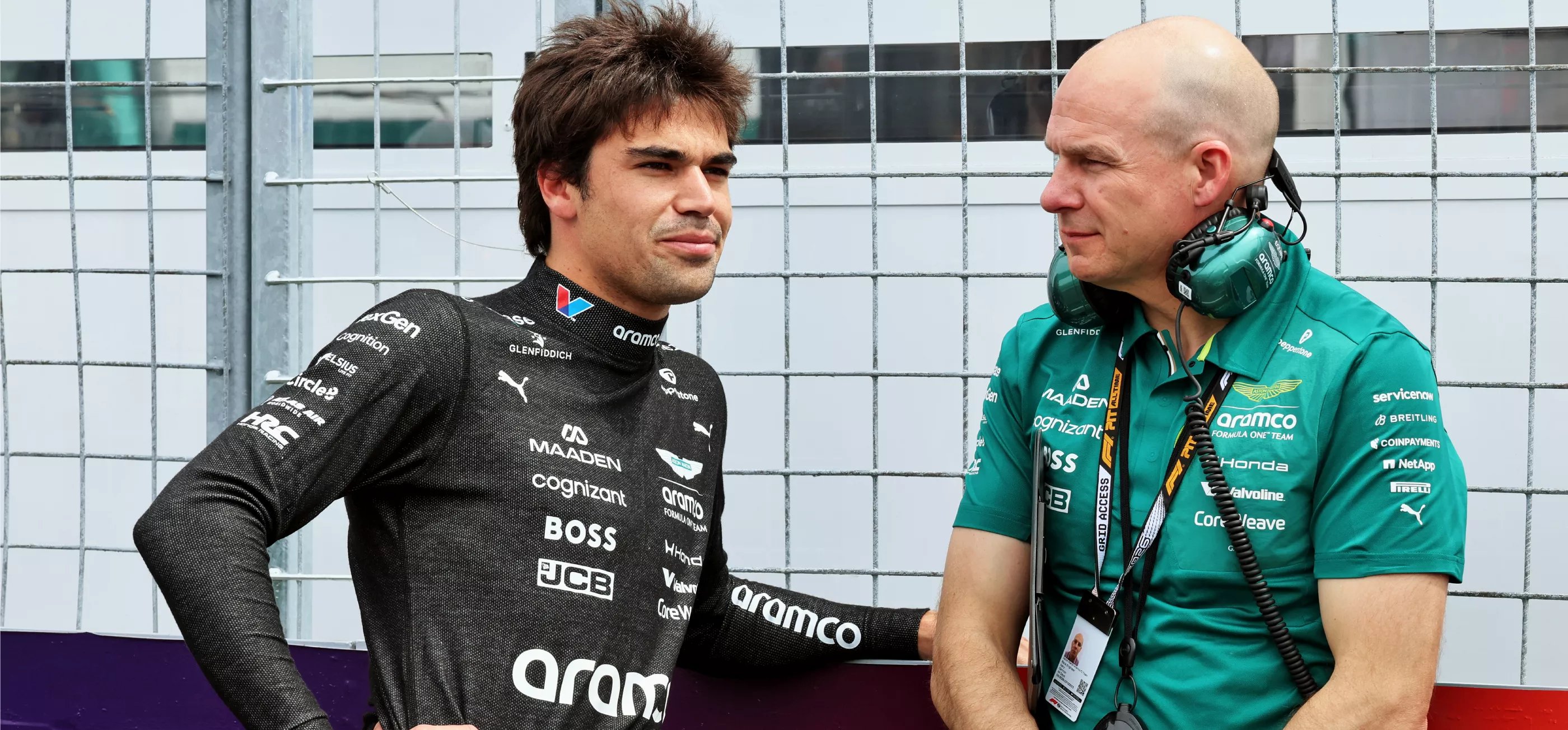
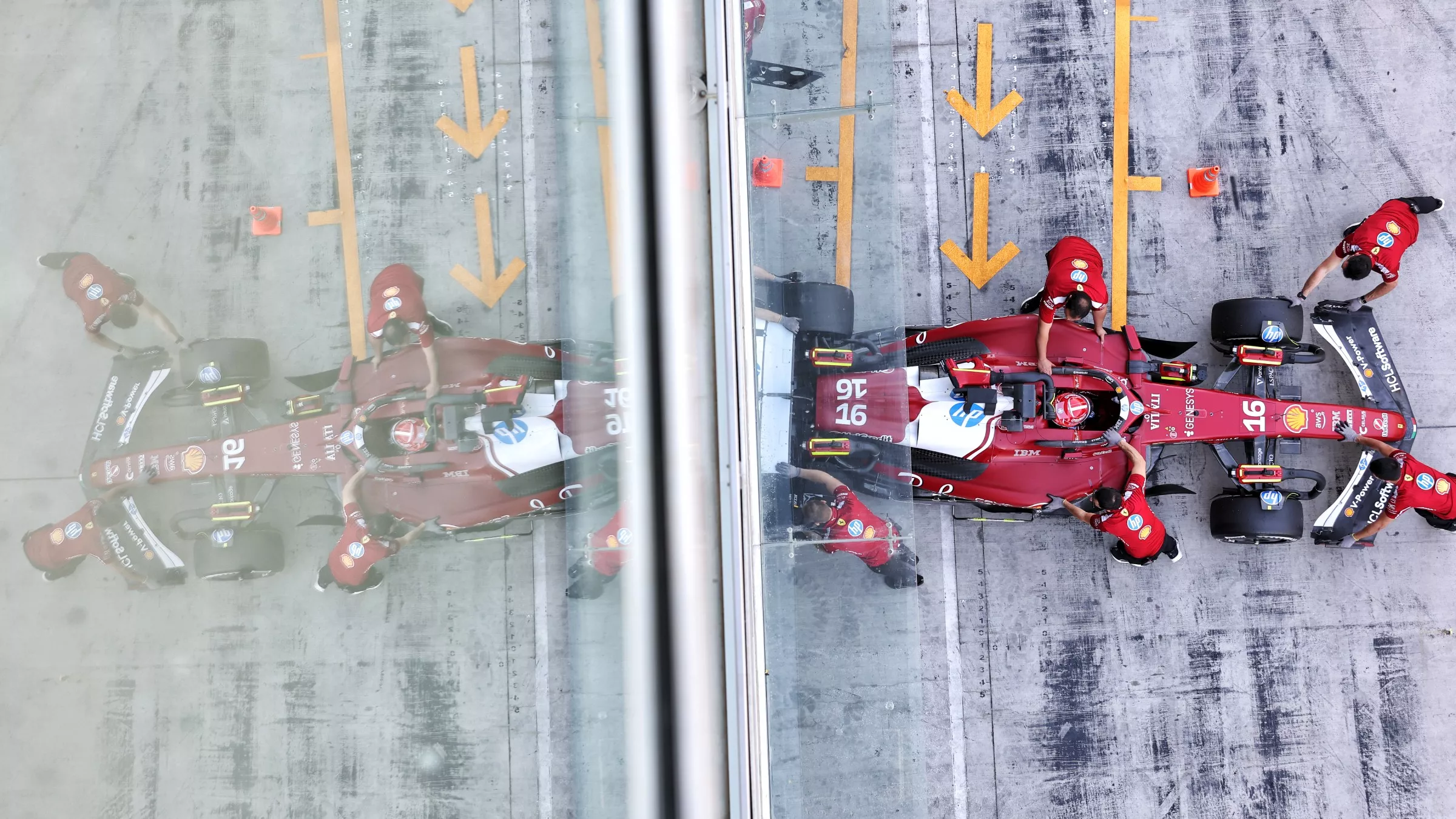
Lance Stroll (L) with his race engineer Gary Gannon (R) on the grid
In large organisations, communication chains become longer, political friction becomes more likely, and instability can spread quickly. Unclear direction and internal tension inevitably bleed through to the driver.
Even the best race engineer can struggle to maintain an optimal performance environment if the organisation itself is unstable.
The best teams are not always the largest or even the most technically advanced.
Very often, they are the ones where alignment exists. Where communication is clear. Where departments trust each other. Where the driver feels supported by the structure around them.
Drivers can feel organisational alignment extremely quickly.
They can also feel instability extremely quickly.
When the car leaves the garage
All of the preparation eventually converges into a single moment when the car leaves the garage.
The simulations. The set-up work. The debriefs. The analysis. The relationship-building.
Everything compresses into real-time execution.
From that point onward, the race engineer becomes the final operational interface between the driver and the entire organisation behind them.
Continuous information arrives from strategy, systems, tyre analysis, weather, reliability, and supporting engineering groups. The race engineer must filter all of it in real time, communicate the decisions that matter, and absorb the information that does not.
The role requires constant situational awareness while remaining emotionally controlled under pressure.
When it works, the feeling is unlike almost anything else in professional sport.
Even though F1 is, fundamentally, a team achievement, the race engineer operates extremely close to the execution phase. Success feels deeply personal because you are directly attached to the outcome.
The opposite is equally true.
When things fail, the emotional impact is severe because you are equally attached to that outcome.
The teams that sustain performance across an entire season are the ones capable of processing pressure constructively without allowing emotion to destabilise the next execution.
That reset capability is one of the most underrated competitive advantages in motorsport.
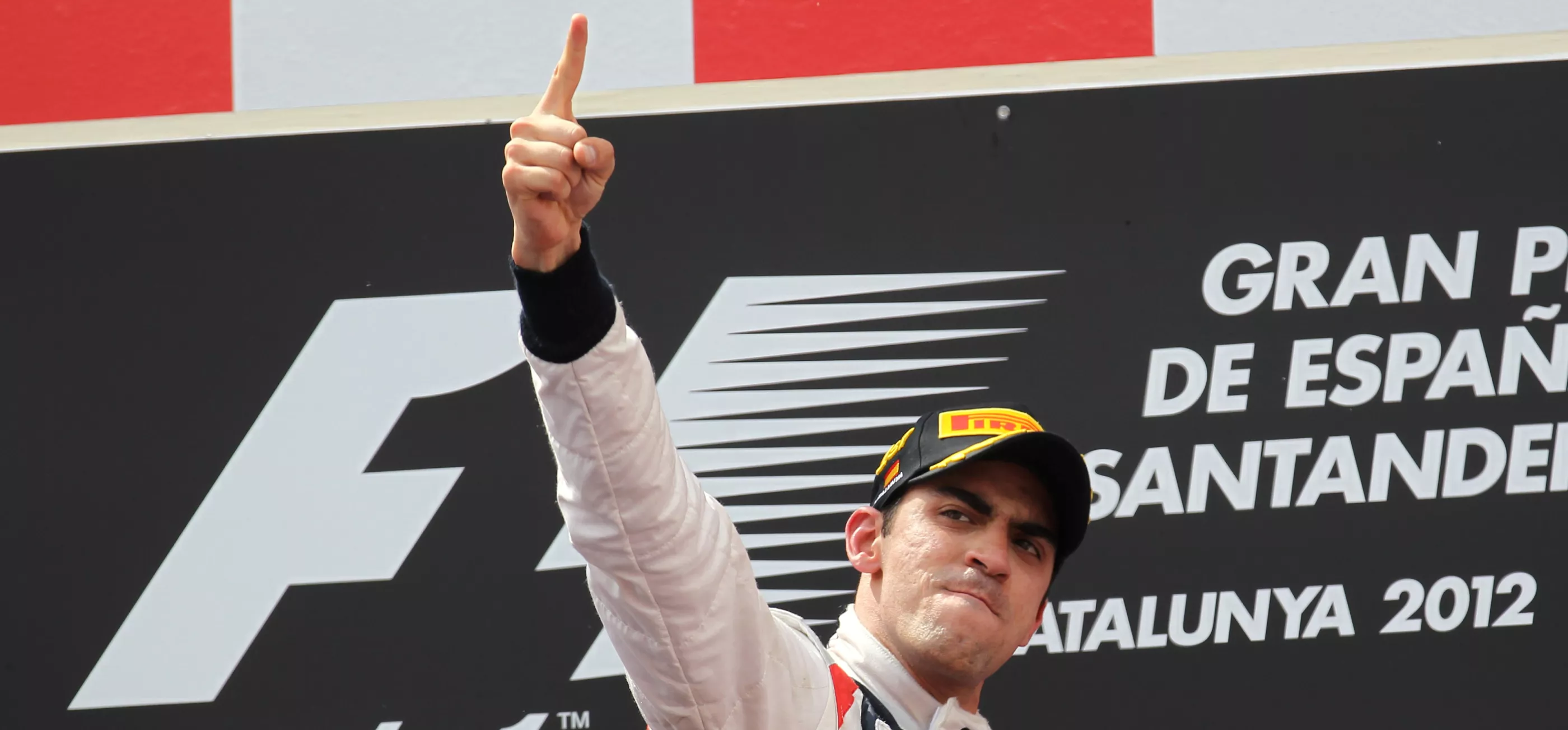
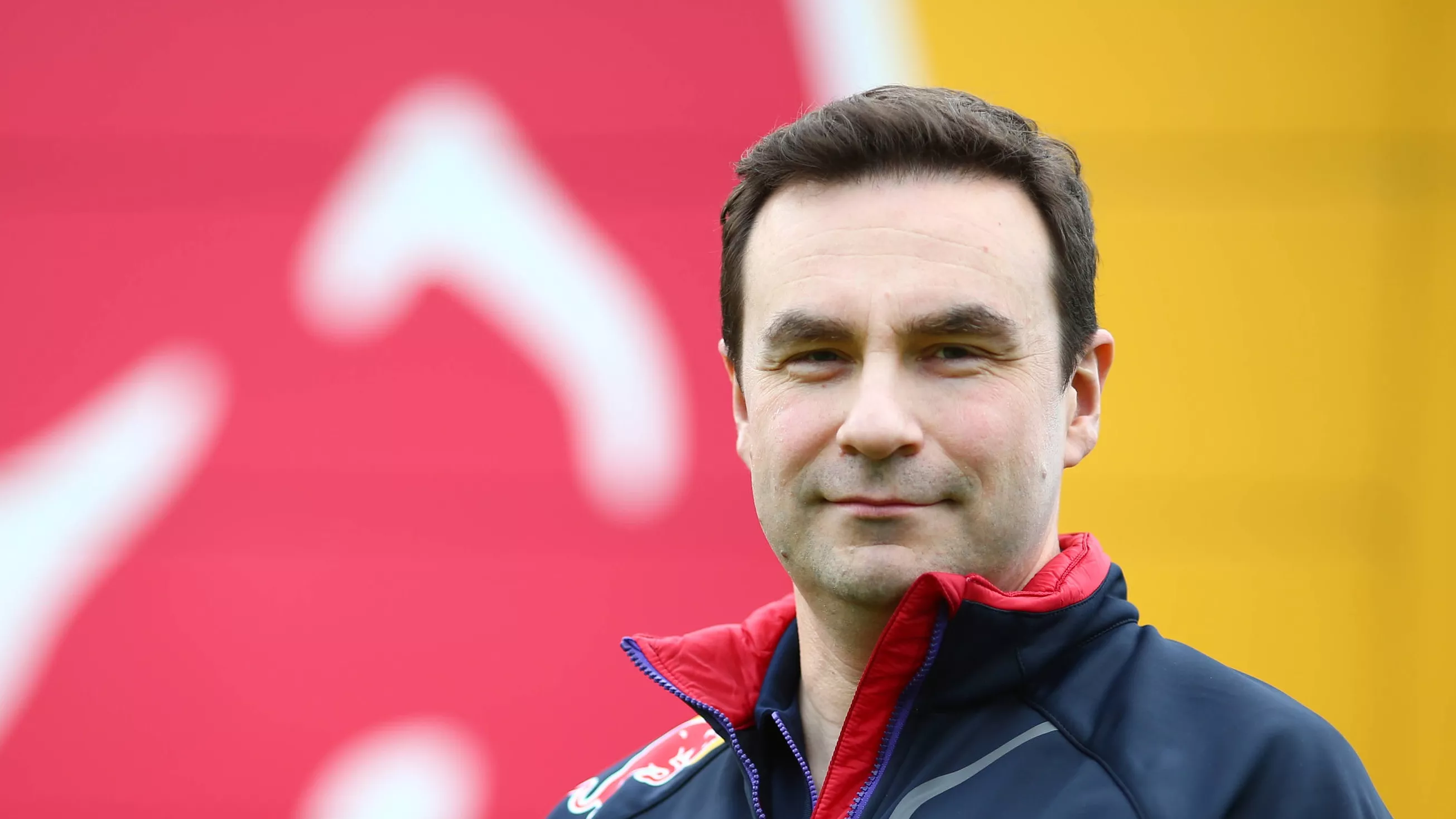
Pastor Maldonado’s first and only grand prix win took place at the 2012 Spanish Grand Prix - with Xevi Pujolar as his race engineer
Collective Flow at the Limit
Everything described across these pages points toward the same underlying reality.
Individual performance, however exceptional, always has a ceiling.
A driver may reach flow state inside the cockpit. An engineer may operate at the peak of analytical capability. A strategist may make brilliant decisions.
But if the surrounding organisation cannot synchronise those individual performances into one coherent system, the overall ceiling remains limited.
What Formula 1 at the highest level truly requires is collective flow.
The entire organisation - driver, engineers, mechanics, strategists, and factory departments - is operating in alignment under extreme pressure and time constraints.
Not a collection of brilliant individuals.
A unified system.
Building that system is not purely a technical challenge.
It is fundamentally a human one.
It requires clarity of roles, communication quality, trust structures, emotional stability under pressure, and a decision architecture capable of functioning without friction precisely when the stakes are highest.