Car
F1 and F2 pitstops compared: the seconds that can make or break a race
by Samarth Kanal
6min read
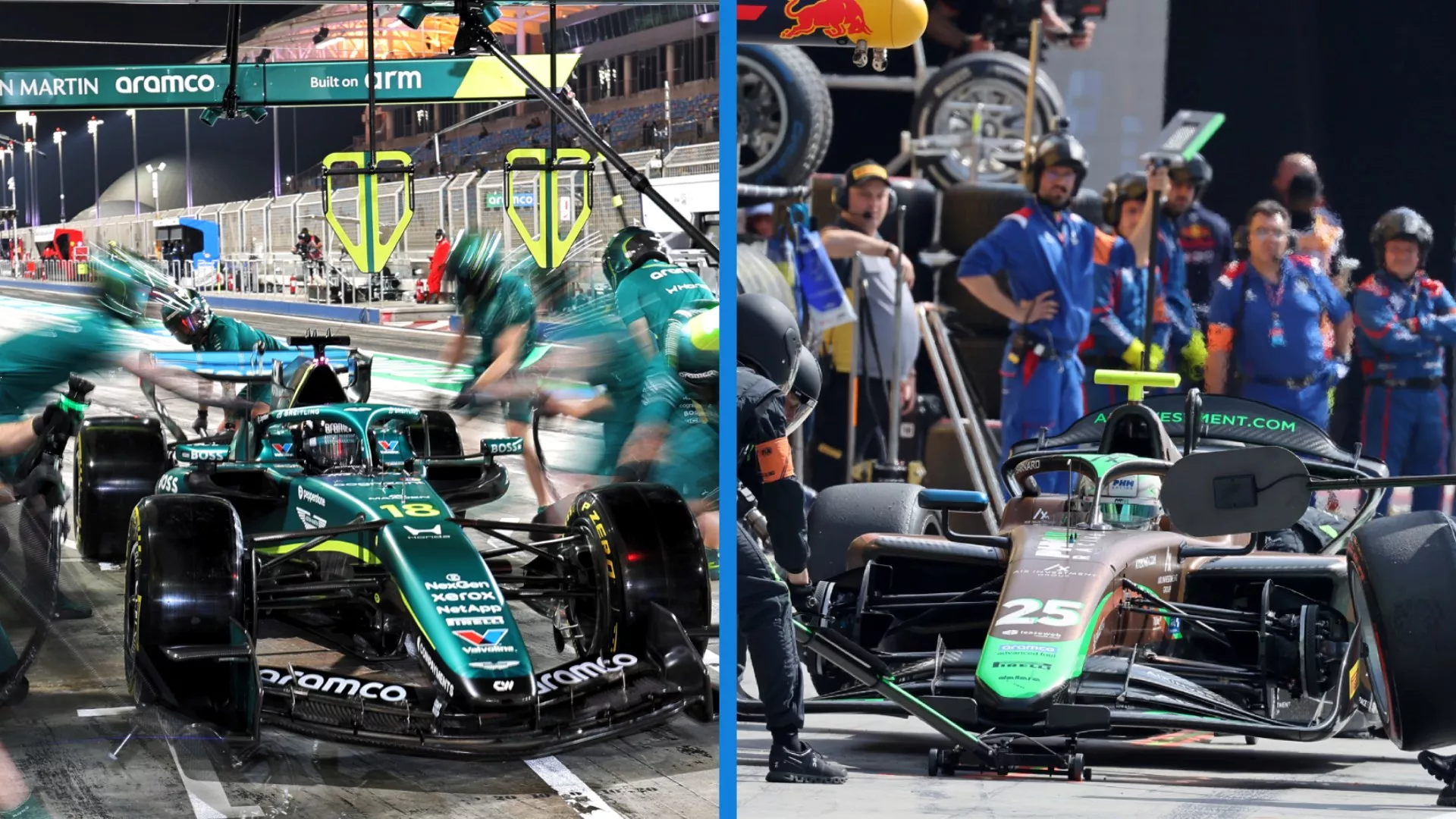
A pitstop is a pitstop - or so it might seem - but the gulf between a Formula 1 tyre change and its Formula 2 equivalent is vast.
Sign up for a newsletter and we'll make sure you're fully up-to-date in the world of race technology
When a Formula 1 car dives into the pitlane, the spectacle is almost surgical.
Up to 24 mechanics descend on the car in a choreography so refined that the best teams can change all four tyres in two seconds or under. In 2023, McLaren set the official world record, changing all four tyres of its F1 car in just 1.80 seconds.
Formula 2, by contrast, operates in a fundamentally different world. Teams are smaller, budgets are tighter, and the regulations are deliberately simpler.
A typical F2 pitstop takes between four and seven seconds - not because the mechanics are less skilled, but because the rules, equipment, and surrounding infrastructure are structured entirely differently.
| Rank | Driver | Team | Race | Time (s) | |
| 1 | Lando Norris | McLaren | 2023 Qatar GP | 1.80 | |
| 2 | Max Verstappen | Red Bull | 2019 Brazilian GP | 1.82 | |
| 3 | Alex Albon | Red Bull | 2020 Portuguese GP | 1.86 | |
| 4 | Max Verstappen | Red Bull | 2020 Russian GP | 1.86 | |
| 5 | Max Verstappen | Red Bull | 2019 German GP | 1.88 | |
| 6 | Max Verstappen | Red Bull | 2021 Hungarian GP | 1.88 | |
| 7 | Max Verstappen | Red Bull | 2020 Spanish GP | 1.90 | |
| 8 | Alex Albon | Red Bull | 2020 Sakhir GP | 1.90 | |
| 9 | Max Verstappen | Red Bull | 2024 Chinese GP | 1.90 | |
| 10 | Oscar Piastri | McLaren | 2024 Mexico City GP | 1.90 |
The equipment behind a pitstop
The most immediately visible difference lies in the wheelguns. F1 teams use bespoke pneumatic or electric wheelguns. Dino Paoli, an Italian company, is one particular supplier of these wheelguns.
While F1 teams are secretive about the tools that give them a performance variable, Dino Paoli’s F1-specification wheelguns can be purchased off the shelf.
A dive into their technical datasheets shows that F1-spec wheelguns weigh just over 3kg and deliver up to 4,300 newton-metres of torque (turning force). For comparison, the world’s fastest road car, the Koenigsegg Gemera, produces up to 2,750 Nm of torque using both its combustion and electric motors.
F1 wheelguns are fed by a pneumatic supply that compresses air to provide the torque needed for the gun to spin and attach or remove the wheelnut.
Meanwhile, F2 teams must use single-spec electric wheelguns. Instead of a hydraulic supply, these units include a battery that needs to be charged between uses.
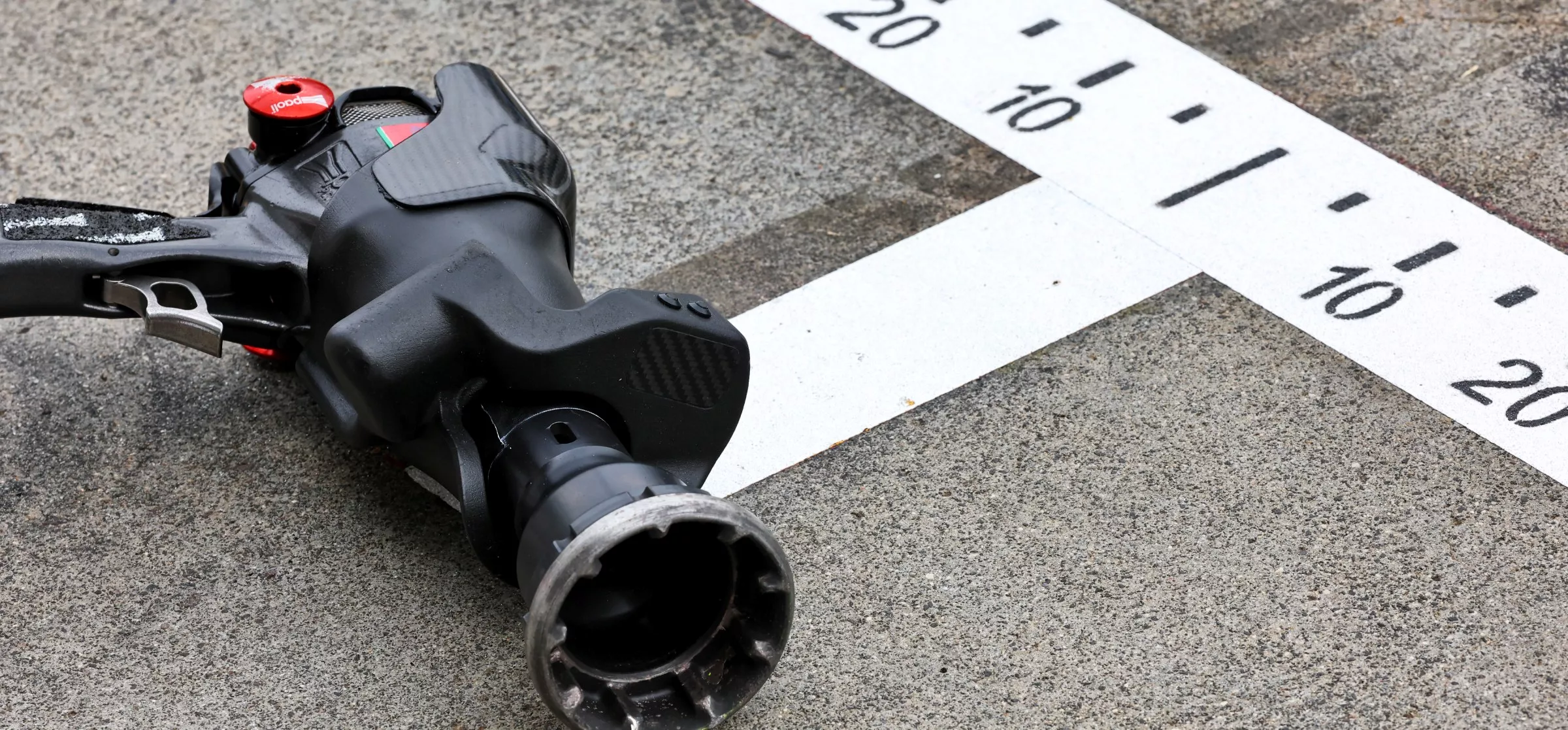
A Formula 1 pitgun made by Dino Paoli with rain cover attached, lying next to marking denoting the position where a driver must stop for an optimal pitstop
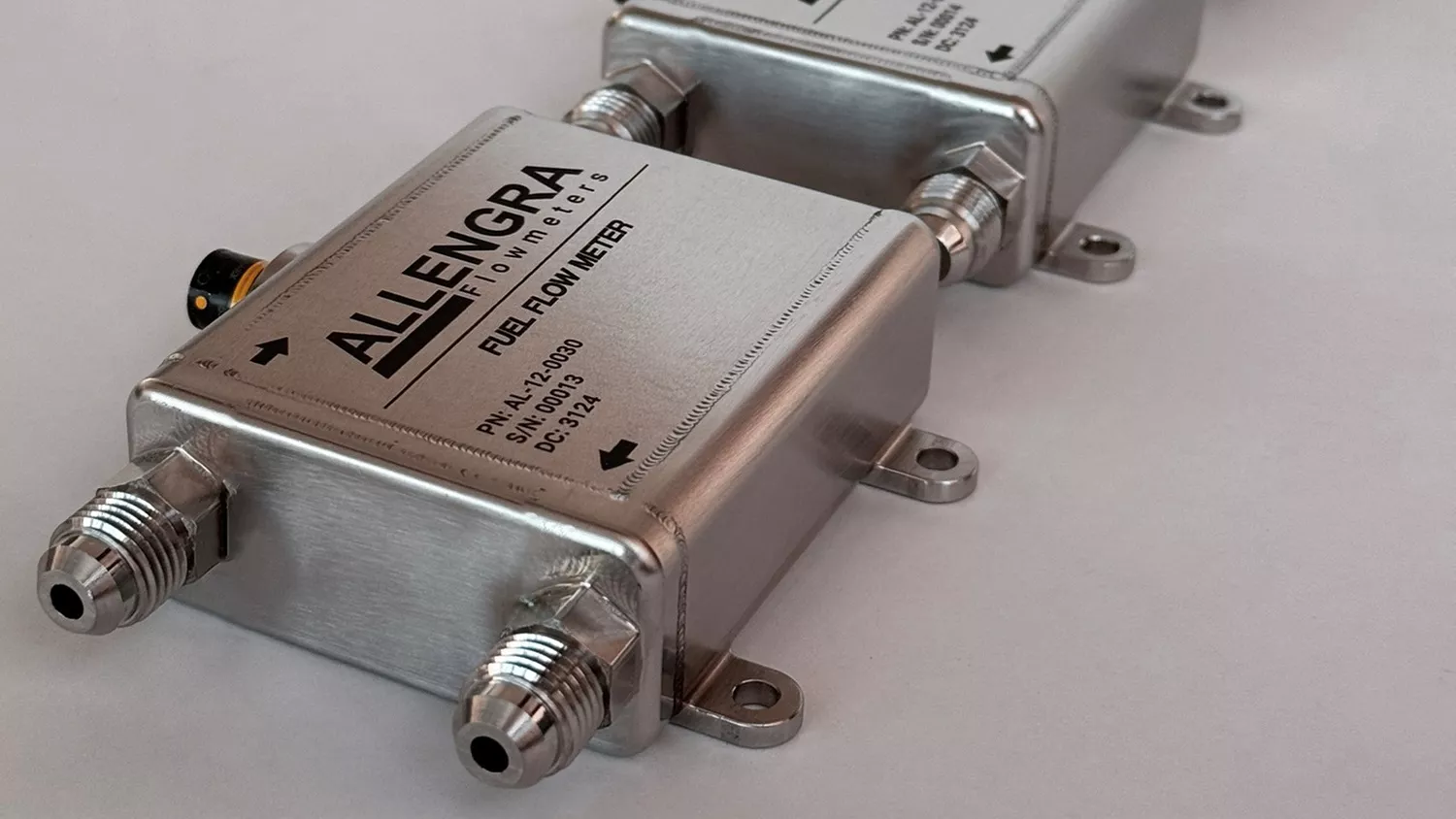
F2 doesn’t divulge the specification of its wheelguns, but an equivalent-spec version weighs just under 4.5kg, producing up to 1,600Nm of torque.
F2 CEO Bruno Michel said that the championship switched from hydraulic to electric wheelguns in 2023 for the following reasons: “The number one reason behind this change is to get the pitlane much cleaner than it was before and, by doing that, much safer,” he said.
“If you looked at all the equipment teams used to have in the pitlane, there was so much with the bottles of air, the gantries and everything needed for those old wheelguns. Now, we’ve made it much simpler andsafer.”
Pitstops are still a performance differentiator in F2 - particularly in the feature races, tyre changes are essentially mandatory - but they’re not quite as fast as those in F1. The tools, however, aren’t the reason for this.
Front and rear jacks are also standardised in F2; F1 teams will build their own for their car. As F1 cars differ from team to team, the jack needs to be built to fit the car exactly.
If a front wing needs to be replaced, this will add time onto a pitstop. Mechanics will enter keys into three holes - two on the wing and one on the body - to remove the wing, and then slot the new wing on and tighten it using the keys.
Depending on the damage, this can add between 10-20 seconds to a pitstop in either F1 or F2.
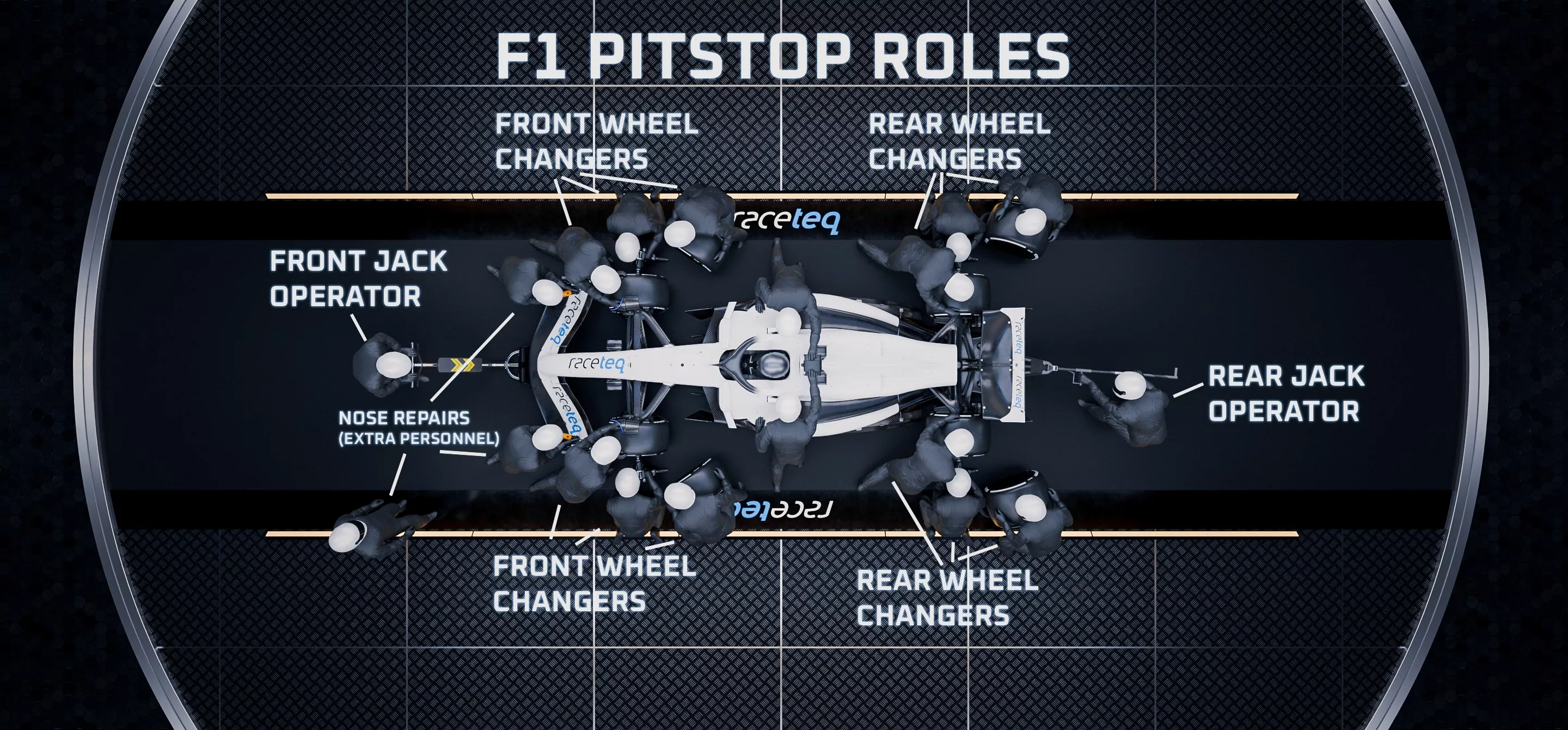
A diagram showing the roles of F1 pitcrew
Crew size and specialisation
A full Formula 1 pitcrew during a race stop involves 20-25 working on the car at once: three mechanics per wheel (one on the gun, one stabilising the wheel off, one fitting the new tyre), plus a front jack operator, a rear jack operator, a lollipop person or traffic light controller, a fire extinguisher holder, and additional crew managing brake cooling ducts, front wing adjustments, and any other changes that may be needed during the stop.
F2 operates with a leaner set-up.
The regulations permit a smaller crew, and with fewer personnel available per team across a race weekend, mechanics often carry out multiple roles. Where an F1 team will fly 50 or more staff to a race, an F2 operation includes just 12 operational staff trackside.
Six people will service an F1 car during a pitstop - one on each wheel plus a forward and rear jack person. The seventh team member will hold a sign and signal to the driver when they’re ready to be released.
Both championships have impressively competent pitstops but, with fewer staff, it takes longer to change all four tyres on an F2 car than it does in F1. The result, either way, is an impressively choreographed spectacle.
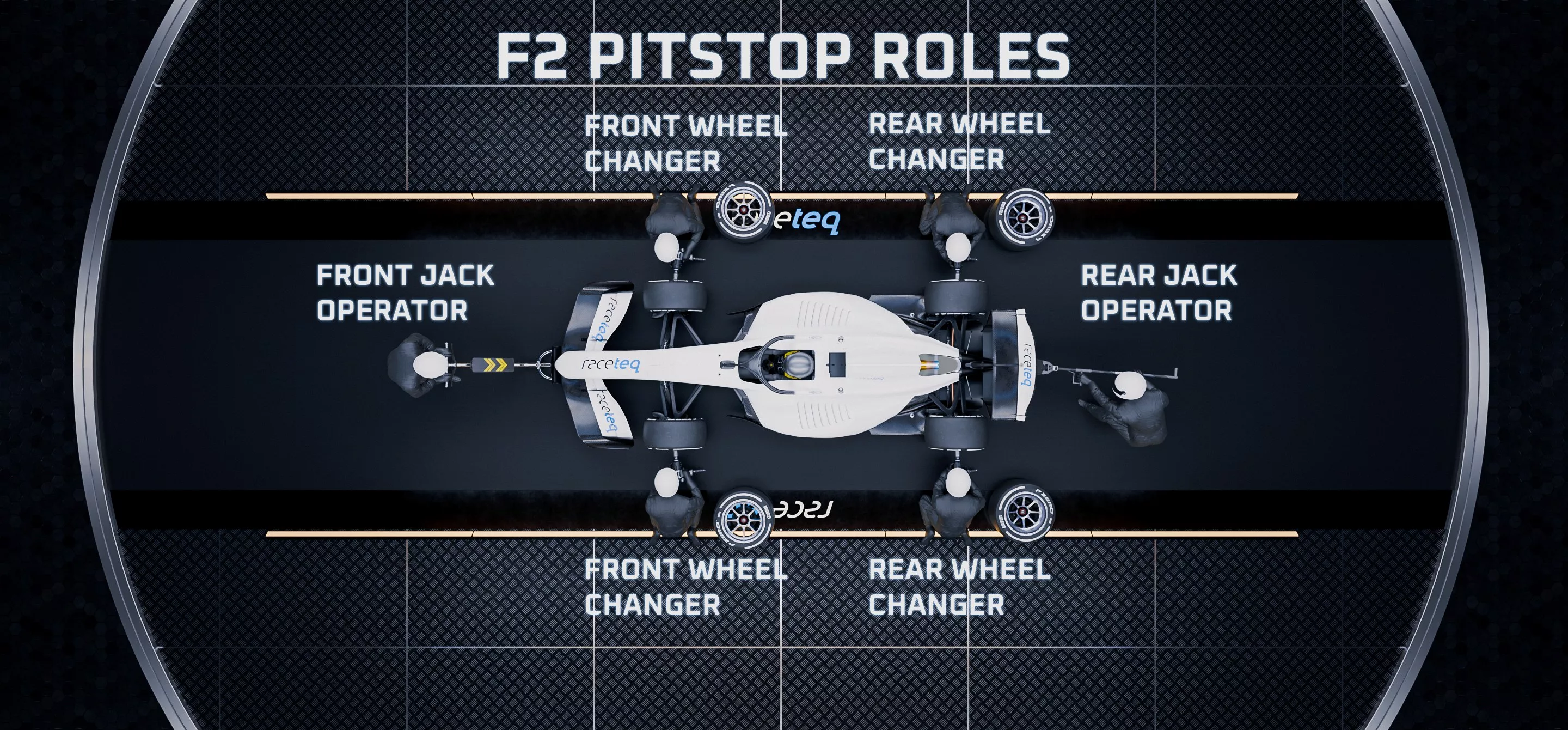
A diagram showing the roles of F2 pitcrew
/xpb_1418541_hires-(1).webp?cx=0.5&cy=0.5)
When a pitstop goes wrong
Visit a racetrack and you might see boards that say ‘Motorsport is dangerous’. In the tight confines of an F1 pitlane this warning often materialises.
A driver has four marks to hit when they stamp the brakes - marked by teams on the ground - and stop their car in the pitbox. Sometimes, they can overshoot, and the front jack person is most likely to be left bruised or even worse as an F1 or F2 car hits them.
As pitlane car speeds circle around 40-50mph in F1 and slightly less in F2, one can only imagine how painful this can be.
The tyres themselves also need to be fitted tightly to the tyre. If the wheelgun hasn’t completely locked into the nut, or the tyre changer has released their wheelgun prematurely, the tyre itself can fly off and bounce around the pitlane.
A wheel weighing 18kg, as in F1, can cause significant damage and, therefore, an unsecured tyre normally results in a time penalty for a driver.
Furthermore, if a driver is released into traffic from their pitbox, the team could receive a monetary or time penalty under the ‘unsafe release’ clause.
Long gone are pitlane fires; refuelling has been banned in F1 since 2010.
It can, and often does, go wrong. When pitlane mistakes happen, it’s always a relief when a team member escapes unscathed.
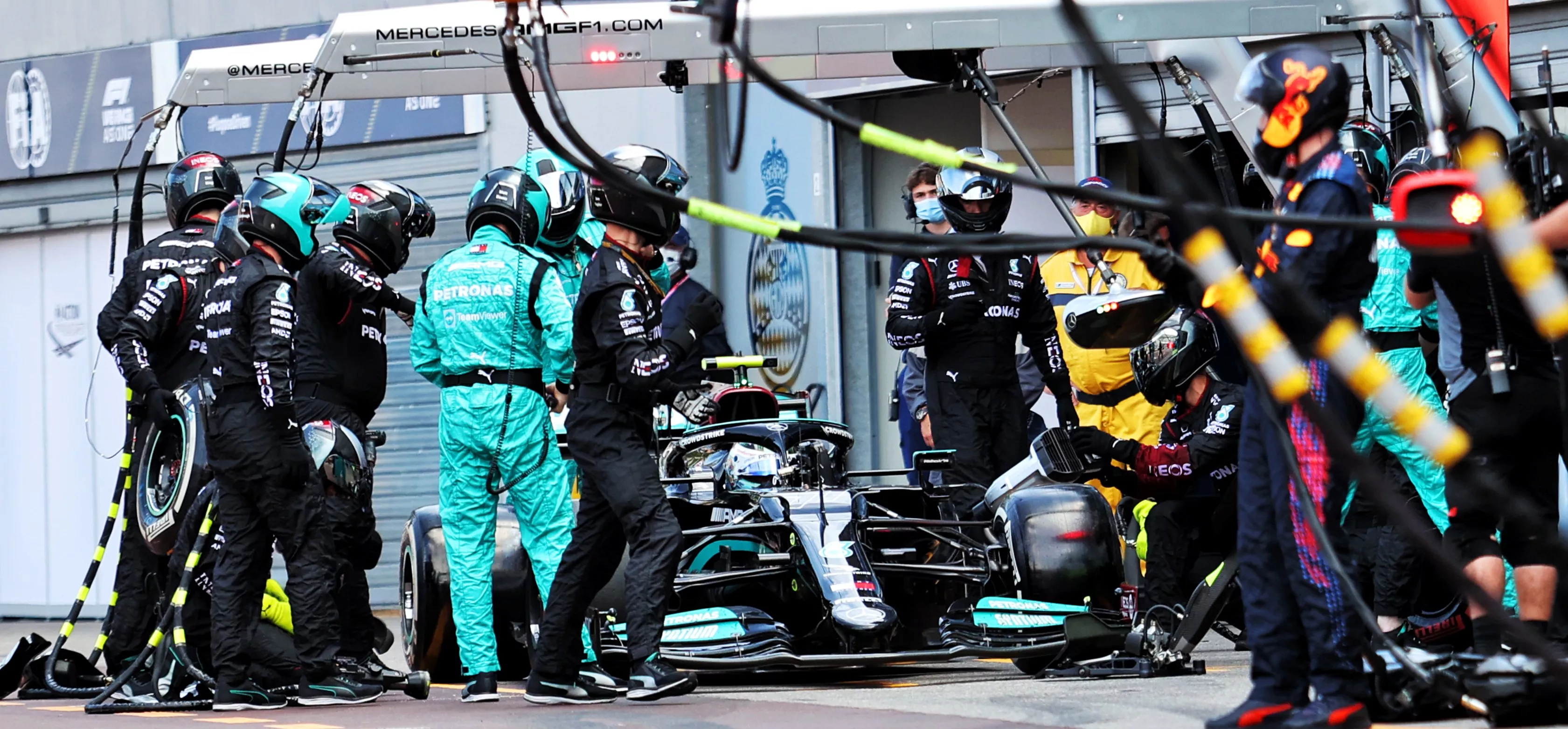
The longest pitstop ever? The wheelnut got stuck on Valtteri Bottas’s Mercedes during the 2021 Monaco Grand Prix, he had to retire from the race, and only 43 hours later was the wheel removed
.webp?cx=0.5&cy=0.5)
Data, rehearsal, and the science of the stop
Perhaps the least visible but most significant gap between the two series is the infrastructure around the pitstop itself.
F1 teams rehearse pit stops obsessively - some conduct hundreds of practice stops during the week before a race, using purpose-built pit lane rigs at their factories to train under race-simulating conditions.
Sensors embedded in the pit lane surface at some circuits feed real-time data back to the team about how the car is positioned on the marks and how each mechanic is performing. The data isn’t as comprehensive as it is in a series such as NASCAR, where pitcrew members are ranked against each other and the data is available for teams to peruse - but there’s plenty of pressure on F1 pitcrews.
Every stop in F1 is reviewed from multiple camera angles. Individual mechanic performance is tracked over time.
Teams build up datasets on each crew member's reaction time, consistency, and error rate under pressure.
F2 teams do not have the budget or staffing to replicate this approach. Practice stops do happen in the lead-up to the weekend’s action trackside and back at the factory but they are conducted by the same mechanics who also build the car, manage the set-up, and handle every other aspect of the race operation.
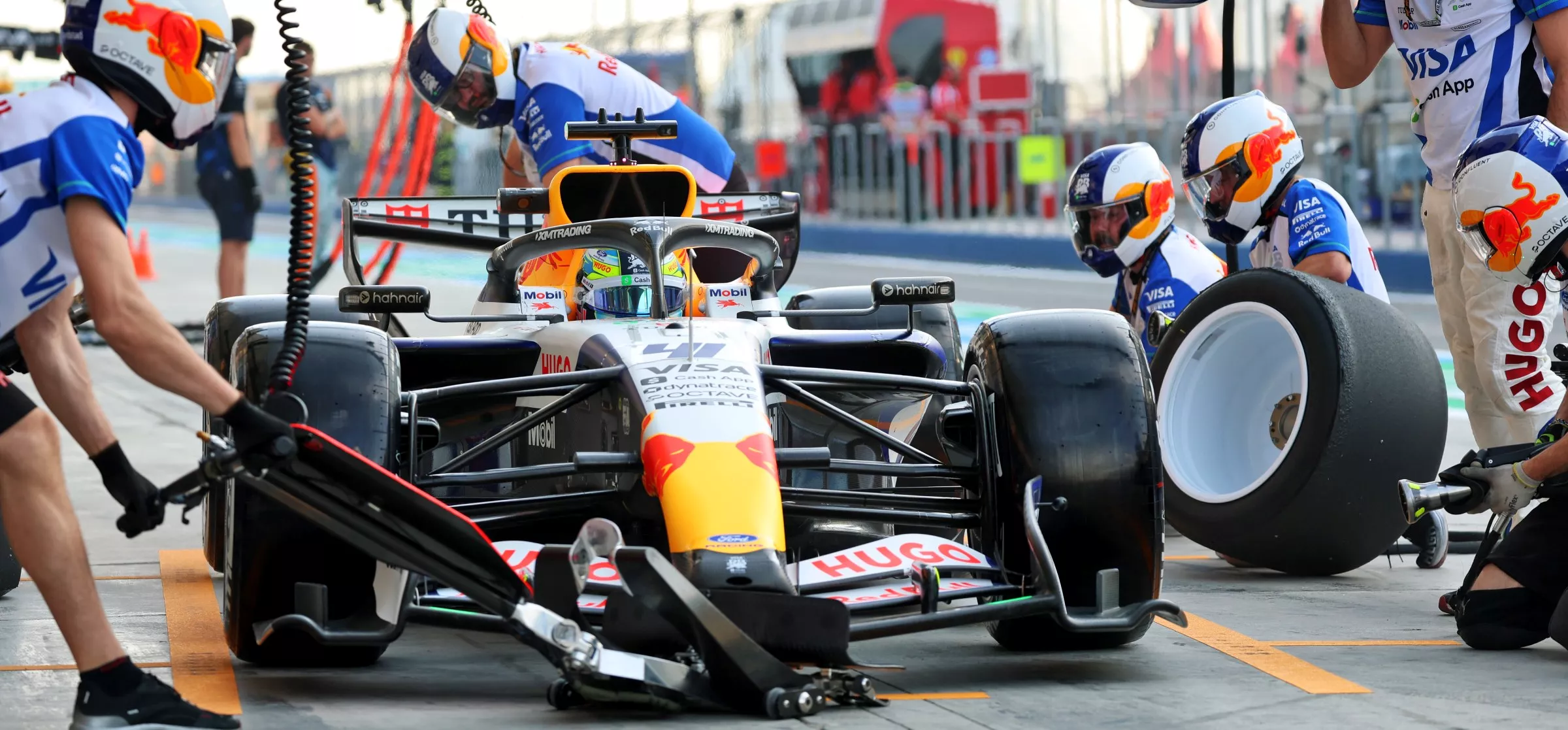
Racing Bulls practising a pitstop during 2026 F1 testing
The margins for individual error are wider in F2 - and, within the context of the series, that is perfectly appropriate. F2 is a proving ground for talent at every level: drivers, but also engineers and mechanics learning the craft.
It’s crucial to stress that pitcrew members in F1 and F2 are not solely trained to operate a jack or a wheelgun. In fact, changing tyres is probably the least time-consuming part of their weekend and overall role as an F1 mechanic. Instead, they’ll be responsible for car-build, repair, and many other tasks that take place in the pit garage.
For all their differences, F1 and F2 pitcrew members share the same pressures. A slow stop costs track position; an unsafe release risks a penalty. The skills are transferable between the two series, and a mechanic from F2 might make their way up to F1.
The gap between a two-second F1 stop and a five-second F2 stop is the product of an enormous difference in resources and technology - yet both are impressive in their own way, and both say a great deal about the relentless effort, commitment, and pressure that underpins high-level motorsport.