Innovation
From pole to pole: the hot battery revolution
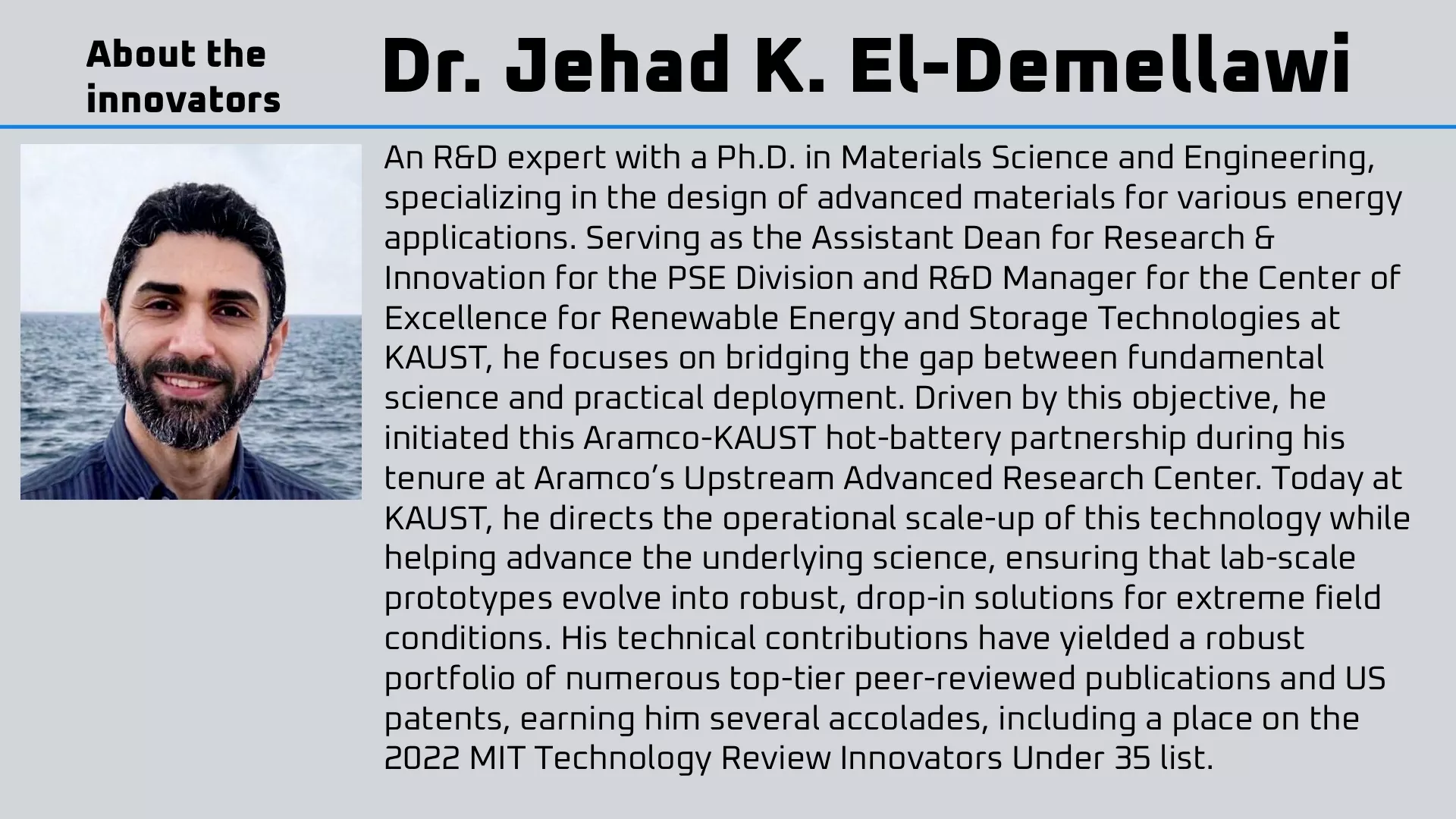
by Dr. Jehad K. El-Demellawi, Dr. Dong Guo, Dr. Muhammad Arsalan, and Dr. Husam N. Alshareef
15min read

Batteries must withstand extreme temperatures from pole to pole to be a key solution to theworld’s energy demands. But what if there was a battery that didn’t just tolerate intense heat,but was built specifically for it? And how would such a battery be usable in motorsports?

Sign up for a newsletter and we'll make sure you're fully up-to-date in the world of race technology
The true watershed moment arrived in the early 1990s with the commercialization of the lithium-ion battery (LIB)—a leap in energy density that made modern mobile technology and electric mobility a reality.
However, conventional LIBs - the kind currently powering everything from mobile phones to hybrid vehicles (including Formula E cars) - are constrained by narrow operating temperature windows (typically 15°C to 45°C). Push them past 60°C, and they degrade rapidly; push them further, and safety is compromised.
Cooling batteries used in EVs requires bulky, heavy, and expensive thermal management setups. Cost and weight are antithetical to an efficient vehicle, adding parasitic weight and aerodynamic drag.
That leads us to the recent work of an innovative partnership between Aramco and King Abdullah University of Science and Technology (KAUST). Together, they are pushing the boundaries of traditional thermodynamics in energy storage.
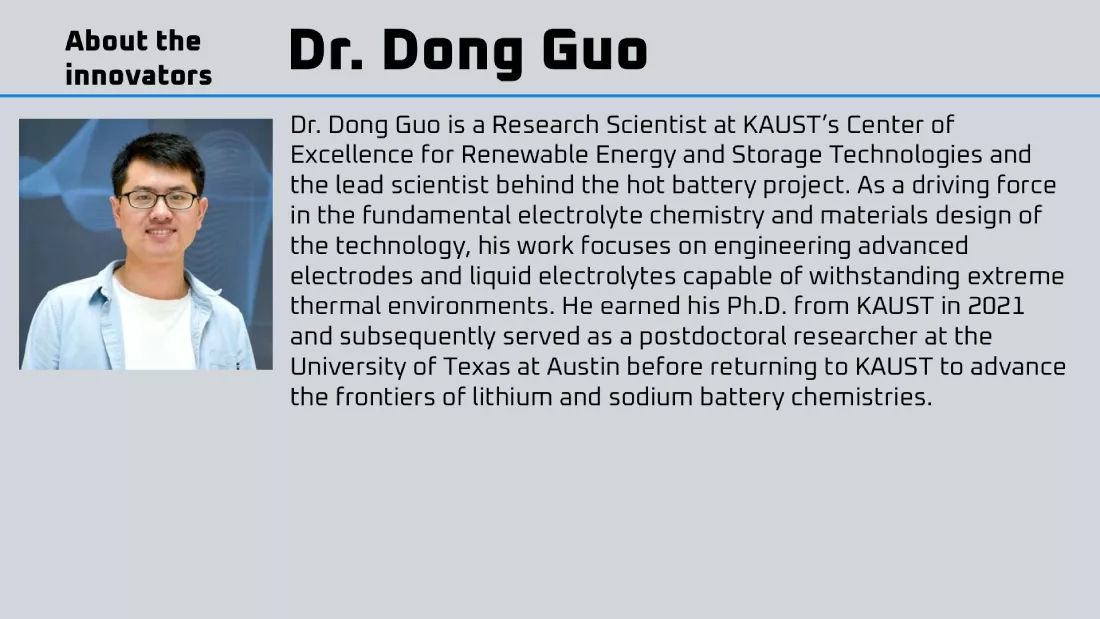
They have developed a technology that survives where others fail: a battery system capable of operating efficiently from -20°C to +100°C.
What could this mean for motorsport?
Nowhere is this thermal crucible more unforgiving than in motorsport. On the track, heat is the ultimate adversary. The brutal cycle of massive power deployment out of corners, immediately followed by the aggressive energy recovery of regenerative braking, generates an immense thermal load within tightly packaged cells. A battery designed to operate at temperatures exceeding 100°C offers a paradigm shift in performance and vehicle design. For race engineers, this unlocks a distinct tactical arsenal:- Radical simplification of thermal management: Shedding the heavy, parasitic liquid cooling systems required by current architectures translates to massive weight savings. For aerodynamicists, this means tighter packaging, less drag, and the freedom to sculpt smaller, more agile cars.
- Eliminating thermal derating: When a battery doesn't need to throttle its output to survive, drivers can exploit maximum power deployment lap after lap without the dreaded performance cliff. - Unleashing ultra-fast mid-race charging: In endurance racing and upcoming EV formulas, rapid pit-lane charging is a major bottleneck because forcing massive current into a pack generates exponential heat. A thermally resilient battery can accept substantially higher charge rates without triggering thermal throttling or requiring heavy, specialized pit-lane cooling rigs, drastically cutting stationary time.
- Enhancing safety: By operating well below its new 100°C ceiling, the pack avoids hovering on the precipice of its thermal limits, drastically cutting the risk of thermal runaway. Coupled with a tailored, less volatile electrolyte, it presents a significantly reduced fire risk in the event of a high-speed shunt.
- Unlocking 800V architectures: Motorsport’s migration to 800V systems lowers current and reduces cable mass, but it magnifies thermal vulnerabilities. In a 200- plus-cell string, a mere 2°C variance can create an impedance mismatch—meaning the pack ages only as slowly as its weakest cell. An electrolyte that chemically neutralizes these thermodynamic shifts up to 100°C effectively solves the greatest hidden flaw of high-voltage racing systems.
- Rewriting race strategy: Thermally bulletproof batteries grant race strategists newfound freedom. Teams could crank up regenerative braking biases to harvest more energy without the persistent fear of cooking the battery, while chassis designers gain flexibility in mounting the pack closer to high-heat components like the combustion engine.
Beyond Lithium-Ion: the chemistry shift
To understand the magnitude of this breakthrough, we must distinguish between standard Liion batteries and lithium-metal batteries (LMB), such as the Lithium-Sulfur (Li-S) systems developed in this partnership.Standard Li-ion batteries work by shuttling lithium ions back and forth between two electrodes - a graphite anode and a metal-oxide cathode - through a liquid electrolyte. While reliable, they are heavy and thermally fragile.
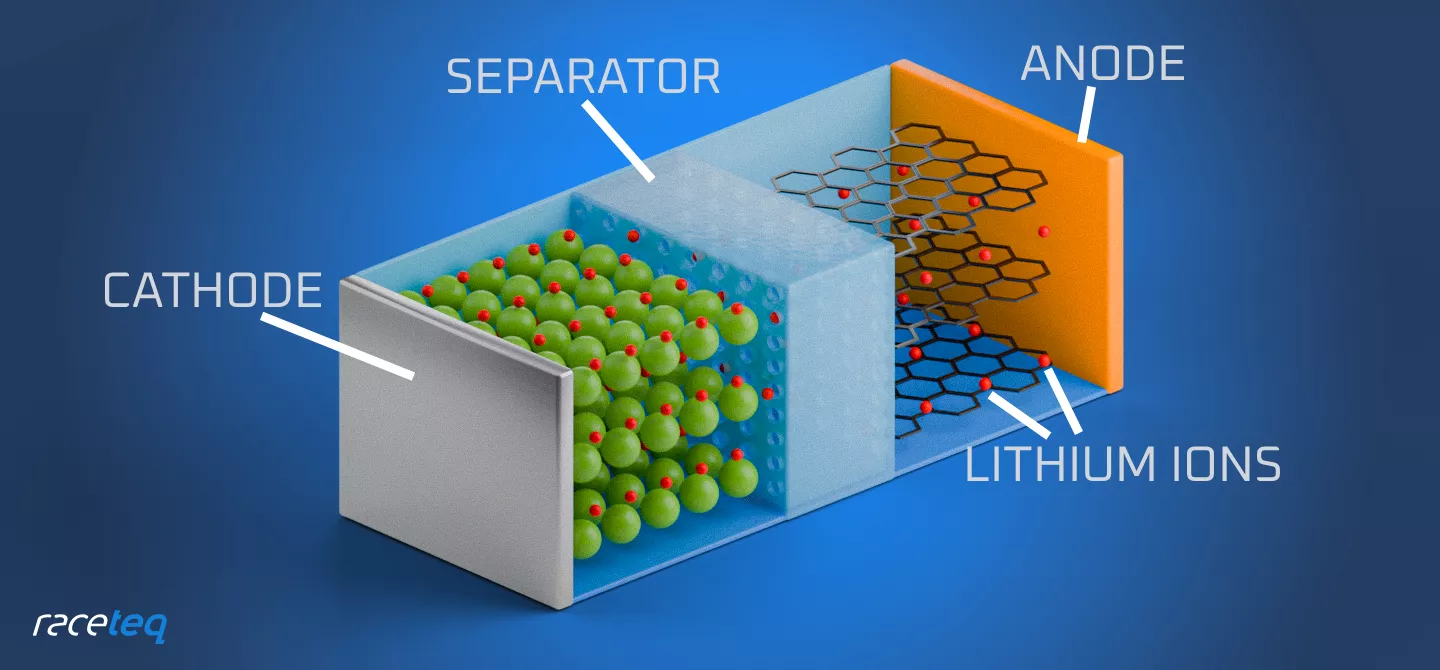
Diagram showing the inner components of a Li-ion battery. When discharging, electrons move from the anode to the cathode, and vice versa when charging
The theoretical energy density of Li-S batteries makes them a promising solution, but until recently, their performance at high temperatures above 60°C has been largely unexplored. The low voltage of the sulfur cathodes helps the battery achieve better stability at high temperatures.
Numerous operations, including motorsport, subsurface exploration, aerospace, energy grid storage in desert climates, drones, and electric vehicles, generate significant internal heat during operation, routinely pushing battery packs into a critical range.
Aramco and KAUST saw an opportunity to engineer batteries specifically designed for this heat. Hot batteries function safely and efficiently over a temperature range from -20°C to 100°C.
The hot batteries breakthrough: electrolyte engineering
The essence of this collaborative innovation - and supported by several joint top-tier publications - is not in the electrodes alone, but in the liquid electrolyte, which is the medium that moves ions between the electrodes.
The problem has always been heat. As detailed in the team’s recent journal publication in
Energy & Environmental Science, traditional electrolytes fall apart above 80 °C. The high
heat causes the lithium anode to break down, creating a "crosstalk" effect, whereby by-products from the anode begin to travel to the other side of the battery and contaminate
the cathode, leading to further unwanted reactions and clogging up the battery.
This leads to a rapid, irreversible failure of the entire battery.
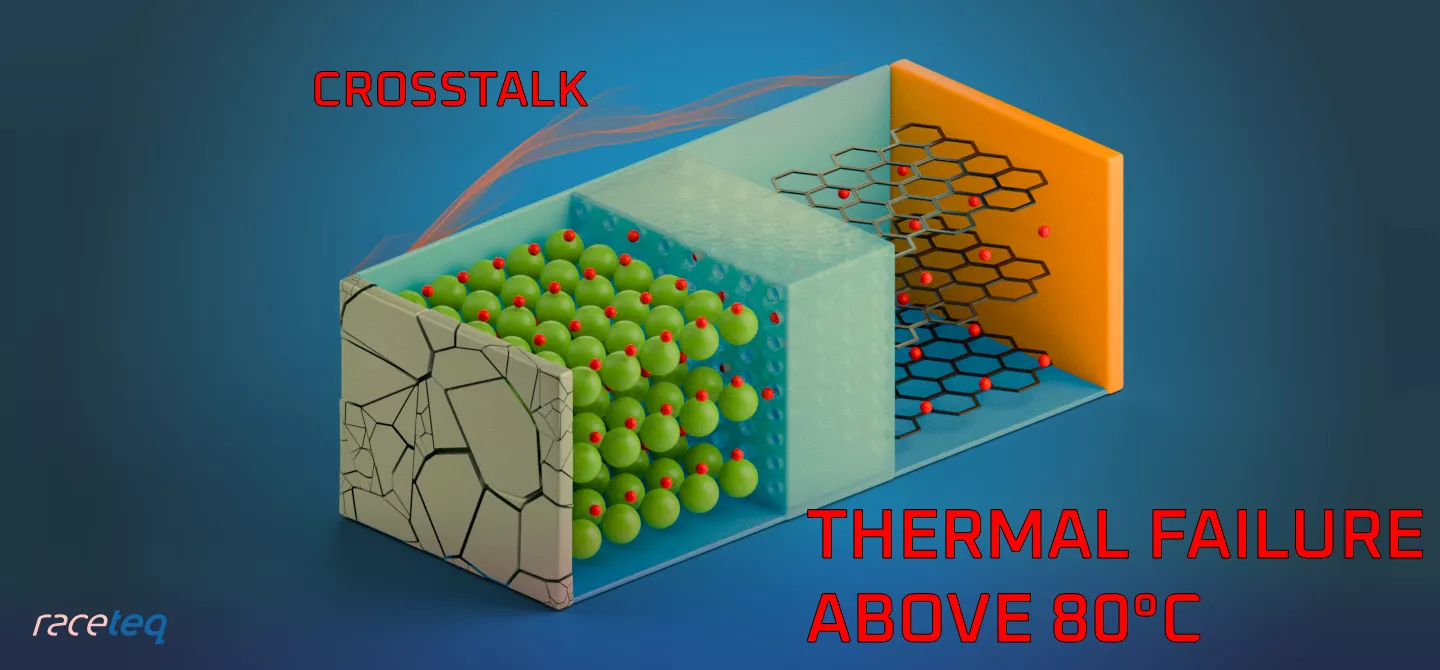
Diagram showing crosstalk - whereby by-products from the anode travel to the other side of the battery and create irreversible damage
The solution, at least up to temperatures of 100 degrees Celsius, was to engineer a localized medium-concentration electrolyte (LMCE) that, at high temperatures, prevents anode decomposition and eliminates destructive crosstalk.
This solution also creates an ideal environment around each lithium ion in the battery, forming a robust, inorganic-rich protective barrier on the lithium metal anode - essentially controlling how liquid molecules surround the lithium ions - which is pivotal to extending the battery lifecycle.
The result is a battery that maintains high efficiency and stability even when at 100°C, while retaining the ability to start up in freezing conditions (-20°C).
This breakthrough extends far beyond the laboratory. These Li-S batteries now deliver proven performance in commercially viable coin, pouch, and—most notably—industry-standard 18650 and 26650 cylindrical formats. This transition from benchtop chemistry to commercial architecture is a defining milestone. While these legendary form factors already drive the consumer EV revolution and high-drain aerospace systems, they hold profound tactical value for motorsport.
For race engineers, utilizing these specific formats translates directly to track readiness. Cylindrical cells are highly prized for their structural rigidity and their ability to be densely packed into the bespoke, aerodynamically constrained enclosures of Formula and prototype cars.
By validating their chemistry within these robust, established dimensions, the researchers have delivered a drop-in solution designed to endure the brutal charge-and-discharge cycles of hybrid-racing powertrains.
After being stored for 60 days at 100°C, these cells retained 90% of their capacity, demonstrating their robustness for real-world applications where devices sit idle in hot environments.
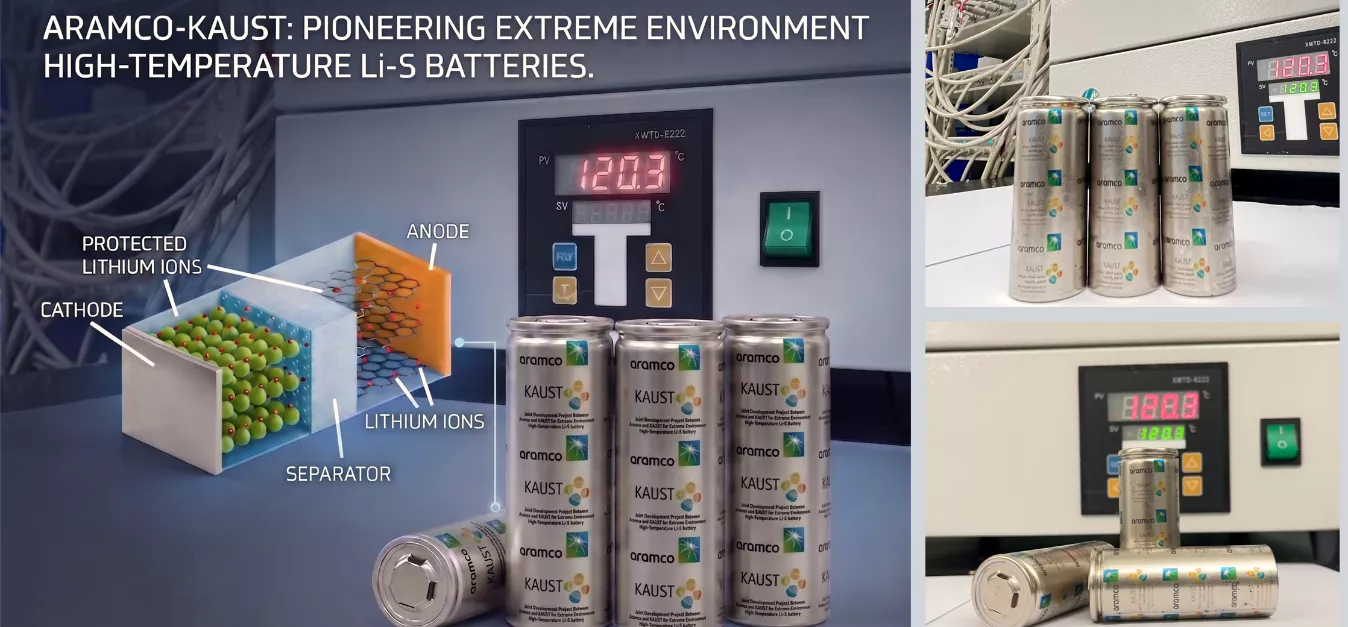
Images of the hot battery cylindrical cells (26650 format) developed by Aramco and KAUST

Simple concept, sophisticated design
At a glance, mixing solvents might seem simple. However, the science behind this highly complex challenge was solved through exemplary molecular engineering. Developing this battery was not simply a matter of finding a stronger chemical mix; it required solving a fundamental conflict between thermodynamics and kinetics that usually spells death for batteries.As the team highlights in their review article in Advanced Energy Materials, heat presents a double-edged sword. Initially, heat helps a battery by speeding up ion movement (kinetics). However, once a critical threshold is crossed, two invisible forces conspire to destroy the cell:
- The thermodynamic shift (the entropy penalty): Rising temperatures fundamentally alter the voltage potentials of the battery materials. This creates a thermodynamic instability in which the cathode begins to strip electrons from the electrolyte, triggering rapid oxidative decomposition. Effectively, the battery starts ‘eating’ its own internal fluid.
- The kinetic explosion (the Arrhenius trap): While useful reactions get faster, parasitic side reactions—corrosion and gas generation—accelerate exponentially (following Arrhenius behaviour where chemical reaction rates or molecular motions increase exponentially with higher temperature). A small increase in heat leads to a massive spike in degradation, creating a runaway effect that physical containment cannot stop.
The sophistication of the team’s solution - the LMCE - lies in its ability to outsmart these physical laws. By engineering a specific ‘solvation structure’ (the arrangement of molecules around each lithium ion), they created a fluid that is thermodynamically tuned to resist thermodynamic shifts while forming a robust, inorganic shield on the anode that blocks the exponential Arrhenius corrosion.
It is a design that doesn't just tolerate heat; it chemically neutralizes the forces that make heat destructive.
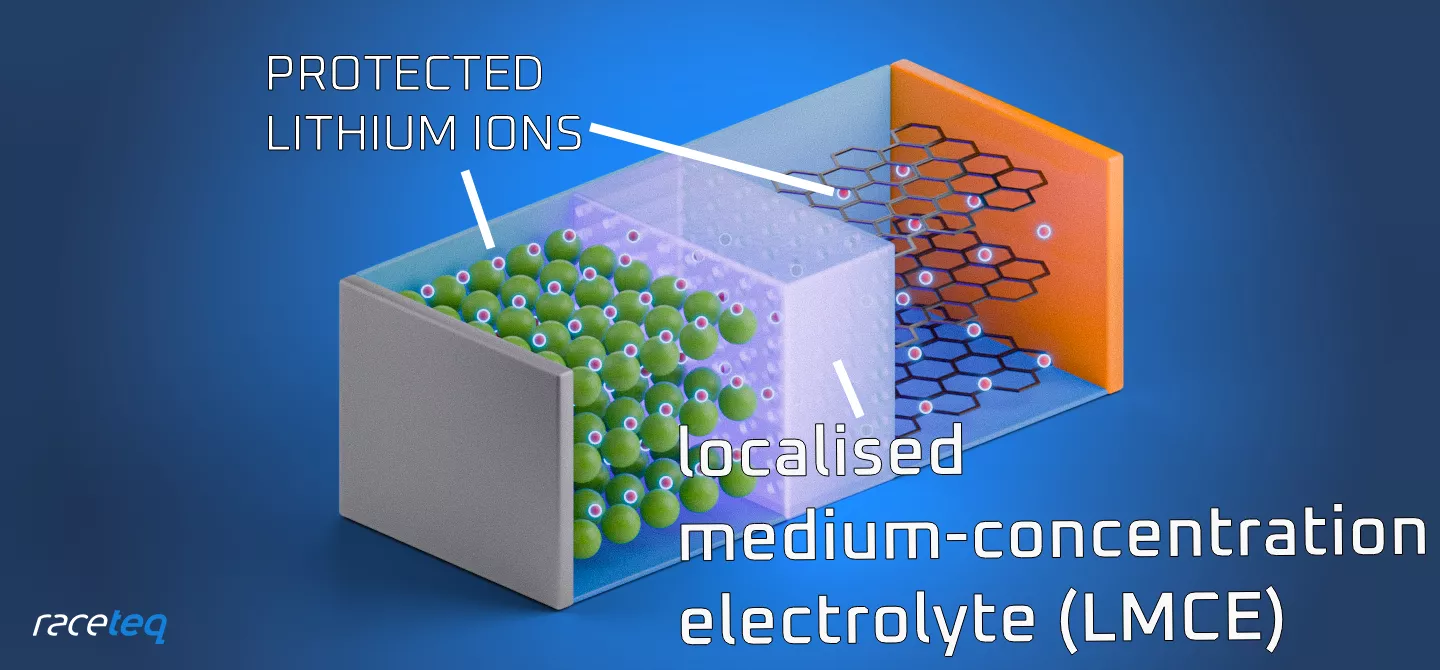
Diagram showing a localised medium-concentration electrolyte (LMCE) and itsprotective effect on lithium ions, which can eliminate crosstalk
Downhole to downforce: where could hot batteries be used?
Beyond the racetrack, this work on hot batteries could unlock applications that were
previously impossible for high-energy rechargeable batteries, such as:
- Subsurface Operations: Downhole drilling and logging tools for oil, gas, and
geothermal production, which operate in environments often exceeding 120°C.
- Aerospace and Aviation: Systems that experience wide temperature swings from
sub-zero to high heat during operation.
- Grid Storage in hot climates: Large-scale energy storage systems in desert
environments, where our technology could eliminate the need for costly air
conditioning.
- Drones and robotics: Unmanned systems operating in high-temperature industrial
or desert environments where performance and flight time are critical.
- ‘Cooling-free’ EV batteries: This technology could drastically reduce or even eliminate the complex, heavy, and costly liquid cooling systems in electric vehicles.
A strategic partnership: Aramco and KAUST
Why is an energy giant like Aramco deeply involved in battery R&D? The answer lies in operational excellence and energy diversification.
While KAUST provided the R&D engine, Aramco provided the strategic vision and industrial imperative, including field testing. This was not a case of simple sponsorship, but a joint pursuit of critical technology.
Aramco’s interest stems from extreme environments far removed from the racetrack. In subsurface oil and gas production, downhole tools must operate in geothermal wells where temperatures routinely exceed 100°C. Existing battery options for these depths are not rechargeable, expensive, and dangerous. Furthermore, developing high-performance energy storage is a key enabler for integrating renewable energy sources and reducing the overall carbon footprint.
This R&D operation enables Aramco to create bespoke technology solutions to meet its own demanding operational needs, such as high-temperature downhole batteries, thereby improving the efficiency, capability, and safety of its core exploration and production business.
Furthermore, developing high-performance energy storage is a key enabler for integrating renewable energy sources and reducing the overall carbon footprint, aligning with global sustainability goals.
It therefore represents a direct investment in future energy technologies that go beyond traditional hydrocarbons. By innovating at the fundamental level across critical fields, including electrochemistry and materials science, Aramco is positioning itself as a technology-driven energy company, not just a resource provider.
The next steps for hot batteries
While fundamental chemistry has been successfully demonstrated in commercially relevant formats, commercial readiness is another step altogether for hot batteries. Bringing this to market requires optimizing manufacturing to ensure consistency at scale:
- Commercially available separators: These can shrink or melt above 100 °C, so sourcing new separators from thermally and chemically stable materials is a priority.
- Scaling up: While hot battery prototypes have been produced in larger commercially relevant formats such as pouches and cylinders, manufacturing needs to be optimized to ensure quality and consistency at scale. KAUST’s demonstration of pouch and cylindrical cells is a major step in this direction.
- Long-term reliability and safety testing: Extensive testing needs to be conducted under real-world conditions, for factors like vibration and shock, in applications such as motorsport. Long-term durability also needs to be validated.
- Supply chain establishment: As with any breakthrough technology, a robust and cost-effective supply chain must be established. In this case, key electrolyte components such as KAUST’s engineered solvents and diluents must be produced at a commercial scale.
Aramco and KAUST have undertaken groundbreaking research to reimagine what batteries can endure in some of the harshest environments above, below, and on the surface of Earth.
From production and drilling tools operating in 120°C oilfield wells to drones surveying scorching desert environments, from grid storage systems in the Middle East to F1 cars pushing the limits lap after lap after lap – and this technology could eliminate one of the most persistent bottlenecks in modern energy storage, and complex battery-cooling systems may be deemed redundant.



/xpb_1408348_hires-(1).webp?cx=0.5&cy=0.5)