Innovation
Why Horse Powertrain’s innovative new engines could be ripe for motorsport
by Samarth Kanal
4min read
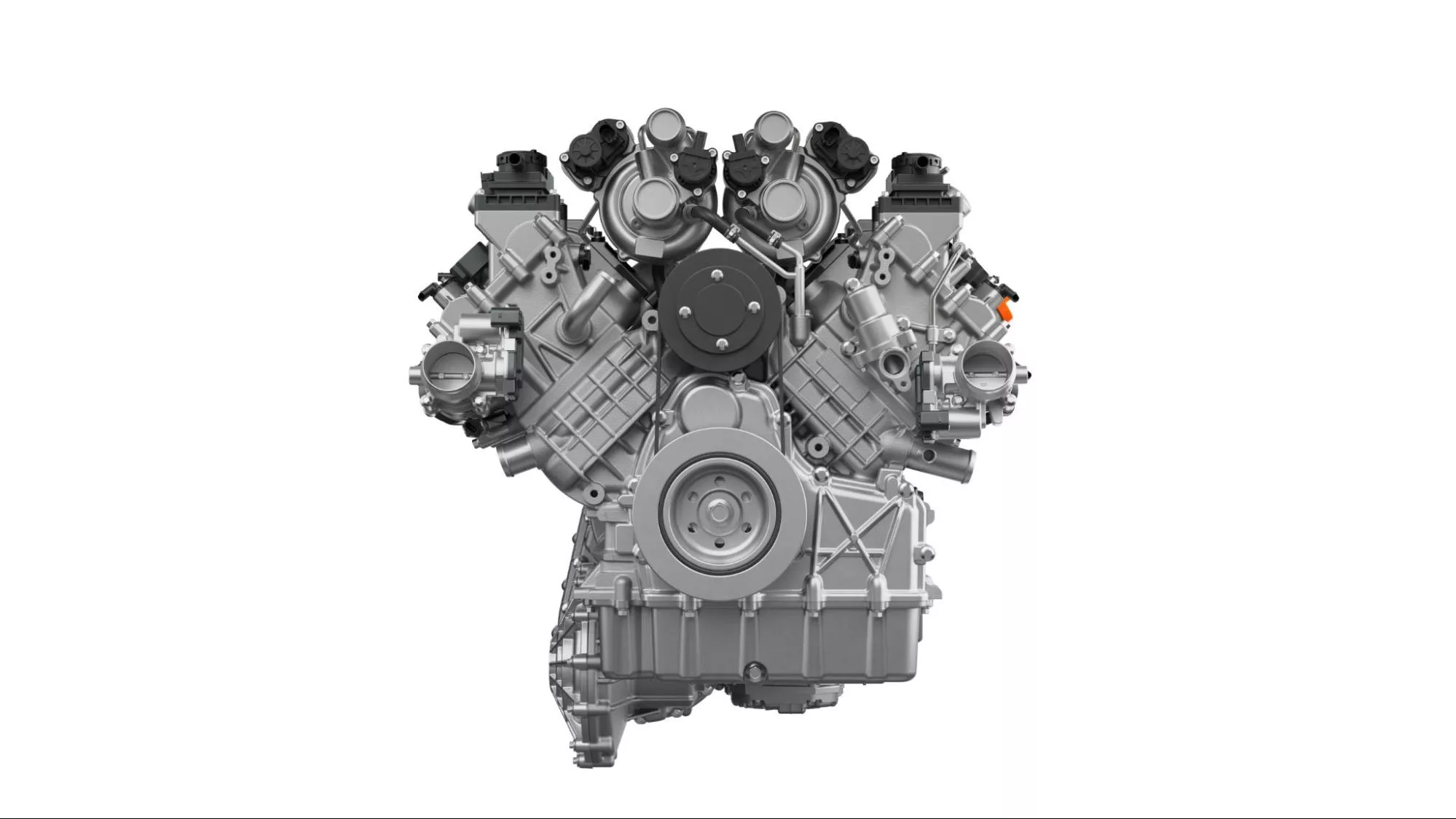
High-power engines come with trade-offs: they’re generally heavier and less fuel-efficient than lower-output units. Now Horse Powertrain has unveiled a potential solution with its new HORSE W30 six-cylinder engine (main image) that debuted at the 2026 Beijing Auto Show.
Sign up for a newsletter and we'll make sure you're fully up-to-date in the world of race technology
High-power engines come with trade-offs: they’re generally heavier and less fuel-efficient than lower-output units. Now Horse Powertrain has unveiled a potential solution with its new HORSE W30 six-cylinder engine (main image) that debuted at the 2026 Beijing Auto Show.
The lightest V6 on the market
Horse Powertrain has recently been concentrating on bringing three- and four-cylinder engines to market, with its four-cylinder HORSE H13 engine being selected to take the Caterham Academy series into the future.
Now, the HORSE W30, unveiled at the Beijing Auto Show 2026 in late April, marks a deliberate step into larger-displacement territory - with the same engineering discipline that made the HORSE H13 a small but punchy unit fit for road and track.
The HORSE W30 is a 3.0-litre V6 with a 90-degree bank angle (the angle between its sets of cylinders), a configuration chosen to lower the centre of gravity and simplify packaging.
Crucially, it can be oriented either transversely or longitudinally, broadening the range of vehicles it can slot into.
Horse claims the engine weighs just 160 kg - around 10 kg less than the next-lightest V6 currently on sale. For a six-cylinder unit, that is a meaningful margin - and that could make it a gamechanger in motorsport, where shedding mass and weight is always paramount.
The HORSE W30’s efficiency is borne from integrated exhaust manifolds with turbochargers mounted directly on the cylinder heads - a packaging decision that Horse Powertrain says shortens the thermal path, reduces turbo lag, and helps the catalytic converters reach operating temperature faster.
In simpler terms, this can be explained by visualising an engine in which exhaust gases travel along a separate pipe before reaching the turbocharger.
On the HORSE W30’s engine, the turbo is bolted directly to the cylinder head.
This means that the thermal energy travels a shorter distance before it reaches the turbo, helping it spool up more efficiently. The turbo therefore responds faster - eliminating turbo lag - when the throttle is applied.
Furthermore, the catalytic converter - which controls emissions - warms up sooner. Getting to working temperature sooner, the catalytic converter works earlier and therefore helps control emissions sooner.
That means collectively less time between energy transfer, and a more responsive engine.
“Bringing our mindset and expertise to a new category, we've developed the lightest V6 that was designed from the outset to support hybrid vehicles,” says Horse Powertrain CEO Matias Giannini.
The V6 HORSE W30 engine and HORSE 4LDHT transmission are expected to reach production vehicles in 2028.
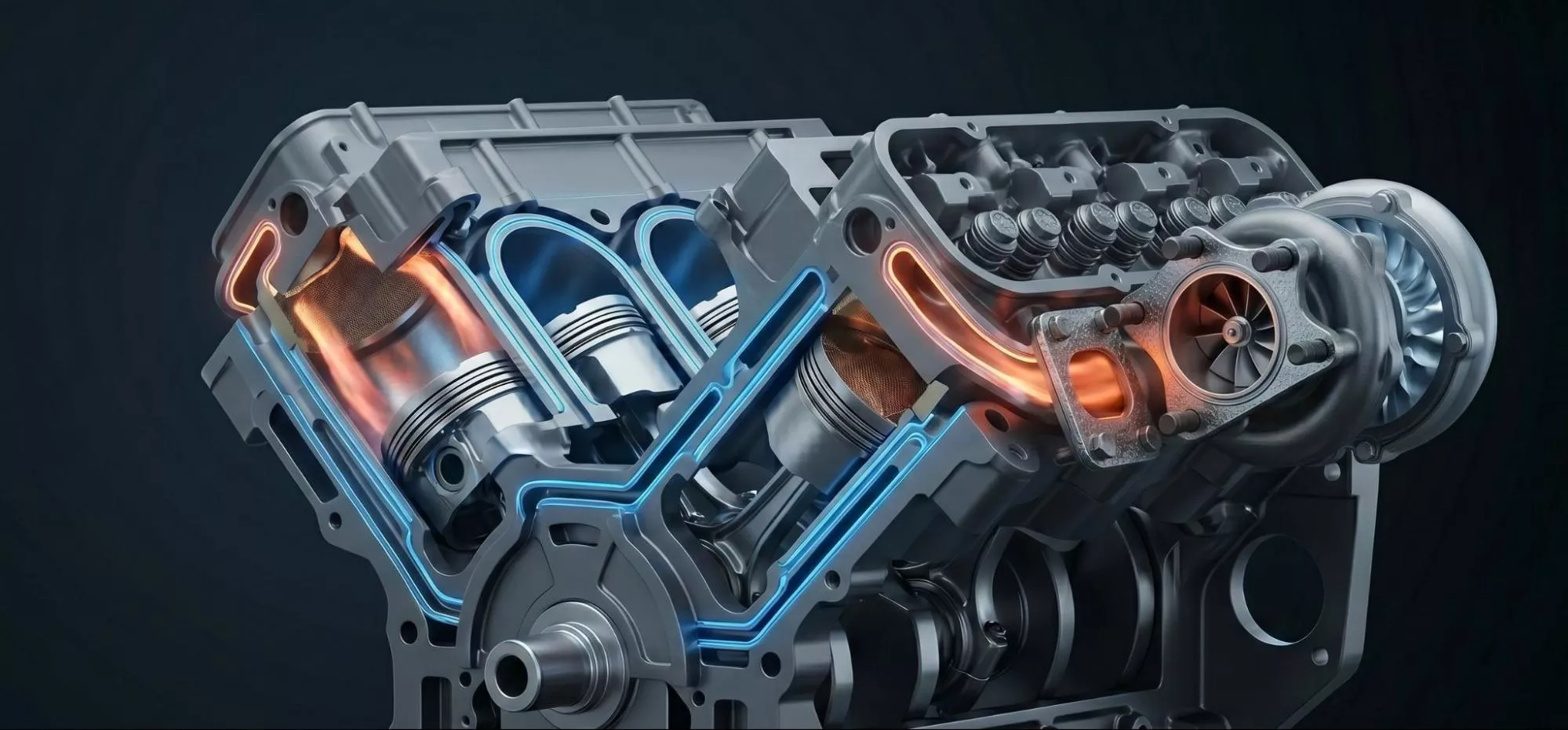
A representative 3D render showing a turbocharger attached directly to the cylinder head of an engine, as it is in the HORSE W30
The HORSE 4LDHT: a transmission built around hybrid power
The V6 was developed around Horse Powertrain’s mindset - supporting hybrid vehicles with innovative power units, says Giannini.
The V6 HORSE W30 engine is therefore intended to be twinned with the HORSE 4LDHT four-speed hybrid transmission.
The HORSE 4LDHT weighs just 199kg and is designed to be mounted in a P1 + P3 configuration - the P1 and P3 being its two electric motors.
The P1 motor used to support the engine crankshaft and charge the vehicle’s battery can output between 250-300kW, with the P3 motor used to support driving capable of outputting between 350-450kW in a P3 configuration.
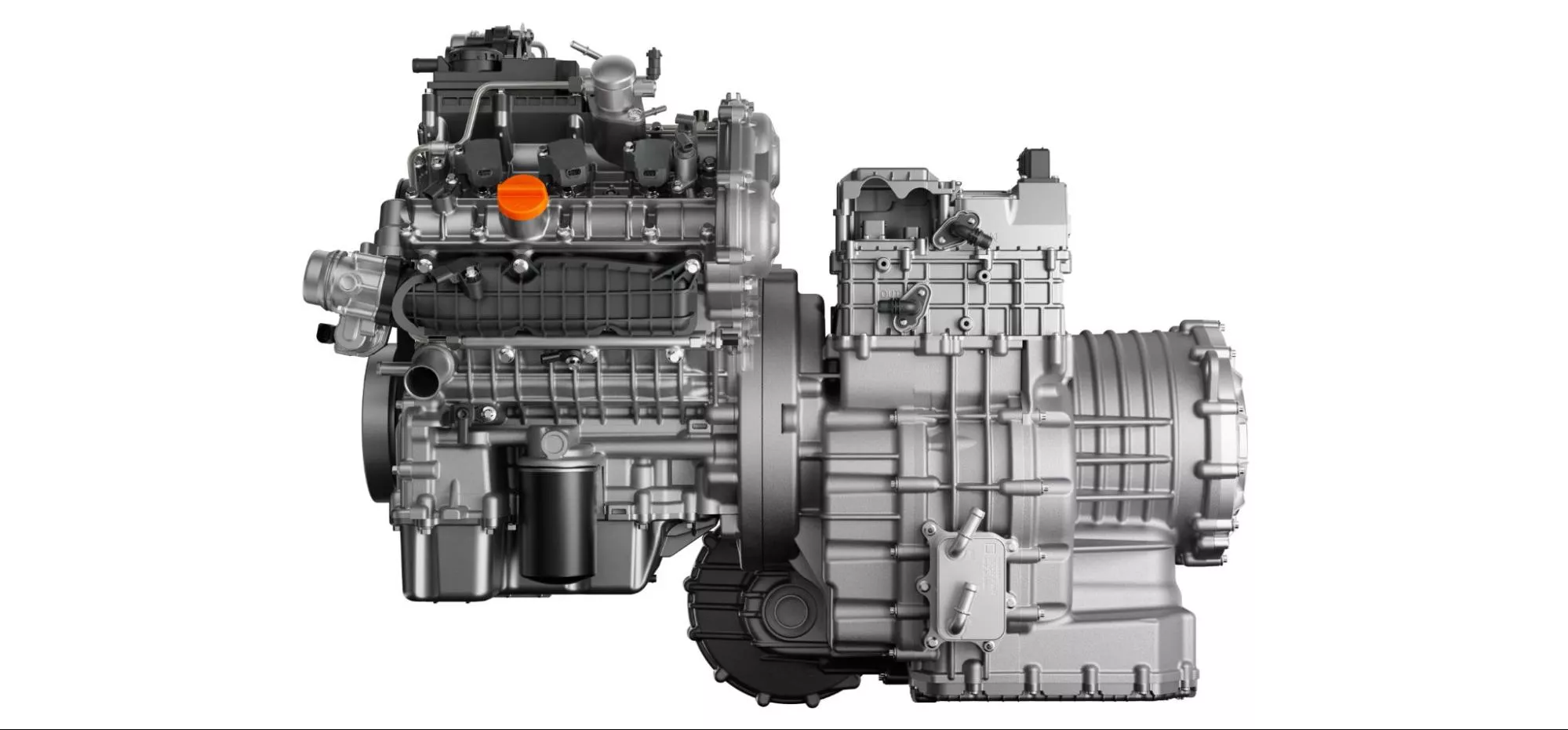
The HORSE 4LDHT transmission
The evolutionary HORSE V20 engine
While Beijing was used to showcase the HORSE W30, Horse Powertrain's Aurobay Technologies division has concurrently put the next generation of its HORSE V20 into production at its Skovde, Sweden, facility.
The HORSE V20 is a 2.0-litre four-cylinder engine - an established design - but this revision matters because it had to satisfy emissions regulations in various regions.
The new-generation HORSE V20 comes in two variants sharing a single architecture. One is a 400-volt plug-in hybrid; the other is a 48-volt mild hybrid.
Building both on one platform reduces material cost and manufacturing complexity for automakers, while the common architecture means Horse can scale production efficiently regardless of which variant customers demand.
The plug-in variant carries the more extensive hardware revisions: a modified crankshaft-mounted starter-generator, a high-position mechanical water pump, a re-routed cooling system, a new multi-injection fuel system, revised engine management software, and a redesigned air induction layout.
The modified crankshaft-mounted starter-generator fires up the engine and charges the battery, eliminating the need for a separate starter motor and separate alternator.
Horse’s packaging innovations continue with the high-position water pump, which moves coolant around the engine: the higher mounting frees up space elsewhere in the engine bay, which is an important point when electrical components share the same space as the combustion unit.
Revised engine management software gives better ignition timing and therefore better fuel efficiency. The enhanced software also governs the multi-injection fuel system that injects fuel into the cylinders multiple times per cycle when needed, improving efficiency and reducing emissions.
Those changes mean that Horse’s existing four-cylinder engine is more efficient in space and energy. Furthermore, the HORSE V20 is one engine platform that can satisfy emissions regulations in numerous locations.
"Designing one engine to meet three different regulatory regimes is harder than designing three separate engines. Pulling that off requires serious engineering,” says Ingo Scholten, Deputy CTO of Horse Powertrain and Managing Director of Aurobay Technologies Sweden.
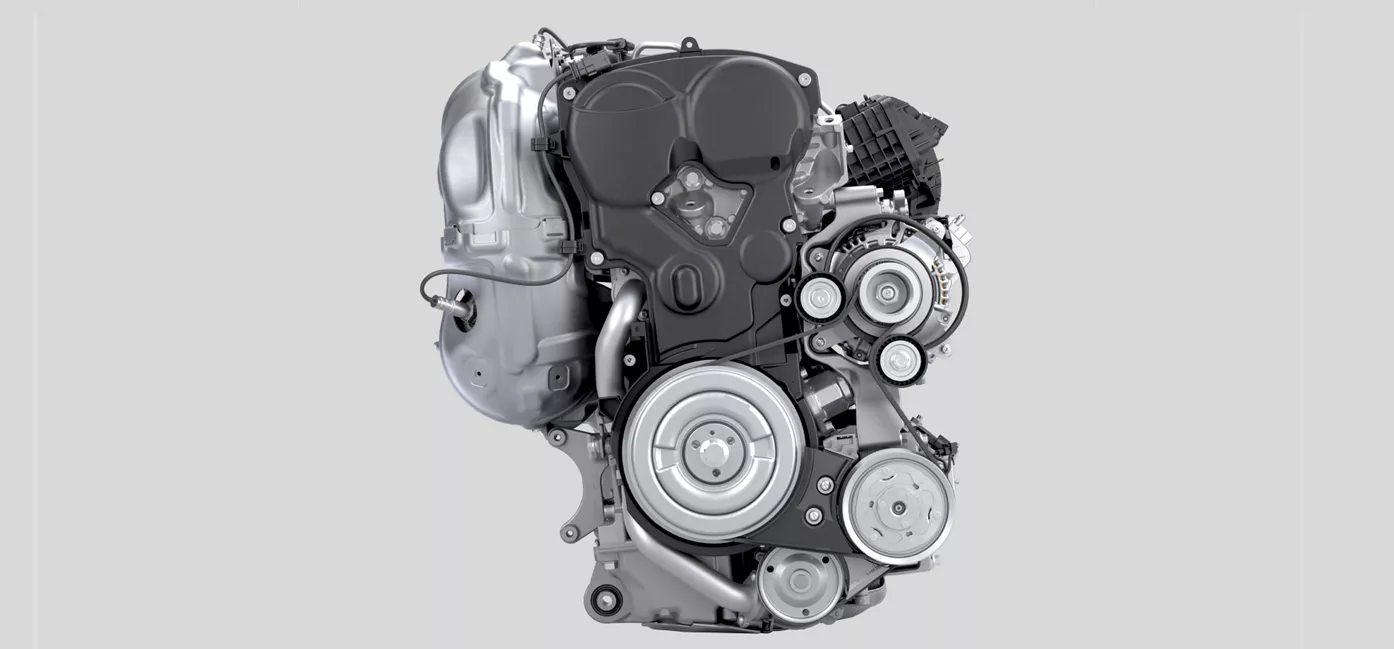
The HORSE V20 engine, pictured, is already in production
The bigger picture of Horse’s power units
Taken together, the HORSE W30 and the updated HORSE V20 illustrate Horse Powertrain’s position as a supplier that can cover a range of engine needs - mild hybrid, full hybrid, and plug-in hybrid - across a wide displacement range.
In fact, the 2.0-litre turbocharged Aurobay engine (the foundation of the HORSE V20) has already become a formidable asset for Wolf Racing Cars. Born from an official technical partnership, a production-derived TCR version of this engine has been adapted for track use, powering models like the Wolf GB08 Extreme and the two-seater Wolf GB08 Tornado for endurance racing and the CIVM hillclimb championship.
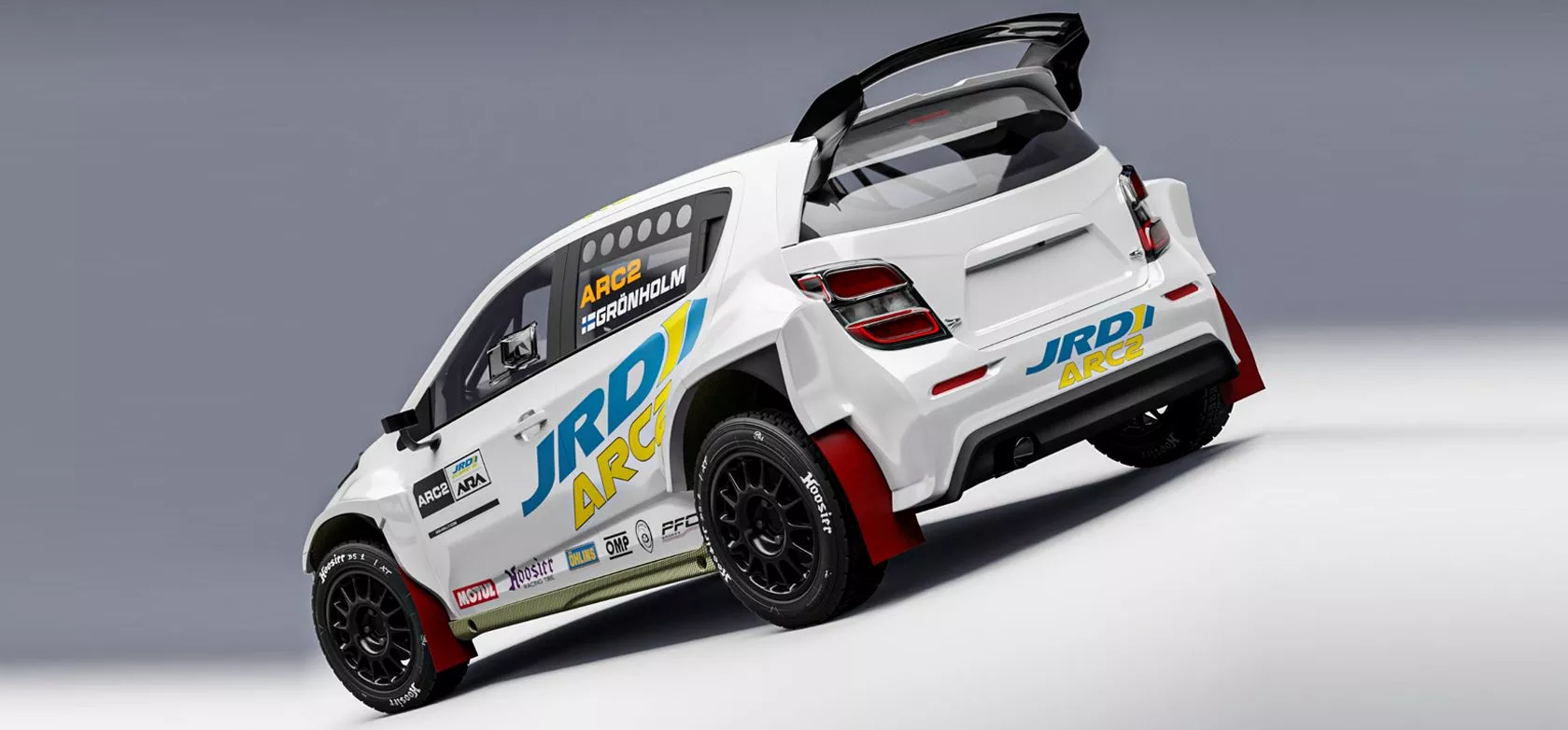
Horse already powers offroad racing cars such as the ARC Rally Car (pictured) and hillclimb machines
The engine recently completed a demanding development cycle at the Pikes Peak International Hill Climb, proving its reliability, smooth power delivery, and consistency at altitudes exceeding 4,000 meters in both the 2024 and 2025 events.
Building on this successful extreme-weather testbed, Wolf Racing Cars is preparing a dedicated Pikes Peak kit for 2026 that will push the Aurobay engine's output to nearly 700 horsepower, alongside a specialised 1,750cc variant designed to meet new FIA regulations for European hill climbs.
Ultimately, Horse Powertrain is helping rewrite the hybrid playbook by proving that high performance and strict efficiency aren't mutually exclusive.
Whether through the ultra-lightweight engineering of the new W30 V6 or the track-proven resilience of the V20 four-cylinder, Horse has established itself as a powerhouse supplier bridging the gap between everyday road-going hybrids and the demands of competitive motorsport.
.webp?cx=0.5&cy=0.5)