Motor
From manual to mind-bending: The decades-long evolution of the F1 gearbox
by George Wright
6min read
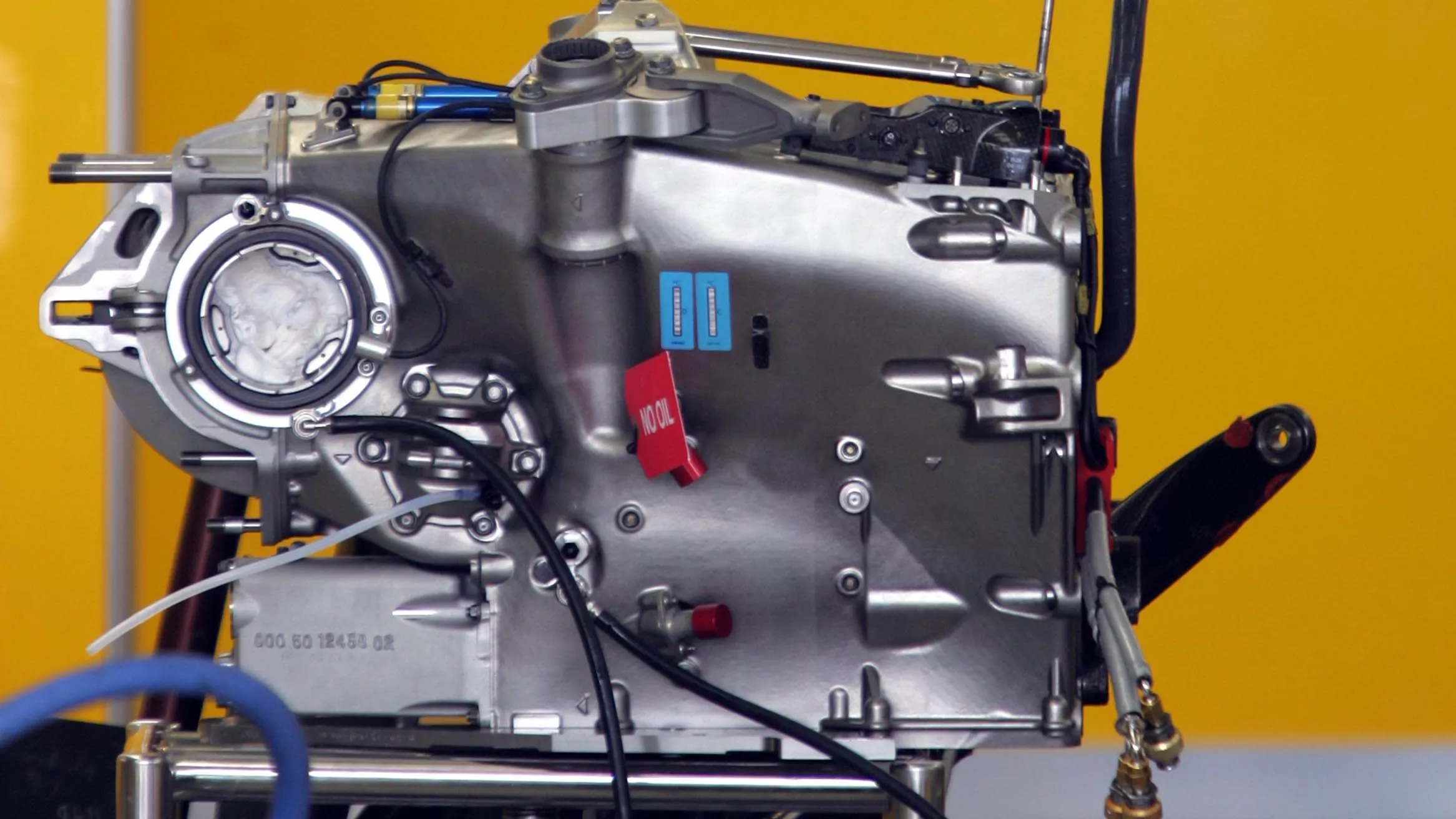
The gearbox of a modern Formula 1 car is a true engineering marvel, and undoubtedly one of the most important components on the whole car. Despite this, the only time that many F1 fans hear about the gearbox is when something goes wrong with it.
Sign up for a newsletter and we'll make sure you're fully up-to-date in the world of race technology
So refined are today’s gearboxes that faults are rare. But that wasn’t always the case. It’s been a long road to today’s ultra-reliable, eight-speed, seamless-shift, semi-automatic gearboxes - a road that spans back to 1950.
What did F1 gearboxes look like in 1950?
Compared to the F1 gearboxes of today, the transmissions of early F1 cars were decidedly crude. The gearboxes used from the very first world championship in 1950 were almost invariably fully manual units, with the driver having to select each gear themselves, manually rev-match - applying throttle to ensure the engine’s revolutions matches the revolutions of the lower gear to save the drivetrain from wearing - and use a clutch to disengage the engine from the gearbox when changing up or down.
Most also featured only four forward gears in addition to reverse, though some teams such as Ferrari did experiment with a fifth gear in an attempt to take advantage of improvements in engine technology which allowed for higher limits to the engine’s RPM (revolutions per minute).
One design choice which several top teams in F1’s early years settled on was the use of a transaxle gearbox. In the first season of the F1 world championship in 1950, both the dominant Alfa Romeo and Ferrari teams used this solution, which combined the gearbox, differential and rear axle into a single compact unit, saving both space and weight.
Such an approach was a rarity in front-engined cars of the time, but it proved to be a decision which would truly stand the test of time. Indeed, F1 cars to this day invariably use a transaxle just as their forebears over 75 years ago did.
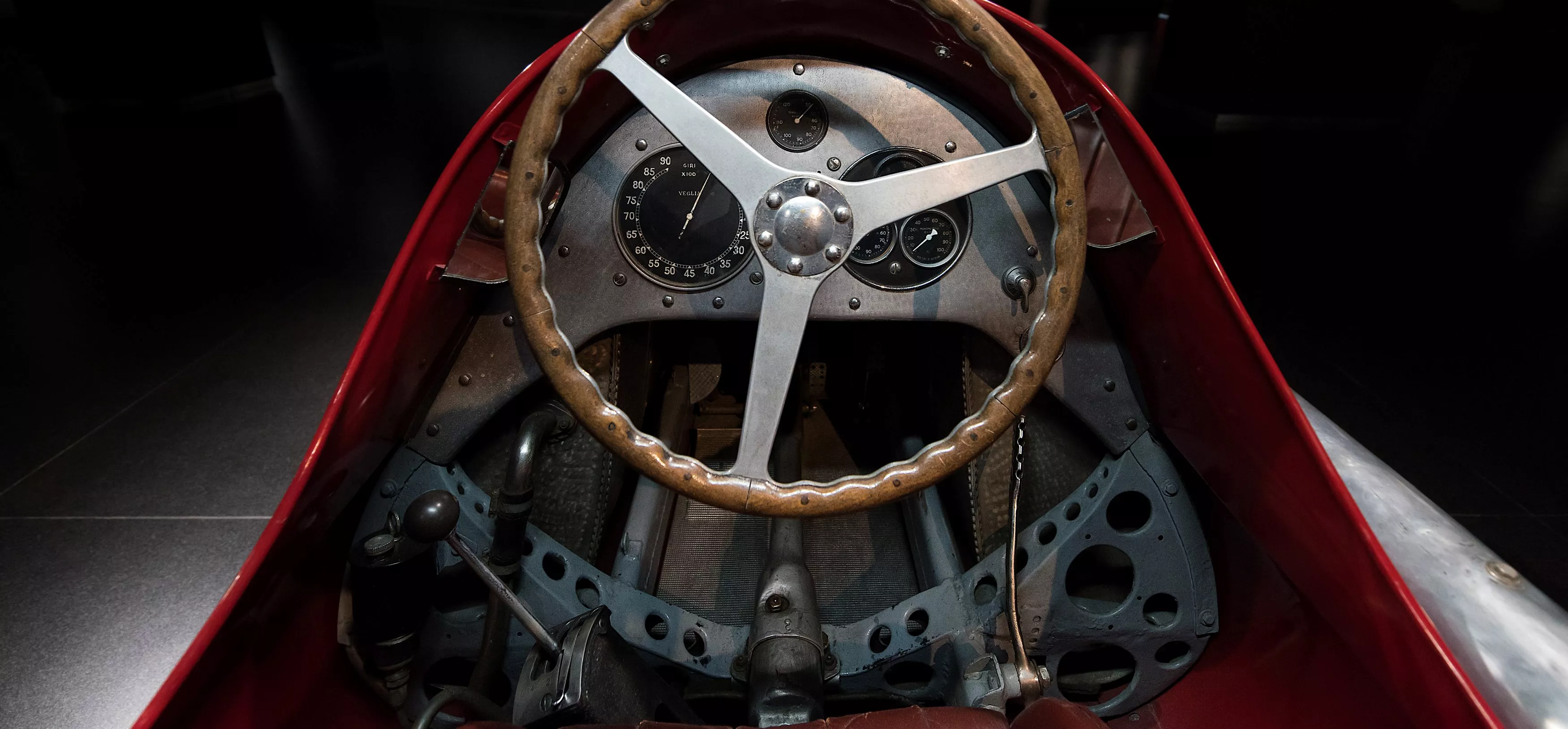
The cockpit of the Alfa Romeo 158/159 showing the gear shifter in the bottom left-hand corner
The Hewland hegemony
The late 1950s saw a new type of team rise to prominence in F1, which Enzo Ferrari famously referred to as ‘garagistes’. These teams constructed their chassis themselves, but purchased many mechanical components for their cars such as engines, and indeed gearboxes, off the shelf.
Several of these teams initially turned to modified road car gearboxes for their F1 cars. For example, Cooper’s groundbreaking rear-engined T51 of 1959 won the world championship using a modified five-speed Citroen road car gearbox.
Specialist racing gearbox manufacturers soon emerged to meet the demands of these new teams, and the most successful of these was Hewland. Hewland produced its first F1 gearbox in 1963, but it was with its FG400 of 1968 (and later FGA and FGB variants) that it really found success. These were a series of dependable, easily-serviced manual transaxles ideally suited for use with the ubiquitous Ford Cosworth DFV engine. They therefore became an almost standard component among F1’s garagiste teams.
The one major exception to this norm was Ferrari, which continued producing its own gearboxes even when Hewland’s offerings were at the height of their popularity. One of Ferrari’s biggest innovations in this period was its transverse gearbox of 1975. This meant the entire gearbox was rotated sideways, giving its 312T chassis and its successors a shorter wheelbase and allowing the entire gearbox to fit in front of the rear axle. This centralised the car’s mass, lowering its polar moment of inertia and improving handling. Other teams such as March had experimented with this setup earlier, but Ferrari was the first to prove a transverse gearbox could win championships.
Perhaps inspired by Ferrari’s success with its own gearboxes, in the mid-1970s, some Hewland customer teams began modifying their gearboxes in search of a competitive advantage. In 1976, McLaren notably re-engineered its five-speed Hewland FG400 gearboxes by relocating the oil pump and reverse gear and cramming in a sixth forward ratio.
This allowed it to take advantage of a wider range of their DFV engine’s power curve, and helped James Hunt to win the 1976 world drivers’ championship. Hewland responded with a first-party six-speed version of the FGA in 1977, but the trend of using its gearboxes totally unmodified rapidly lost favour. While Hewland still supplied many teams, by the 1980s most of its customers made alterations to their offerings, with some even transplanting their internals into a bespoke casing.
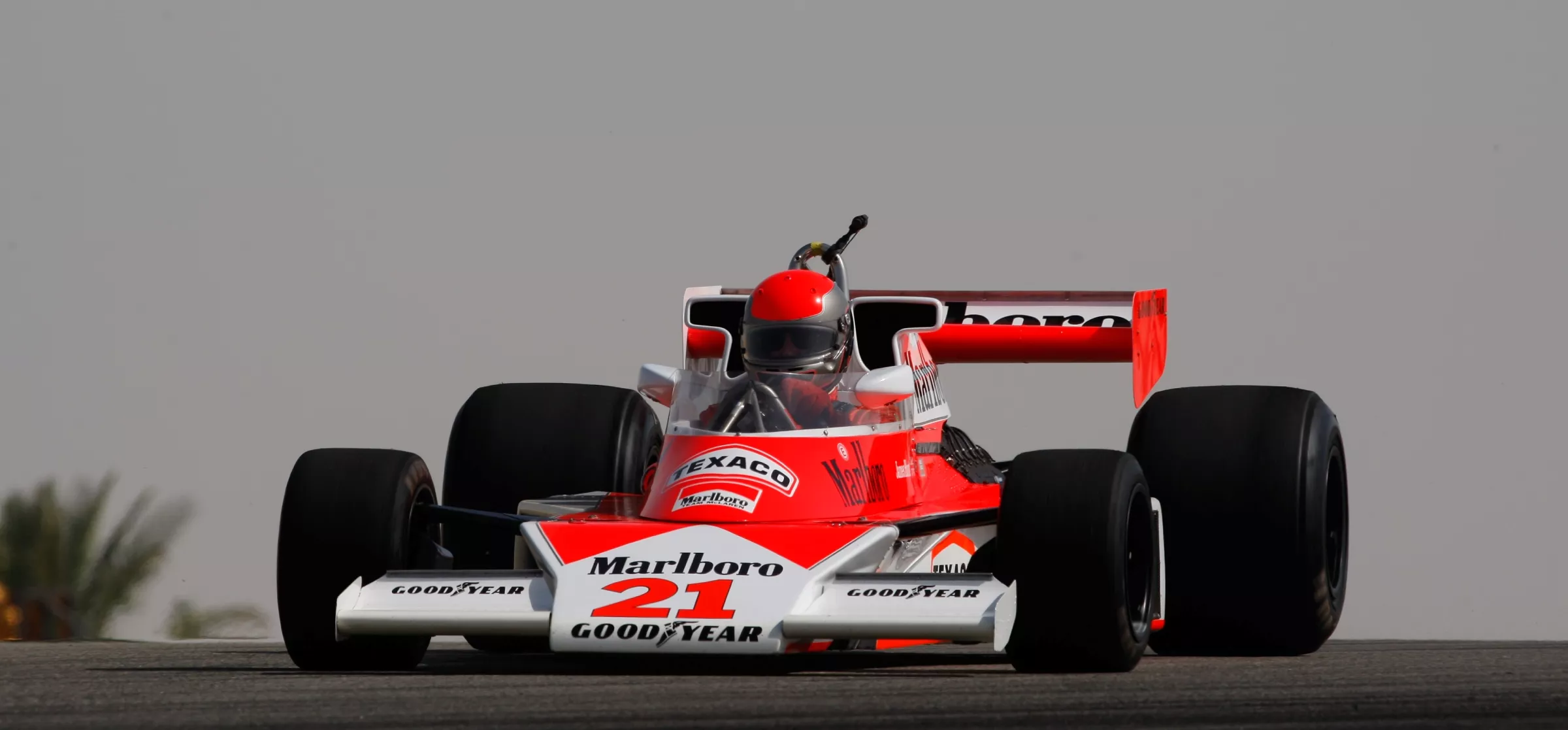
The 1976 McLaren M23 included a modified Hewland gearbox that slotted in a reverse gear and a sixth forward ratio
/fw14b-track-logo2.webp?cx=0.5&cy=0.5)
The dawn of the semi-automatic era
Perhaps the biggest gearbox innovation in F1 history took place in 1989, when Ferrari introduced F1’s first-ever semi-automatic, paddle-shift sequential gearbox on its 640 chassis.
F1 teams had long sought faster and easier gear changes than traditional manual gearboxes allowed. Lotus notably experimented with an early sequential transmission in 1958, and a clutchless-change gearbox manufactured in collaboration with German firm Getrag in 1978. Ferrari itself also dabbled with an early semi-automatic unit in 1979.
However, Ferrari’s decision to actually race a semi-automatic gearbox in 1989 was primarily for aerodynamic reasons, rather than speeding up gear changes. John Barnard, the team’s technical director at the time, had long been irked by having to run a physical gear linkage from the cockpit to the gearbox at the rear of the car, as this necessitated a larger cockpit and a bulkier chassis.
The semi-automatic gearbox solved this problem by eliminating the gear linkage entirely and instead using electronically controlled hydraulic actuators within the gearbox to change gears one at a time when a paddle behind the steering wheel was pressed. This let the driver keep their hands on the wheel at all times, removed the need to disengage the clutch for every shift thanks to precise software control, and allowed the front end of the car to be packaged more tightly.
Ferrari initially suffered horrendous reliability problems with its semi-automatic gearbox in 1989, retiring 19 times in 16 races, with the gearbox being the cause more often than not. However, the potential of the system was clear to see. Nigel Mansell gave the sleek 640 and its groundbreaking gearbox victory first time out at the 1989 Brazilian Grand Prix, and by 1990 the gearbox proved sufficiently reliable to challenge for the championship in the hands of Alain Prost.
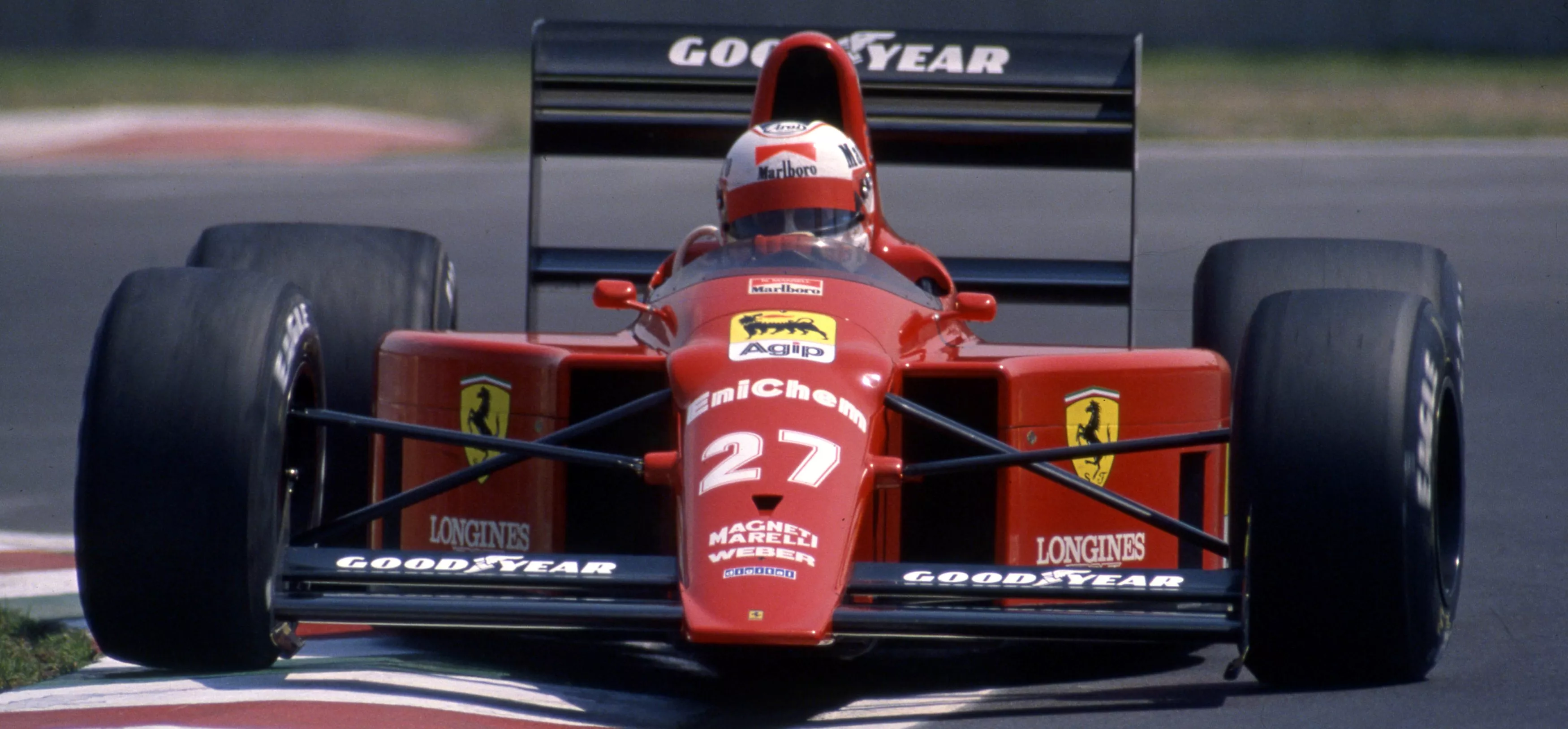
The Ferrari 640 was revolutionary thanks to its semi-automatic gearbox - but reliability hampered it throughout 1989
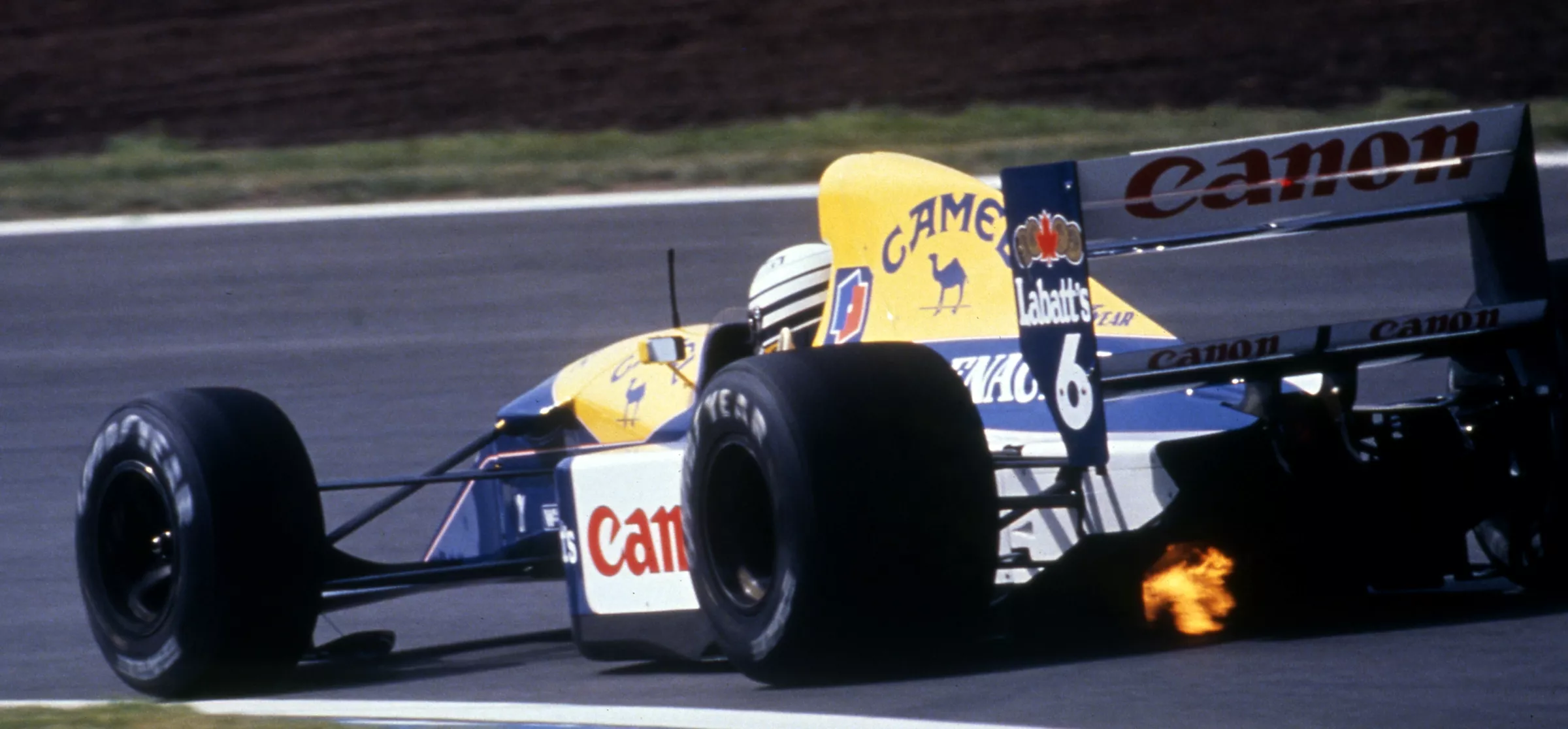
The 1992 Williams FW14B took the semi-automatic gearbox to the top of the world championships
Seamless shifts
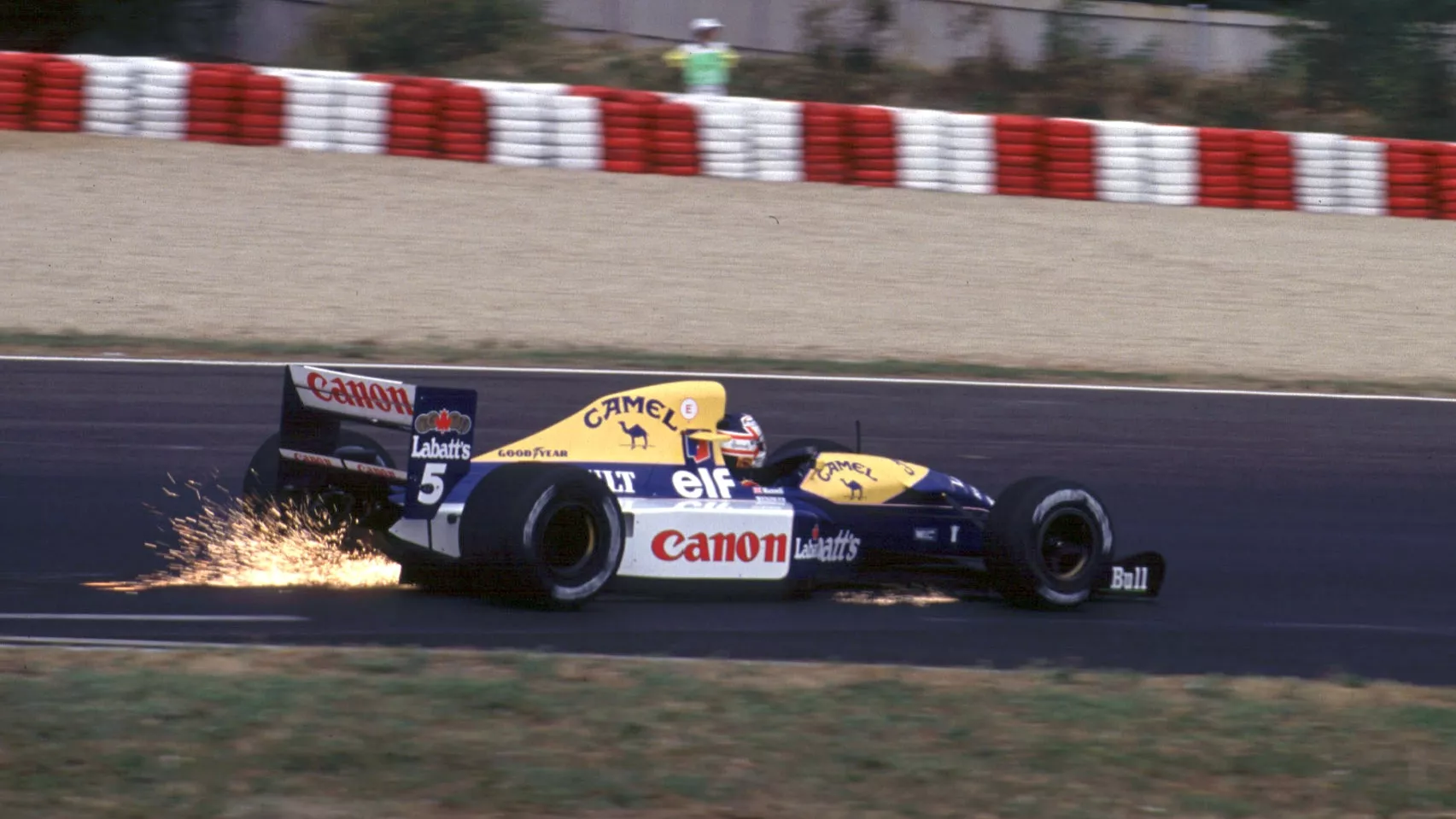
Williams was the first other team to follow Ferrari in adopting a semi-automatic gearbox, fielding its own six-speed transverse semi-automatic design starting in 1991. This gearbox set the standard for future F1 gearboxes by using a rotating shift drum to move the selector forks in the gearbox rather than individual actuators, making it simpler and more compact than Ferrari’s unit.
The legendary Williams FW14B of 1992 was equipped with this gearbox, and when it cruised to both world championships in 1992, the winds of change became impossible for rival teams to ignore. As a result, by 1996, every team in F1 had abandoned traditional manual boxes for good.
Gearbox development continued. In 1993, Williams tested a type of transmission called a CVT or Continuously Variable Transmission. This replaced the discrete gear ratios of a standard gearbox with a belt running between two sets of movable cone-shaped pulleys. By adjusting the pulleys on the fly, the exact gear ratio needed to keep their engine running at its optimal RPM could be achieved, regardless of the speed of the car. This provided unmatched smoothness and power and an uncanny single-tone engine note.
The Williams CVT was banned by the FIA before it ever raced to ensure parity between Williams and its rivals and close off any loopholes around changeable gear ratios. Teams instead opted to refine their semi-automatic gearboxes. In 1993 some teams turned to gearbox software that could automatically shift gears when a pre-programmed optimal RPM was reached.
While not a true automatic gearbox, this still served to take much of the finesse out of changing gears out of the driver’s hands, and was swiftly banned by the FIA in 1994. While they briefly returned in 2001, they were then banned again by the governing body for good in 2004.
.webp?cx=0.5&cy=0.5)
The internals of a 2012 F1 gearbox
By 2005, modern seamless shift gearboxes began appearing, with Honda designing the first such unit for the BAR 007. These built on established semi-automatic designs by introducing a second shift drum, with one drum being responsible for selecting the odd-numbered gears, and the other for the even gears. With appropriate software, the gearbox could therefore begin engaging the next gear before the previous gear had fully disengaged, cutting shift times down to approximately two milliseconds and eliminating torque drops during changes.
Since 2014, the gearboxes in F1 include a total of eight forward speeds, plus reverse.
Unlike in previous years though, since 2014 teams have been required by the FIA’s technical regulations to fix their gear ratios at the start of the season, with only one alteration to gearing allowed per season. Therefore, while older F1 gearboxes may have had fewer selectable ratios at a given time, teams cannot change their gear ratios from circuit to circuit as they used to.
As we watch 2026’s new regulations and the associated changes to the F1 cars unfold, teams are bound to face further challenges this season potentially leading to the next significant gearbox evolution.