Motor
Hydrogen under pressure: How Extreme H proved the viability of hydrogen motorsport
by Samarth Kanal
6min read
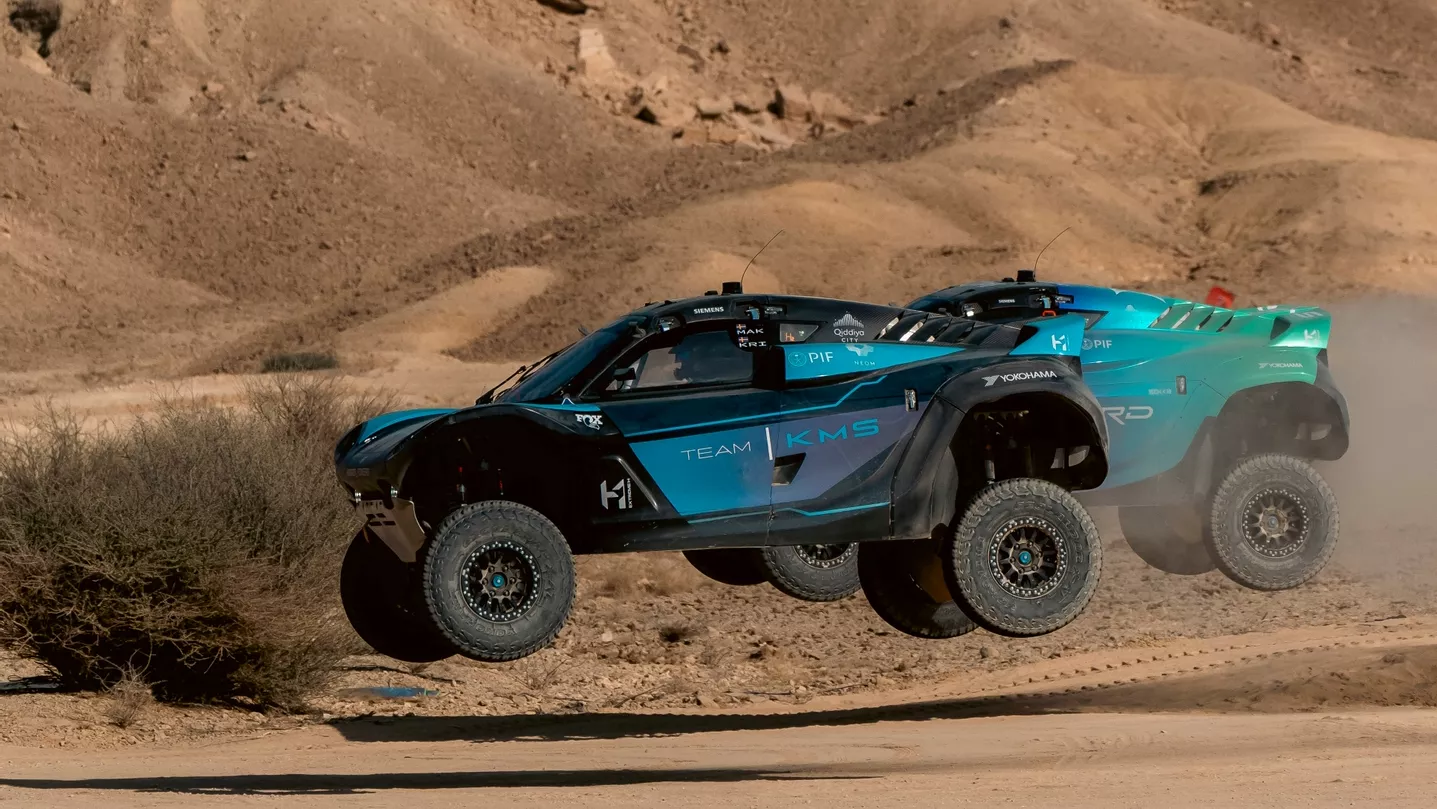
Hydrogen is finding its feet in the most unlikely of settings - the realm of offroad racing -and closer inspection shows that this rugged laboratory is yielding fascinating results through Extreme H.
Sign up for a newsletter and we'll make sure you're fully up-to-date in the world of race technology
Following the conclusion of the inaugural FIA Extreme H World Cup on October 9-11, 2025, in the desert surrounding Qiddiya City, Saudi Arabia, the viability of hydrogen fuel cell technology in a competitive motorsport environment has moved from concept to proven reality.
As the series prepares for its second iteration - scheduled to return to the Qiddiya City desert from October 29-31, 2026 - engineers and industry observers are dissecting the telemetry and structural data from the first season.
For automotive engineers, the most significant takeaways surround thermal management, structural safety, and powertrain reliability under immense stress. Raceteq took a closer look at where Extreme H stands for 2026, and what it learned from its inaugural event.
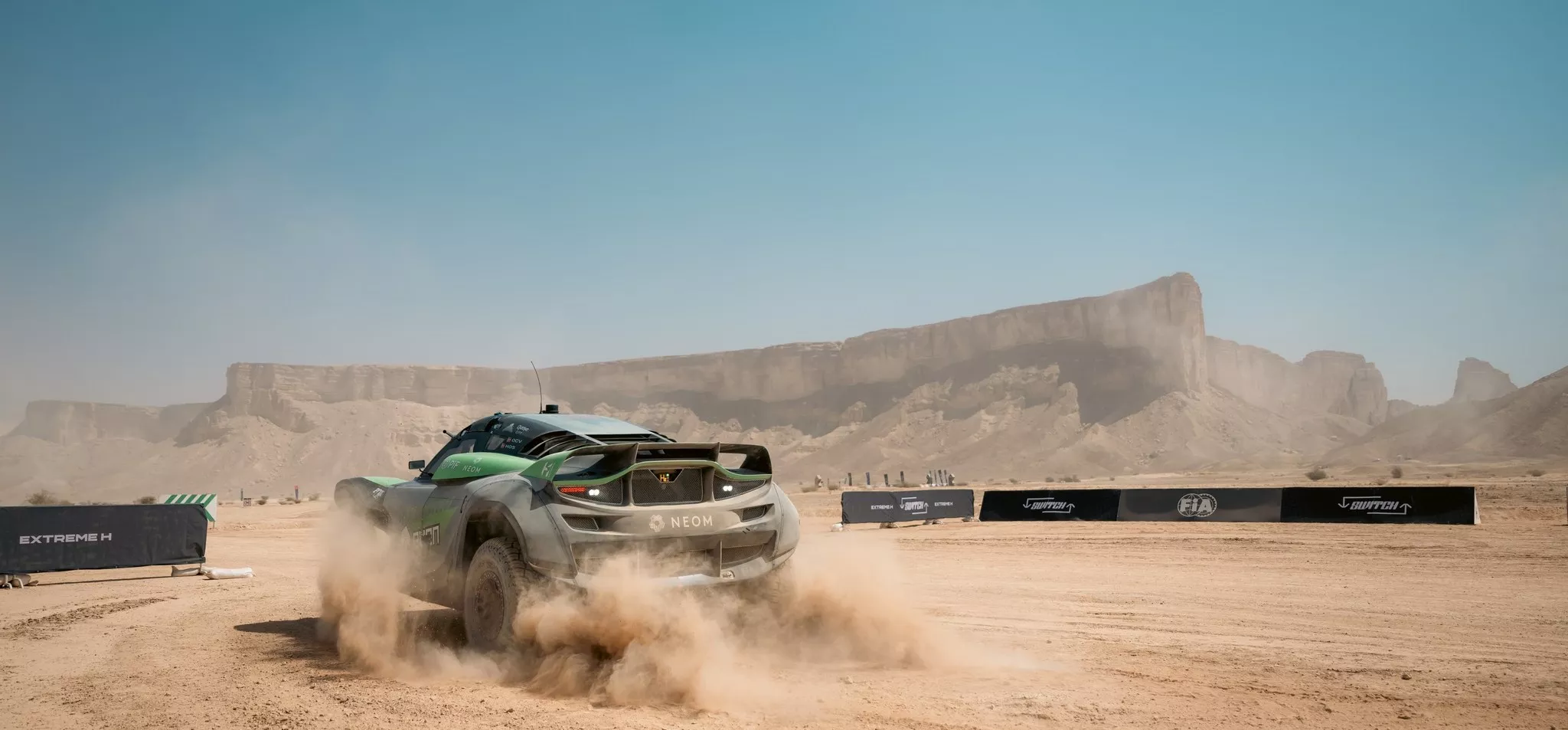
The 2026 Extreme H World Cup will take place on October 29-31, 2026, in the desert outside Qiddiya City
What is the Extreme H car and the World Cup race format?
There’s plenty of data to sift through from Extreme H, but it’s important to establish that this is a single-spec event - like Formula 2 or Formula 3 - in which every car is built the same.
The Extreme H grid consists entirely of the Pioneer 25, a purpose-built 2,200kg offroad racing vehicle.
The Pioneer 25 has a high-power electric battery fed by a hydrogen fuel cell. The fuel cell consumes onboard hydrogen gas to generate a steady flow of electricity, which continuously replenishes the battery pack. The electric motors then handle the sudden energy demands required for acceleration, absorbing heavy impacts, and regenerative braking. The principal byproduct of this process is water.
The race format eschews traditional endurance racing in favour of a multi-disciplinary sprint structure. Teams compete in precision Time Trials to determine seeding, followed by knockout Head-to-Head drag races, and finally, a frantic, wheel-to-wheel eight-car Extreme H World Cup Final. In the inaugural event, the margins were razor-thin, with one finish recorded at a gap of just 0.082 seconds.
The series also mandates a gender-equal driver pairing for every team, a format that demands seamless adaptability from both drivers. Inaugural honours went to Kevin Hansen and Molly Taylor of the Saudi Arabian squad Jameel Motorsport, who will look to defend its title against an international field in 2026.
The 5 key engineering takeaways from Extreme H so far
Overseen by Extreme H’s Technical Director Mark Grain (whose career spans three decades with McLaren) and the FIA’s Extreme H Technical Manager Vincent Gaillardot, the inaugural race yielded five critical engineering lessons that directly address questions surrounding hydrogen as a viable energy source in motorsport and offroad vehicles.
1. Structural integrity
The primary engineering challenge was packaging a highly pressurised hydrogen fuel system within a chassis that regularly experiences violent impacts as offroad racing subjects vehicles to massive vertical loads.
During the inaugural event, the 2,200kg Pioneer 25s were repeatedly launched over jumps, registering impacts of up to 17g upon landing. Furthermore, the vehicles endured high-speed rollovers. Despite these catastrophic forces, the engineering teams reported zero structural breaches or safety issues concerning the fuel cells or hydrogen storage tanks.
2. Road-relevant safety
The immediate concern for both motorsport and consumer applications of hydrogen is fire safety, given hydrogen is highly combustible.
To clear the Pioneer 25 for competition, the FIA had to write an entirely new rulebook, specifically drafting new elements into Appendix J of the International Sporting Code. The homologation process involved extreme crash testing scenarios far exceeding those expected on public roads.
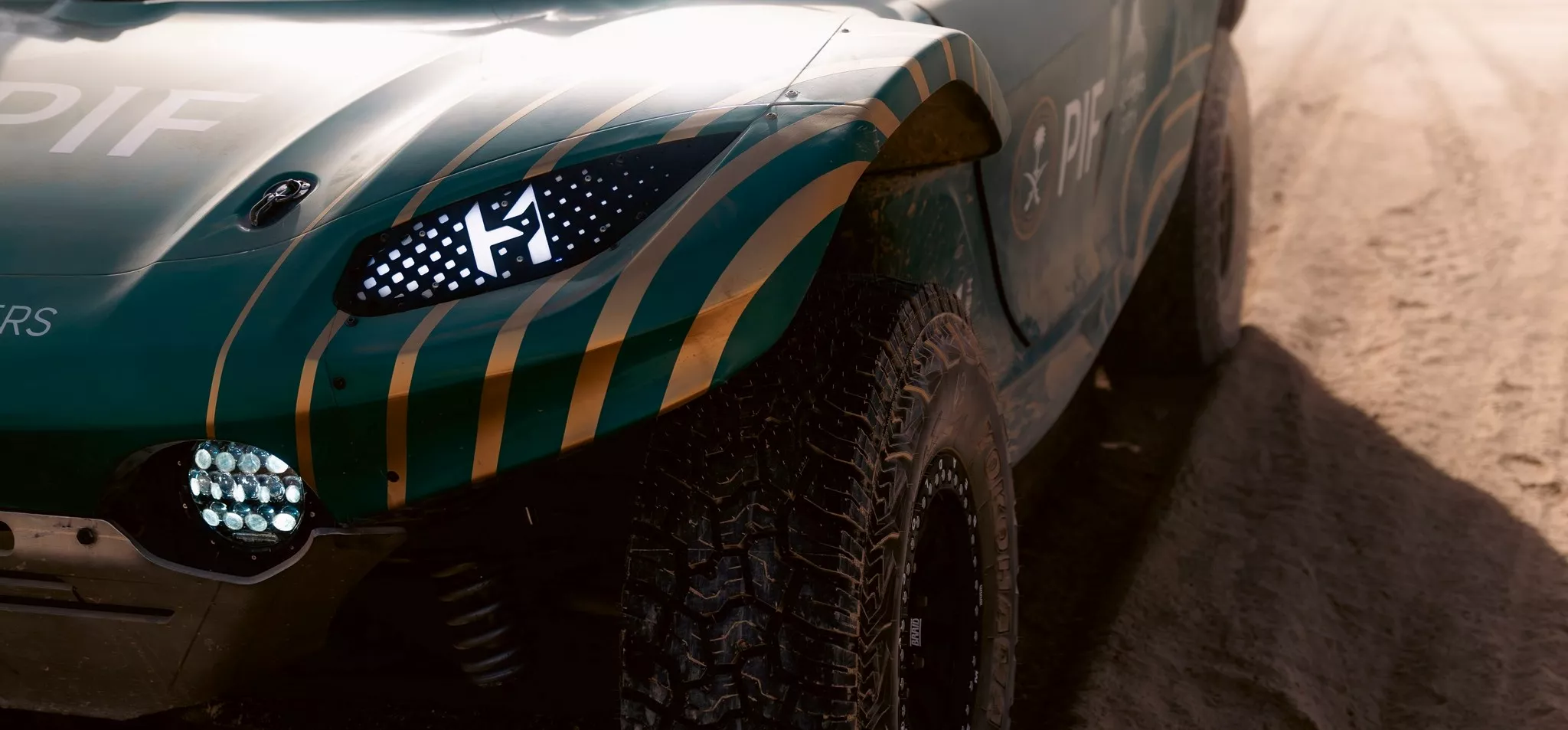
The Extreme H Pioneer25 includes composite body panels to take on huge impacts
The vehicles were mandated to include comprehensive failure mode and effects analysis (FMEA), specialised survival cells for the fuel tanks, and highly sensitive H2 detector sensors capable of identifying microscopic leaks.
The lack of any safety incidents over six days of fierce competition suggests that the rigorous safety standards applied to these racing prototypes can scale directly to consumer and commercial hydrogen vehicles, which will rarely - if ever - experience the forces of offroad racing that Extreme H sees.
3. Unexpected reliability
Introducing a completely new powertrain architecture to a racing grid usually results in a high attrition rate. Teething issues with software integration, cooling, and vibration are par for the course.
Yet, across the nine-car fleet (including the test vehicle), the Pioneer 25s covered a combined 550 kilometres during the 2025 event, without a single powertrain failure. This reliability was achieved despite ambient temperatures hovering around 40° Celsius and fine desert dust permeating the chassis. The continuous operation of the hydrogen fuel cells in these thermal conditions provides invaluable data for engineers developing cooling systems for commercial hydrogen trucks operating in similarly harsh climates.
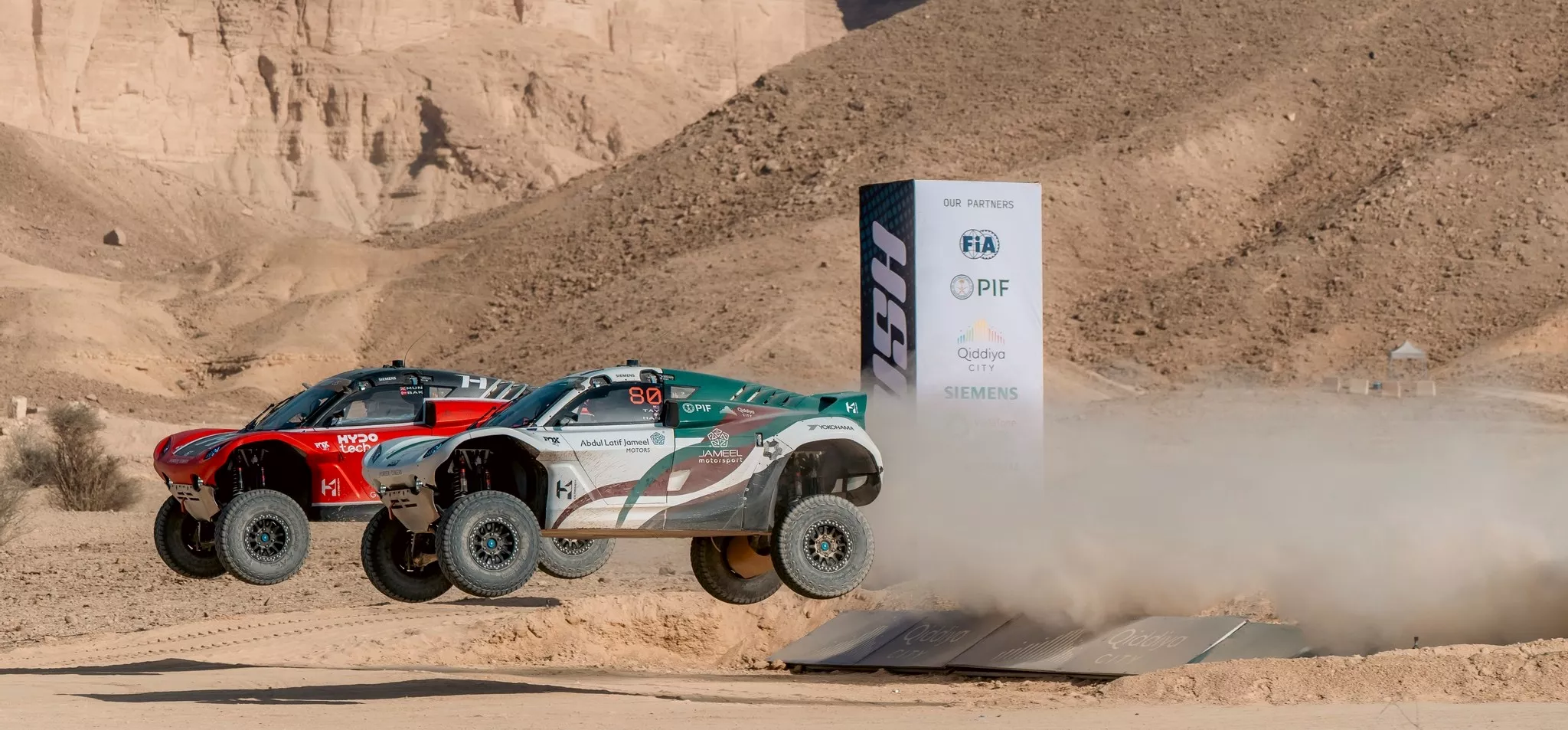
Extreme H said there wasn’t a single powertrain failure over 550km of running in the 2025 event
4. Extreme H’s refuelling advantage
One of the persistent bottlenecks in electric motorsport - and consumer Battery Electric Vehicle (BEV) adoption - is charging time.While battery technology has improved, fast-charging a grid of massive offroad vehicles in a remote desert location presents significant logistical and infrastructural challenges. The Pioneer 25 circumvents this entirely. Because the primary energy source is hydrogen gas, the tanks can be refilled in minutes, akin to a traditional refuelling pitstop.
This rapid turnaround capability is vital for the intense, back-to-back sprint format of Extreme H. Beyond the track, it highlights hydrogen’s primary advantage over pure battery-electric systems for heavy-duty applications: the ability to maintain continuous operational uptime without lengthy stationary charging periods.
5. A sandbox for diverse powertrains
While the current Pioneer 25 relies on hydrogen gas and fuel cell technology, the technical roadmap for Extreme H is intentionally broad.According to Gaillardot, the series views itself as an open laboratory for Original Equipment Manufacturers (OEMs). Future iterations of the regulations are being designed to accommodate liquid hydrogen storage - which offers higher energy density at the cost of complex cryogenic requirements - and even hydrogen internal combustion engines (H2ICE).
By keeping the technical framework flexible, Extreme H provides automotive manufacturers with a high-visibility proving ground to test whichever hydrogen pathway they believe is most viable for their future consumer lineups.
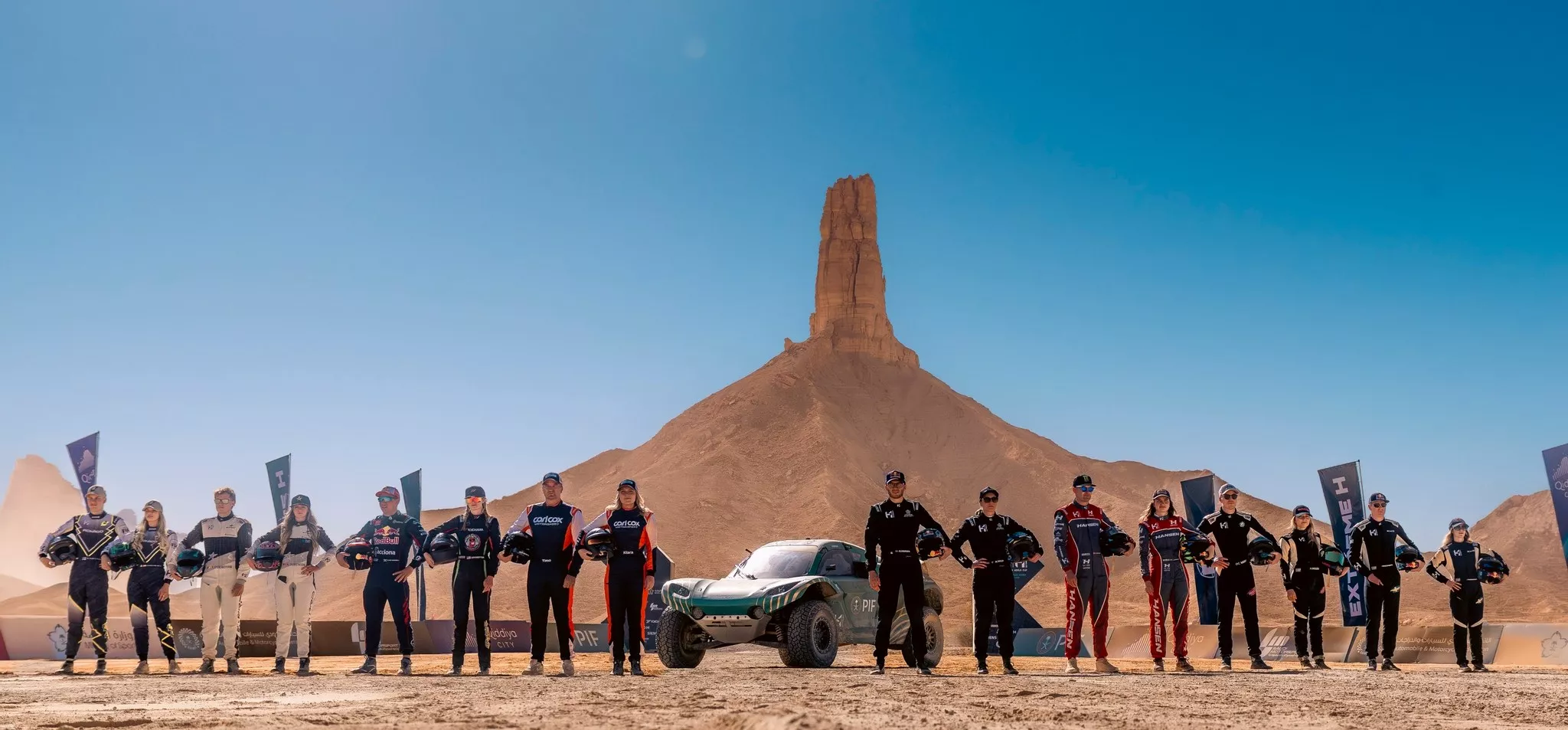
The Extreme H World Cup grid of 2025 stands in front of the Tuwaiq Mountains backdrop
What to expect from the 2026 Extreme H event
When the FIA Extreme H World Cup returns to Saudi Arabia in October 2026, the backdrop will be a rapidly changing Qiddiya City, a region that aims to be a global hub for entertainment and sports, including international football and Formula 1.
For the engineers in the Extreme H paddock, however, the focus will remain strictly on the telemetry screens.
The first season proved that hydrogen is safe, reliable, and capable of delivering elite racing performance.
The second season shifts the focus from survival to optimising performance, using an elite grid of teams and drivers to push the boundaries of what these hydrogen-powered Pioneer 25 cars can achieve.
As global automotive brands continue to weigh their investments in clean energy, the data generated in the desert surrounding Qiddiya City may well dictate the heavy-duty and commercial powertrains of the next decade.