Car
Two formulas, two philosophies: Formula E's Gen4 vs the 2026 Formula 1 car
by Samarth Kanal
7min read
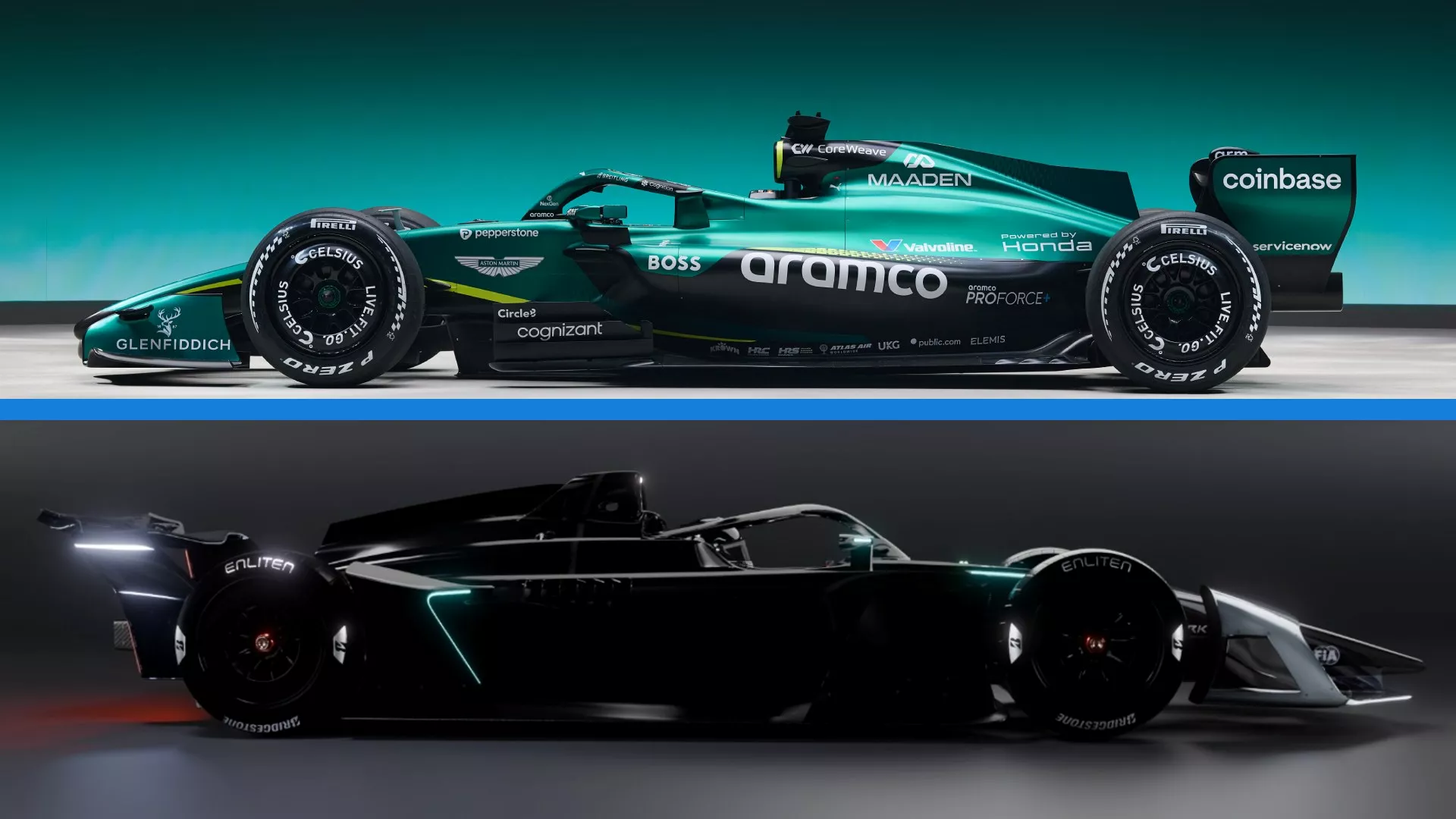
Motorsport is constantly in a state of flux, and the technology curve shows no sign of flattening. This year, Formula 1 has launched its biggest rules reset ever, and Formula E has revealed its striking Gen4 car that will race later in 2026.
Sign up for a newsletter and we'll make sure you're fully up-to-date in the world of race technology
Both series are now fielding cars that look, on paper at least, more similar in philosophy than at any point in their shared history. Both rely a great deal on electric power. Both feature active aerodynamics. Both have cars that output more than 700 horsepower. Both are designed with sustainability credentials embedded in the regulations rather than bolted on afterwards.
But the numbers, when you place them alongside each other, quickly reveal two machines built around fundamentally different constraints, and two very different answers to the question of what a racing car is actually for.
The basics: size and weight
The 2026 F1 car represents the FIA's most determined attempt in years to reverse the trend toward larger, heavier machinery. The 2026 cars are around 30kg lighter than their 2025 counterparts, bringing the minimum car weight to 770kg.
The wheelbase has been reduced from 3,600mm to 3,400mm, while the overall width has been cut by 100mm and the floor width by 150mm.
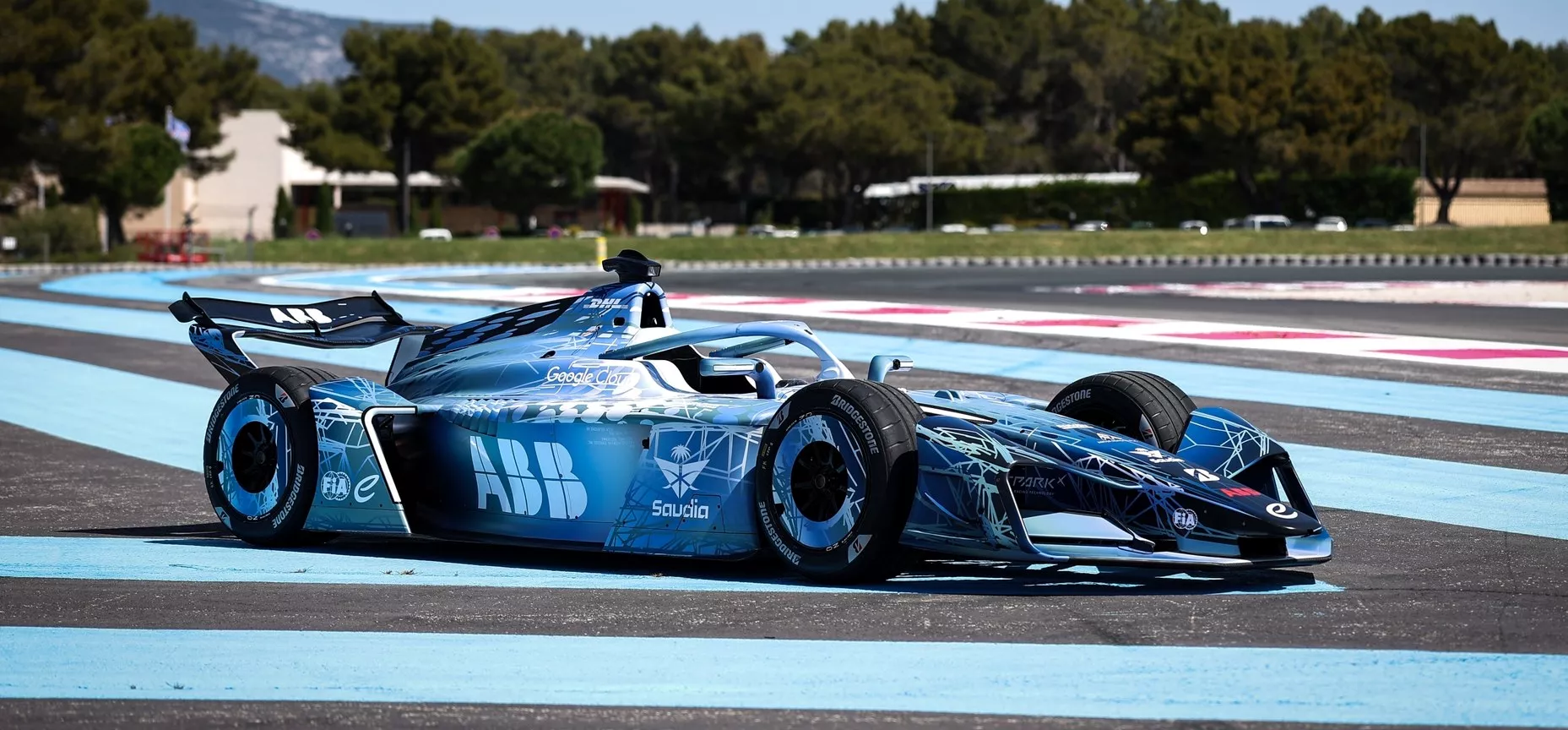
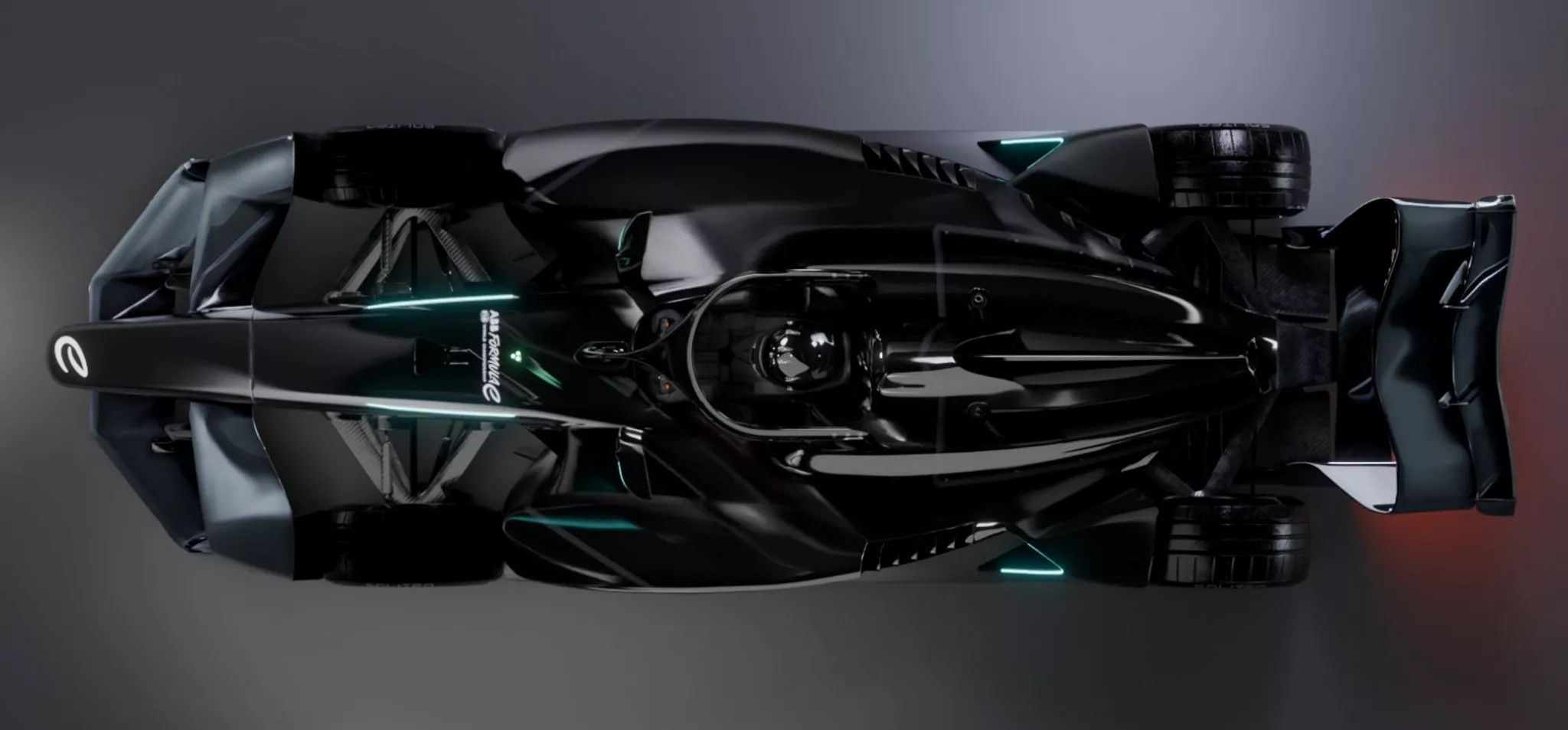
The Gen4 Formula E car on display at France’s Circuit Paul Ricard
That still makes it a large object by most standards, but the FIA - both F1 and FE’s governing body - has managed to improve the F1 car’s safety features while calling on teams to reduce weight through the regulations. That is no mean feat.
The Gen4, by contrast, sits at a minimum weight of 954kg without driver - a figure that will initially look counterintuitive to anyone who expects an electric racing car to be lighter than a petrol-electric hybrid.
The reason is straightforward: the Gen4 runs a new 55kWh battery, a unit 43% larger by stored energy than the GEN3 Evo's pack. Batteries are heavy. Energy storage at this level of density and thermal robustness doesn't come cheap in kilogrammes.
So on the scales: the Gen4 is the heavier car by a significant margin - roughly 184kg before you factor in a driver. The F1 car is the lighter package, although it has a longer wheelbase (3400mm versus 3080mm for the Gen4).
The Gen4's figures state a 5,540mm total length. While the 2026 F1 car's exact overall length has not been specified in the technical regulations and each team’s car will vary, it is generally thought to be longer than the Gen4 car.
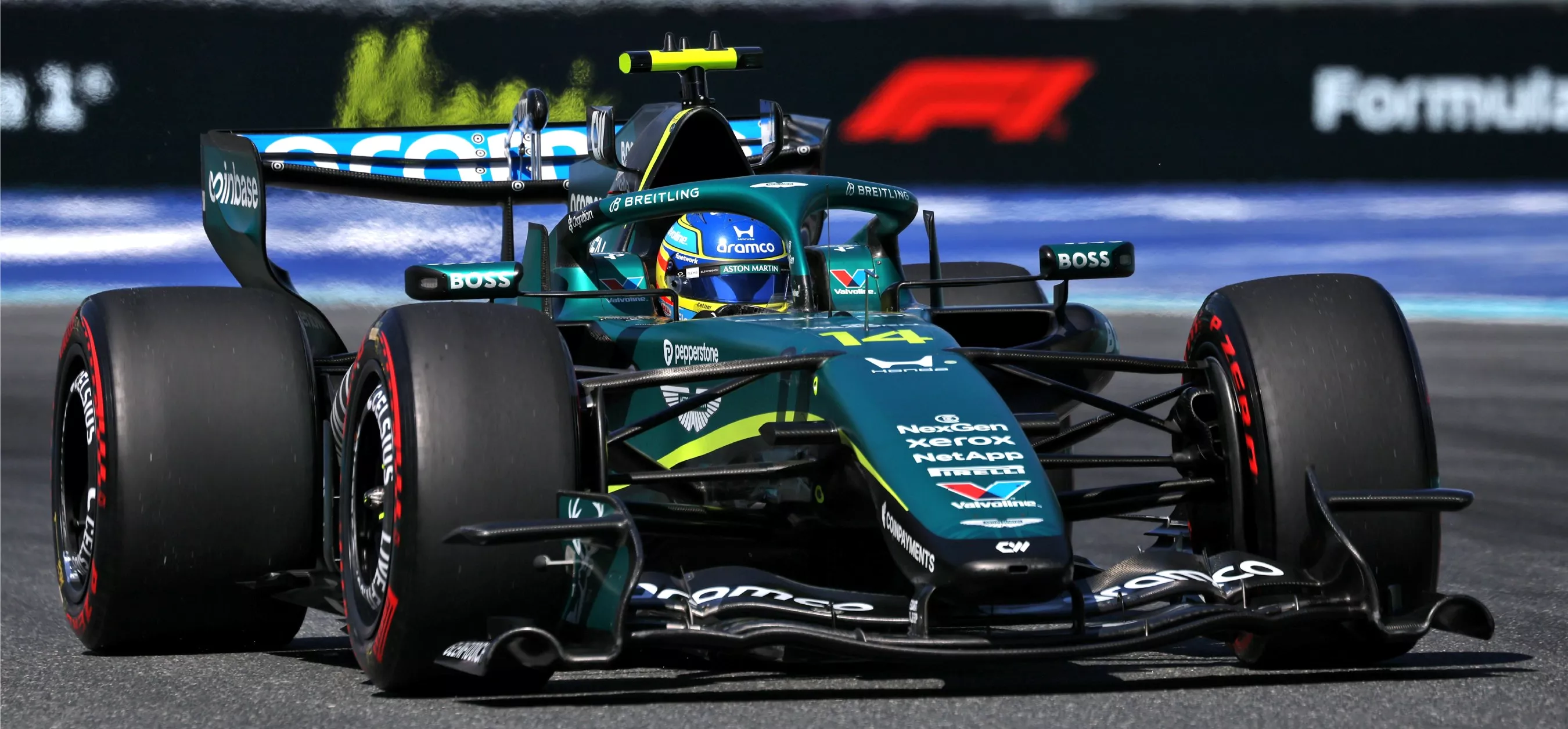
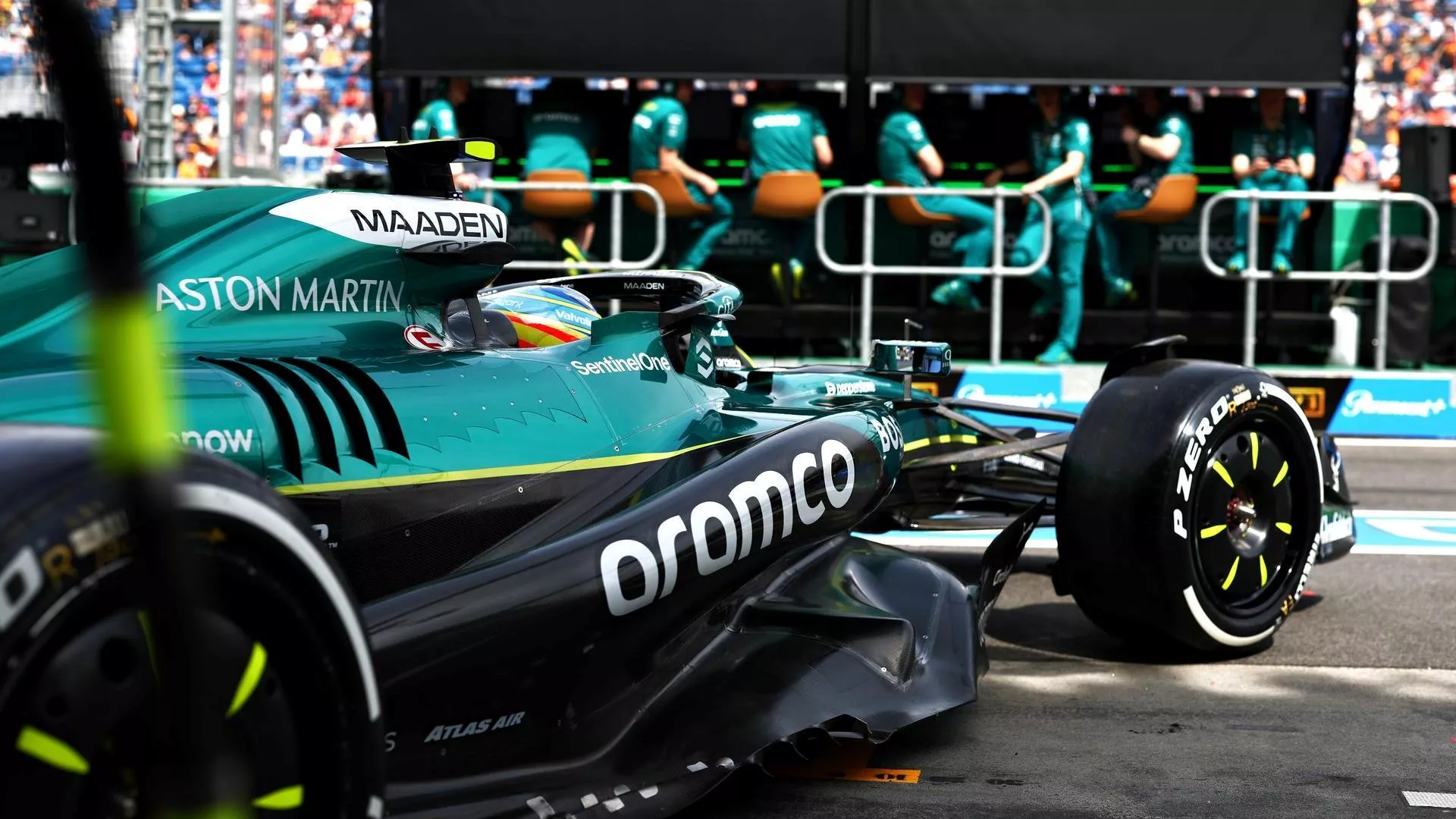
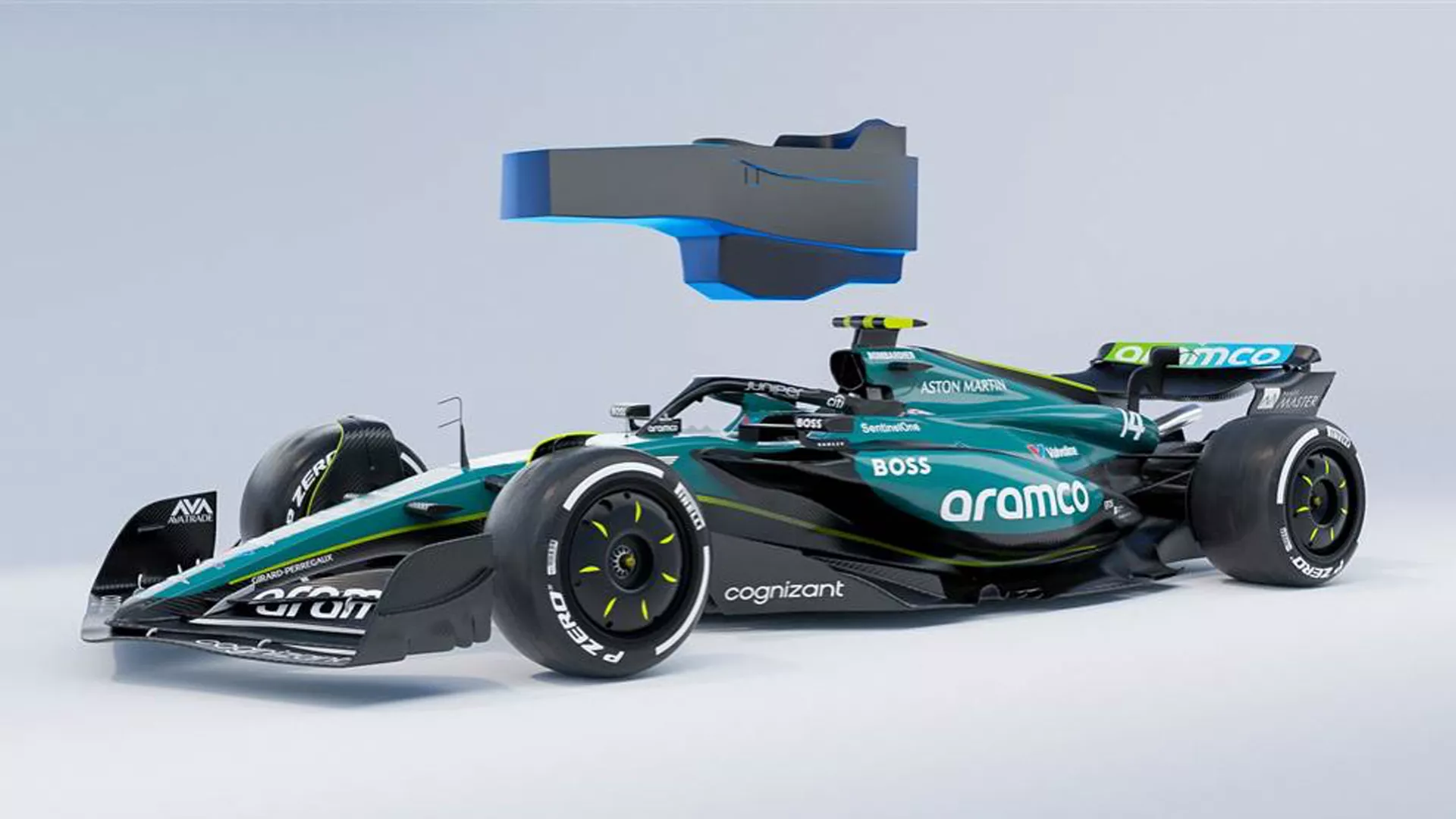
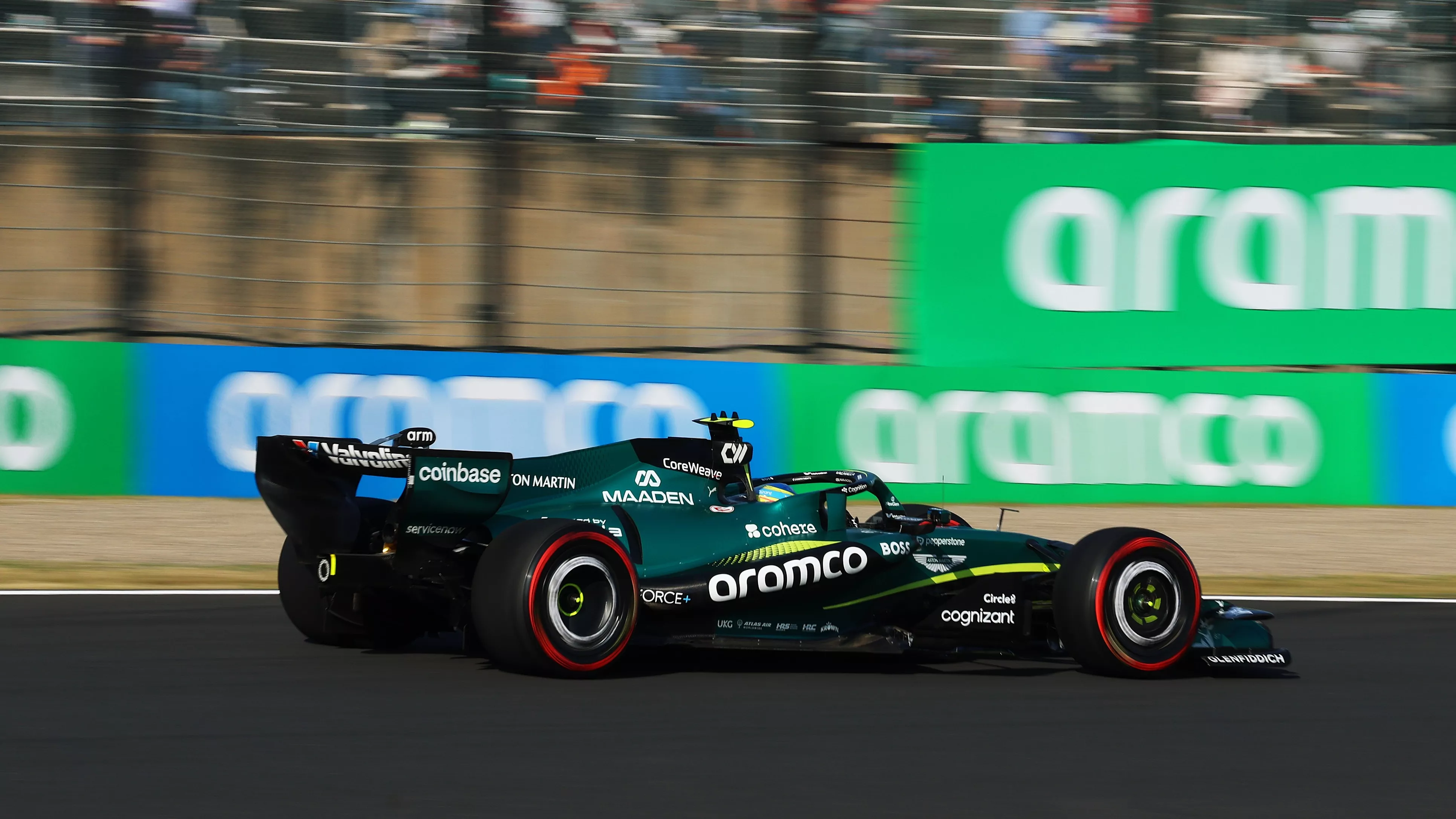
The Aston Martin AMR26 F1 car. F1 cars have a longer wheelbase than the Gen4 FE car
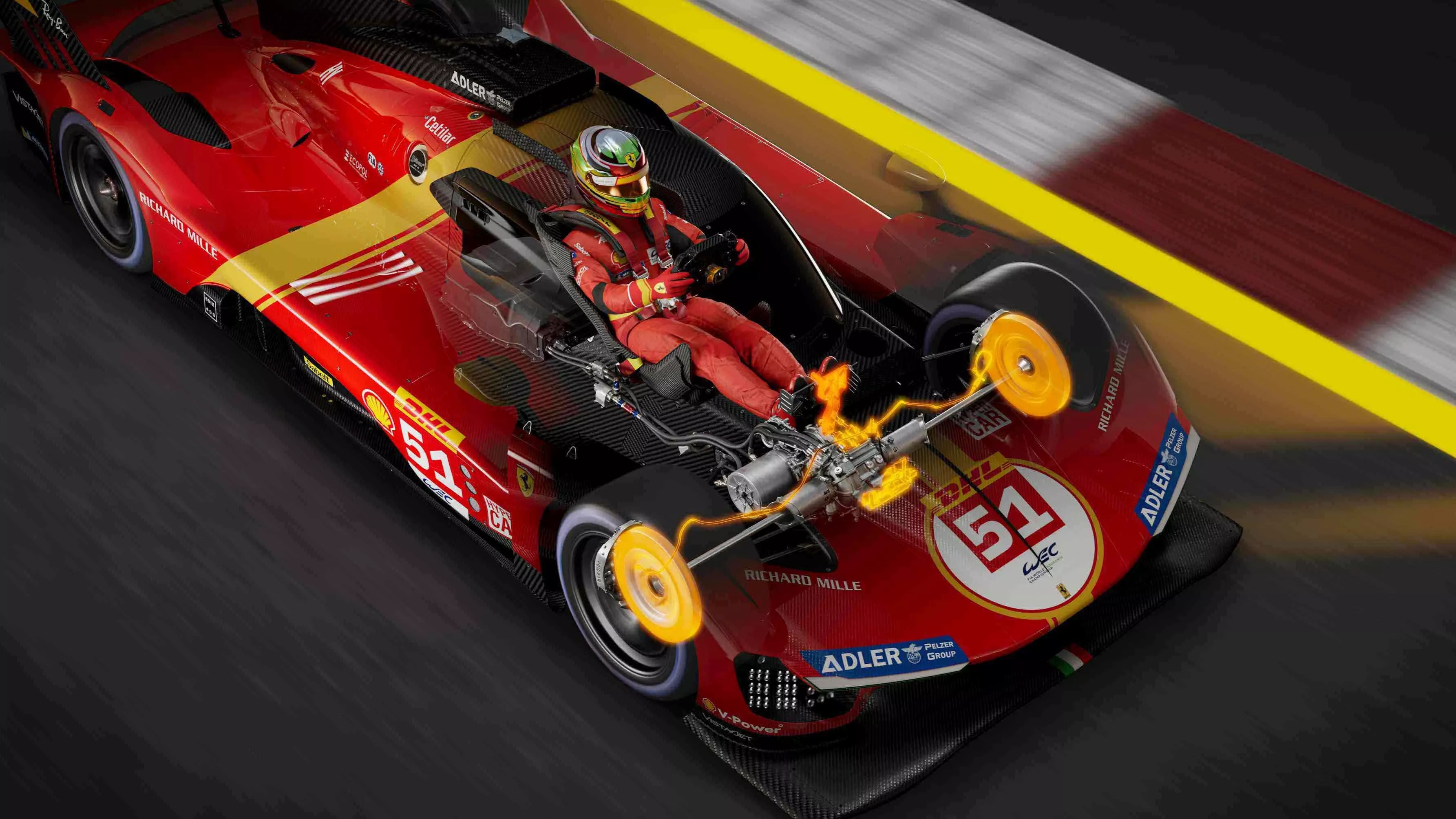
Power: the numbers and what they mean
This is where the comparison gets more interesting, because both series have offered headline numbers that require some unpacking.
The Gen4 produces 450kW (approximately 600bhp) in race conditions. In Attack Mode - Formula E's equivalent of a push-to-pass system - that rises to a peak of 600kW (approximately 800bhp).
All of that power goes through a permanent active all-wheel-drive system, with one motor at each axle. Regenerative braking capacity is rated at 700kW, which Formula E states allows the car to recover close to 50% of the energy used during a race.
The 2026 F1 power unit operates on a different architecture. The internal combustion engine element produces around 400kW, while the MGU-K delivers 350kW to the rear wheels - roughly three times the electrical output of its predecessor. The result is an approximate 50/50 split between combustion and electrical power.
The goal for 2026 was to increase the electrical contribution to around 50%, with the new MGU-K delivering 350kW, up from 120kW. This is set to change in 2027, however.
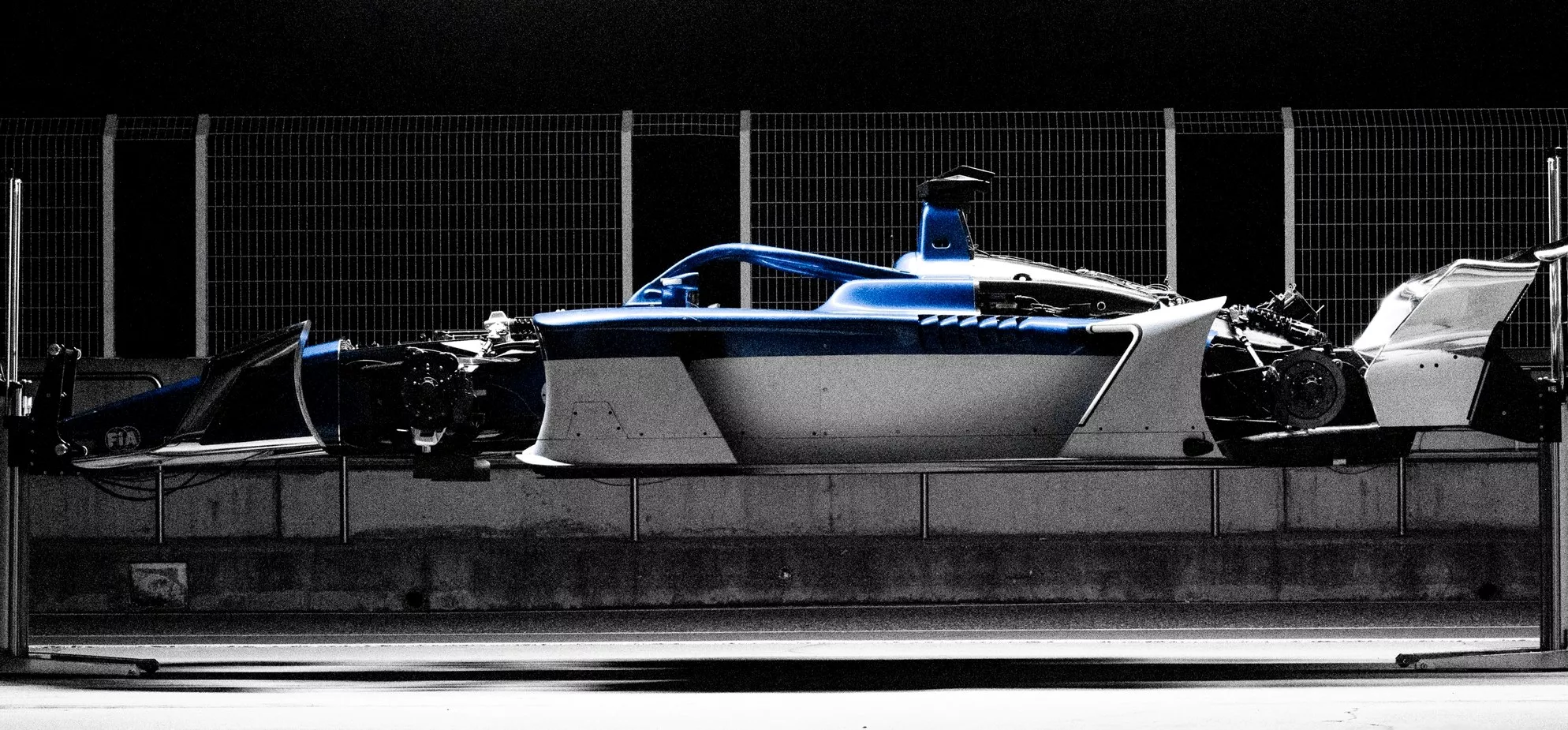
A Gen4 Formula E chassis without its wheels attached, showing just how small the brakes are due to regenerative braking on all four wheels
Total combined peak output for the 2026 F1 package sits in the region of 750kW (approximately 1,000bhp), though exact combined figures depend on deployment strategy and circuit characteristics. MGU-K deployment is maintained at 350kW in key acceleration zones - from corner exit to braking point, including overtaking zones - but is limited to 250kW in other parts of the lap.
The Gen4's 600kW peak is therefore a meaningful step below the F1 car's combined output. However, the Gen4 distributes power to all four wheels, and its 1.8-second 0-100 km/h time reflects the traction advantage that four-wheel drive provides from a standing start.
The F1 car sends all of its power to the rear wheels only, though its lower weight and substantially higher downforce help it manage that - while the rear-wheel drive configuration in turn helps F1 have a lighter package.
The fuel arrangement differs entirely. From 2026, F1 cars run on FIA compliant 100% advanced sustainable fuels derived from sources including carbon capture, municipal waste, and non-food biomass. The Gen4 uses no combustion fuel whatsoever; it is a pure battery-electric car.
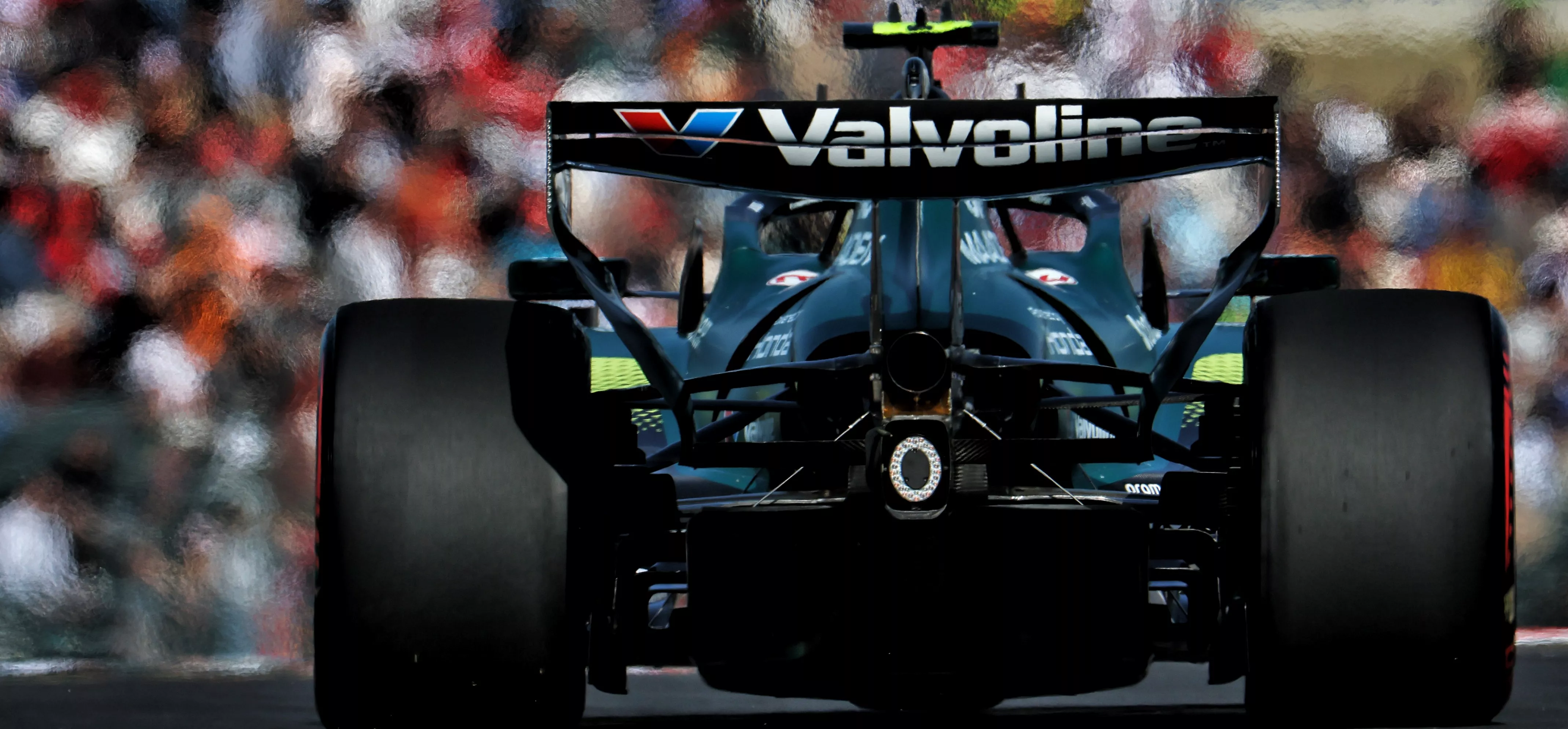
Formula 1 teams use FIA-compliant 100% advanced sustainable fuel from 2026
Aerodynamics: active systems, different goals
Both cars feature active aerodynamics in 2026, but the systems work differently and pursue different outcomes.
On the F1 side, the 2026 cars feature movable front and rear wings with different configurations for 'corner mode' and 'straight mode'. In corner mode, the flaps rest in their higher-downforce position.
When manually activated by drivers in predetermined activation zones, straight mode opens the flaps to reduce drag. The system replaces the previous Drag Reduction System (DRS), which only operated on the rear wing and only when a car was within one second of a car ahead.
The FIA estimates that overall downforce has been reduced by around 30% and drag by approximately 55% compared to the previous generation of cars. The intent is to allow cars to follow each other more closely - the FIA projected earlier in 2026 that a following car will retain 80% of its downforce at one car length and 90% at two car lengths at this early stage of the season.
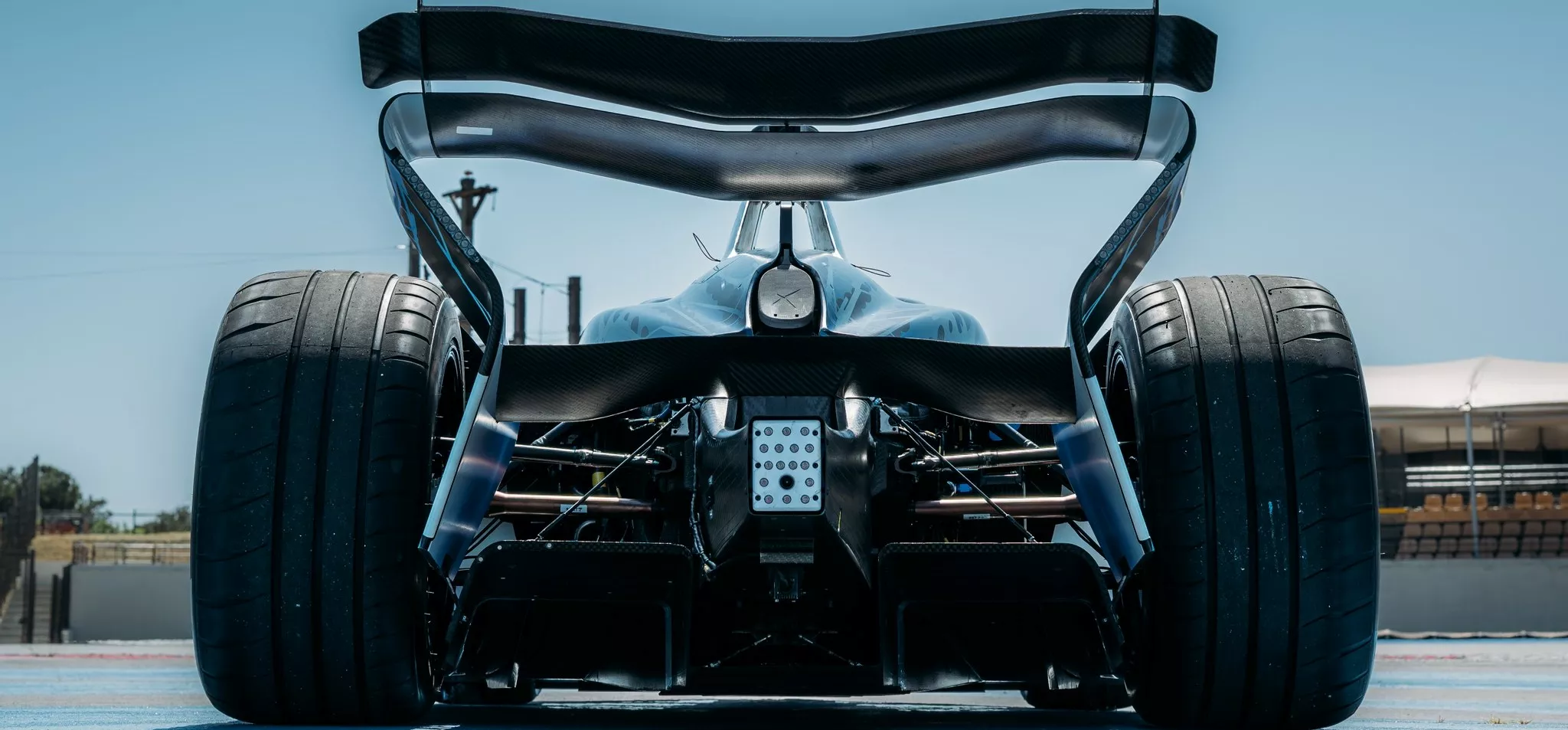
Aerodynamics are closely governed in FE and F1; as FE is a single-spec series it will be easier for the FIA to ensure turbulence is kept to a minimum
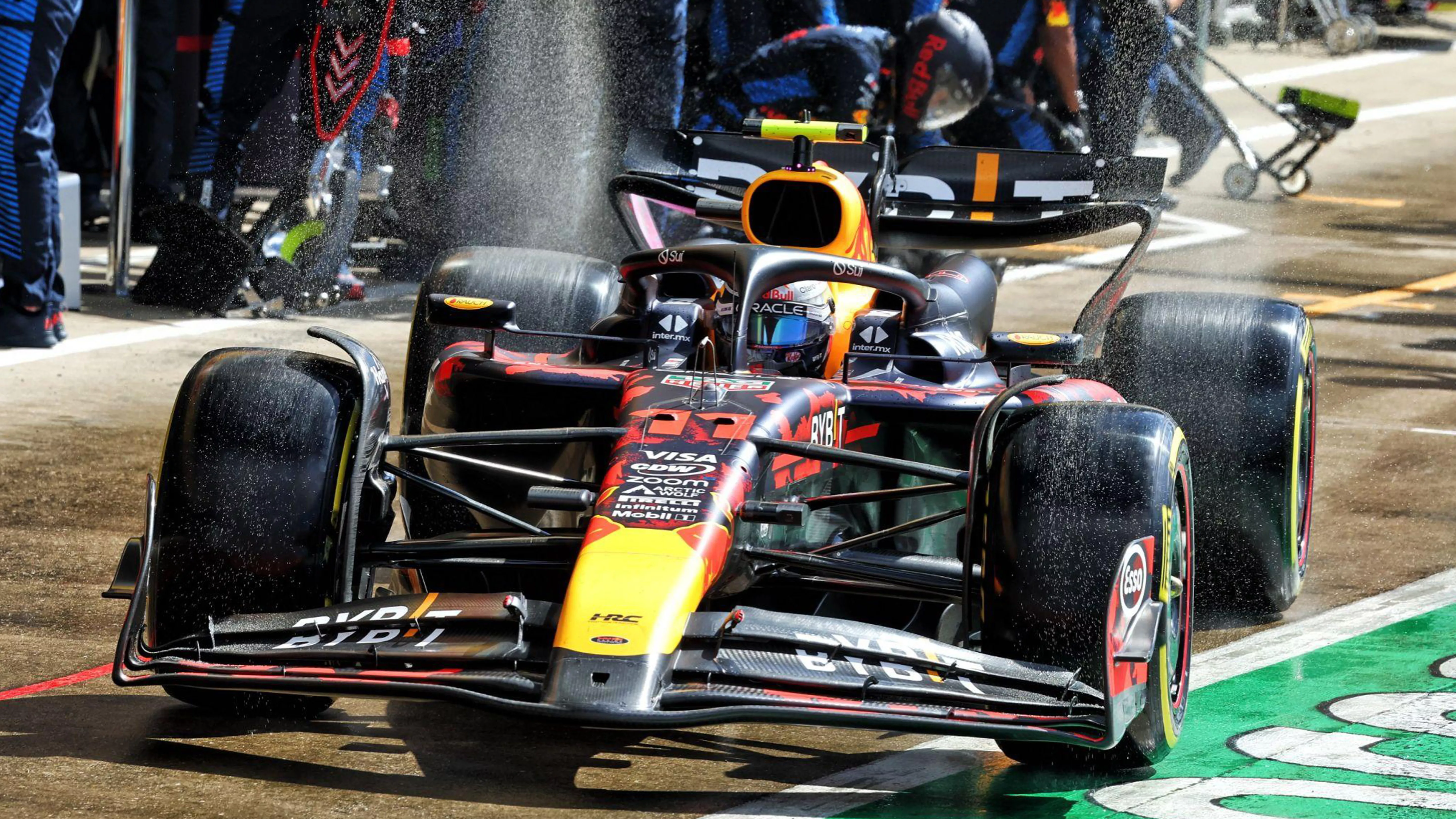
The Gen4 operates a two-configuration aerodynamic package as well, switching between high-downforce qualifying trim and a lower-drag race setup. The specific mechanisms differ from F1's driver-controlled active wings - Formula E's street circuits demand a different downforce profile than the sustained high-speed corners of permanent F1 venues - but the principle of managing the tradeoff between cornering grip and straight-line efficiency is shared.
Top speed illustrates the aerodynamic intent of each car. The Gen4 is quoted at over 335km/h (208mph). The 2026 F1 car, with its substantially reduced drag, is capable of higher speeds still on faster circuits - though the specific top speed varies by team and circuit configuration - and the fastest we’ve seen in 2026 during a race was 354km/h, set by Pierre Gasly in the 2026 Chinese GP.
Tyres: grooved versus slick
Tyre specification represents one of the clearest philosophical divergences between the two cars.
The Gen4 runs grooved all-weather tyres supplied by Bridgestone. To handle the increase in power, they are wider than previous generations, at 295mm front and 330mm rear, and there’s another dedicated full-wet compound.
Formula E has always run a single tyre compound capable of handling dry and damp conditions, partly for logistical reasons on temporary street circuits where weather can change quickly within a race, and partly as a cost and complexity control.
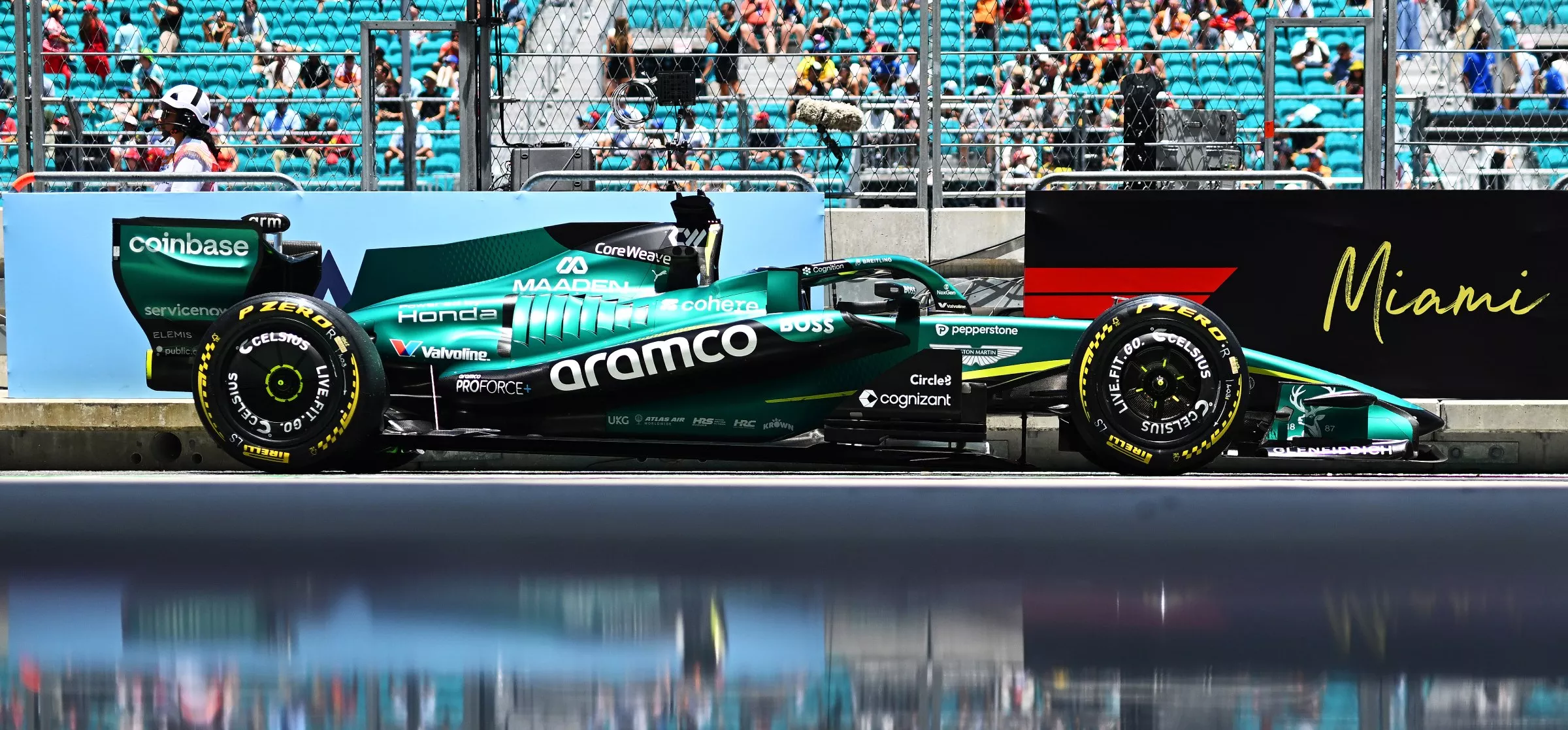
F1 uses slick tyres and FE uses grooved tyres. While F1 races on street circuits such as the Miami International Autodrome, these share a lot in common with purpose-built motorsport venues and the F1 cars generally run at higher speeds
Both cars now feature sophisticated energy deployment strategies that directly influence on-track tactics. In Formula E, Attack Mode - activated by deliberately driving through a specific part of the circuit to trigger the higher power setting - adds a tactical layer to race management.
In F1, Overtake Mode is triggered when a driver is within one second of the car ahead at a designated point on the track, giving the following car access to additional electrical energy that can be deployed to attack or spread across the lap.
Both series have therefore moved away from the DRS era's binary push-to-pass logic toward systems that reward energy management over the course of the race.
The materials question
The Gen4 carries an explicit sustainability target baked into its construction specification.
The car's bodywork uses at least 20% recycled carbon fibre content and bio-based composites, double the proportion used in the GEN3 Evo. The chassis is designed to be 100% recyclable, and the powertrain recovers close to 50% of the energy used during a race through its 700kW regeneration system.
Formula 1's 2026 regulations approach sustainability differently. The advanced sustainable fuels used by F1 teams are independently certified and derived from non-food sources, genuine municipal waste, and carbon capture, meaning no new fossil carbon is burned.
The fuel is described as 'drop-in', meaning it can be used in conventionally-engined road vehicles. The construction regulations for the cars themselves do not mandate recycled content proportions in the same explicit way the Formula E rules do.
Both FE (above) and F1 feature overtaking aids that make use of regenerative braking and its stored energy
What the numbers say, and what they don't
Placed side by side, the Gen4 car and a representative (via Formula 1) F1 car look like this:
| 2026-27 Formula E GEN4 | 2026 Formula 1 car | |
| Race power | 450kW (~600bhp) | ~750kW combined (~1000bhp) |
| Peak power | 600kW (~800bhp) | ~750kW+ |
| Weight (no driver) | 954kg | 770kg minimum |
| Wheelbase | 3080mm | 3400mm |
| Top speed | 335km/h (208mph) | Circuit-dependent; higher |
| Drivetrain | Permanent all-wheel drive | Rear-wheel drive |
| Energy storage | 55kWh battery | ~8.5MJ ERS per lap |
| Aerodynamics | Two aero configs | Wings open/close multiple times per lap |
| Fuel | Zero (pure electric) | 100% FIA-compliant advanced sustainable fuel |
| 0-100 km/h | ~1.8 seconds | Not published |
| Tyres | Grooved all-weather + wet | Slick + intermediate + wet |
But the Gen4 closes the gap on previous Formula E generations considerably. A 600kW peak output and a 335km/h top speed would have seemed implausible for an electric racing car just a few years ago.
The 1.8-second 0-100 km/h figure, achieved through four-wheel-drive traction rather than raw power alone, represents a genuine performance statement.
What the comparison genuinely reveals is that both series have arrived at 2026 having made their most ambitious regulatory steps in years.
The shared governing body, the FIA, has also brought its engineering approach for FE closer to that of F1, proven by the shared vocabulary in both series’s regulatory framework, and the heightened power output of the Gen4 car, which is very close to that of the F1 car.
There are fundamentally different priorities when it comes to F1 and FE: peak performance on permanent circuits in one case, accessible street racing with urban logistics constraints in the other.
The numbers tell you what each car can do; the sheer scope of evolution shows you what engineers can do.
.webp?cx=0.5&cy=0.5)