Future
How the FIA used the final Dutch Grand Prix as a microplastics laboratory experiment
by Samarth Kanal
7min read
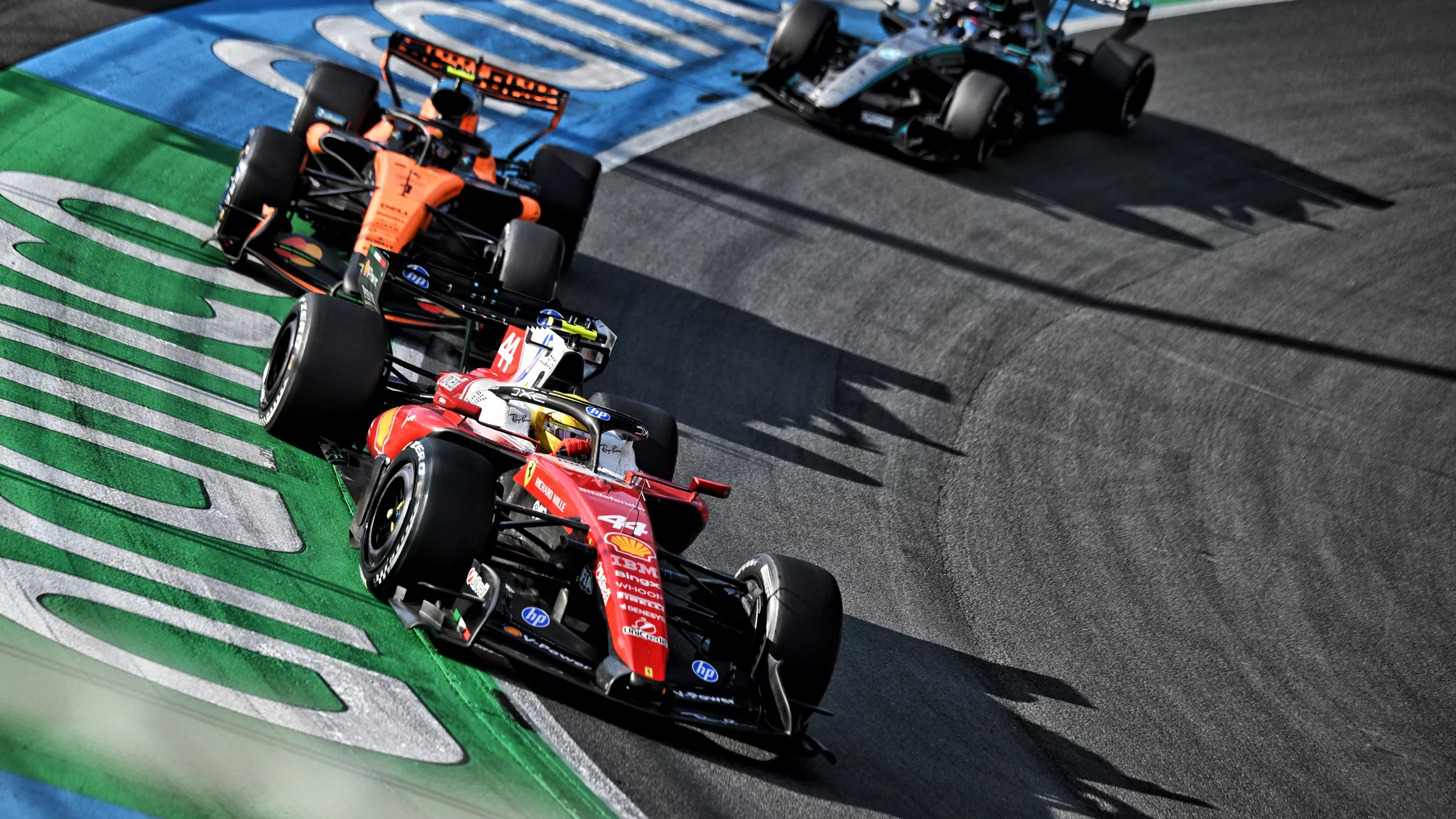
When the rain fell over Zandvoort at the 2026 Dutch Grand Prix, our focus was on strategy calls, and the slippery surface that caught out home hero Max Verstappen. Rainwater, however, brings with it another challenge.
Sign up for a newsletter and we'll make sure you're fully up-to-date in the world of race technology
Tyres, brakes, and powertrains constantly release microscopic particles as cars lap the circuit. Mixed with dust, microplastics, and other pollutants, this material is traditionally swept into drainage systems by stormwater, eventually bleeding into rivers, lakes, and the sea.
Invisible to the naked eye, these waterborne particles represent a critical environmental challenge - one that the FIA has stepped up to try and solve.
The governing body has launched a research project designed to capture and filter tyre wear and pollutants before they ever leave the circuit.
The goal is to develop technology that transfers from the racetrack to the road.
The hidden environmental cost of transport
"With road cars, we've had particles being emitted not only by the power unit, but also by brakes and tyres,” explains Nicolas Aubourg, Head of R&D at the FIA.
“When it rains, the stormwater collects the particles and can carry them into waterways and, potentially over time, into the sea. It is a growing problem for society, but we think that motorsport can help tackle the issue.”
A 2024 report by the OECD (Organisation for Economic Co-operation and Development) estimated that in 2020 alone, 2.7 million tonnes of microplastics seeped into the global environment - a figure expected to double by 2040.
While microplastics come from myriad sources, transport is a primary source. A 2024 University of Portsmouth study estimated that tyre particles account for a massive 28% of all microplastics entering the environment globally.
A 22-car Formula 1 grid on a closed circuit represents just a microscopic fraction of this total compared to the millions of road cars driving daily. However, the FIA recognises that motorsport provides the ultimate controlled laboratory to test solutions that can be scaled for public roads.

An illustration courtesy of Urbanfilter that shows areas where particle runoff could be concentrated
Measuring the almost-invisible
The FIA set out to understand this problem, enlisting the help of Imperial College London - specifically its world-renowned Environmental Research Group (ERG) - to meticulously measure particle emissions at major races, including the Belgian Grand Prix at Spa-Francorchamps and the 24 Hours of Le Mans, in France.
At Spa in 2026, sensors were deployed across the paddock, pitlane, and grandstands, as well as far off-site to establish background baselines.
At the 2026 Le Mans 24 Hours, the monitoring equipment was positioned uniquely close to the cars themselves, isolated from paddock pollutants such as cooking equipment and fireworks.
“The idea is to have a pool of data that will help the research community understand the phenomenon, because it is complex," Aubourg notes. "Even if we could just provide data to help the scientific community, it would already be a legacy from motorsport. But we want to use motorsport as a laboratory to trial new solutions.”
The 2026 Dutch GP solution
Measurement has now turned to mitigation as the FIA has teamed up with the Technical University of Berlin (TU Berlin) and German start-up Urbanfilter.
Together, they developed a smart, modular filtration system designed to integrate directly into street drains, capturing contaminants precisely at the source while maintaining crucial stormwater flow.
In laboratory conditions, the Urbanfilter system captured up to 99% of passing particles with only annual maintenance required.
Following a year of analysing specific track surface samples from Zandvoort, engineers designed and manufactured two bespoke prototype filtration units. These have now been seamlessly integrated into Zandvoort’s drainage network, covering roughly 3,300 square metres around the pitlane and the iconic banked Turn 1.
Zandvoort’s immediate proximity to the North Sea coastline makes water quality a high-stakes priority, while its European location allowed the project to accelerate from concept to deployment in just over a year.
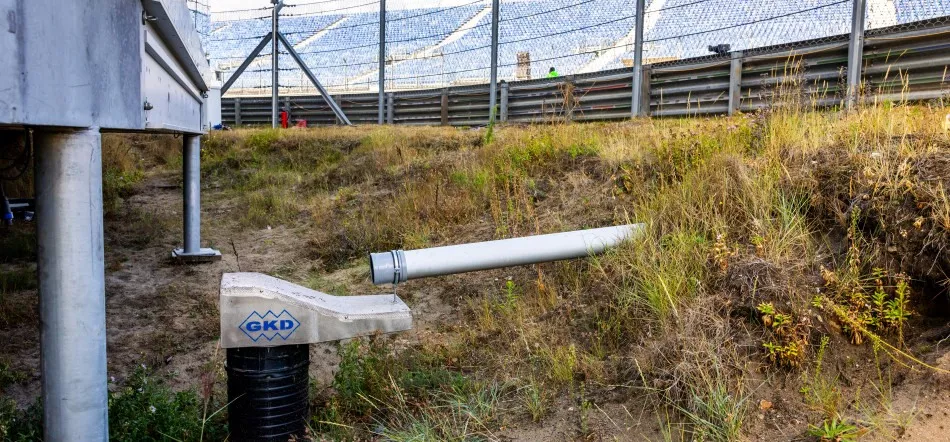
Measuring equipment used by the FIA at Zandvoort during the 2026 Dutch GP weekend - image courtesy of the FIA
From the racetrack to the road
“If we show that it’s working... we will hopefully begin discussing the concept with other circuits," says Aubourg.
"If we do convince the promoters of street circuits that we could install these filters, we can race with fewer particles leaving the site and leave the filters behind afterwards for everyday road traffic.
“That would represent a significant quantity of particles that do not go into the environment. It's a legacy from motorsport to road cars that could be implemented at scale.”
The FIA Foundation continues to collaborate with TU Berlin, Urbanfilter, and conduct testing on racetracks around the world.
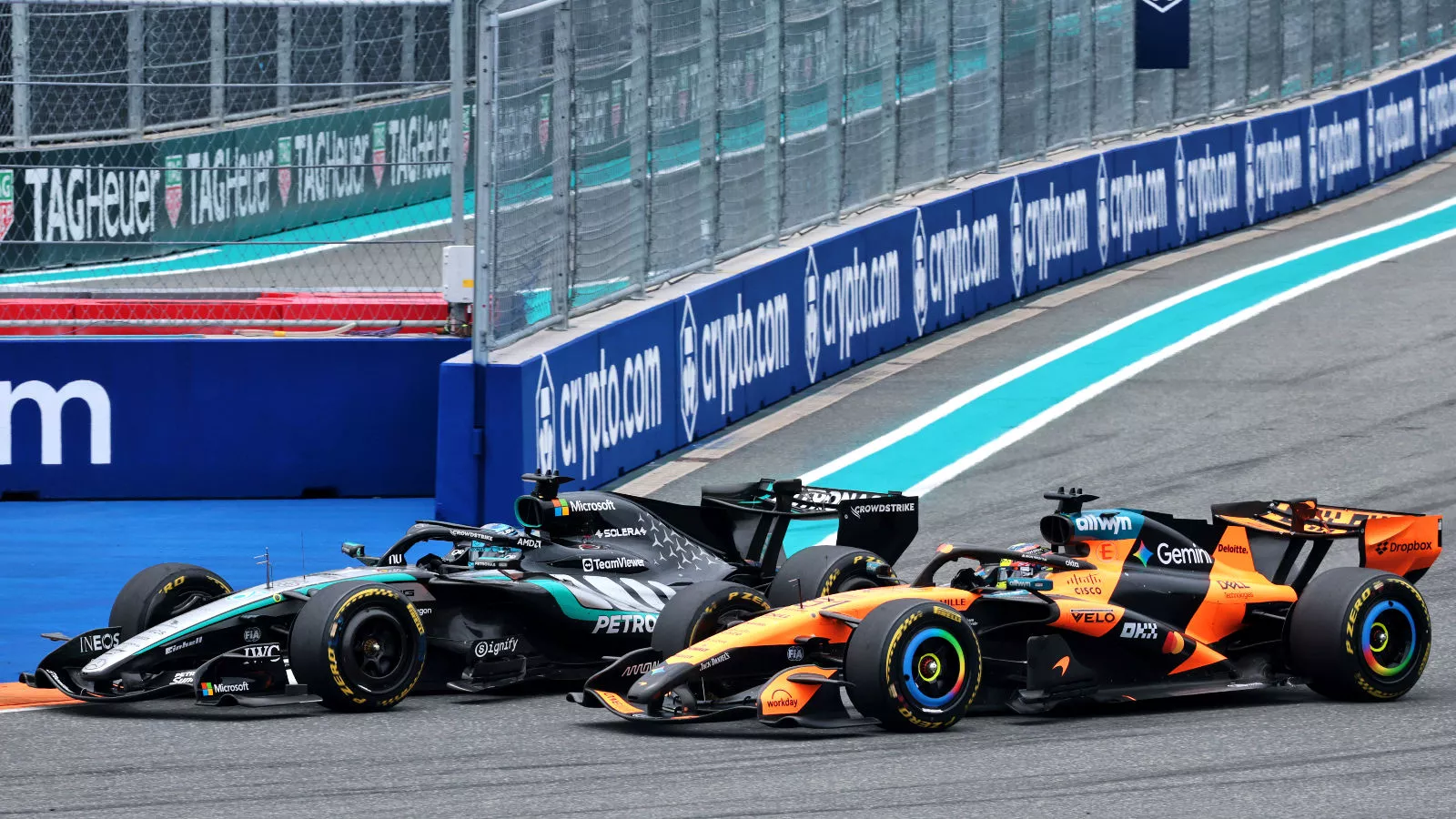
So, as the cars navigated the sweeping, banked corners of Zandvoort - where McLaren’s reigning champion Lando Norris took victory over Mercedes’s championship leader Kimi Antonelli - there was an impactful technological milestone quietly taking place.
/xpb_1424094_hires.webp?cx=0.32&cy=0.93)