Innovation
Can F1 teams achieve full circularity? Analysing McLaren and Mercedes’s efforts
by Matthew Somerfield
8min read
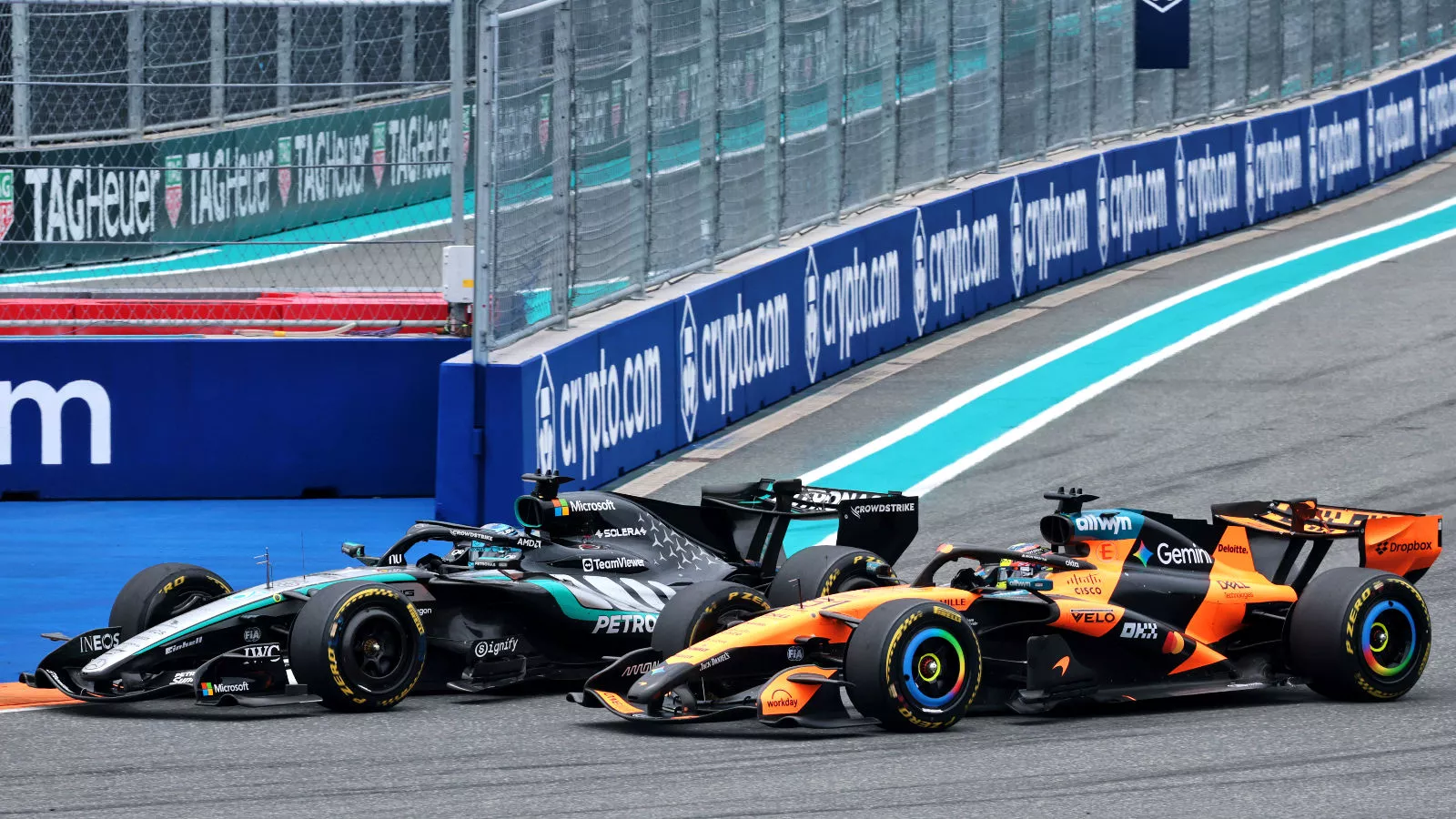
While McLaren sets about defending its drivers’ and constructors’ titles in 2026, it has a big ambition off the track: creating a circular Formula 1 car.
Sign up for a newsletter and we'll make sure you're fully up-to-date in the world of race technology
That’s not a quip on the shape of its car, but the ambition of creating a fully recyclable Formula 1 car, with minimal waste.
This is a challenge that extends beyond the track to the factory, and McLaren’s 2026 sustainability report outlines its progress and highlights key milestones.
At the centre of its sustainability report is, as McLaren describes it, the “moonshot” of a fully circular car.
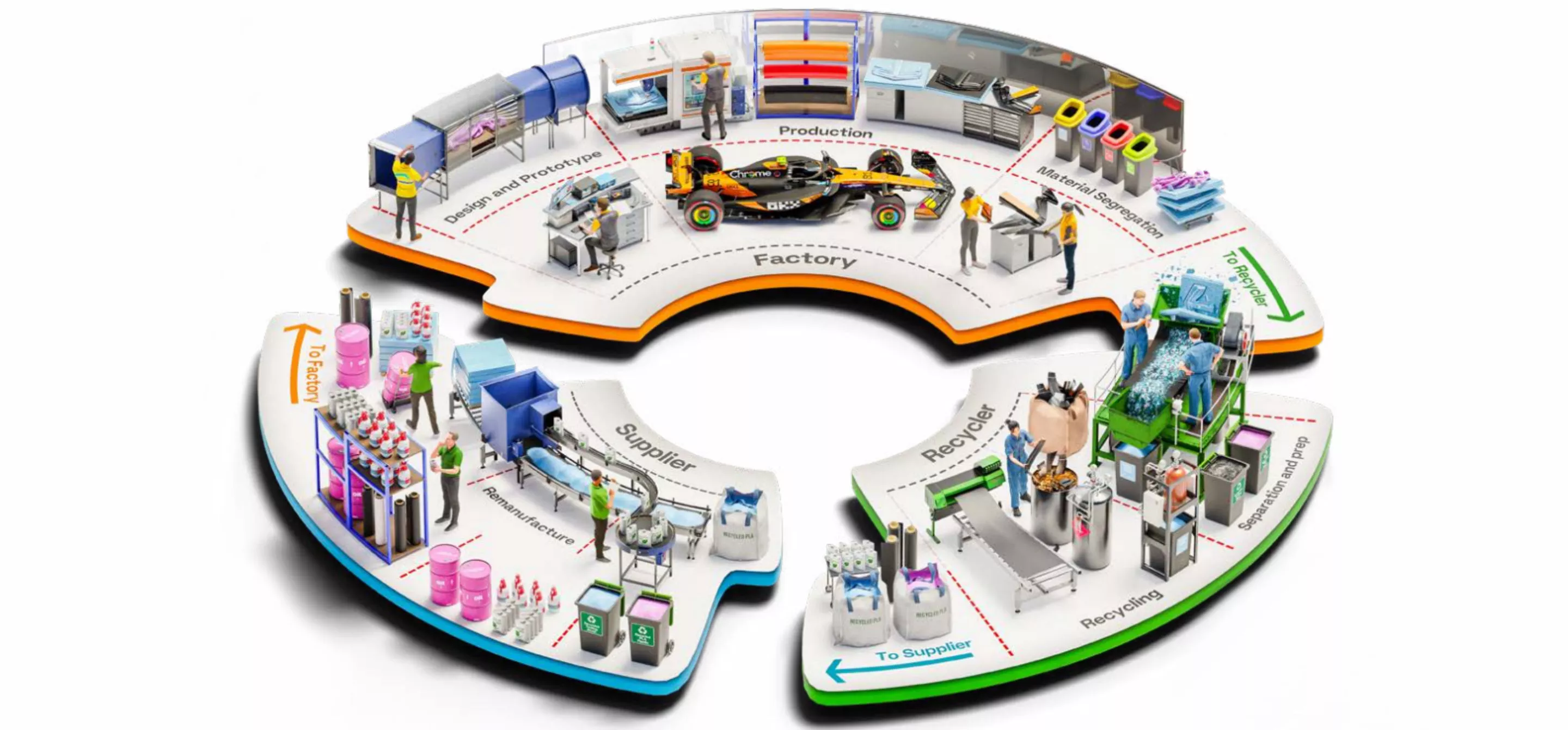
A graphical representation of the processes and departments that go into building a Formula 1 car.
How does an F1 team begin to achieve circularity?
In order to achieve this, the team needs a complete picture of the processes of the team and partners that generate waste, and look at ways those can be improved.
This requires an understanding of the entire lifecycle of components being used, starting with their design and manufacture and ultimately how they are retired.
In the short term, the team can look at their own processes and set about reducing manufacturing waste, trial lower-waste processes and test bio-derived, recyclable and recycled alternatives for key materials.
But, in the longer term, it needs to engage in shaping the behaviour of its suppliers too, some of which will already be on this journey with it, whilst others will either be encouraged to make that transition or face being phased out and replaced by those who will.
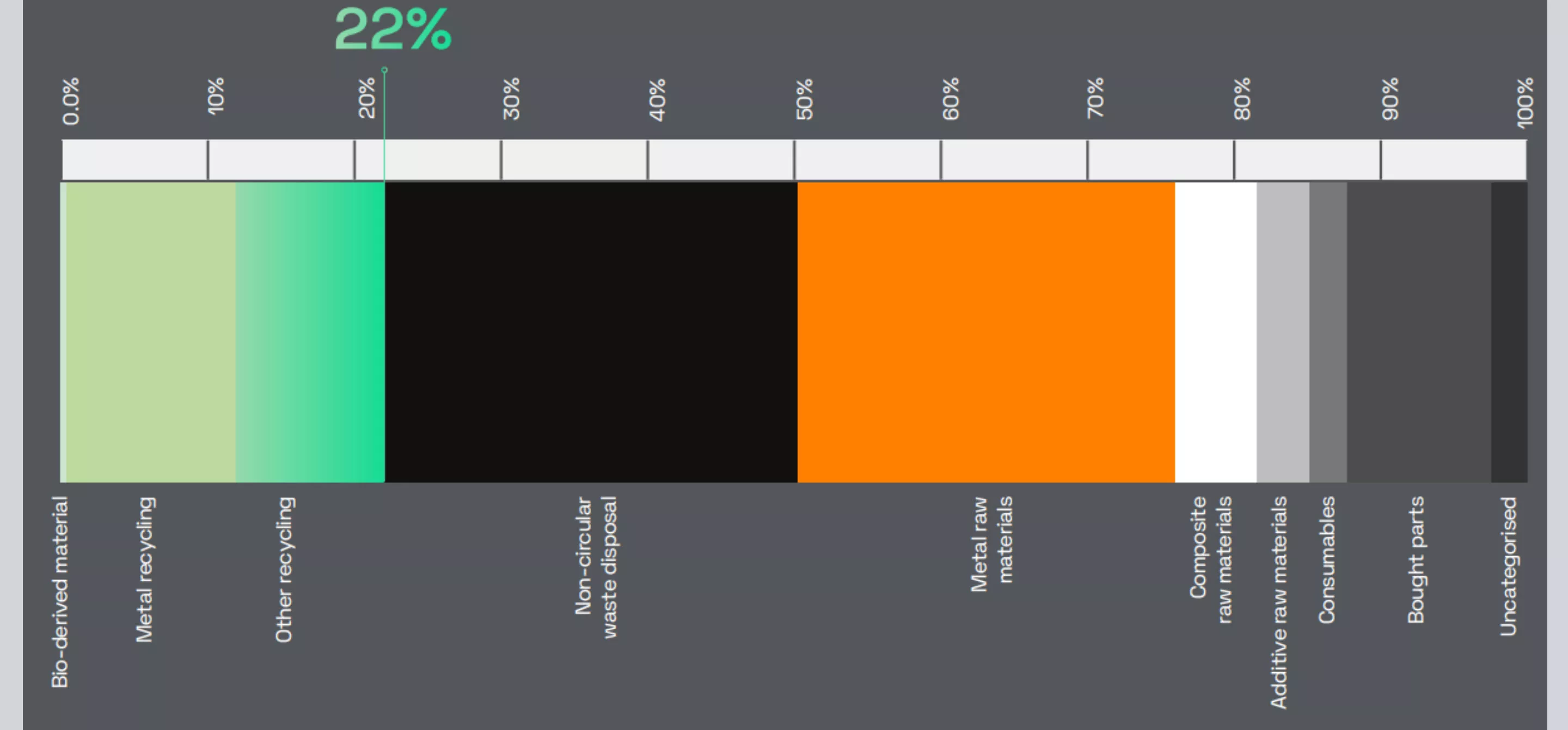
McLaren’s diagram showing their combined material inflows and outflows
How does an F1 team achieve circularity?
At the centre of McLaren’s initiative lies the circularity metric, which is derived from the F1 Constructors’ Circularity Handbook and provides guidance on how to calculate the circularity of an F1 car’s chassis production.
Expressed as a percentage, the metric considers materials going both into the factory for car development and manufacture, and the material disposed of afterwards. To create a clear picture of their raw material consumption, they divide the weight of circular material inflows and outflows by the total material inflow and outflow, thereby arriving at a single percentage.
A 100% circularity metric would represent a fully circular F1 chassis.
McLaren’s circularity metric score was at 22% in 2025. This takes into account the use of bio-derived material and circular material inflows, which offset an overall increase in material consumption and slight decrease in circular outflows for 2025.
The current score of 22% comprises recycled metals, bio-derived materials, general waste recycling and hazardous liquid recycling.
The graphic clearly shows where two of the largest barriers to their circularity reside, as both non-circular waste disposal and metal raw materials take up a large percentage of the remaining consumption.
Notably, achieving optimal waste management - where all material outflows are reduced, reused or recycled - would increase its circularity score to 50%.
But, crucially, moving beyond this requires addressing the volume and type of materials used in car design and production, which McLaren have already started doing for some key materials.
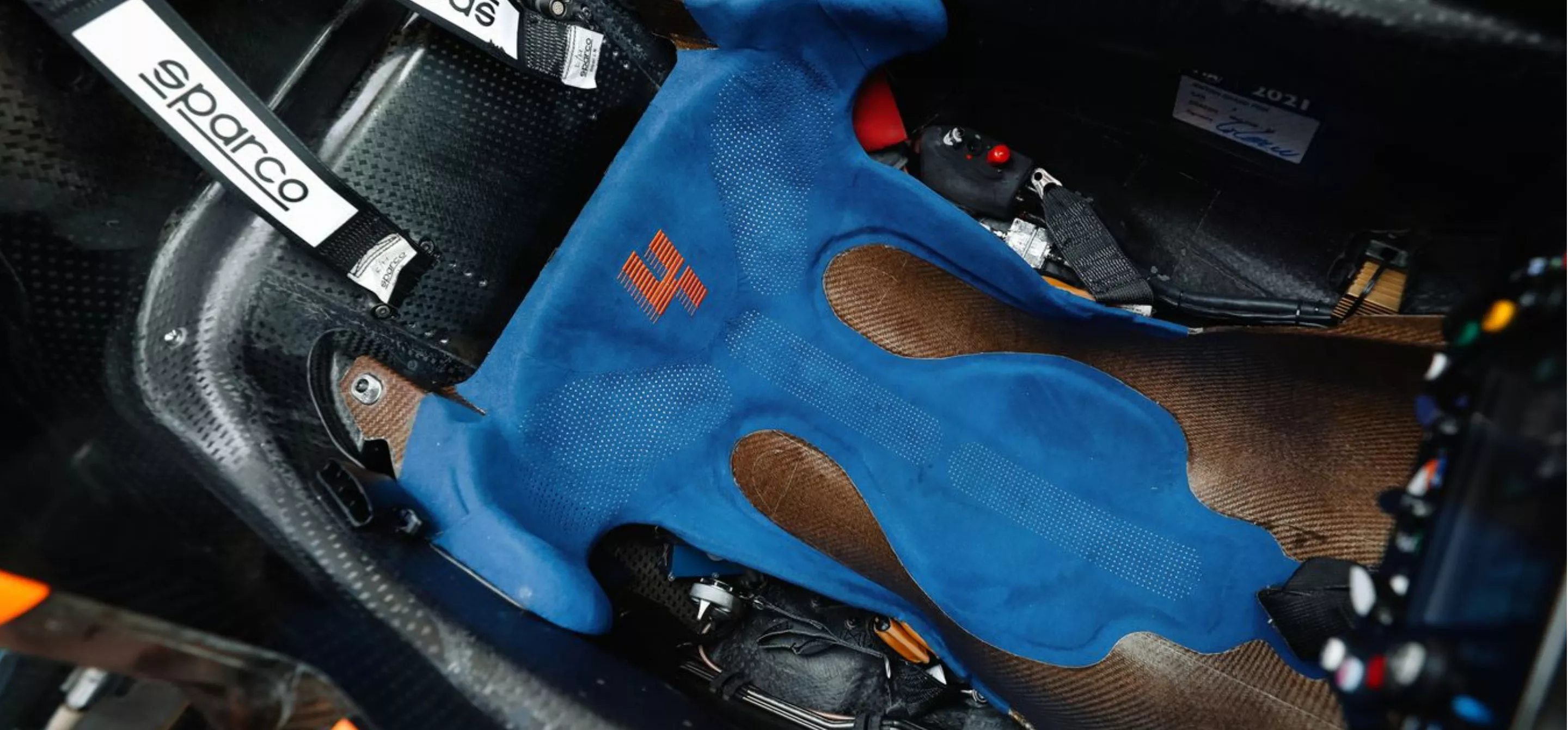
Lando Norris first raced a seat constructed with renewable textile fibres in 2021.
The quest to deliver a circular car cannot come at the expense of performance or safety, with any time lost on the stopwatch still the most important metric, meaning they have to remain vigilant and ensure that performance isn’t lost and that anything that changes adds value.
Over the last few years McLaren has achieved this by making changes to their manufacturing processes, including introducing new partners, such as bComp and V Carbon, whilst also making changes to the makeup of its pre-existing manufacturing techniques.
McLaren is no stranger to moving the needle when it comes to this sort of endeavour either: it was the first team to employ a full carbon monocoque on its 1981 MP4-1.
And, in a similar emerging-materials story, McLaren began developing a new seat arrangement during 2020 in collaboration with Swiss sustainable lightweight specialist bComp.
Made from renewable textile fibres, the seat met McLaren’s strength and stiffness requirements, whilst lowering its CO2 footprint by 85% compared with its carbon fibre counterpart.
But, in order to use the design competitively, McLaren required co-operation from the FIA, as prior to 2021, article 15.1 of the technical regulations, which covers permitted materials, didn’t list organic materials.
It was added in 2021 under the umbrella of organic materials - “19 - Natural Fibres (i.e. flax, hemp, linen, cotton, bamboo)”.
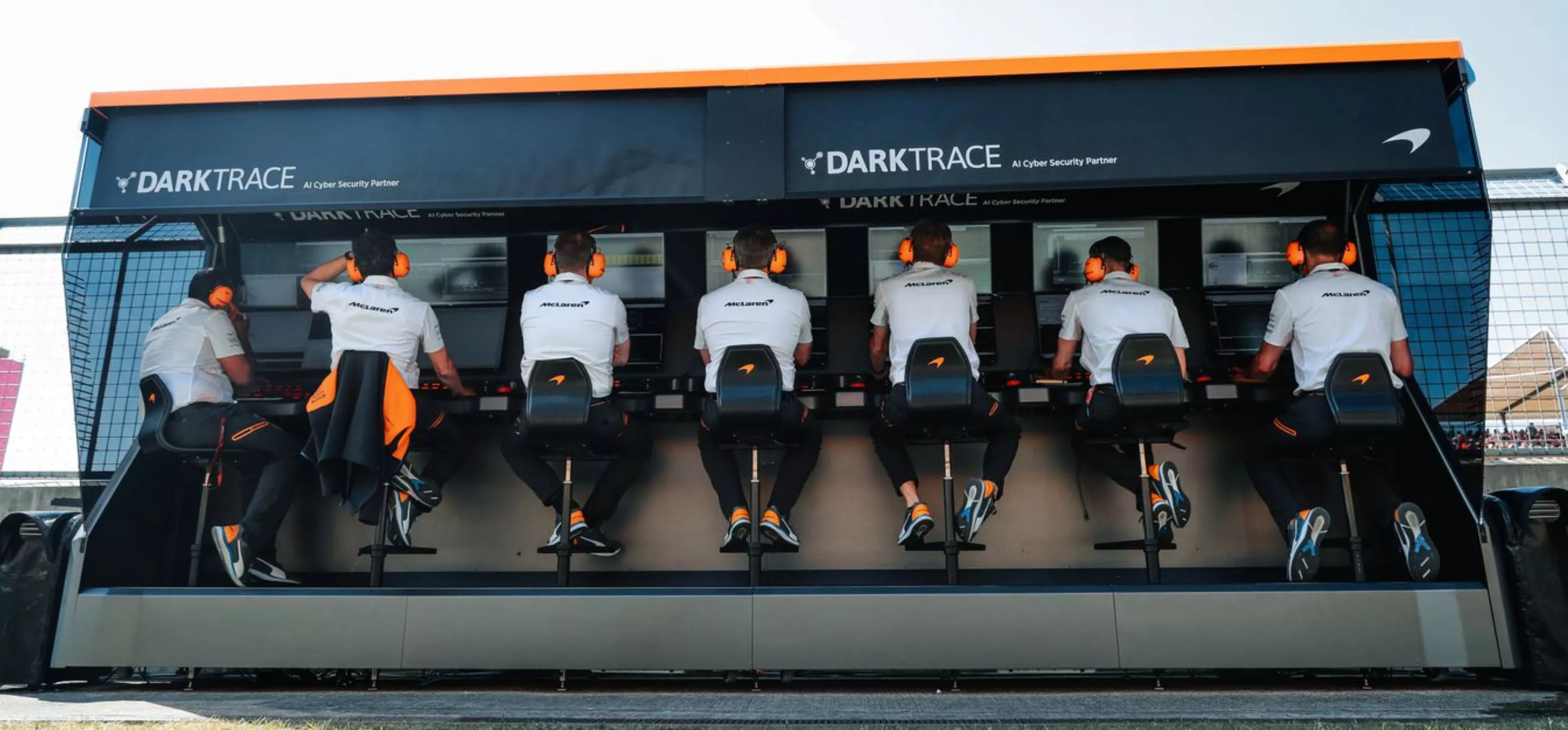
The McLaren pitwall is an essential piece of equipment that needs to be shipped around the world. In 2021, the team said it managed to reduce the mass of its pitwall and engineering island by 3,450kg by using bio-based materials
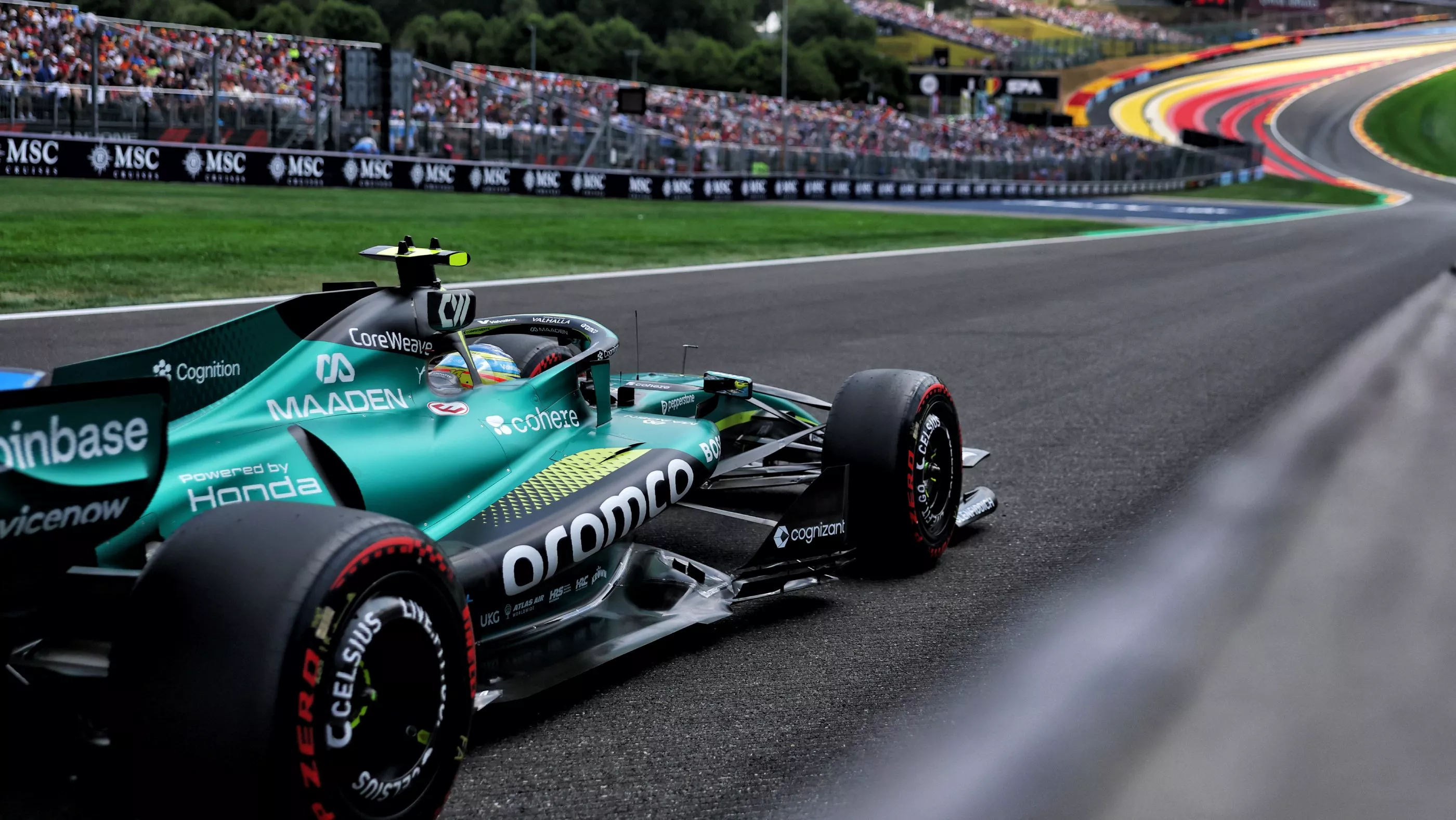
McLaren’s continued use of bio-derived materials
The seat, now able to be raced, due it being added to the permitted materials list, was used for the first time by Lando Norris at the British Grand Prix in 2021.
Since then, McLaren has gone on to develop other components that utilise these materials, in order that they can improve their circularity, whilst having no impact on performance.
For example, in 2022, a keel panel (that sits under the car’s nose), constructed from flax materials was run in a Free Practice session at the Abu Dhabi Grand Prix.
McLaren also saw this as an opportunity to use the materials elsewhere in its operation, as it would reduce production costs when compared with their carbon fibre counterparts.
One such opportunity was its pitwall and engineering island, both of which were previously made entirely of carbon fibre and transported around the world via air freight.
Designing a solution with a flax alternative meant it could rethink the logistical challenge of getting them to a grand prix. In response the team was able to make five sets of these and transport them via sea freight - culminating in a 3,450kg reduction in weight for the pitwall and engineering island in 2021.
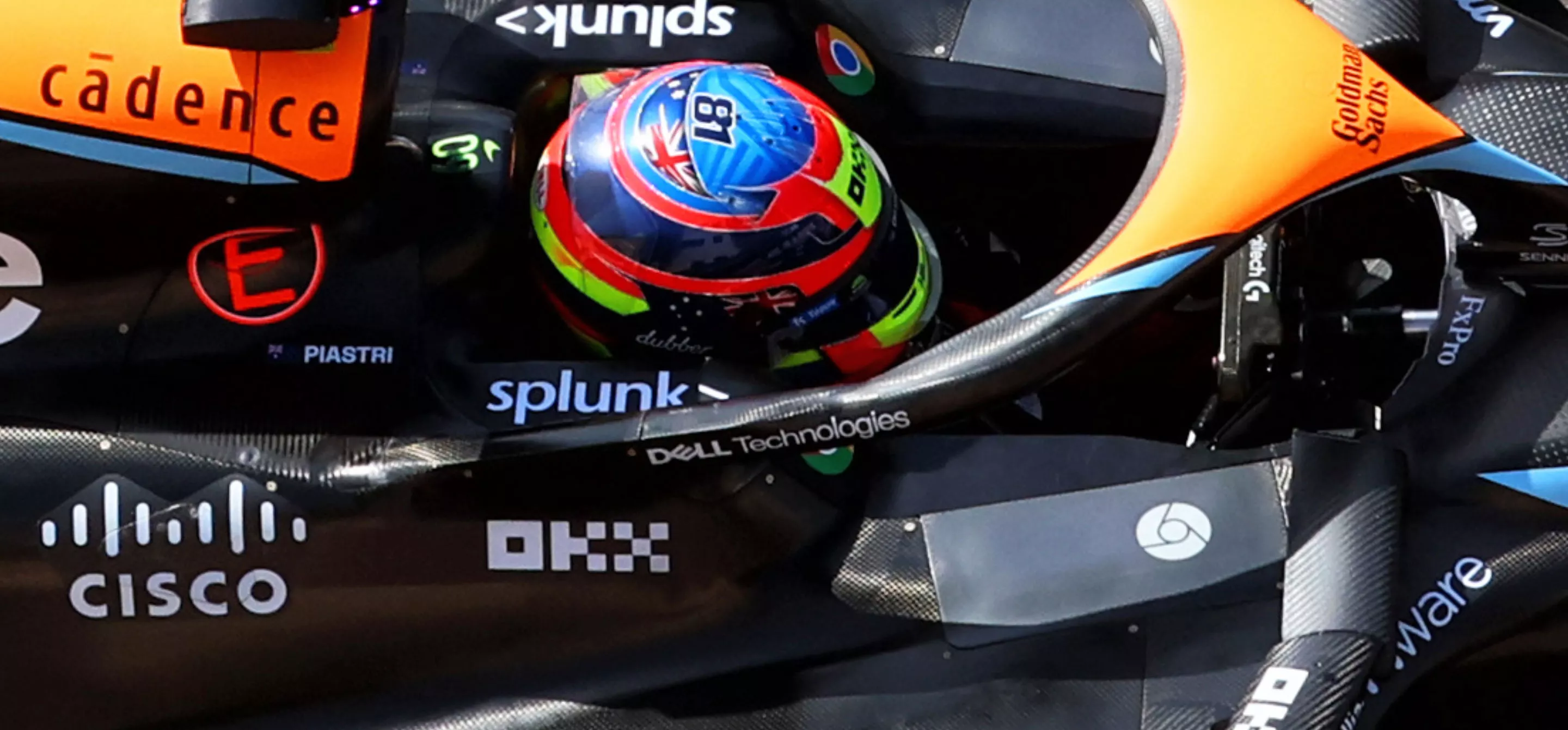
The RCF panels used at the United States Grand Prix provided a real world litmus test for the solution.
Recycled carbon fibre in F1
McLaren also used recycled materials for the cockpit branding panels on the MCL60.
And, given the scale at which carbon fibre is used in F1, the use of recycled carbon fibre could help yield a sizable leap forward in terms of its objectives. Its first outing at the United States Grand Prix, in 2023, was therefore a statement of intent, with the team able to look at how and where else recycled carbon fibre (RCF) could be applied on its car and equipment in the future.
At up to 85% of carbon fibre’s original strength, there’s clearly a number of applications where RCF could be used, not only on the car but around the rest of its operation too.
In 2024, McLaren made clear its goal of achieving a fully circular F1 car by developing the first-ever F1 Constructors’ Circularity Handbook in partnership with the FIA and Deloitte.
This shares research that enables all F1 teams to calculate their own circularity, whilst adopting practices that help mitigate the environmental impact of the materials they use, optimising their use and reducing waste.
The team says it hopes that this collaboration will help to identify more circular practices that could be enshrined within the regulations and improve circularity across the sport.
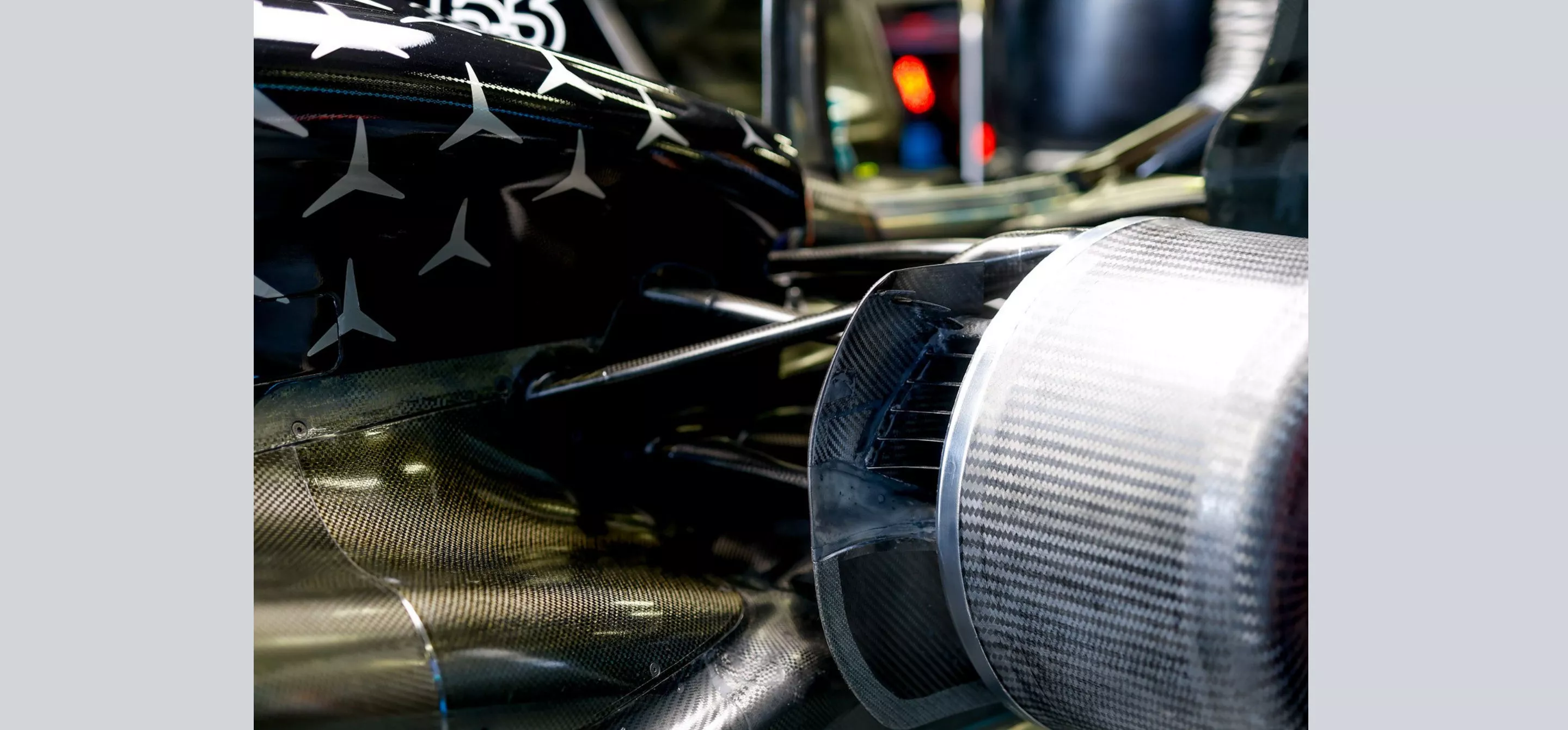
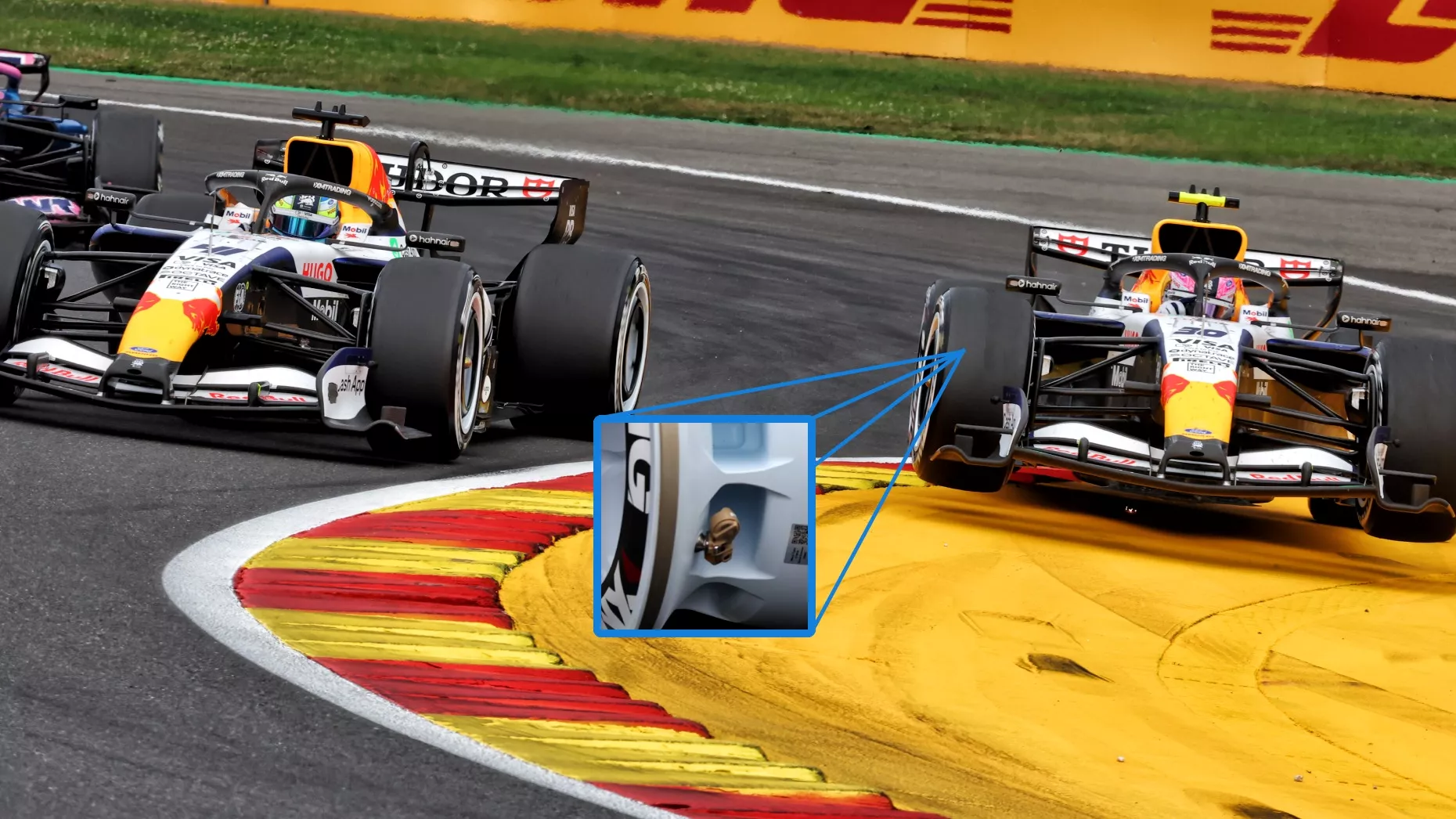
Mercedes introduced its first bio-based carbon fibre composite rear brake duct at the 2025 Azerbaijan Grand Prix
Mercedes joins the fray
Since 2023 McLaren has used 28% bio-based resin as standard in many of its carbon fibre parts, both on and off the F1 car.
This resin makes up around half the mass of the finished carbon fibre material and presents an opportunity to improve the circularity of other materials.
Another team that has seen the benefits of this process is Mercedes, with the team announcing that it used a new resin, that includes 30% bio-based materials, for its rear brake duct at the Azerbaijan Grand Prix in 2025.
This marked the first time that Mercedes had used lower-carbon carbon fibre composites on a technically performant component in race conditions, which further underlines the role that lower-carbon materials can play, without compromising on performance.
Mercedes’s F1 circularity reporting
The use of a performant bio-based resin component is one such milestone that sits within a much broader reporting structure, which Mercedes has published annually since 2021.
Its reporting is different to McLaren, as you might expect, given Mercedes's larger operation, which spans not only the race team at Brackley but also the power unit division in Brixworth.
It recognises four main pillars in its operation: On The Road (travel/logistics), At Home (factory/culture), On The Car (car & technology sustainability), and Beyond Our World (industry-wide influence).
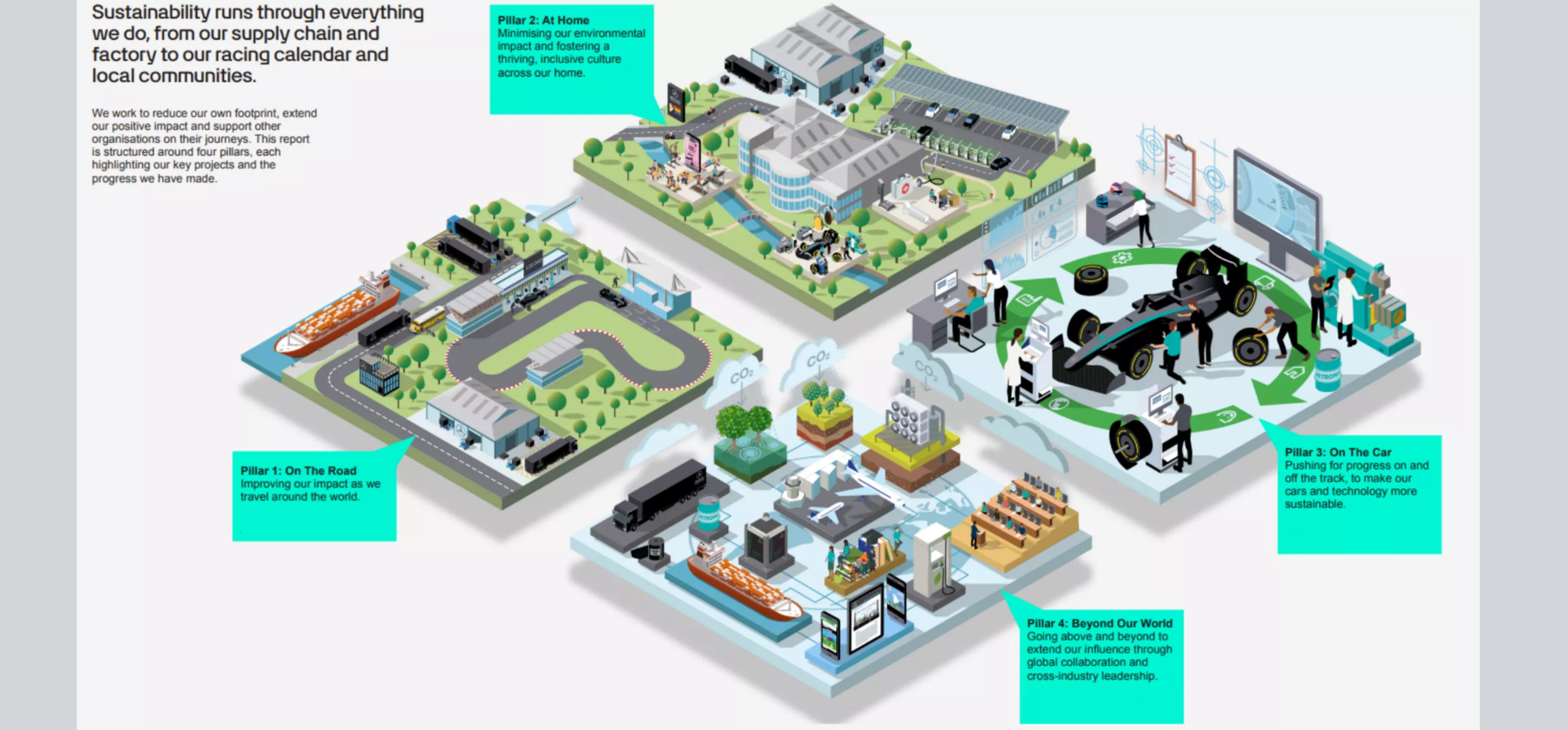
A snapshot from Mercedes’s sustainability report that was published in 2026
Each of these pillars has its own metrics and a dedicated section in the report, with snapshots on their success stories offering further insight into its ‘All in Performance’ mindset.
The use of the bio-based resin brake duct is highlighted as one of its key achievements under the ‘on the car’ umbrella but there are achievements to be found elsewhere. Firstly, fulfilling one of their ‘on the road’ objectives, it became the first team on the grid to use electric power to travel to a European race weekend.
As part of this initiative, in 2025, it transported its race cars and the supporting equipment on a 673km journey from Brackley to Zandvoort using a Mercedes-Benz Trucks eActros 600, after a successful pilot to Silverstone for the British Grand Prix had already been undertaken.
Then, in another story associated with circularity, an upgrade to its CFD (computational fluid dynamics) cluster, in partnership with Hewlett Packard Enterprise, resulted in 99% of the 8700kg of hardware being refurbished and returned to productive use, with 1% being recycled - and nothing going to landfill.
Circling back
Mercedes’ adoption of bio-based resin and its use in a component in a competitive setting is precisely the kind of ripple effect that McLaren was looking to create when it began sharing their research and helped to shape the circularity handbook.
Its wider target was never about achieving 100% circularity, but about drawing its partners and rivals into developing strategies that increase circularity across the industry and beyond.
Clearly, there’s still a long way to go before anyone gets remotely close to a fully circular F1 car, with McLaren’s current score of 22% making that patently clear.
But F1 was built on a constant need to think outside the box, on changing how materials are used in the design of the car and equipment in order – and so doing this with a focus on re-use or recycling is not a great leap.