Motor
ADUO explained: F1’s engine catch-up mechanism in full
by Samarth Kanal
6min read
/xpb_1408348_hires-(1).jpg?cx=0.5&cy=0.5)
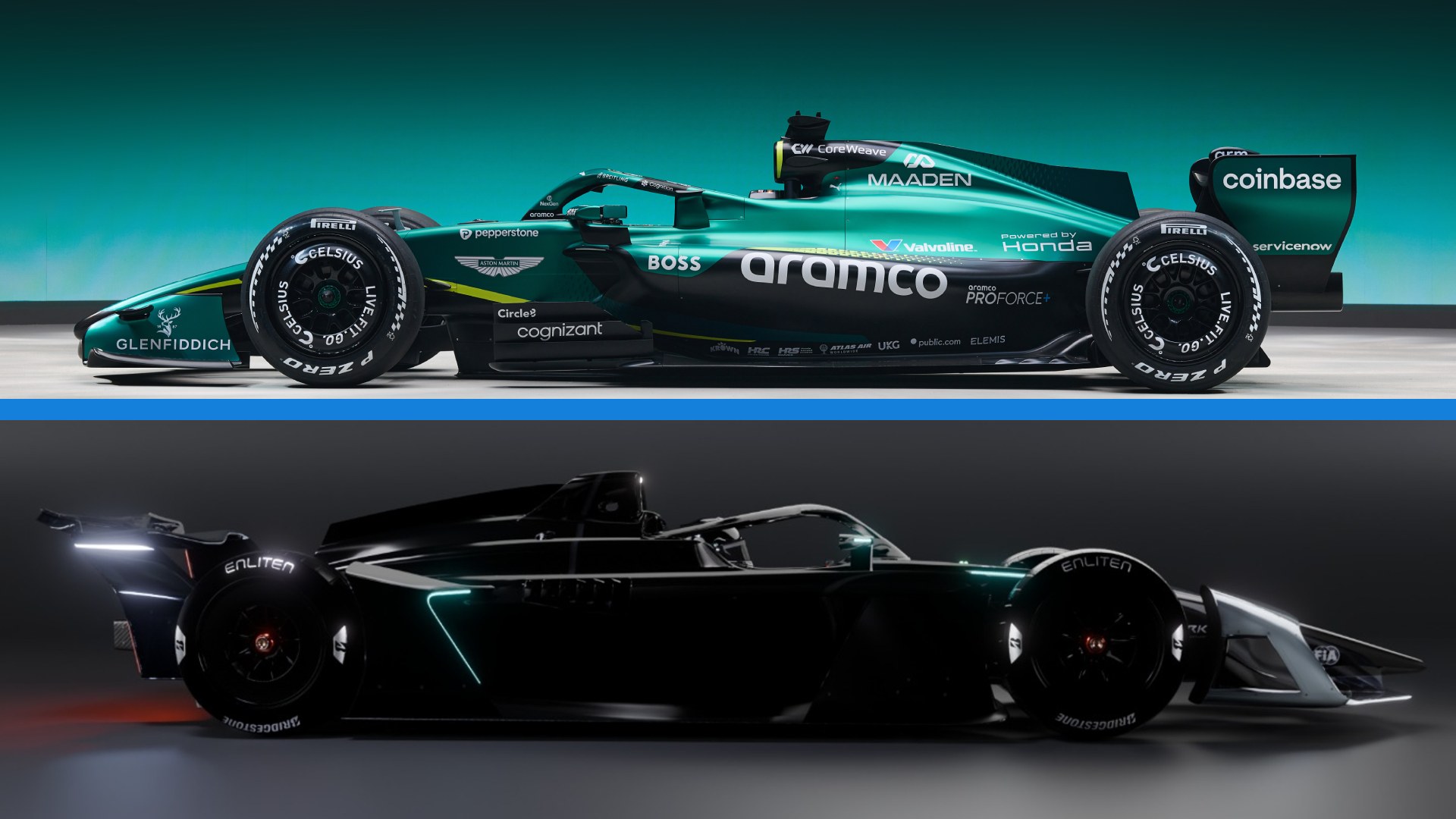
Formula 1's 2026 regulation overhaul didn't just rewrite the rulebook on power unit architecture; it also introduced an entirely new framework designed to prevent any single manufacturer from running away with a performance advantage.
Sign up for a newsletter and we'll make sure you're fully up-to-date in the world of race technology
That mechanism is ADUO: Additional Development and Upgrade Opportunities. With the first assessment window now imminent, just after the Canadian Grand Prix, it's rapidly becoming one of the most hotly contested topics in the paddock.
What is ADUO?
At its core, ADUO is a cost cap relief and development mechanism. The F1 cost cap for 2026 stands at $215 million USD.
FIA Single Seater Director Nikolas Tombazis has been at pains to make that distinction clear, both in the FIA's official explainer and in comments to the wider media.
"It's important to make clear that ADUO is not a kind of balance of performance mechanism," Tombazis says.
"A team or manufacturer will not suddenly get [a] greater fuel flow rate or more or less ballast. It is, in fact, a cost cap relief mechanism, where a PU [power unit] manufacturer meeting ADUO criteria during a review period is given an opportunity to develop its engine through a downward adjustment."
While ADUO might seem to offer an addition in financial resources for power unit manufacturers, the provision actually allows teams to take off or make ‘downward adjustments’ to their cost cap spend.
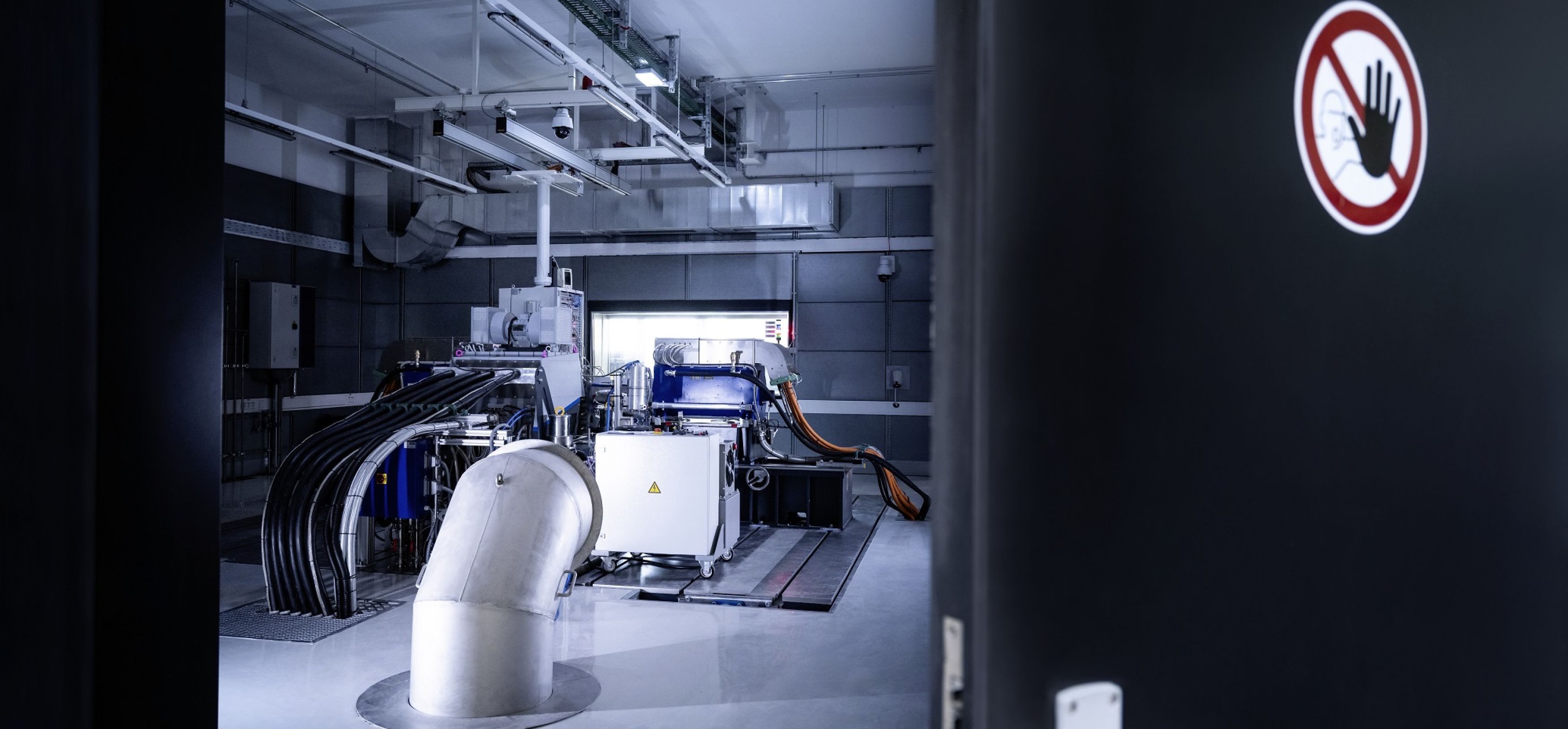
Audi F1 engine testing equipment. Audi is the newest engine manufacturer on the grid - but it is not yet clear whether it will receive ADUO allowances
.jpg?cx=0.5&cy=0.5)
He adds, "A manufacturer will still need to make the best engine in order to win. It's not a magic bullet, or like the FIA is handing out brownie points to somebody who's behind — it simply provides them with leeway to develop their power unit within the framework laid out by the Technical Regulations."
How does ADUO work?
The system works by monitoring the Internal Combustion Engine (ICE) performance of each power unit manufacturer at defined points throughout the season. The FIA generates an ICE Performance Index, calculated using input shaft torque, engine speed, MGU-K (Motor Generator Unit - Kinetic) power output, and a weighting for power sensitivity across measured laps.
Importantly, factors such as fluid temperatures and external aerodynamics are captured as part of the on-car measurements without any correction methodology applied. Any manufacturer whose ICE falls at least 2% behind the benchmark power unit becomes eligible for additional homologation upgrades and extra financial headroom outside the standard cost cap as teams are allowed to write off part of their cost cap spend.
The financial allowances scale with the size of the deficit - data below via FIA:
| ICE deficit vs best PU | Allowance per period | Homologation upgrades |
| 2% – 4% | Up to $3.0m | 1 in-season + 1 following season |
| 4% – 6% | Up to $4.65m | 2 in-season + 2 following season |
| 6% – 8% | Up to $6.35m | 2 in-season + 2 following season |
| 8% – 10% | Up to $8.0m | 2 in-season + 2 following season |
| 10%+ | Up to $11.0m (+ advance up to $8.0m from future periods, 2026 only) | 2 in-season + 2 following season |
What homologation upgrades are permitted under ADUO?
The ICE’s performance provides the benchmark. However, the scope of what can actually be upgraded is quite broad. Permitted changes extend across the engine exhaust system, turbocharger and wastegate, ICE and exhaust-mounted electrical components, the full ERS system and associated cooling, the MGU-K, and the car's control electronics. Certain hydraulic functions, fluids, and ballast are also on the table.
In terms of homologation slots, a manufacturer between 2-4% behind gains one extra upgrade for the current season and one for the following year. A deficit of 4% or more grants two upgrades in-season and two more for 2027 (as per the table above).
Critically, ADUO upgrades are not cumulative within a single season - a manufacturer will only receive the grant on the first occasion it qualifies.
However, awards carried over from the previous season remain valid and can stack with new grants, meaning a manufacturer could theoretically introduce four upgrades in a single campaign if it qualifies in consecutive years.
The 2026 calendar disruption and its consequences on ADUO
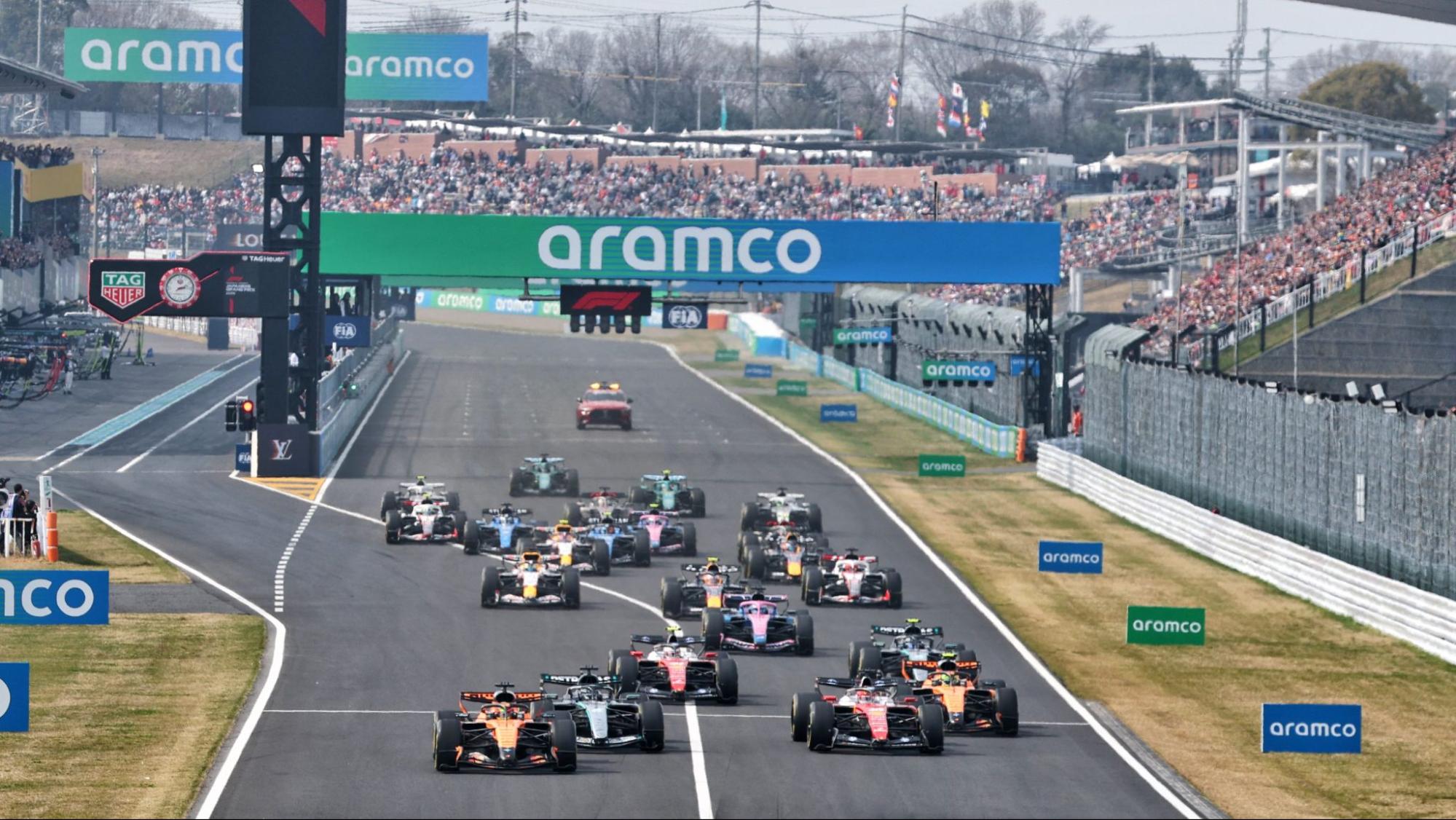
The original regulation structure divided the 2026 season into three monitoring periods covering races 1-6, 7-12, and 13-18. The cancellation of the Bahrain and Saudi Arabian Grands Prix due to regional conflict disrupted that timeline considerably.
With race six now falling in Monaco in June, this was deemed too late for the first allowances to be opened up for manufacturers who are behind.
The FIA has therefore made a one-off adjustment: the first assessment window now closes after race five and the following windows are as per the table below.
| Period | Rounds | Grands Prix |
| 1 (adjusted) | 1–5 | Australia, China, Japan, Miami, Canada |
| 2 | 6–11 | Monaco to Hungary |
| 3 | 12–18 | Netherlands to Mexico City |
Once results are communicated, any eligible manufacturer will receive a separate notification detailing their specific allowance, and upgrades can be implemented as early as the following race.
The politics of ADUO
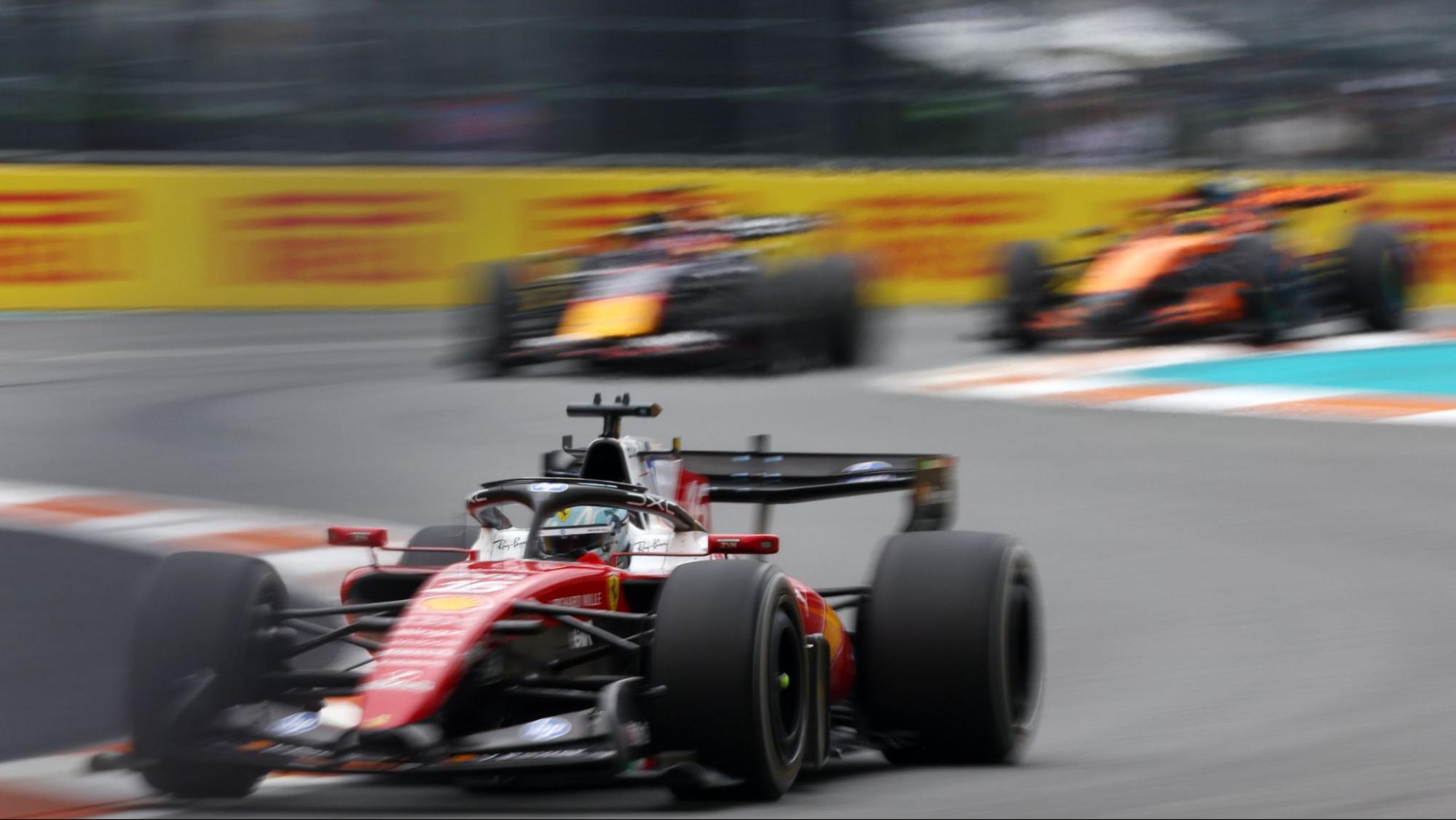
Ferrari has not shied away from the fact that it sees the upgrades system as a chance to close the advantage that Mercedes has enjoyed in the early part of 2026. Team Principal Fred Vasseur has suggested the power deficit is as much as 0.8 seconds, describing ADUO as "an opportunity for us to close the gap".
Mercedes - clearly the leader in the 2026 engine stakes - has taken a notably cautious public stance. Team Principal Toto Wolff has stressed that the mechanism must be applied with absolute precision and transparency, warning that any decision could have a significant impact on the championship.
"You don't want to allow an ADUO to a team that suddenly leapfrogs someone," he said. "The ADUO was always meant as a catch-up mechanism and not as a leapfrog mechanism."
Red Bull, whose Ford-branded power unit is effective, but not at the level of Mercedes's, adds another layer of complexity. Red Bull Powertrains' Technical Director Ben Hodgkinson has cautioned that the regulations don't fully account for the reality of how long engine development actually takes. "The bit that I don't think is fully understood amongst the rulemakers is that the gestation time of an idea in power units is much longer than it is for the chassis," he said.
There has also been debate over how certain design choices - Ferrari's smaller turbo, for instance, or exhaust configurations that affect back pressure (pressure that limits engine efficiency) - should factor into the FIA's assessment.
Red Bull's Team Principal Laurent Mekies acknowledged the objective complexity of the task facing the governing body: "The objective difficulties of evaluating who is where, including for the FIA, is high. The objective complexity of trying to get it right is big, for reasons like ICE versus battery, and fundamental choices: small turbo, big turbo, exhaust blowing, no exhaust blowing."
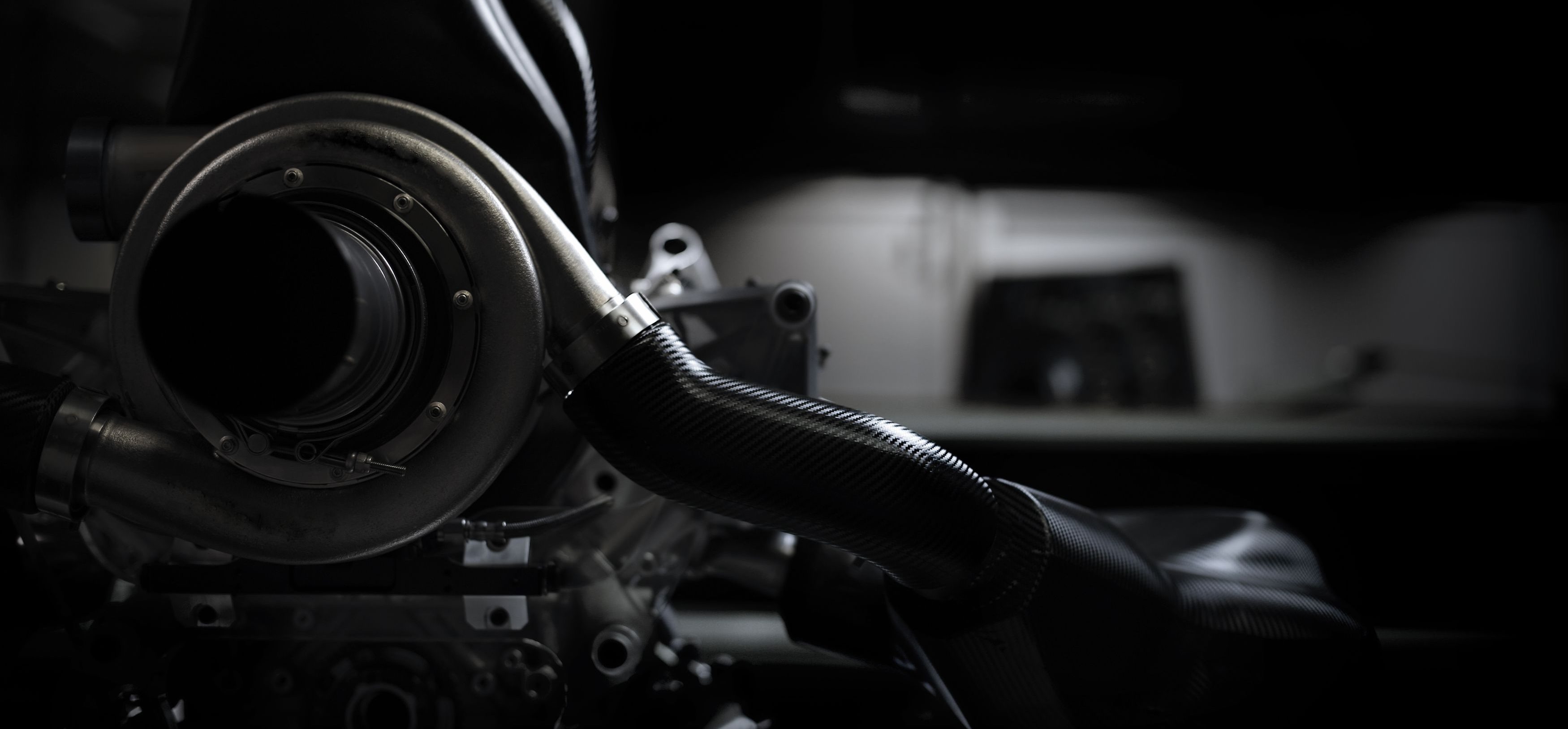
A turbocharger on former engine manufacturer Renault's power unit in 2015. The turbocharger is one of the components that teams can change under ADUO - and different engine manufacturers have varying turbo sizes in 2026
ADUO - not a shortcut
ADUO is a genuinely novel tool in Formula 1's regulatory arsenal - one designed to stop the sport from repeating the prolonged dominance that defined the early hybrid era after 2014.
But as Tombazis himself makes clear, it is not a “magic bullet” to the front. The manufacturers who benefit from it will still need to execute, both in the factory and at the circuit.
Even where ADUO grants the theoretical ability to introduce a new component immediately after the verdict, slotting an upgraded power unit into a race pool limited to four ICEs per season brings its own complications.
The clock is ticking, the politics are heating up, and only now will we see the picture begin to clear.
The engine battle in 2026 is only just getting started.