Car
2026 Formula 1 cars: Every major technical solution revealed so far
by Rosario Giuliana
6min read
Pre-season is the first time we see concrete solutions appear on the Formula 1 cars. Some of them can surprise - and even baffle - and we’ve already seen some very interesting designs on the 2026 grid.
Sign up for a newsletter and we'll make sure you're fully up-to-date in the world of race technology
The new 2026 F1 cars, born under a deeply revised technical regulation, each have strong technical identities. Between extreme diffusers, aggressive suspension layouts, revised nose concepts and innovative active aero systems, the feeling is that teams have interpreted the new regulations in a less convergent way compared to the final years of the preceding ground effect era.
Whether these choices will translate into performance advantages will be decided on track. But one thing is certain: from a technical standpoint, 2026 has started with extraordinary ideas. Here are the main technical curiosities that emerged during 2026 F1 pre-season testing in Bahrain.
Ferrari: Upside-down rear wing
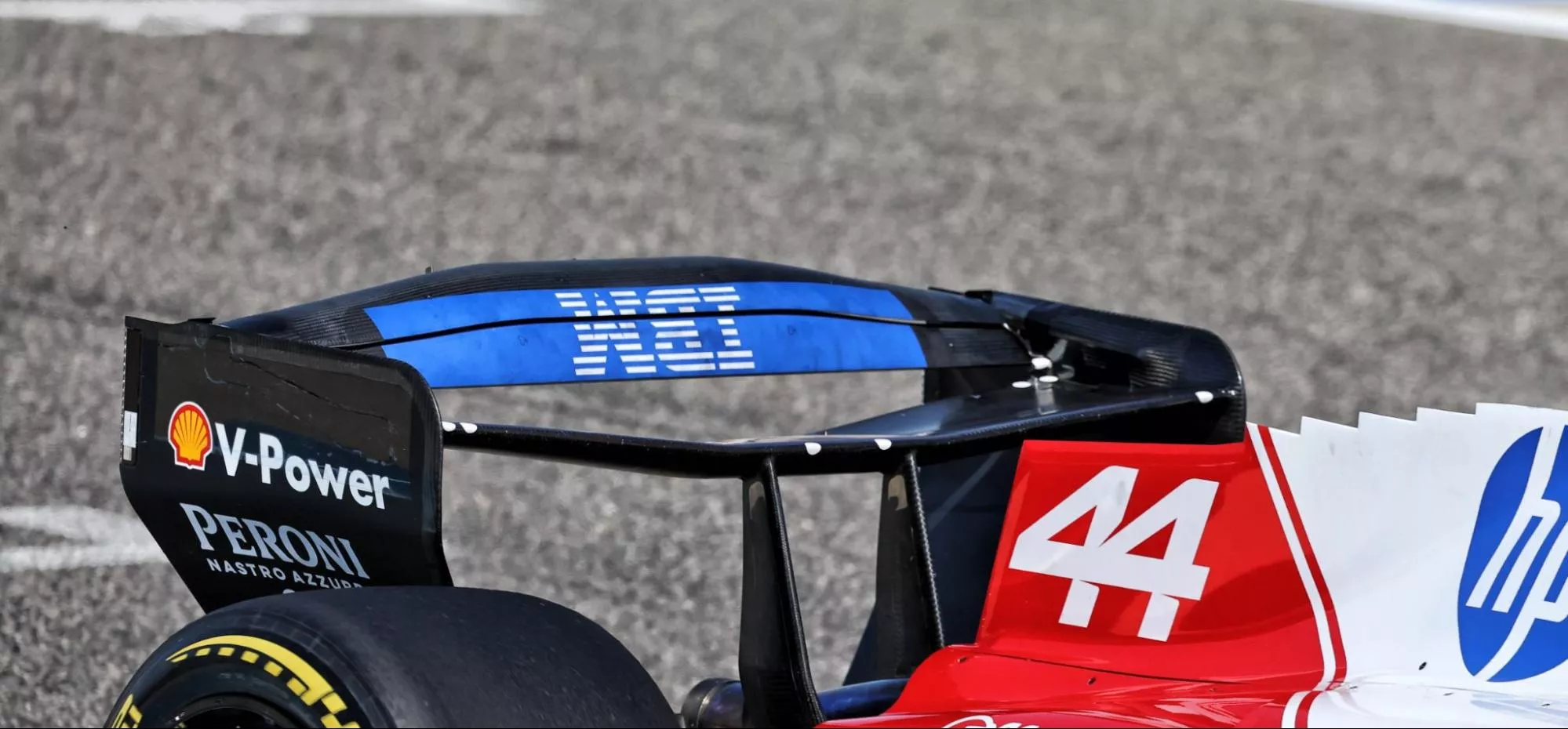
Ferrari’s astonishing upside-down rear wing turned heads on the second day of the final Bahrain pre-season test, but it was replaced by a more conventional solution that same afternoon
Ferrari caught rivals and viewers by surprise on the second day of the second test with a rear wing that rotates around 220 degrees in straight mode - and does away with the actuator that opens and closes the wing.
The rear wing only ran briefly with Ferrari returning with a more conventional rear wing with a main flap that opens and closes akin to a shutter - but the temporary wing was one of the most striking F1 innovations spotted in years.
In straight mode, this design would potentially reduce the drag even more than other teams’ active aero concepts, even generating some lift in a straight line.
When closing, this design would act as an air brake, increasing drag for a split second and helping a driver slow down. Conversely, this design would also briefly create a lot of drag when opening - hampering the team’s acceleration down the straights before the wing fully opens.
Alpine: Reverse rear wing
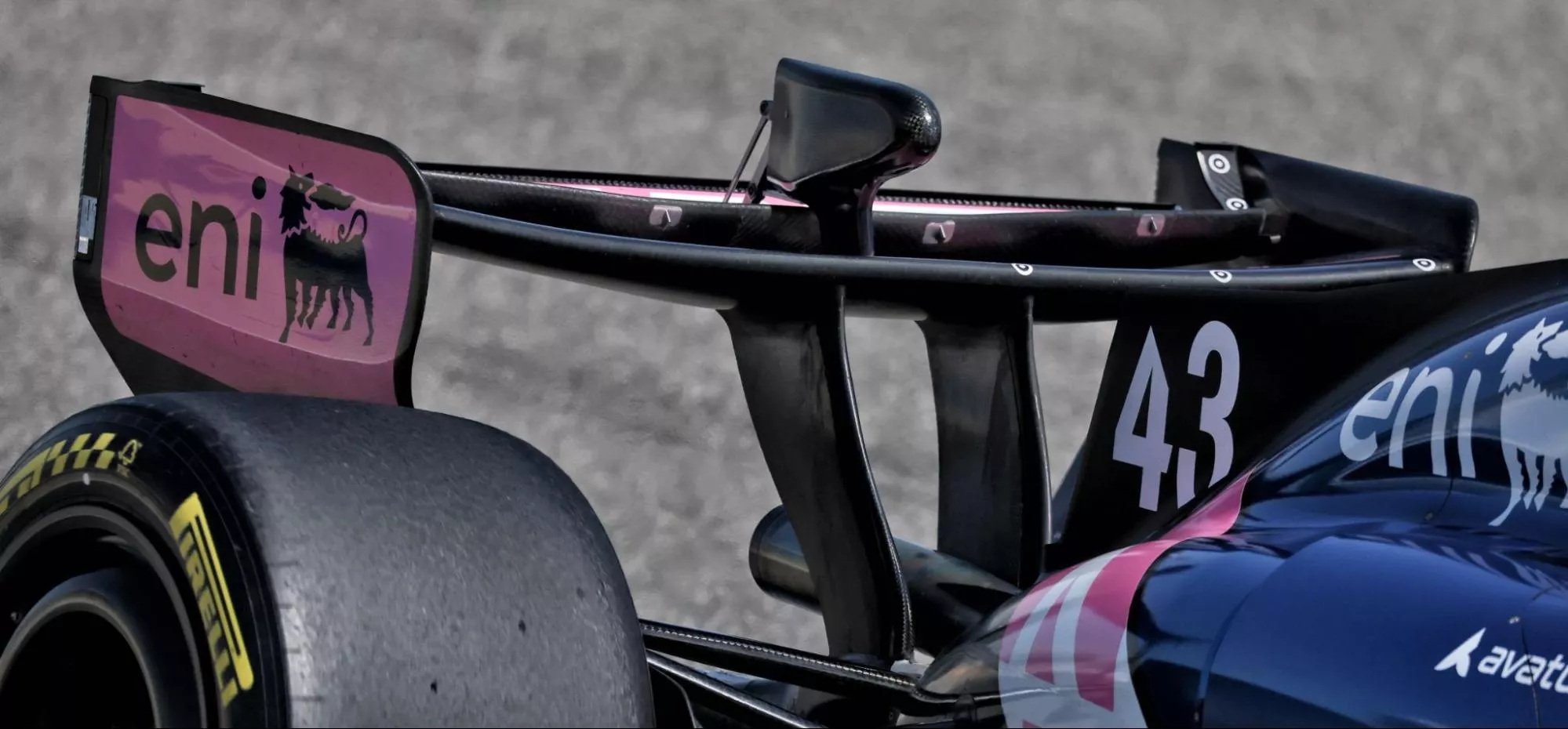
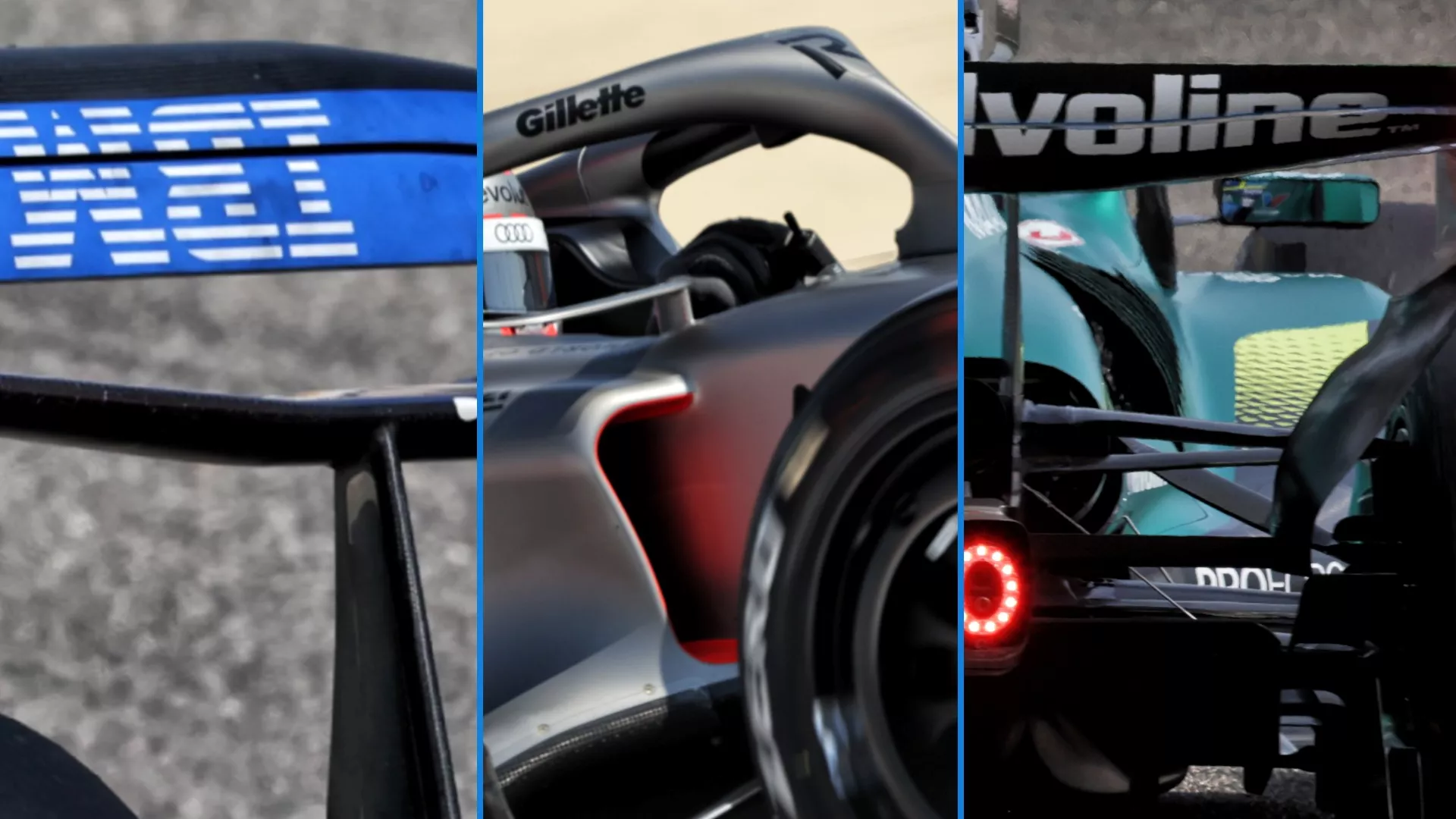
Alpine’s rear wing opens in an opposite manner to every rival team apart from Audi
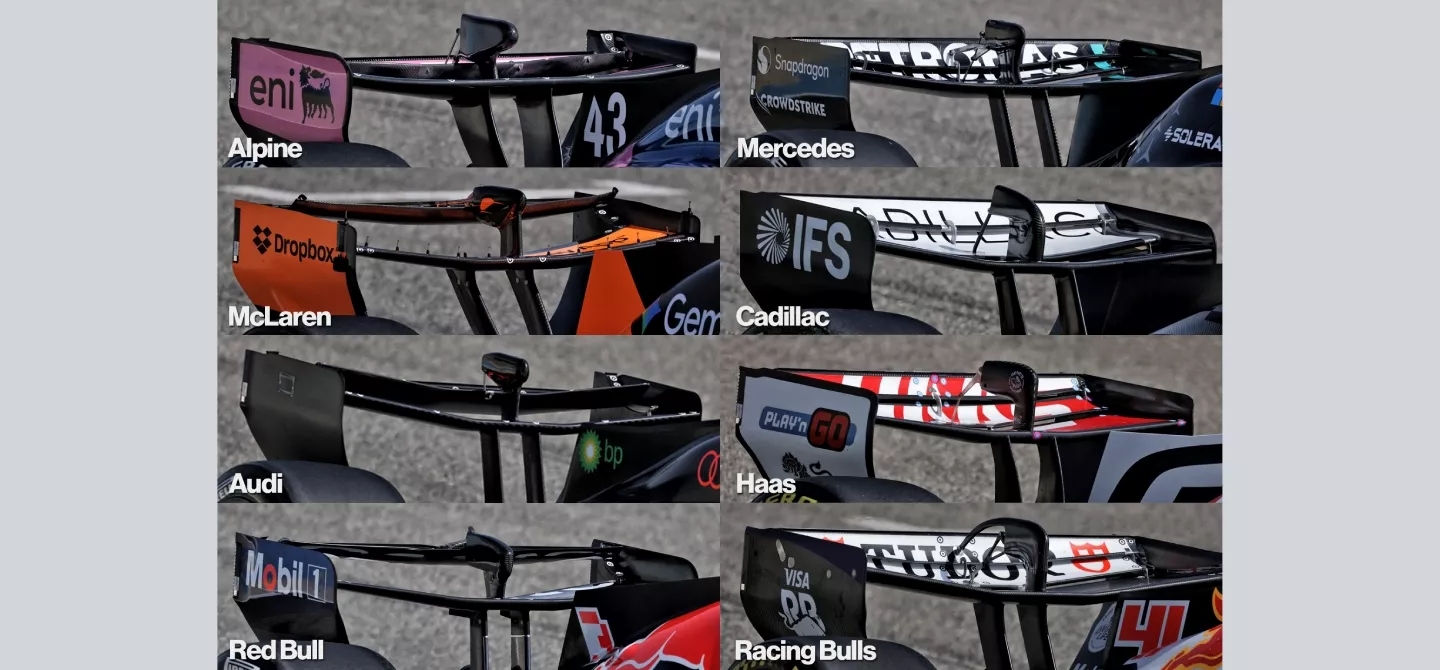
Comparison showing rear wings opening (L) with Alpine’s and Audi’s opening differently to their rivals
This is the other unconventional active aero solution: Alpine’s rear DRS.
Instead of lifting the upper flap, the system lowers it by rotating it backwards. A counterintuitive choice compared to the standard approach, but one that could further reduce drag when open.
If track data confirms that this system reduces drag on straights more than a wing that opens the opposite way, other teams could draw inspiration from this solution during the season. Audi also tested a similar solution.
Ferrari: Expanded diffuser at the rear
Another interesting area on the Ferrari is the diffuser, particularly the extensions around the rear crash structure that incorporates the central red rain light.
Ferrari is not the only team to have increased the volume in that area, but it is the one that appears to have pushed this concept the furthest, almost to the extreme. The objective seems clear: maximise flow extraction in a traditionally very sensitive area, exploiting every millimetre allowed by the regulations to increase downforce without paying too high a price in drag. Ferrari’s design pushes the permitted volumes to the limit and likely required several discussions with the FIA technical department to confirm its legality.
Audi: A massive redesign
One of the biggest surprises of the tests was Audi. The car seen on track in Bahrain is profoundly different from the earlier specification that completed the shakedown in Barcelona. It could almost be described as a true ‘B-spec’.
The bodywork has been completely rethought from an aerodynamic perspective. Particularly striking are the vertical sidepod inlets, which philosophically recall the “zero pod” concept seen on Mercedes between 2022 and early 2023, albeit reinterpreted for the 2026 regulations.
Not only that: the front wing opening system has also been modified. Such a structural change, combined with the revision of the external surfaces, suggests a decisive shift in direction from the initial concept, which was likely still in a very early stage of development.
Mercedes: Four-element rear wing
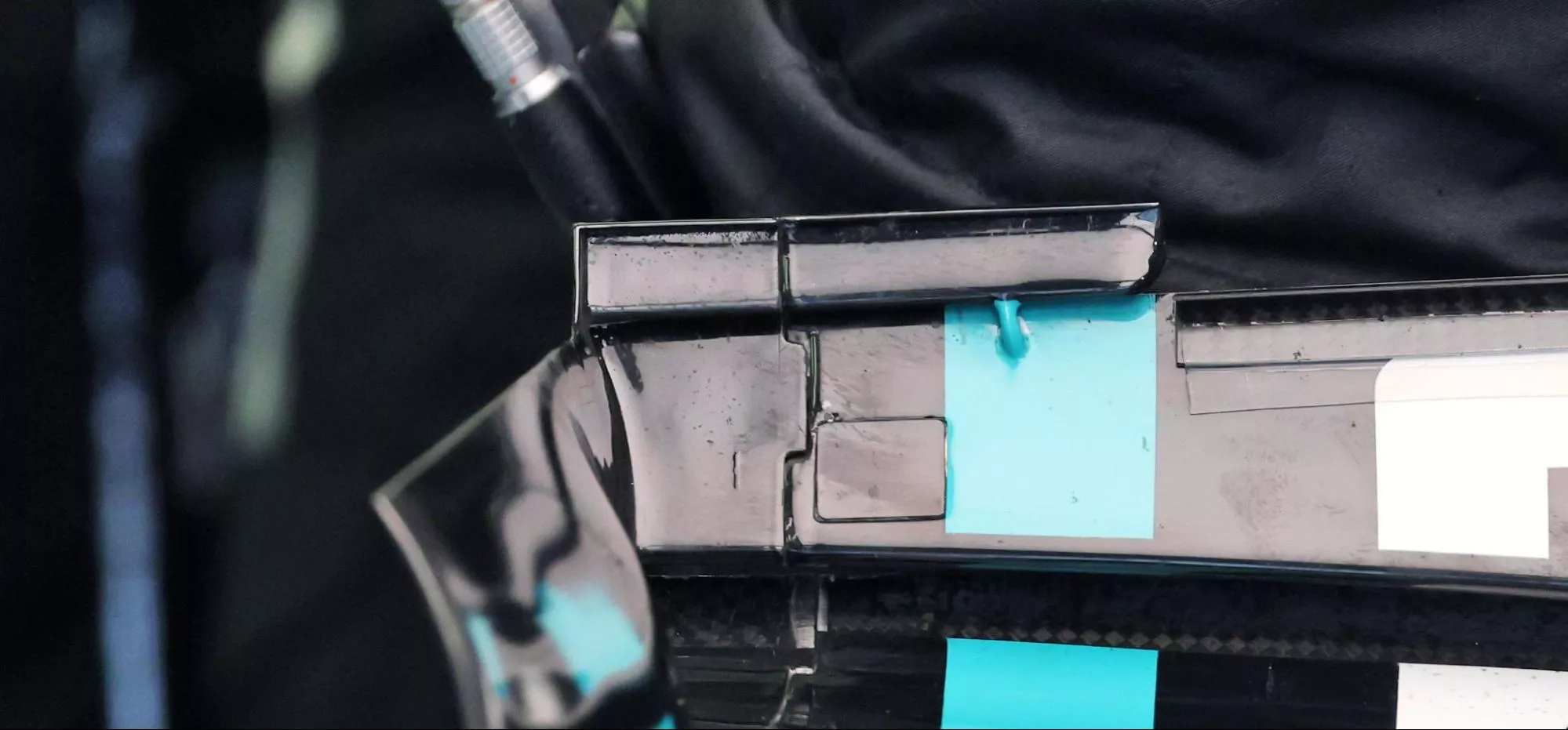
The fourth element on Mercedes’s rear wing that was tested on the final day in Bahrain
Another rear wing innovation, but Mercedes’s doesn’t centre on active aero.
On the final day of pre-season testing in Bahrain, the Mercedes W17 had an added small section, a fourth element, on the outside of the rear wing. This area generates the most drag relative to downforce, and it’s the area that potentially suffers from airflow separation because the airflow on the underside of the wing and on the inside of the endplate is travelling at different speeds. This airflow separation sets up a vortex, serving no real purpose other than creating drag.
The small extension on Mercedes’s rear wing potentially prolongs airflow attachment and increases downforce when the wing is in corner mode. Whether the opposite is true and Mercedes experiences a greater reduction of drag in straight mode is possibly what the team was evaluating on the final day.
Aston Martin: Aggressive rear suspension
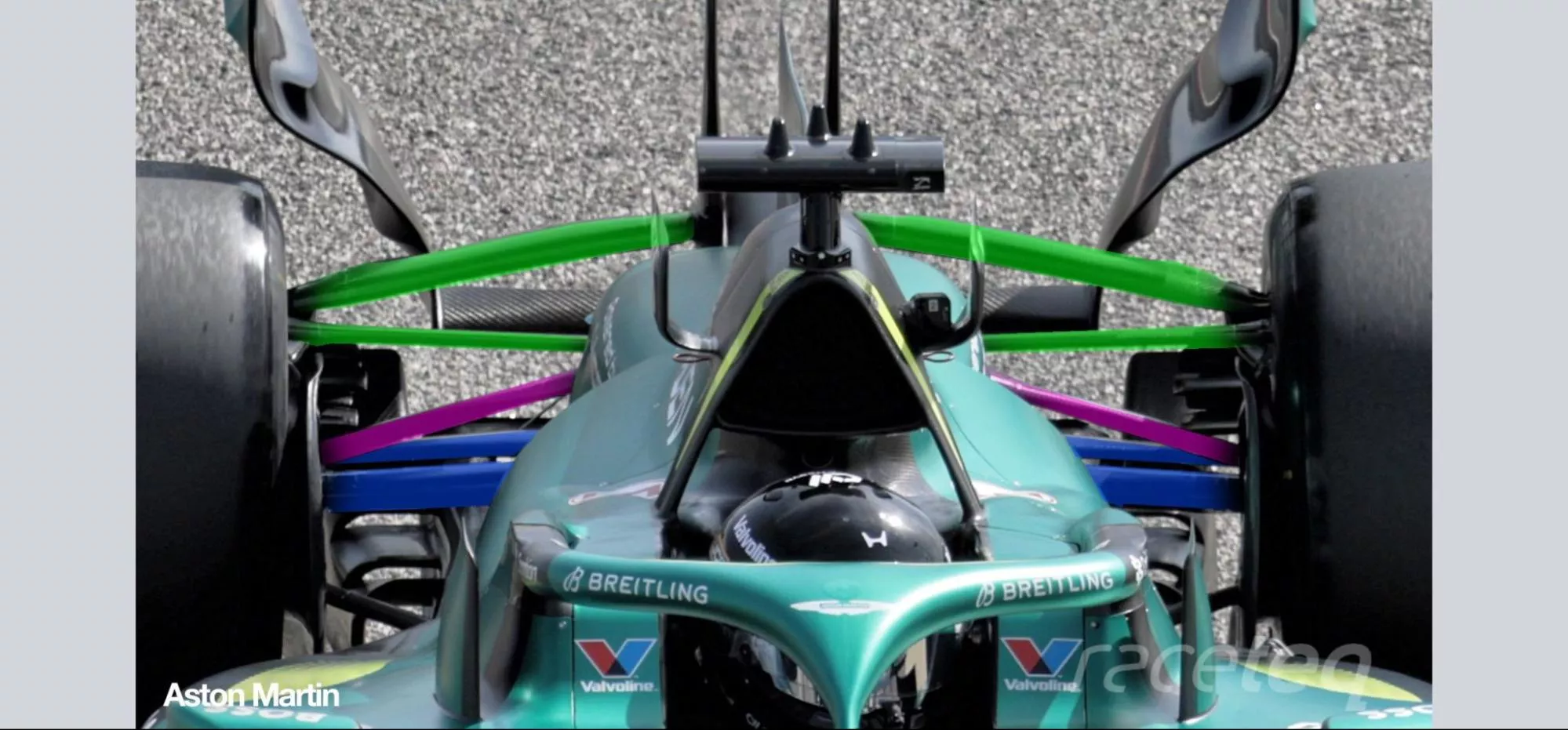
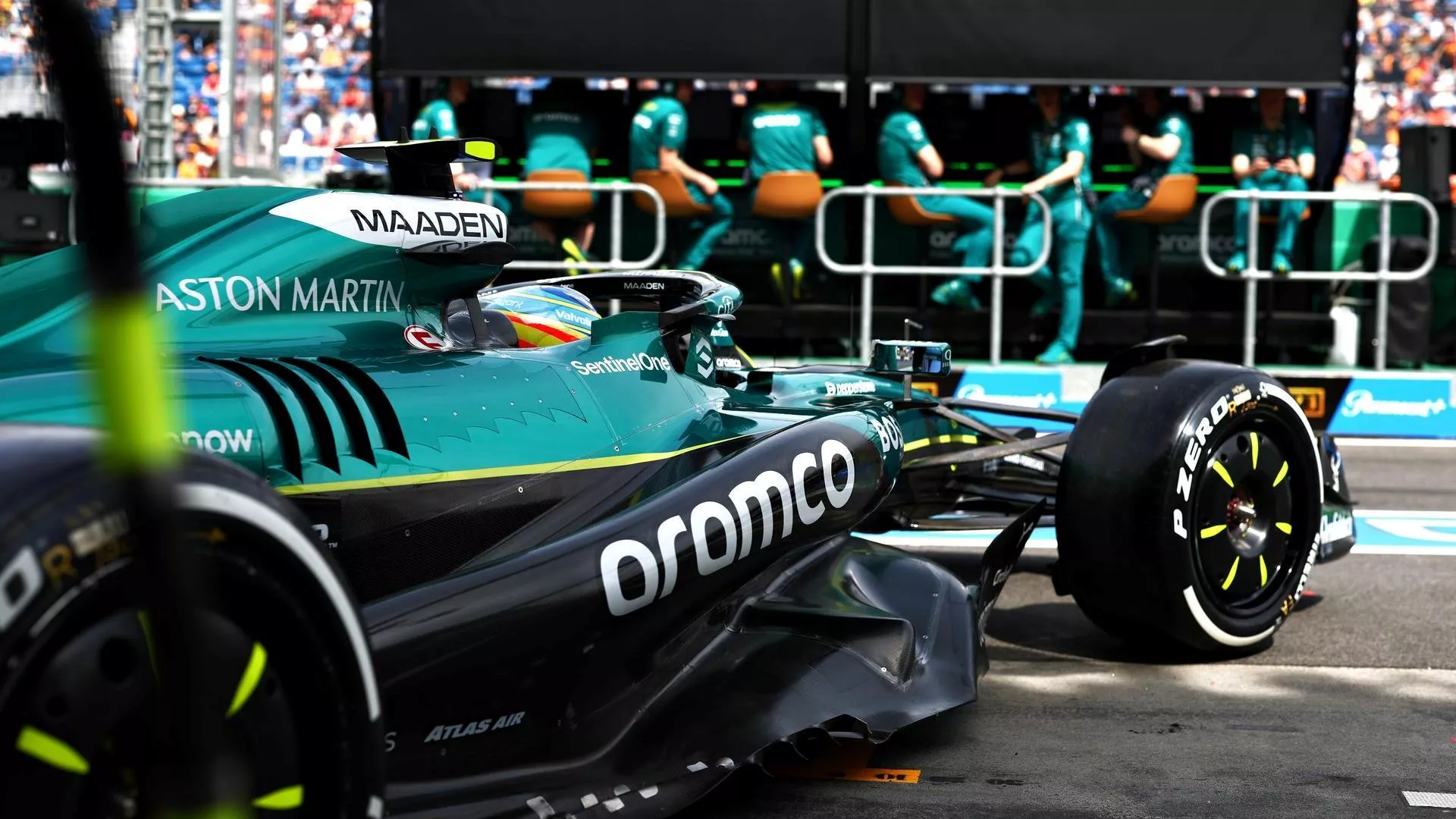
Looking at Aston Martin, one could be tempted to say the entire car is designed in an interesting manner. But the element that draws the most attention is the rear suspension.
The wishbone layout is extremely aggressive in its geometric configuration. It is a unique solution in the 2026 paddock and suggests a precise focus on ride height control and rear-end stability under traction.
In an era where managing airflow towards the diffuser is crucial, suspension kinematics become an integral part of the aerodynamic package. The front suspension also features highly extreme wishbone geometries. You can clearly see Adrian Newey’s influence on the aerodynamic philosophy.
McLaren: High nose and unique floor edges
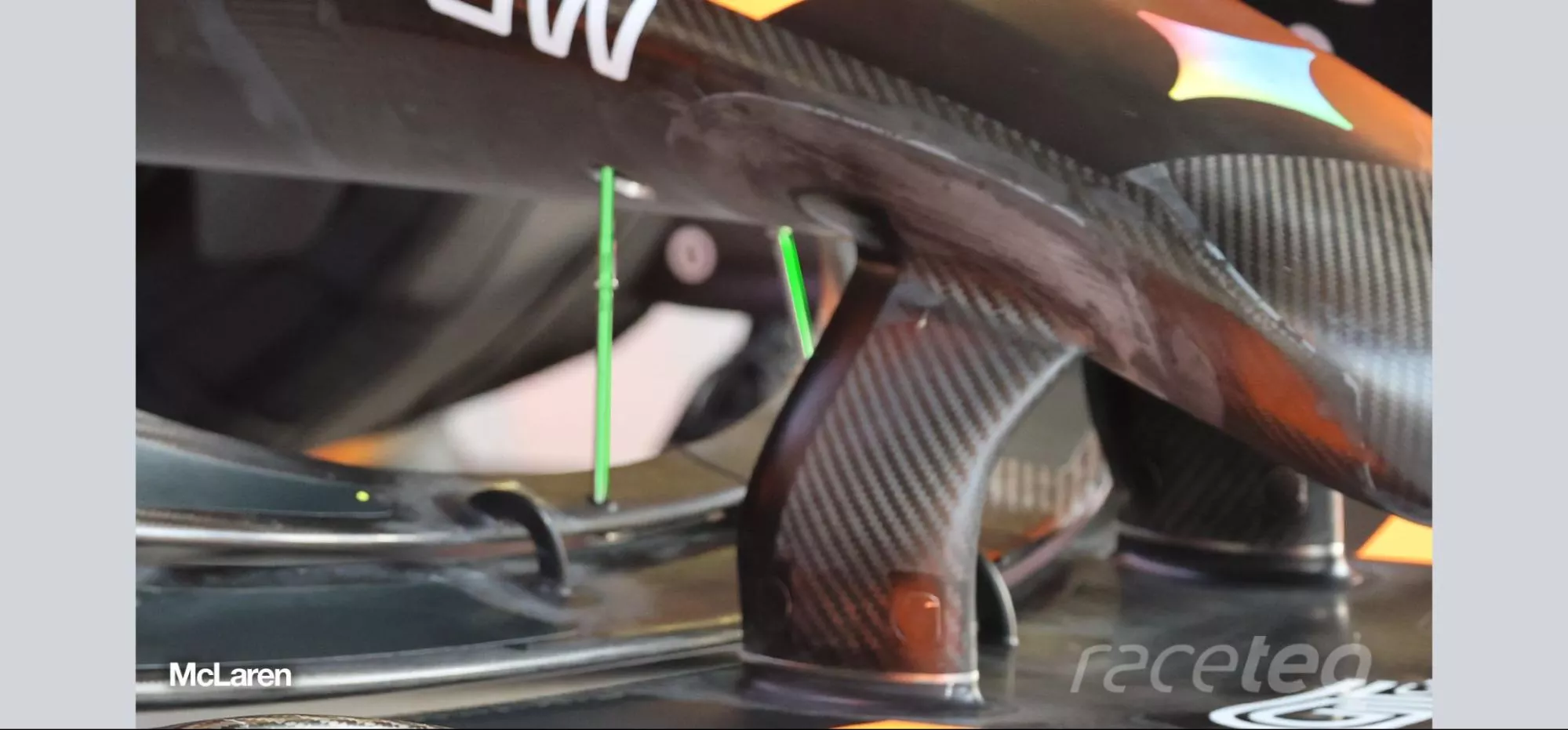
McLaren has introduced several interesting solutions. The first is the nose design: very high, with a shape that must have made passing the FIA crash tests far from straightforward.
The impression is that the team aims to promote a larger but slower airflow between the two pylons supporting the front wing - a choice that can influence the quality of the air directed towards the floor.
The movable front wing system is also intriguing: it opens completely, but there are two actuators, both positioned under the nose.
Finally, the floor edge design is very different from that of its competitors: a single large triangular element (which also houses the McLaren logo) accompanied by numerous small flow diverters underneath. An approach likely aimed at more finely managing the lateral vortices.
Red Bull: counter-trend front suspension
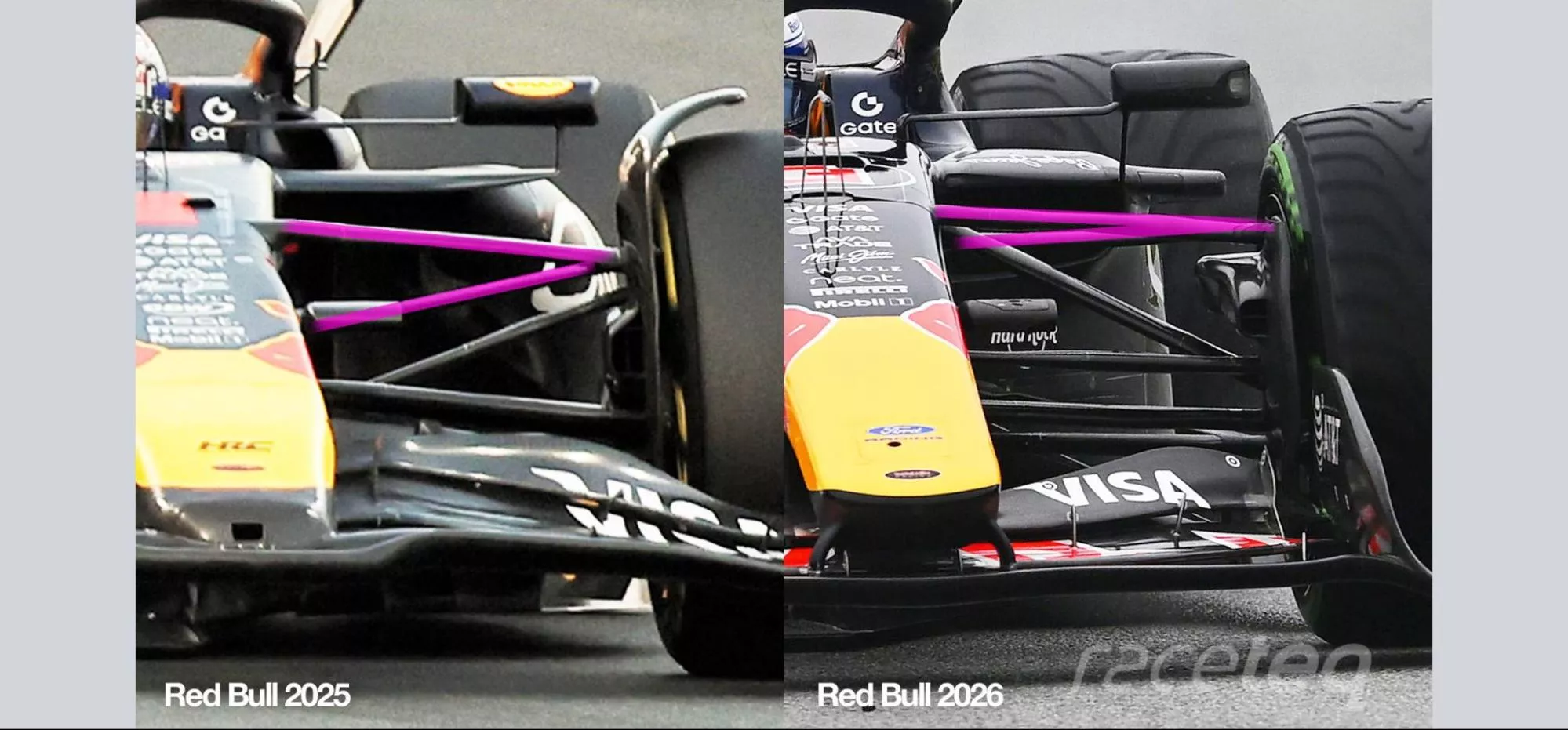
Red Bull continues to stand out for unconventional choices. While most teams lowered the upper front wishbone arm compared to 2025, it did the opposite by raising that arm.
This decision could indicate a reduced focus on mechanical anti-dive (where the car lurches forward under braking), perhaps compensated by other aerodynamic solutions or a different set-up philosophy.
As is often the case with the Milton Keynes-based team, the true logic will only become clear as the first races unfold.