Car
Inside Invicta Racing’s two-time Formula 2 championship-winning factory
by Samarth Kanal
8min read
This is far from a Formula 1 factory, but don’t be fooled by first appearances. Nestled in Norfolk, United Kingdom, Invicta Racing’s headquarters is where back-to-back F2 teams’ and drivers’ championships have been engineered.
Sign up for a newsletter and we'll make sure you're fully up-to-date in the world of race technology
Invicta Racing’s F2 lineage stems back to the Russian Time squad that competed between 2015 and 2018, and then became Uni-Virtuosi in 2019.
Watch brand Invicta sparked a name change for the F2 team in 2023 and, in 2025, it fully took over the team. In 2024, Invicta Racing won the teams’ championship over Campos Racing while Gabriel Bortoleto took the drivers’ championship and was promoted to Sauber F1 team.
It repeated the feat in 2025, this time with Leonardo Fornaroli taking the drivers’ championship. To understand more about how, Raceteq went behind the scenes with this championship-winning team.
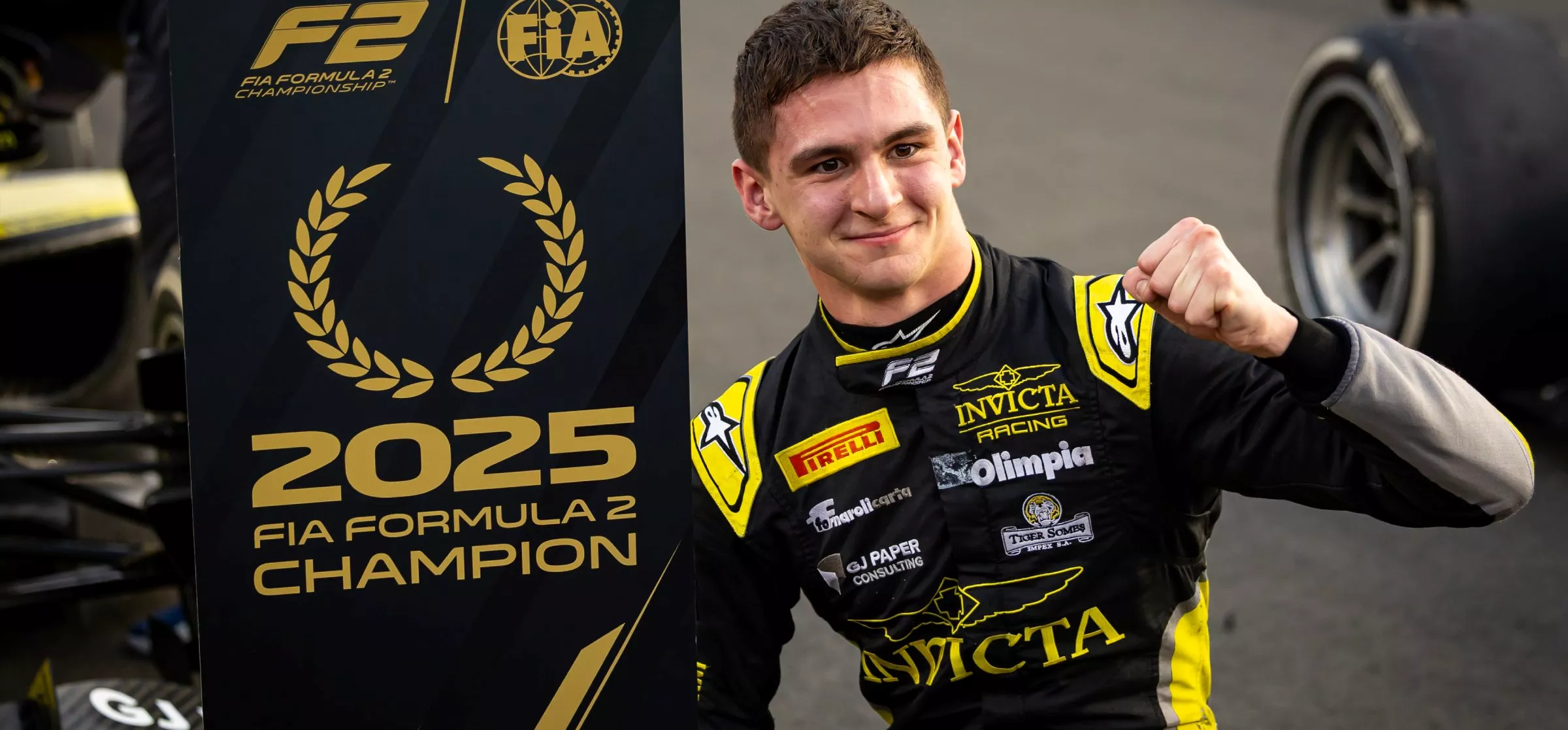
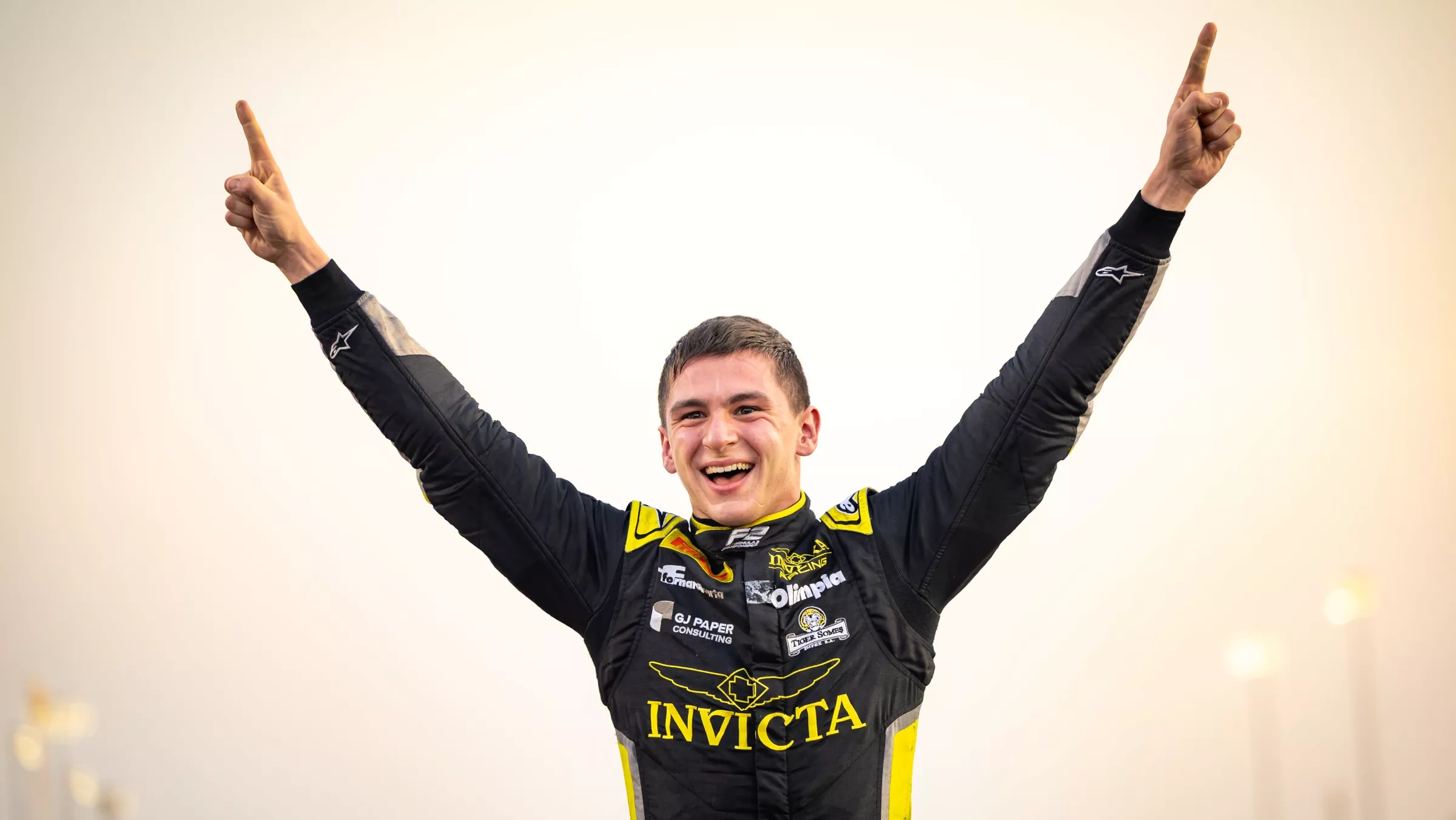
Leonardo Fornaroli won the 2025 F2 drivers’ title while Invicta Racing won the teams’ title
Doing more with less
Not only does Invicta operate in an industrial park unit hovering around 400 square metres in area, it also shares that space with the Virtuosi Racing Formula 4 team.
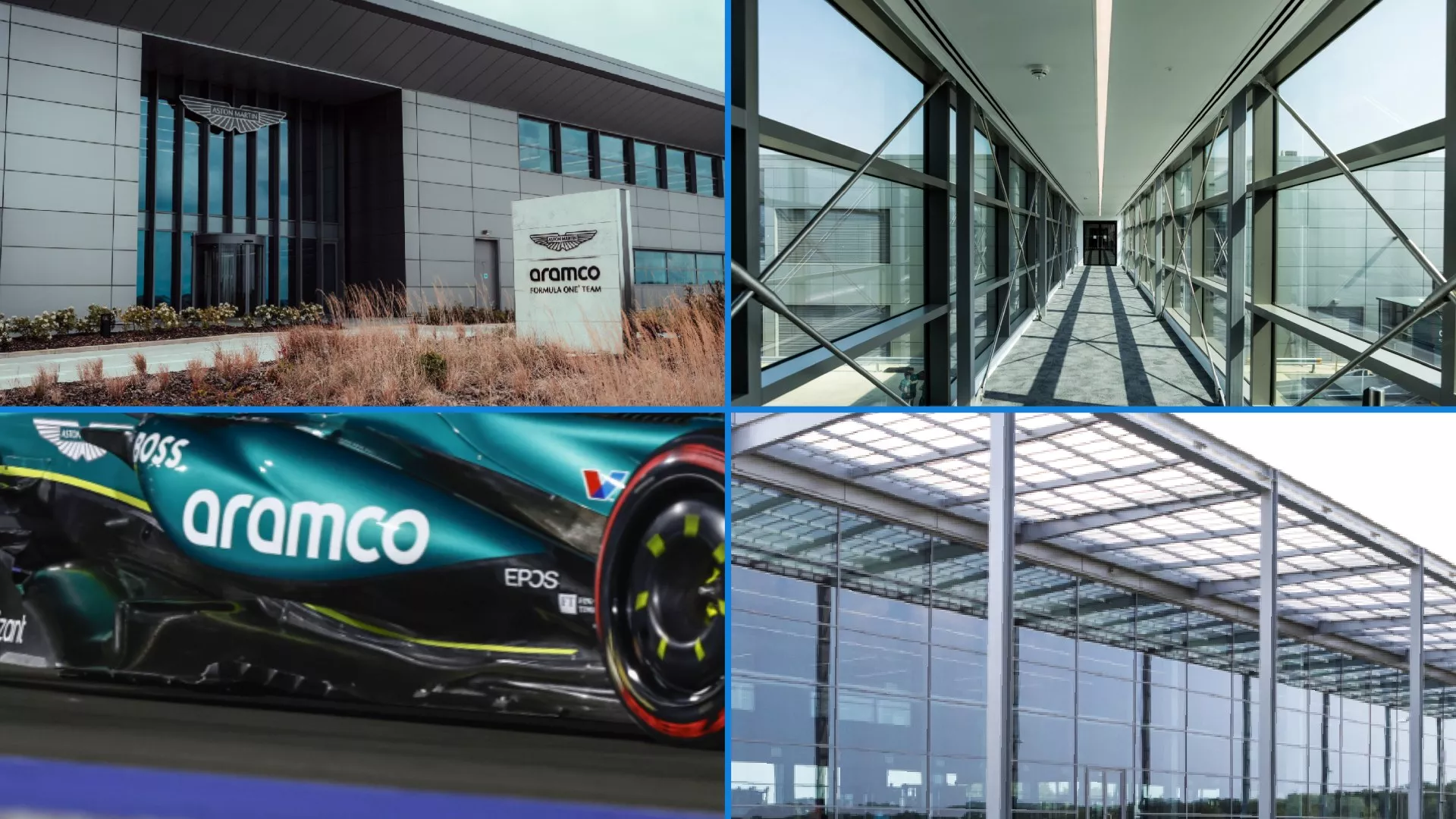
By comparison, Aston Martin Aramco Formula 1 Team operates from a dedicated space with a footprint of 37,000 square metres.
Invicta’s team principal James Robinson, who previously worked at Lotus, Renault (now Alpine), and F1 itself, says: “Everybody knows everybody very intimately here. There are 15 people in our factory as opposed to 500 when I was at Renault. Now, there are over 1,000 employees at Alpine.”
With such a small space, Invicta outsources much of its fabrication needs to build specialist parts and tools. Many rival teams compete in multiple series such as Formula 3 and Formula Regional, which means they have more small parts to produce, so it’s economically viable to have in-house fabricators.
"We have local machinists, a local fabricator, other local suppliers that we know very well," explains team manager Geoff Spear, as he points out that the team’s fabricator is just 400 metres away.
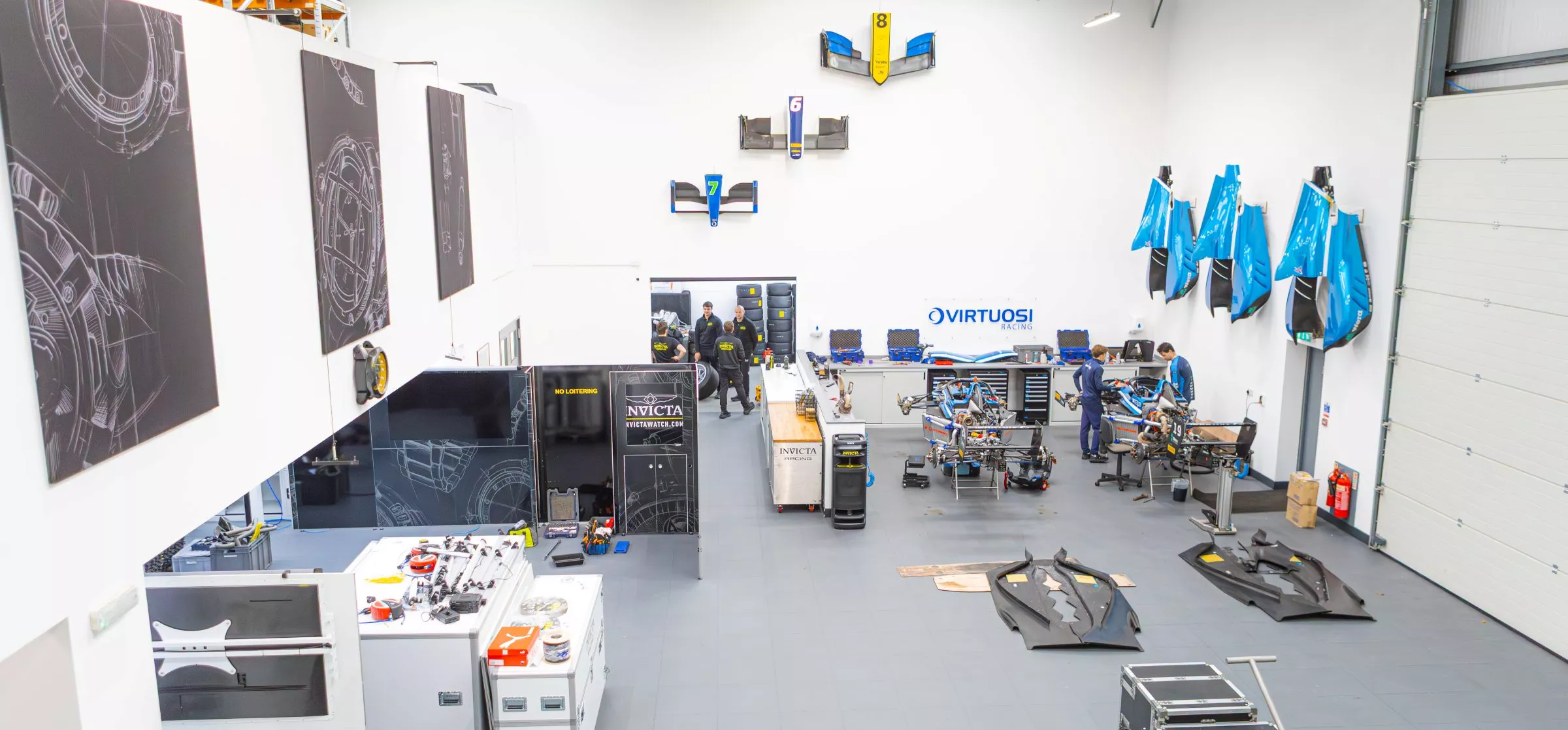
The shop floor in Invicta Racing’s factory, where the Virtuosi F4 team works alongside Invicta’s F2 team
“It is quite local. It does have a community feel.”
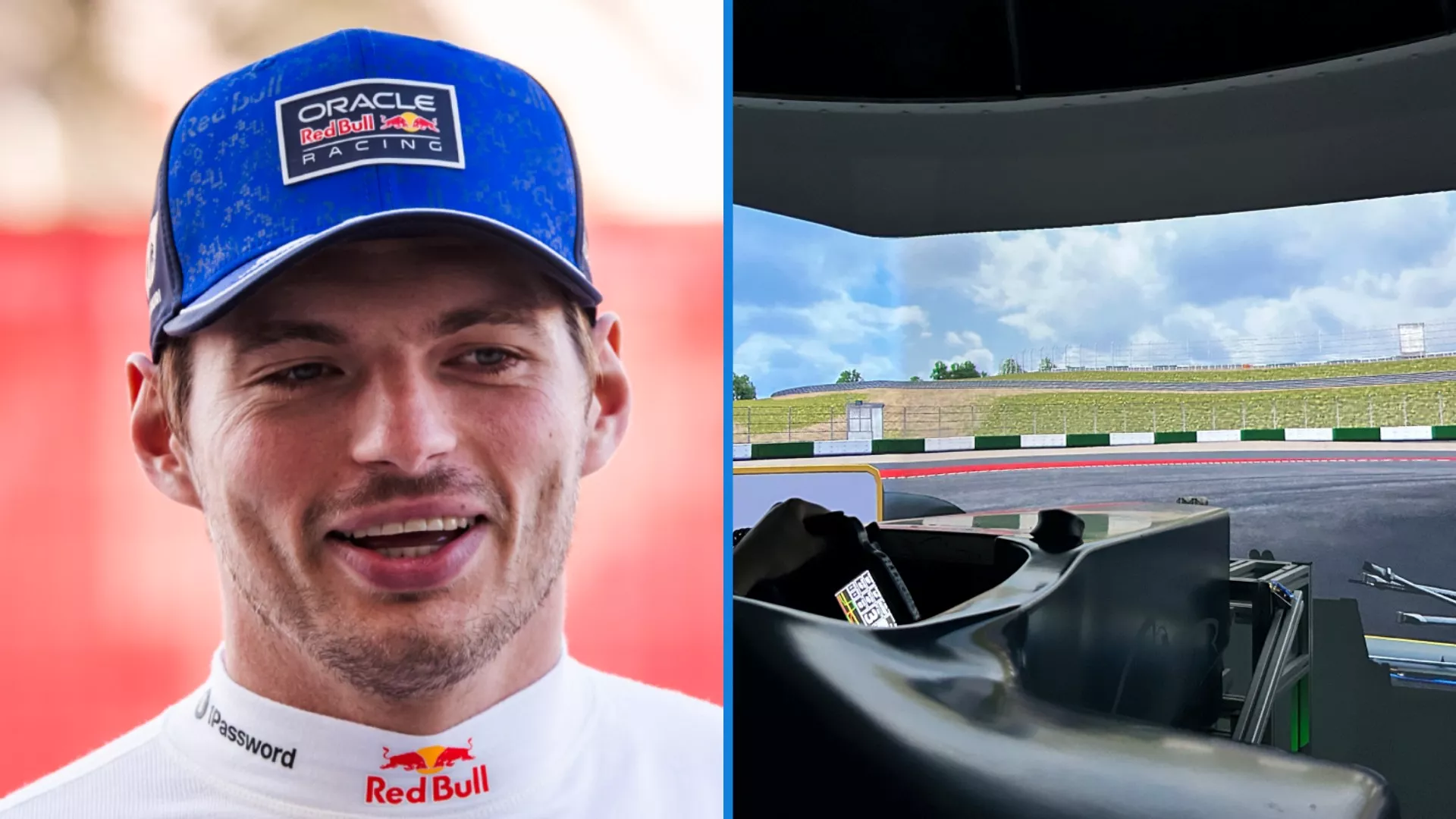
Invicta also outsources its driver simulator needs to the Verstappen.com Racing Pro Simulation facility located in Tilburg, Netherlands - 300 kilometres away.
Austrian firm AVL Racetech handles vehicle dynamics simulation, using the company’s dedicated dynamometer to see how set-up tweaks shape the behaviour of the car on track - specifically around the brakes, dampers, and gearbox.
Team boss Robinson draws parallels between his team and customer F1 teams such as Haas, which partners with Dallara to build its Formula 1 chassis and sources many parts from Ferrari.
“I think like all racing teams though, it's not necessarily about what you do in-house versus what you outsource - but how well you do,” he says.
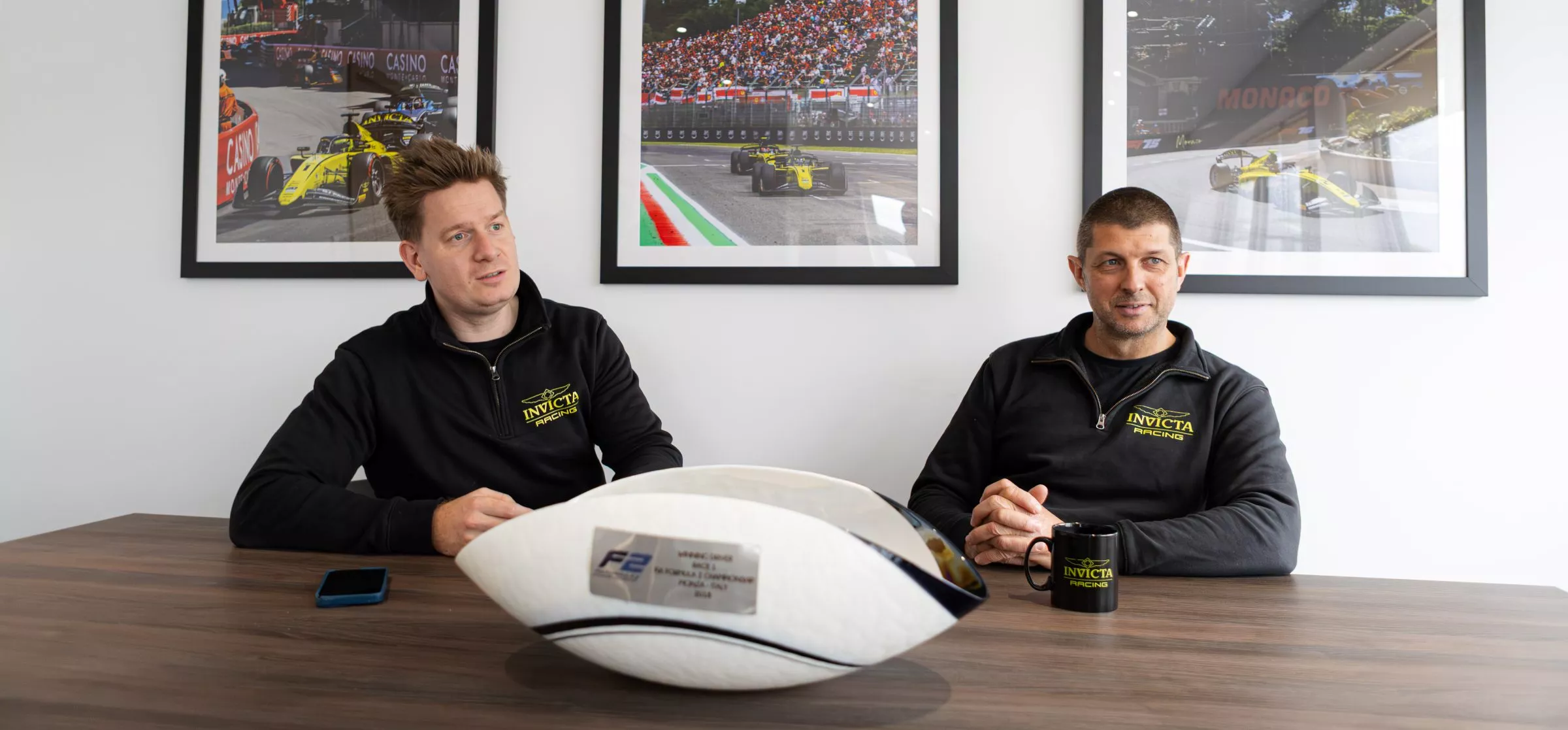
Invicta team boss James Robinson (L) alongside team manager Geoff Spear (R)
What goes on inside the factory?
Despite having fewer rounds than F1, the F2 factory doesn’t stand still when there’s a gap between races.
During the two-month gap between the Azerbaijan and Qatar rounds, Invicta’s race and performance engineers comb through data to see where the drivers can make up time.
Furthermore, they’re running through numerous strategic variables to ensure they can be prepared for anything in the following races.
“Really, one of our focuses each year is making sure that we're not being complacent about things, that we're looking at whatever we can do to improve,” says Spear. “Often, those improvements come in very small increments, but if we do enough of them across the board, then it adds up and becomes meaningful.”
Also upstairs is the room in which the yellow and black wrap is sized up to be applied to the F2 cars, and another - cramped - space full of trophies, memorabilia and signed helmets from previous drivers such as Uni-Virtuosi alumnus Zhou Guanyu, now a Cadillac reserve driver.
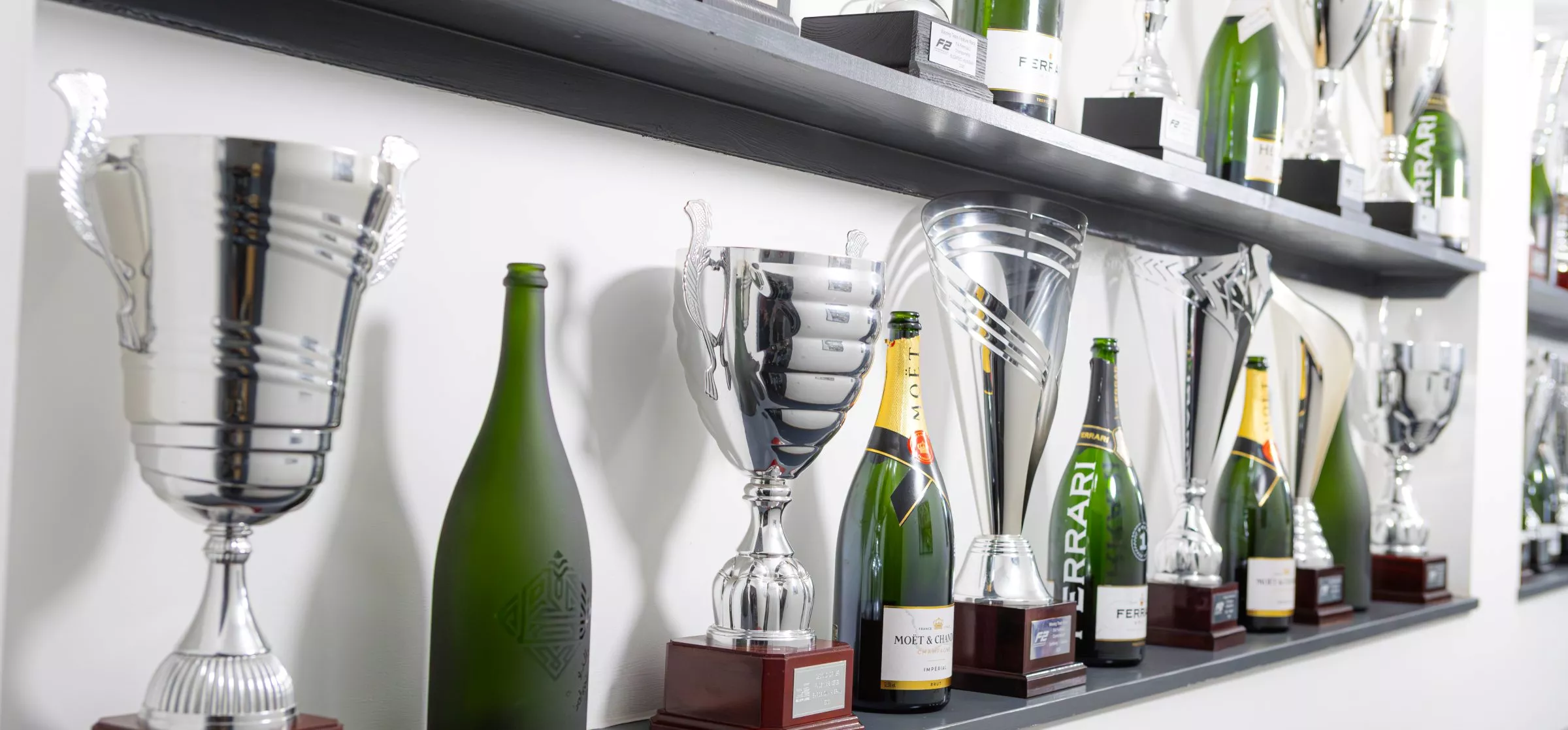
Trophies and memorabilia lined up inside a room at Invicta’s factory
Spare parts are given far more space down the hallway - mostly gears, lubricants, adhesives, and freight equipment - in what is the largest room in the factory.
Downstairs is where the bulk of the F2 team’s manual work takes place. In one room it has a small workbench to cut and shape smaller pieces of material as the team constantly hones its tools and processes to make life at the track easier.
The main space holds the team’s garage equipment, while the Virtuosi F4 team is also busy working in the background.
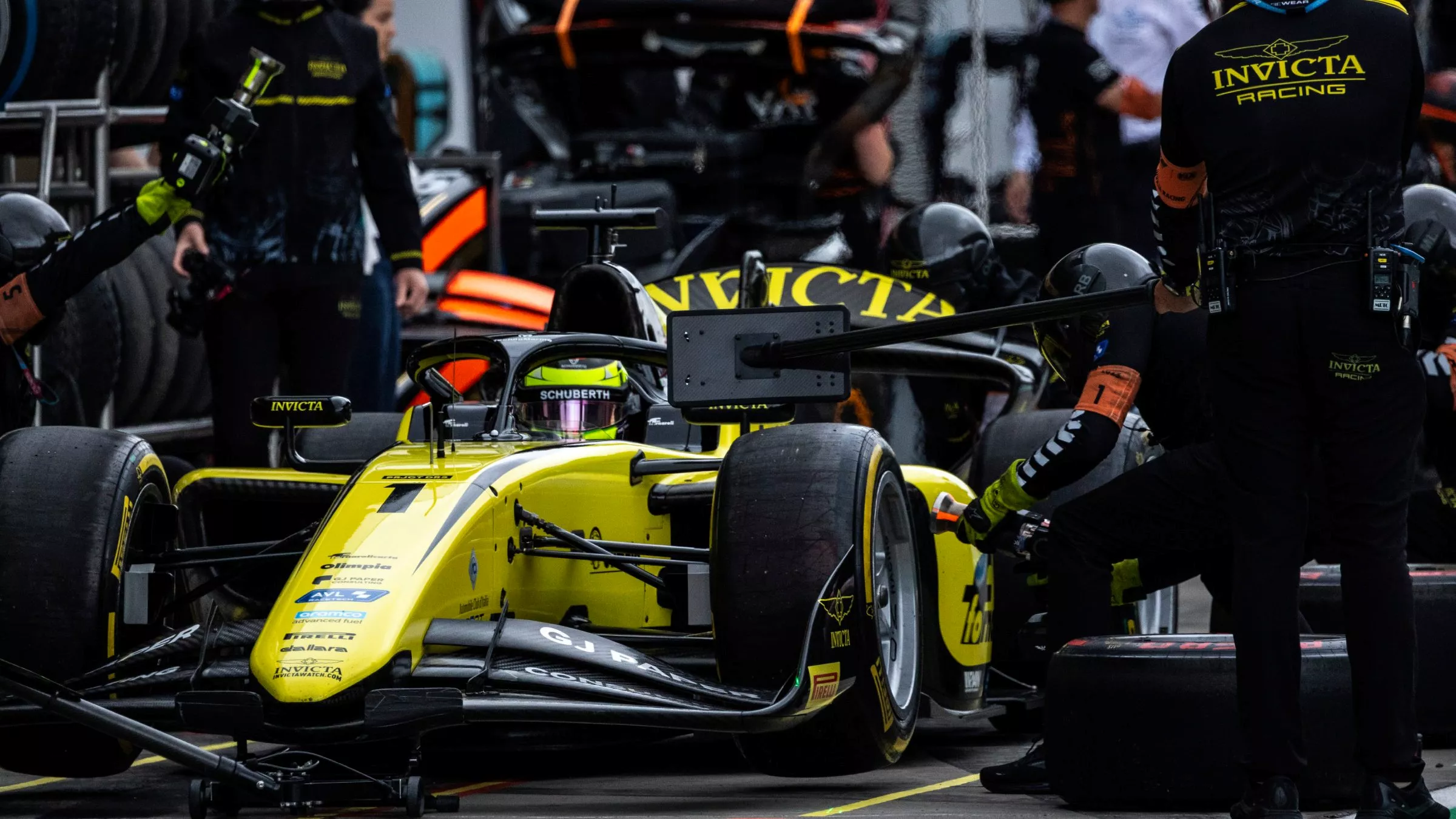
Pitstop practice takes place in a room full of tyres. An axle mounted to the wall is coupled with a digital timer. Here, team members can practise fitting and detaching tyres for pitstops. It’s unrelenting work; the pitgun and 18-inch F2 tyre make an unwieldy duo.
Preparation for the upcoming season is also paramount as Robinson explains: “we cannot afford to get back from Abu Dhabi and say, ‘OK, let's close the book on 2025, let's open the book on 2026.’ We've already had to write the first couple of pages for 2026 in terms of operational preparations.”
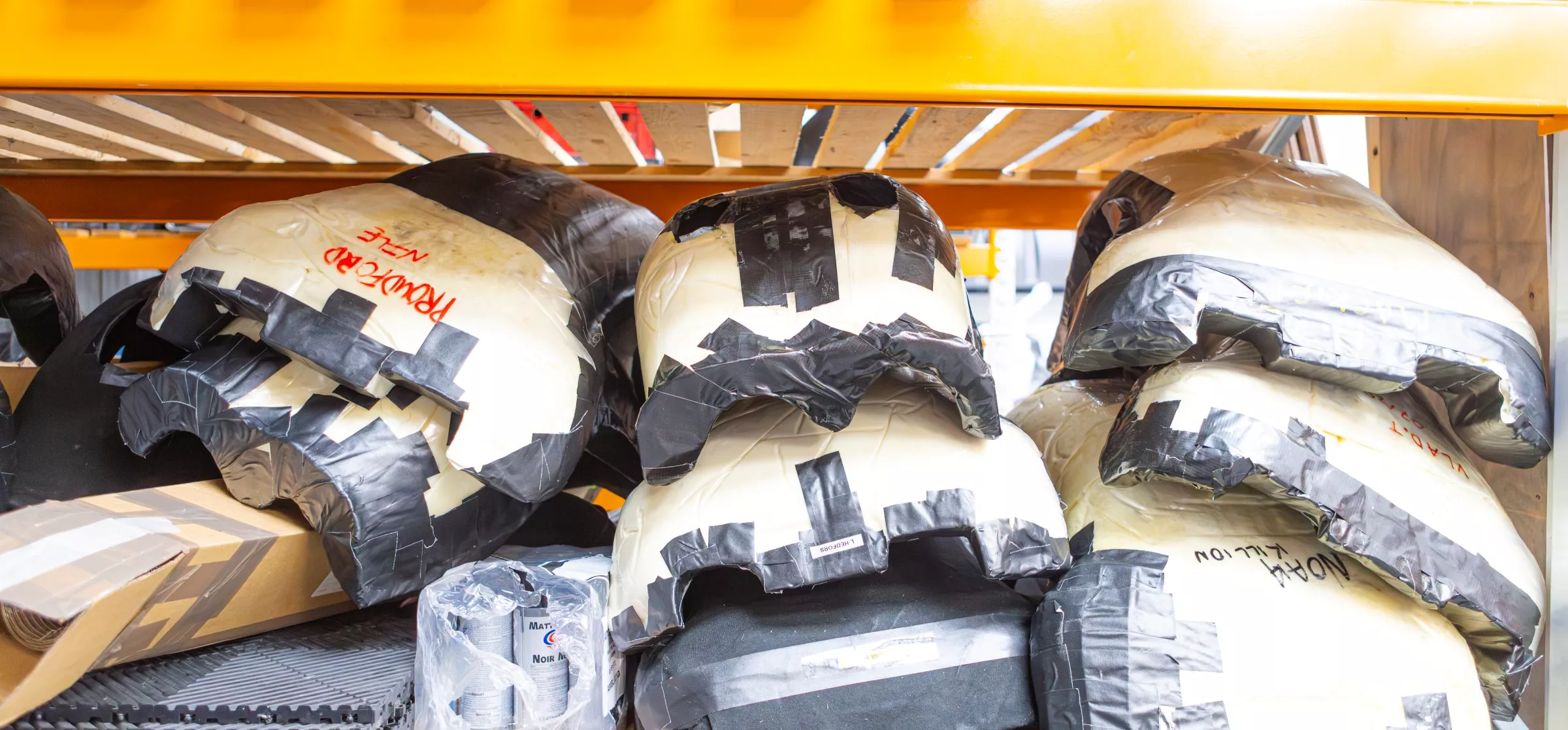
Spare parts are piled high in one room of the factory, including previously used seats, pictured
What happens trackside?
While F1 teams can bring more than 100 staff to the track for each event, F2 teams are only (as per the regulations) allowed 12 team personnel “who are associated in any way with the operation of the cars within the confines of the circuit”.
That means an F2 team member will have more roles to fulfil than an F1 team member.
“When we're at the track, you'll never see an F2 mechanic sitting down ever during the day,” says Robinson.
“It’s a tough life and it's incredibly rewarding when you get wins and championships, but it's a very, very different life to what people think when they watch F1, where jobs are very siloed.”
Before a race weekend, everyone in the team is involved in setting up the garage as the team arrives at the track on Tuesday.
Team manager Spear has been with the team almost since its inception and credits a core of longstanding engineers and staff for the team’s success. He says experience has served Invicta well in its successful pursuit of two teams’ titles (2024 and 2025) and the two drivers’ titles it secured with Bortoleto in 2024 and Fornaroli in 2025.
“Even the guys who have done the series for 10-15 years finish a race weekend tired - knackered - but it works quite well because they get a day or two off to recuperate when they return, and for European rounds it takes the truck a couple of days to get back to the factory.
“It does take that focus, it does take a lot of organisation and commitment. But I think that we're in a decent place and as long as we keep going with the job we're doing, we'll be fine.”
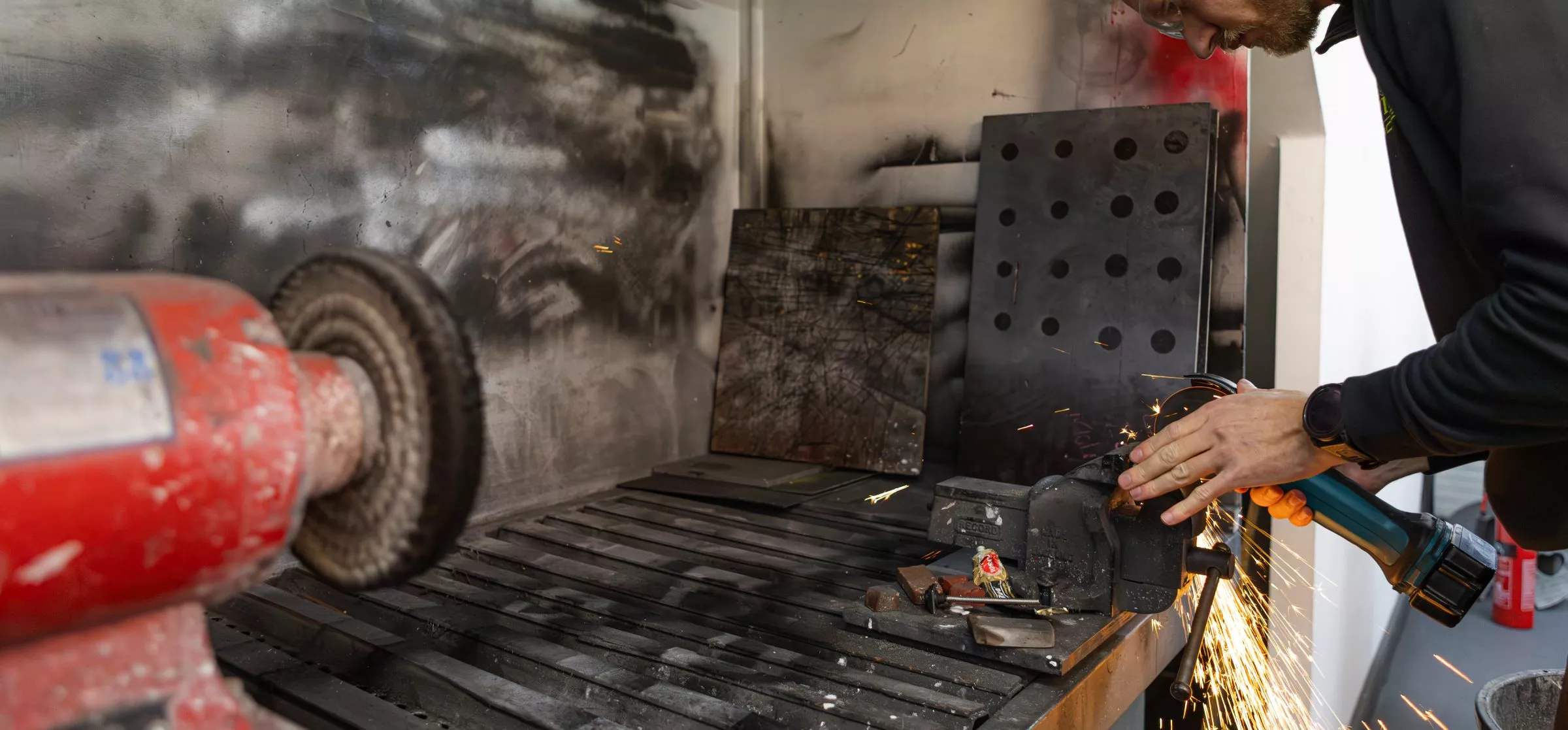
An Invicta team member cuts a part down to size using a saw
Invicta’s legacy
Invicta Racing may have only raced in F2 in this guise since 2023, but it has already forged a solid legacy.
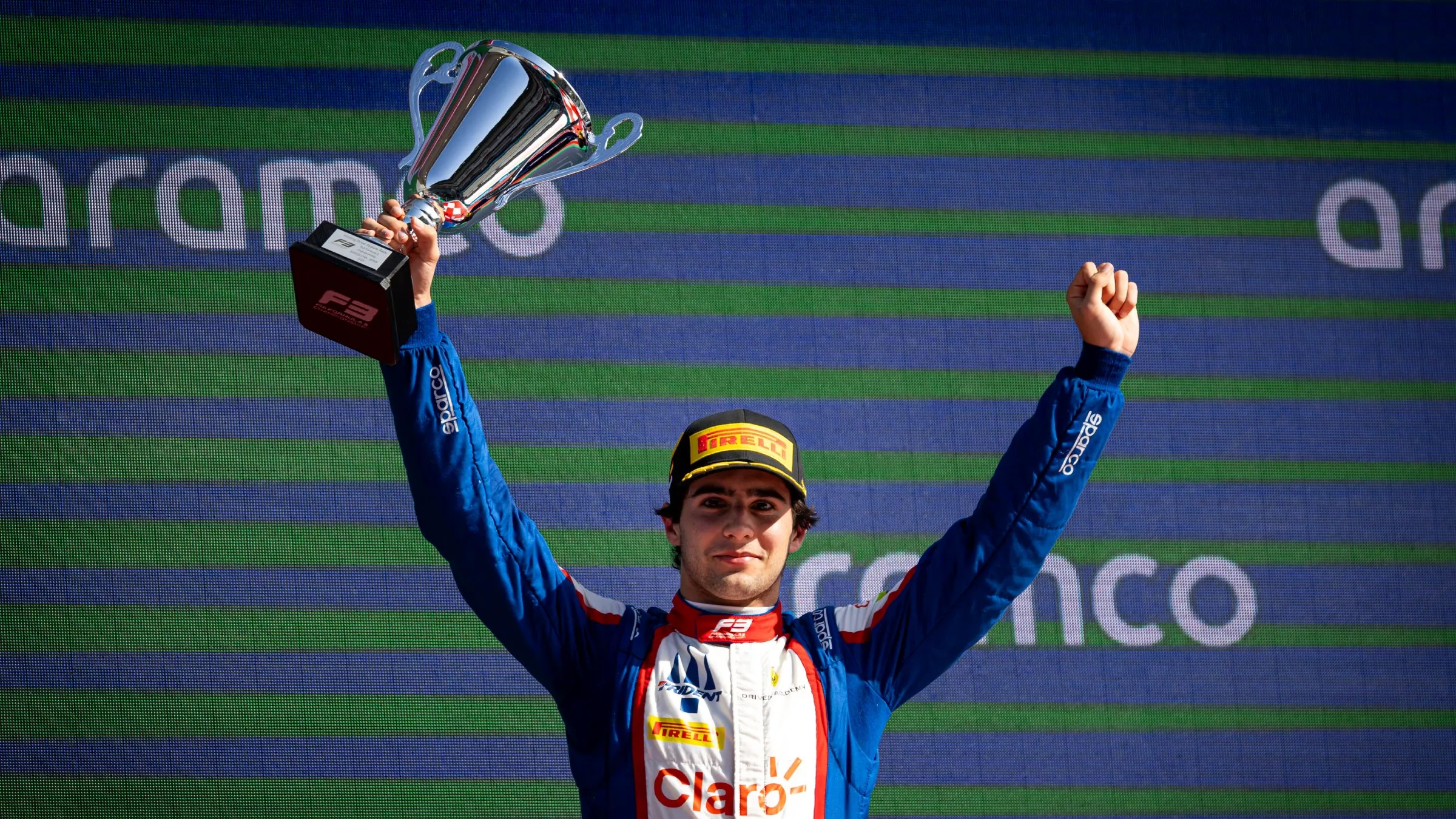
For 2026, it has an all-new lineup in four-time F2 race winner Joshua Duerksen, and 2025 Formula 3 champion Rafael Camara.
“We identified Rafa [Camara] very early on [in 2025] as the hot favourite to win F3 and I met with his manager in Melbourne, and that was actually a proactive approach from us,” reveals Robinson.
The team reflects back fondly on its previous championship-winning drivers Bortoleto and Fornaroli, the former having stepped up to race with Sauber in F1 from 2025 and the latter having joined McLaren’s junior programme in late 2025.
“His ability to pull everything together from what you show him on paper to execute it on track is exceptional,” Robinson says of Fornaroli.
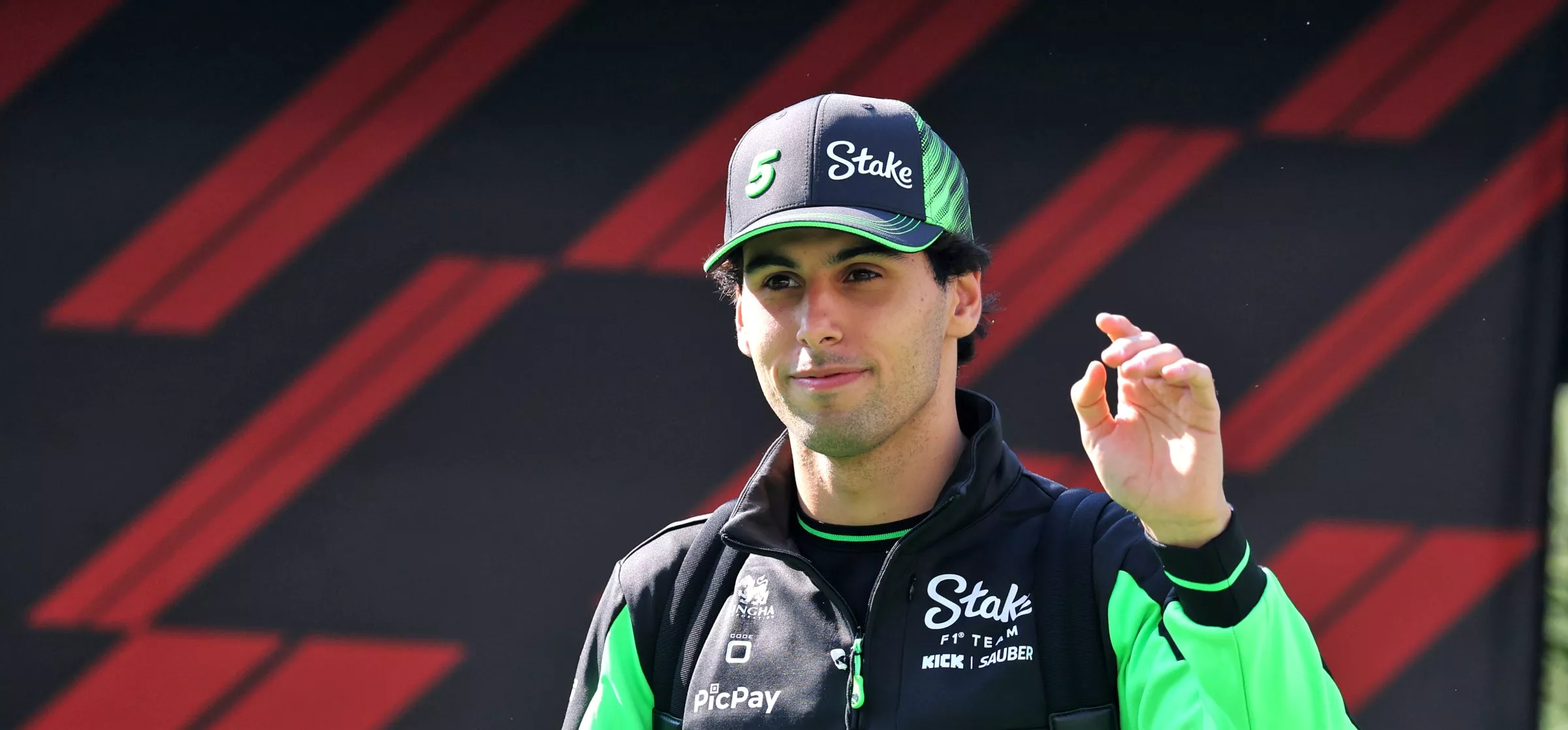
Sauber and Audi F1 driver Gabriel Bortoleto won his F2 championship with Invicta
“I've never seen a driver do it as well as he does. He's incredibly analytical, he's incredibly hard on himself, like really self-deprecating - but in a way that works for him. So it's ultimately a positive, and it's actually his secret weapon that he finds mistakes in himself that other drivers would only dream to find.”
Spear adds: “You develop a relationship with them that becomes almost like a father and child relationship, so you do have a huge amount of pride when you see them move on.
“I've had drivers go into WEC and IndyCar and Super Formula, Formula E, and Super GT, and it's been nice to see them progress.
“The majority of F2 drivers don't go into Formula 1; they go into other places as well. We do see ourselves as the last form of school, if you like. And so, the same as a teacher would, you take pride in what your students go on to achieve.”
It’s easy to see how F1 teams build their own state-of-the-art machines and compete at the very highest level. At first glance, Invicta’s diminutive headquarters, on the other hand, can seem at odds with its burgeoning trophy room.
But deeper inspection clearly reveals that this team in the east of England is the one to beat.
.webp?cx=0.5&cy=0.5)