Motor
Why are race starts so different in F1 2026?
by Samarth Kanal
6min read
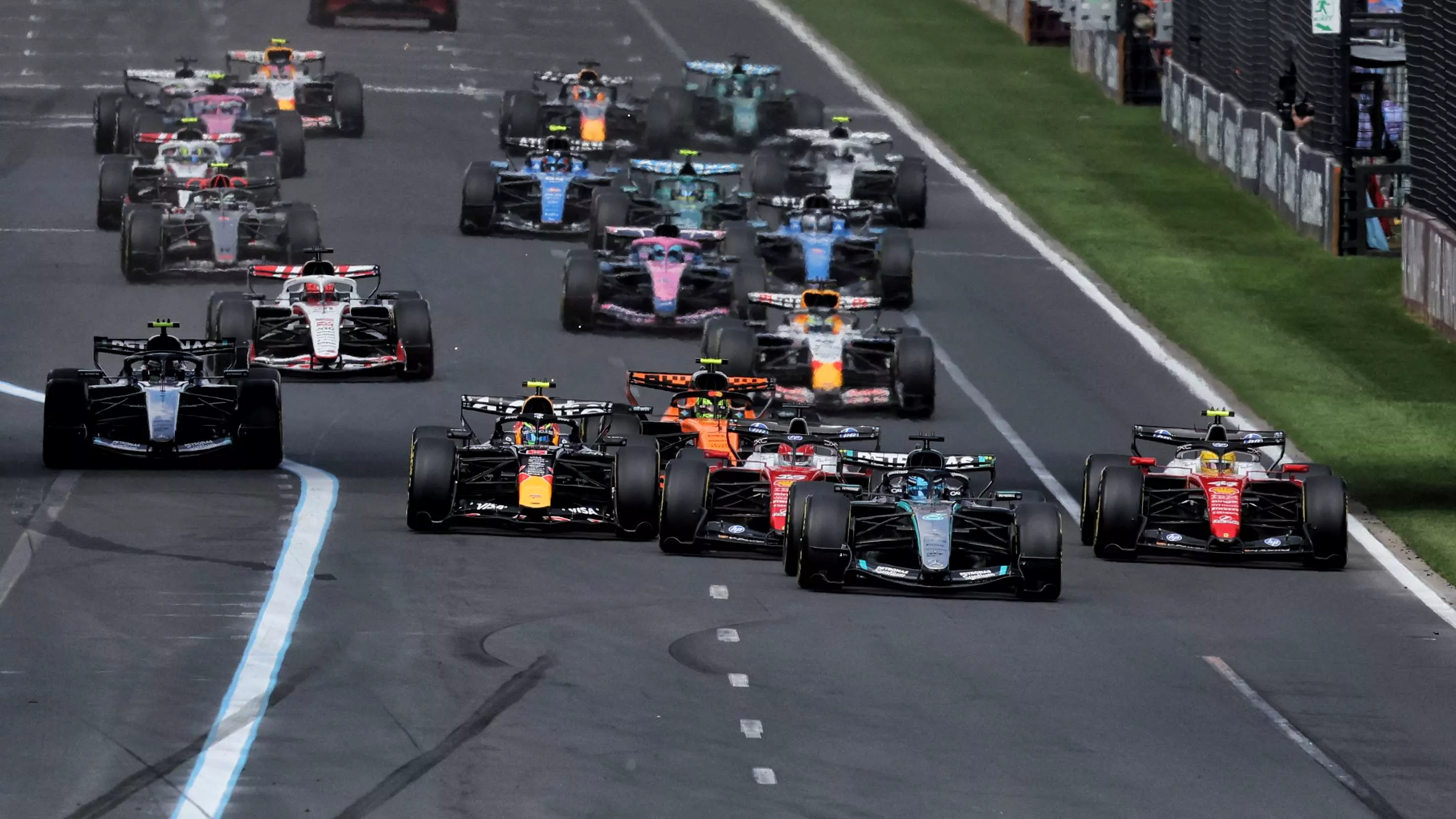
As soon as the lights went out in Melbourne, it became abundantly clear just how different this Formula 1 chapter is from anything seen before.
Sign up for a newsletter and we'll make sure you're fully up-to-date in the world of race technology
Ferrari’s Charles Leclerc leapt into the lead of the 2026 Australian Grand Prix over Mercedes’s polesitter George Russell - while their respective team-mates also enjoyed (and suffered) similar fortunes at the start.
Further back, there was a stark difference between how cars got off the line, with Alpine’s Franco Colapinto having had to dodge the very slow-going Racing Bulls of Liam Lawson.
While drivers and fans might differ on whether this new era of F1 is the ideal, the reasons behind the new race start procedure and its results are easy to explain.
Why have race starts changed in 2026?
Pre-season testing showed that race starts would be very different, and it’s partly to do with the removal of the Motor Generator Unit - Heat (MGU-H).
This component, present in F1 power units from 2014-25, converted exhaust heat energy into electrical energy. It was essentially a turbine. Not only would it harvest exhaust heat, but it could also be used as an electric motor to spool up the turbocharger.
Now that the MGU-H is no longer part of the power unit, the turbocharger relies on the exhaust gases to spool up - with maximum boost being delivered when it is spinning at around 100,000RPM.
The faster the turbo spins, the more it boosts the engine. It needs to run at maximum boost to deliver full power to the engine. Yet, it takes time to spool the turbo up to maximum RPM. This is a phenomenon called turbo lag - one that is completely normal in turbocharged engines.
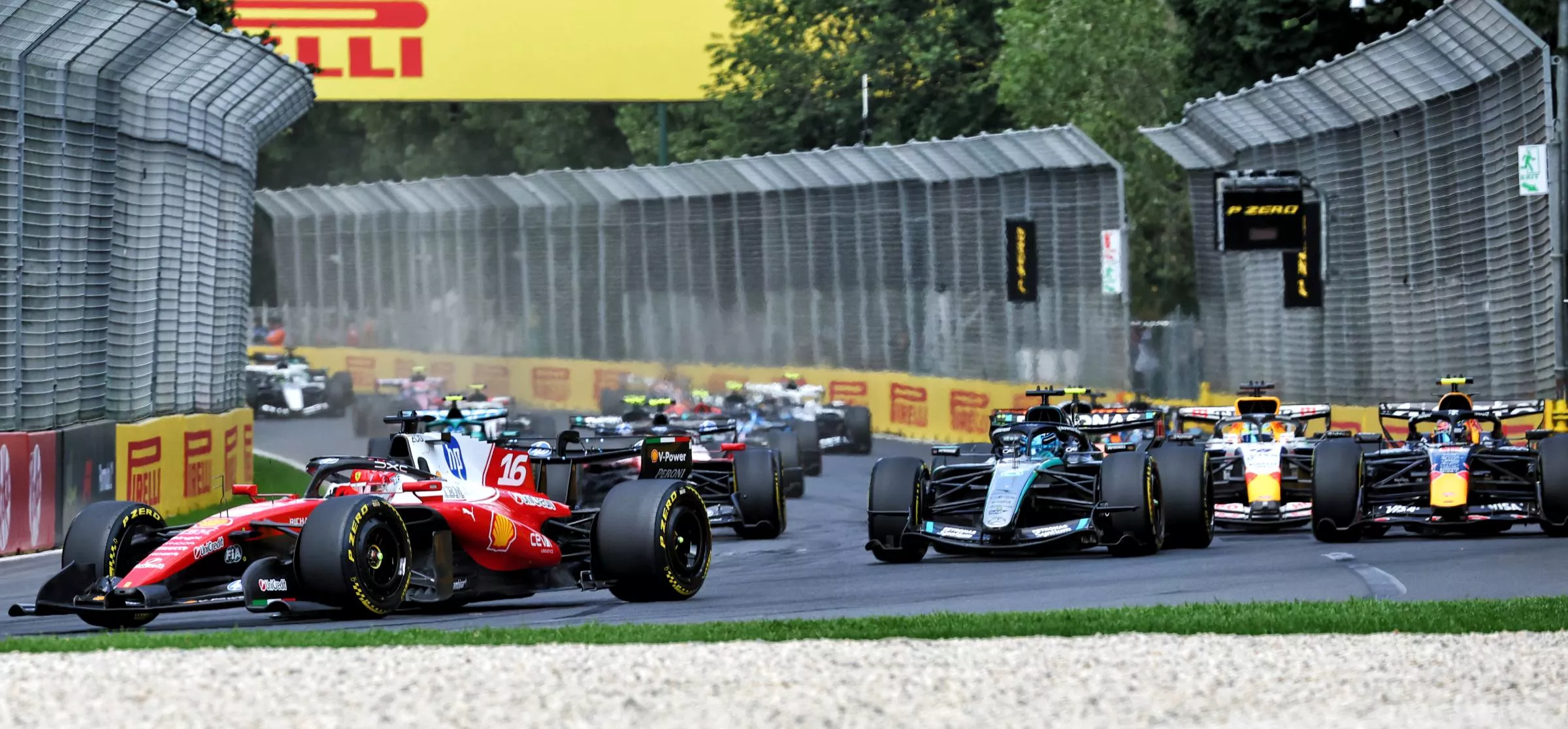
Ferrari’s Charles Leclerc mastered the race start to take the lead off the bat in 2026
Due to turbo lag, drivers had to hold the throttle while stationary to have exhaust gases running through the turbo and spool it up to maximum RPM. This took up to 10 seconds, as was clear in pre-season testing. Of course, this would mean that the driver who got to their grid slot first - the polesitter - would have longer to spool up their turbo than the driver who reached their slot last.
The FIA therefore introduced a delay of five seconds - a ‘pre-start’ to allow drivers to spool up their turbochargers - before the standard starting sequence began.
The Ferraris still enjoyed better starts than their rivals in Australia, and part of this is thought to be down to a smaller turbo in the Ferrari engine that takes less time to spool up, downplaying the problem of turbo lag.
That still doesn’t completely explain why there was such a discrepancy between starts in Melbourne. Another reason is the new power units, in which there is a greater reliance on electrical power than before.
The new power unit regulations mean drivers have a bigger battery to charge. While the cars leave the pits with a reasonable amount of charge, drivers have to recover the rest during the formation lap. Unfortunately, Melbourne doesn’t have many hard braking zones, and it’s difficult to recover power there.
That’s exactly the reason Mercedes gave for its relatively slow start in Australia, as trackside engineering director Andrew Shovlin explained.
“The start was difficult; we didn't do a good enough job of managing the limited energy around the formation lap and both drivers ended up with low battery on the line. Kimi in particular became a sitting duck off the line. George fared slightly better but still lost a lot of ground.”
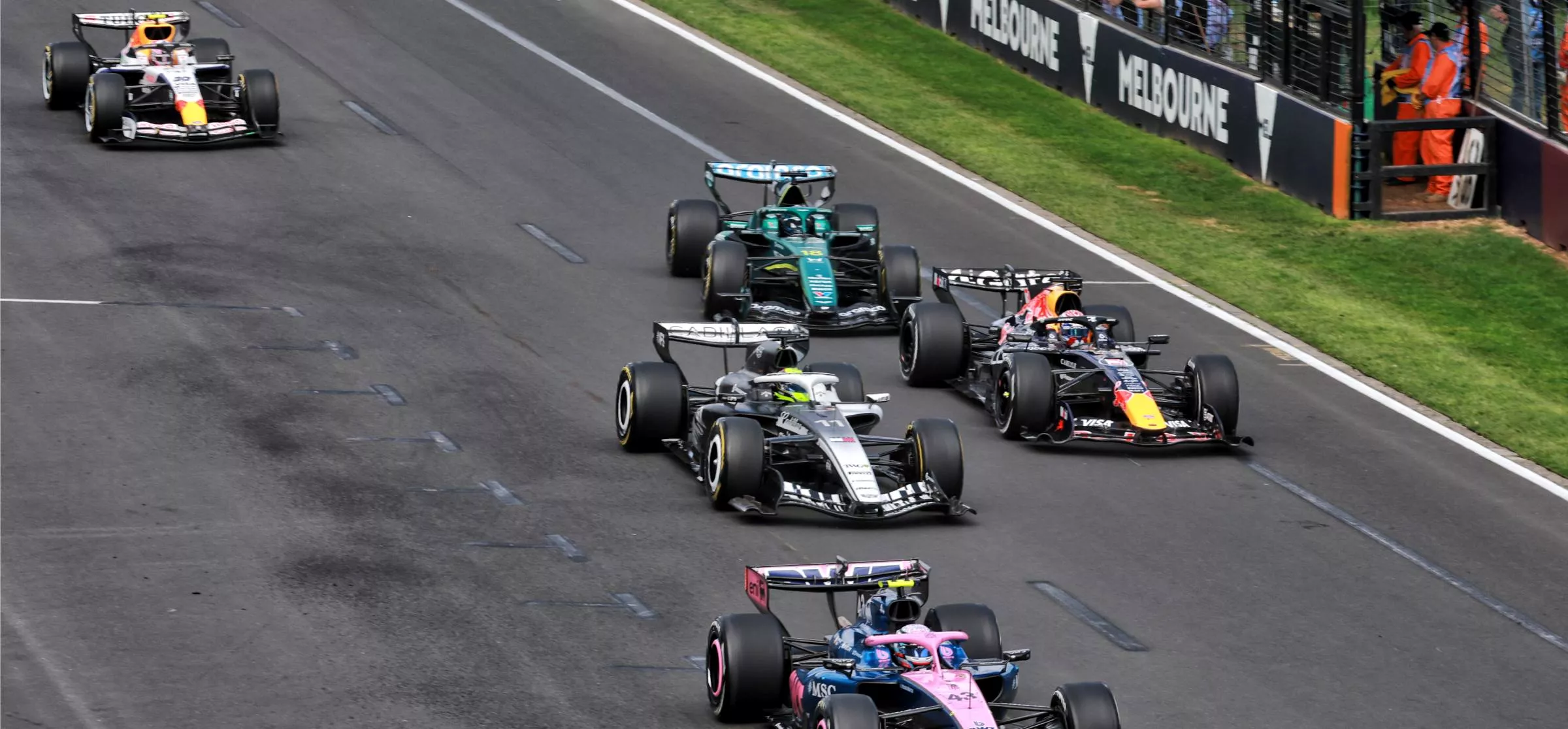
Liam Lawson (L) got his Racing Bulls off the line very slowly in Melbourne
A lack of battery power was also blamed for Lawson’s slow start as team principal Alan Permane said: “Liam had an unfortunate issue at the start with a lack of power but did his best to manage the situation.”
Teams will improve when it comes to harvesting energy during formation laps but, circuit layout will still play a key part in how easy it is to fill up the battery.
Circuits with hard braking zones, such as Bahrain, Singapore, and Baku (Azerbaijan), might lead to faster starts than circuits such as Monza (Italy), Suzuka (Japan), and Spa-Francorchamps (Belgium), where there are long sequences without the use of the brakes.
Ultimately, the 2026 regulations have introduced a fascinating new variable into F1 race starts - adding a layer of strategic complexity that teams are only beginning to understand.
As the season progresses, engineers will refine their approaches to turbo spooling and energy recovery on formation laps, and the gaps we saw in Melbourne will likely narrow. But, circuit characteristics will ensure that start performance remains unpredictable throughout the year, meaning that grid positions may count for slightly less than before, and the moment the lights go out could be more exciting (or frustrating) than ever.
.webp?cx=0.5&cy=0.5)