Career
Dan Fallows on what F1 teams really want - and why he joined Racing Bulls
by Raceteq
7min read
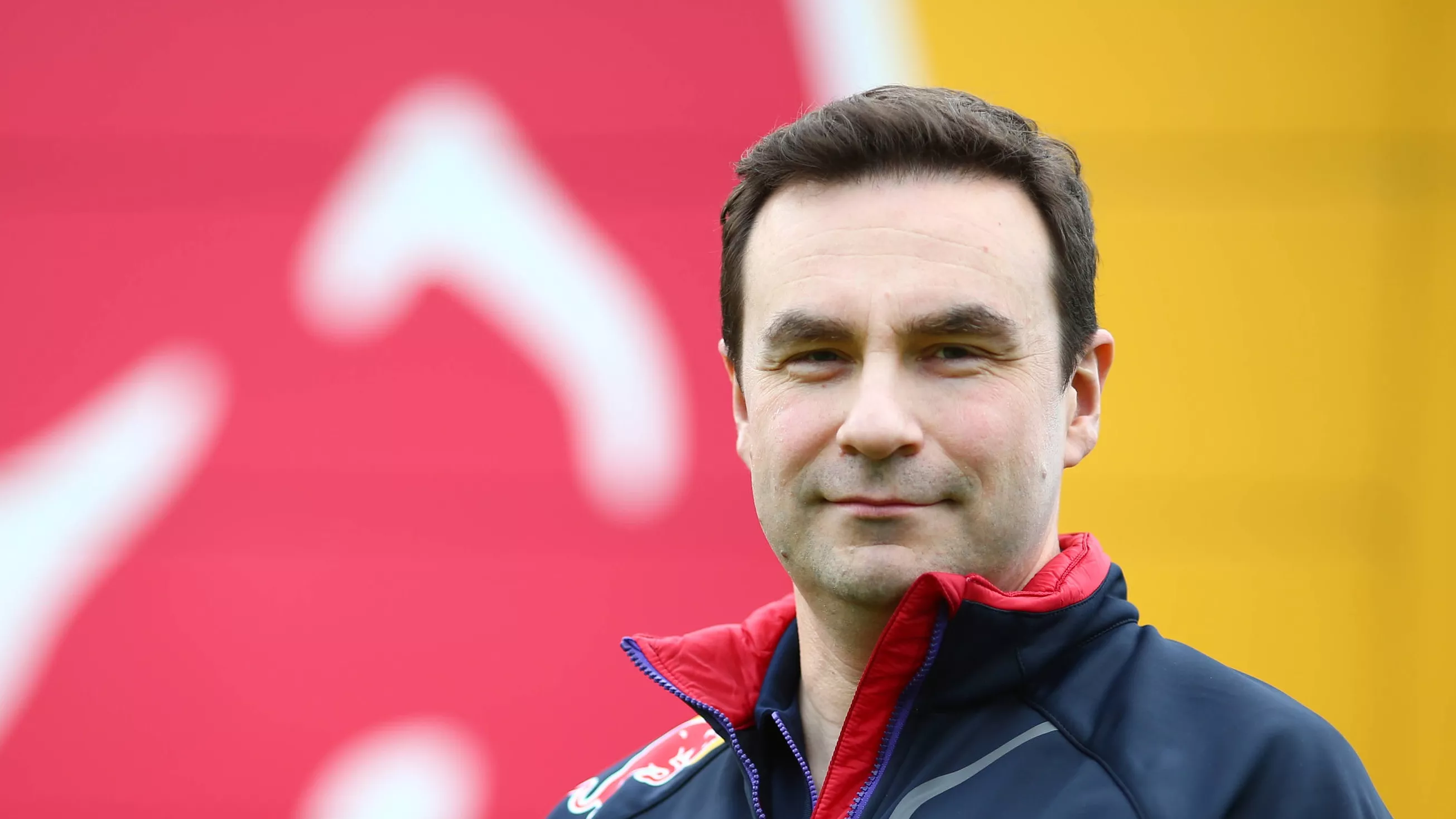
Former Red Bull and Aston Martin aerodynamicist Dan Fallows has begun a new chapter as Racing Bulls’ technical director. As he closes his chapter as Raceteq’s contributor, he opens up about the skills that actually matter in Formula 1, his career, and the reasons for his return.
Sign up for a newsletter and we'll make sure you're fully up-to-date in the world of race technology
There's a version of Dan Fallows' career that gets told in headlines: the man who helped build Red Bull's championship dynasty alongside Adrian Newey, that bold move to Aston Martin, the difficult exit, and now the return as technical director of Racing Bulls.
Sitting down with him for an hour gives a nuanced picture. He’s a deeply thoughtful engineer who is refreshingly candid about what it actually takes to get into F1 and what teams are genuinely looking for.
Moreover, after seriously considering walking away from the sport altogether, he tells us why he was drawn back in.
A Master’s degree, numerous rejections, and the path to motorsport
By his own admission, Fallows’ entry into motorsport was somewhat conventional. He completed a Master’s degree in aeronautical engineering at Southampton - the same institution, he notes with some amusement, that Adrian Newey attended.
After realising that working on aircraft wasn’t as exciting to him as motorsport, he began knocking on doors in F1.
"I wrote to every F1 team," he recalls. "They all said no. I wrote them again.”
He recalls that only on his third round of letters to F1 teams did Williams engineer Geoff Willlis relent, offering him an interview out of what Fallows says was sheer exhaustion.
Fallows wasn’t offered a job at Williams but instead as an aerodynamicist at Lola, which competed in Champ Cars among other series. What followed was, by his description, one of the best possible educations a young engineer could have.
At Lola in the late 1990s, working across Champ Cars and Formula 3000, Fallows was one of only two aerodynamicists at the company.
“You did everything," he says. "We were doing model-making, designing bits for the car, all kinds of things."
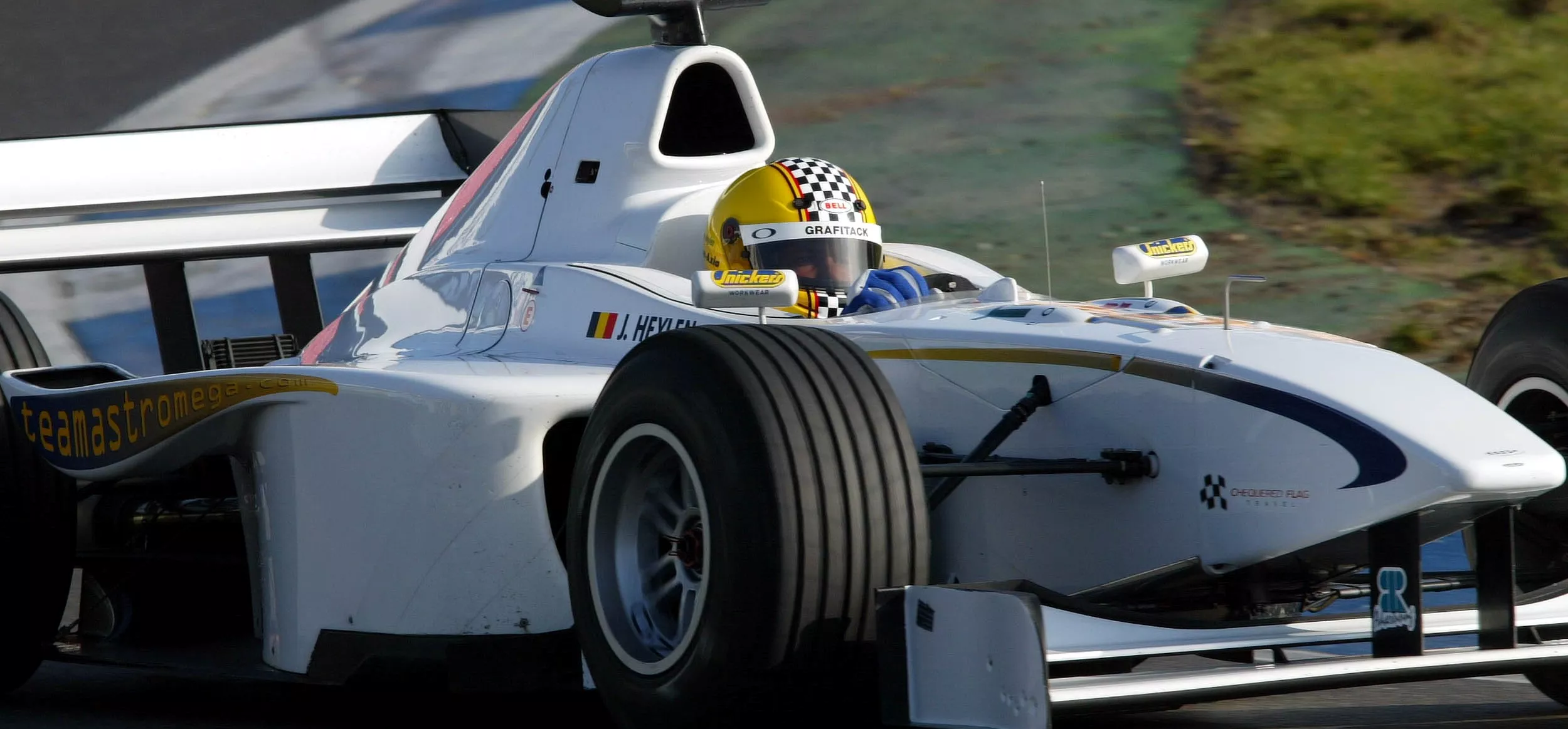
An example of an F3000 racing car - open-wheeled racing cars built and designed by Lola
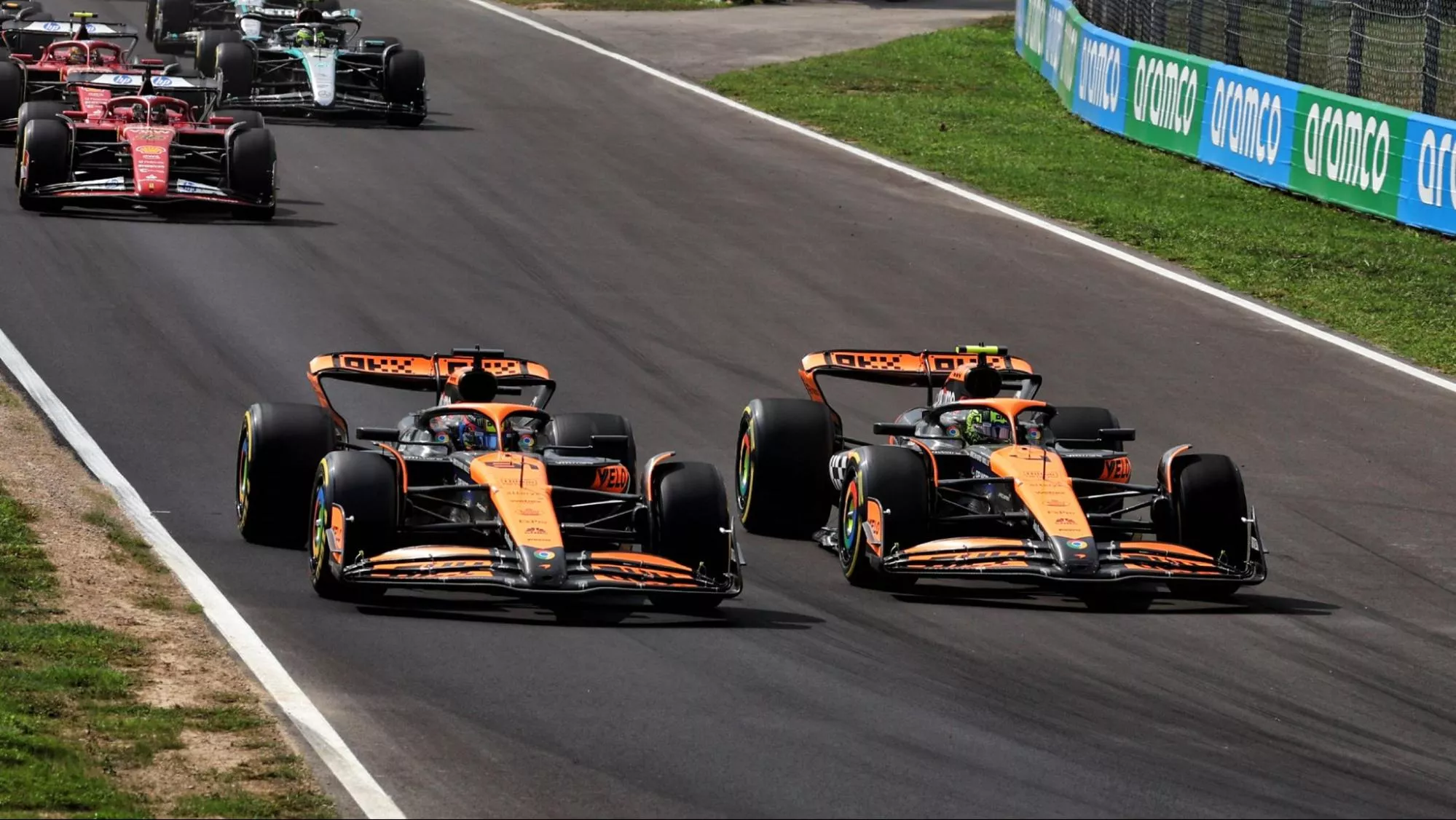
He contrasts this sharply with the modern F1 environment, where specialism is so deep that junior engineers might spend years working on a single component of a single system.
"People's jobs [in F1] have become so specialised. You can't have people who are relatively junior having an overview of that much of the car."
He speaks with genuine affection for Lola, of that era, noting that several alumni have gone on to senior roles across the paddock: Neil Houldey at McLaren, Andrew Murdoch at Williams among them.
He draws a parallel with Italian constructor Dallara today as perhaps the closest modern equivalent: a company where engineers still get to work on whole cars, in small enough teams that a broad understanding remains possible.
For those hoping to follow a similar path now, Fallows is clear-eyed about the challenge because many traditional ‘feeder’ companies to F1 have largely disappeared, and the route inside is harder to map.
His advice? Map out your own specialisation before you apply to the big teams.
"If you want to be a strategy engineer, you have to have done everything up to that point to make yourself a viable candidate," he says.
"It involves big data modelling and understanding all the maths behind it."
The same logic applies across disciplines. F1 teams are looking for people who have already started shaping themselves toward a specific role.
Would I have done it again if given the chance? 100%. Having been given the opportunity to mess things up in my own unique way, but also to help build something at the same time, is a really powerful thing.
What F1 teams actually want from young engineers
Ask Fallows what he looks for when hiring, and the answer is more complicated than a first-class degree and a passion for racing. Teams receive thousands of applications.
What separates the people who get hired from those who don't is a combination of attributes that doesn't fit neatly onto a transcript.
"We're looking for this very strange blend of a quite creative and almost artistic side to people," he says, "and then also a very solid academic and mathematical background."
Aerodynamicists in particular need to be able to visualise airflow in three dimensions, to hold a mental model of something invisible and complex, and reason about it intuitively. That's not a skill that academic performance alone reliably predicts.
He is candid about the people skills dimension as well, and notably frank about the tensions it creates. The academic bar for entry into F1 technical departments has risen significantly since he joined the sport - so much so that he half-jokes that neither he nor Newey would be hired today. However, he observes that high academic achievement, does not always come with the interpersonal qualities that high-pressure team environments demand.
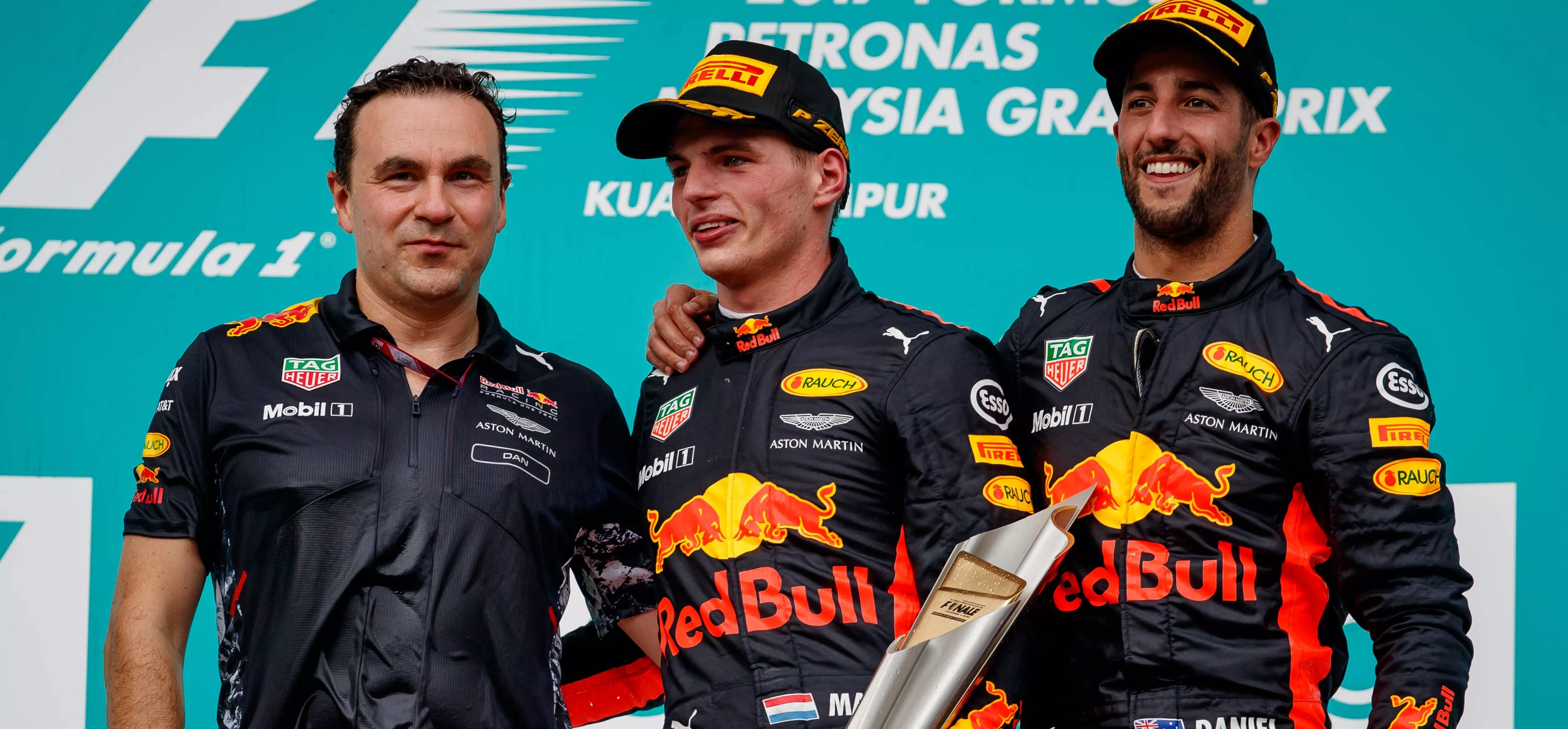
Fallows with Max Verstappen (centre) and Daniel Ricciardo (R) on the podium at the 2017 Malaysian Grand Prix
.webp?cx=0.5&cy=0.5)
"When you hire people who are particularly high academic achievers, they can be challenging personalities sometimes. They can not necessarily play well with others.
“There has to be a certain element of just knuckling down and working with each other. And you find that people who are very good at their job are the ones who can be most effective.
“You can be most effective when you're leveraging the people around you.”
Cross-department synergy is a performance variable. That’s why F1 teams design their headquarters to promote seamless routes for information and physical resources. Potential hires need to buy into that.
“I'd say the hardest people to recruit out of university are designers and aerodynamicists in particular, because of the types of skills they need.
“We're asking for a great deal of commitment - very long hours. It is a stressful job at times. So you're looking for certain personality types as well.”
F1 software engineering, meanwhile, faces a different kind of pressure: finance and tech sectors can offer six-figure salaries to graduates, while a cost-capped F1 team will struggle to match them.
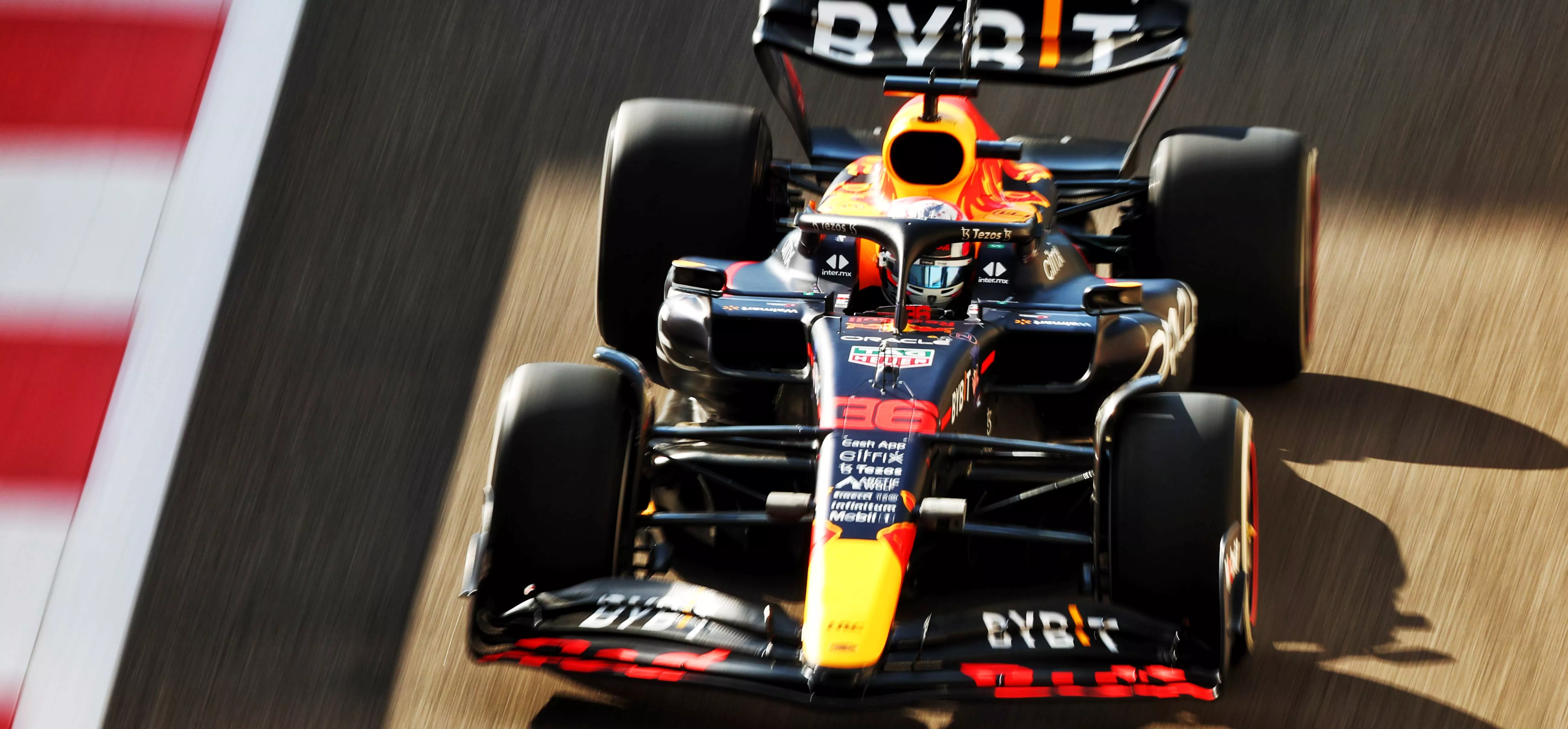
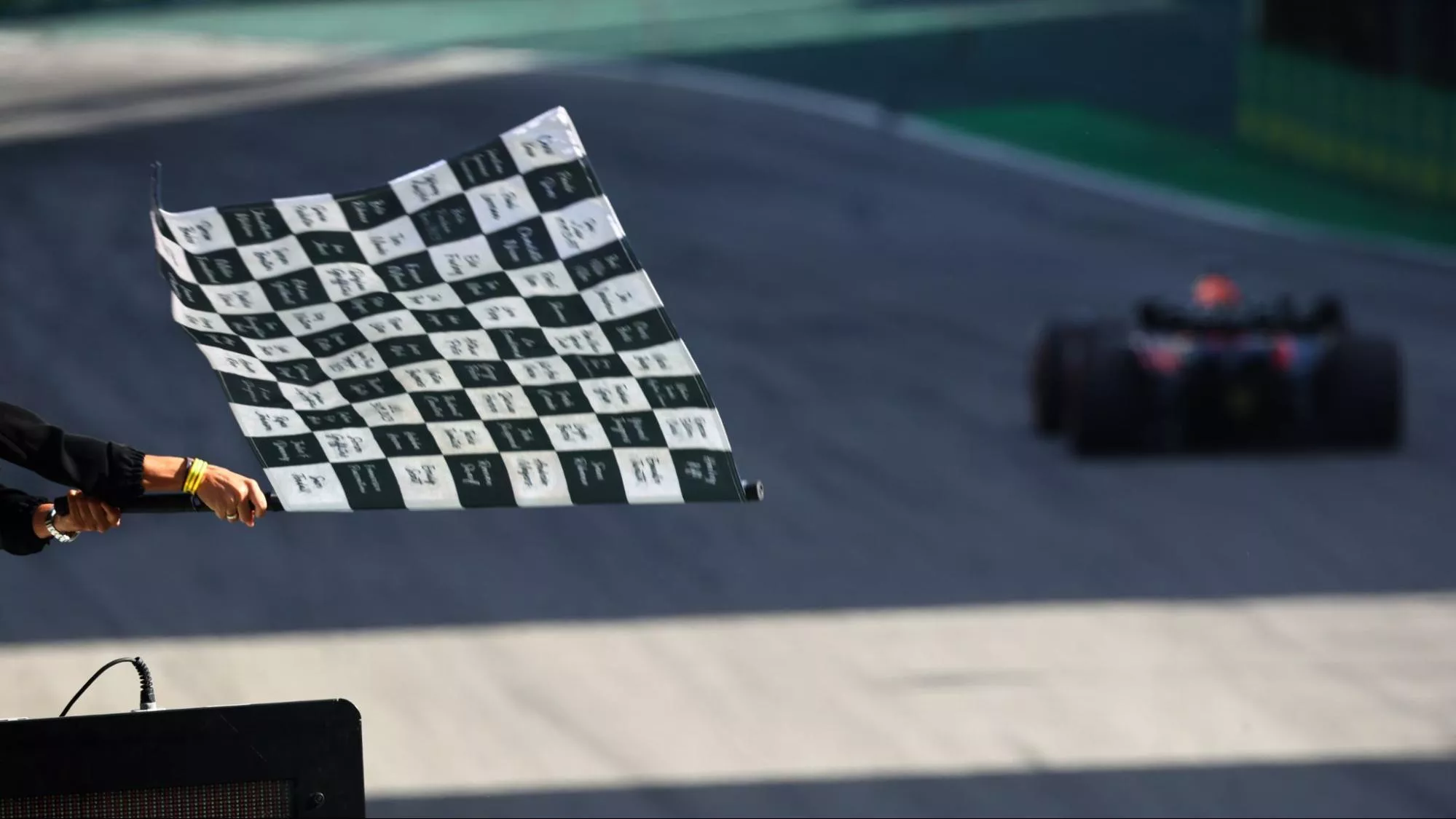
The championship-winning 2022 Red Bull RB18 F1 car was the last Red Bull that Fallows worked on
The Red Bull and Aston Martin years
Fallows spent the bulk of his career at Red Bull, rising to the role of chief engineer for aerodynamics in 2014.
The team struggled in the power stakes against Mercedes and Ferrari, yet, even in the early years of the turbo-hybrid F1 era, Red Bull never finished worse than fourth in the constructors’ standings.
Red Bull still knew it had a capable chassis, team, and drivers.
“I think we got to a point where we could see what good looked like,” says Fallows, as he admits it was painful not to see consistent wins.
That was until Max Verstappen won the drivers’ title in 2021 and Red Bull dominated with Verstappen in 2022. On the RB18 F1 car’s Wikipedia page, numerous aerodynamicists are credited; Fallows laughs at this notion and says anything less than providing a Hollywood movie-length credits sequence would be “absolute rubbish”.
“You can't say that a car is designed by one person. And I certainly would never take credit for that because if I would take credit for anything, it's creating an environment or helping to create an environment where that car can be produced that's that competitive.”
.webp?cx=0.5&cy=0.5)
Dan Fallows was head of aerodynamics at Red Bull before he moved to Aston Martin
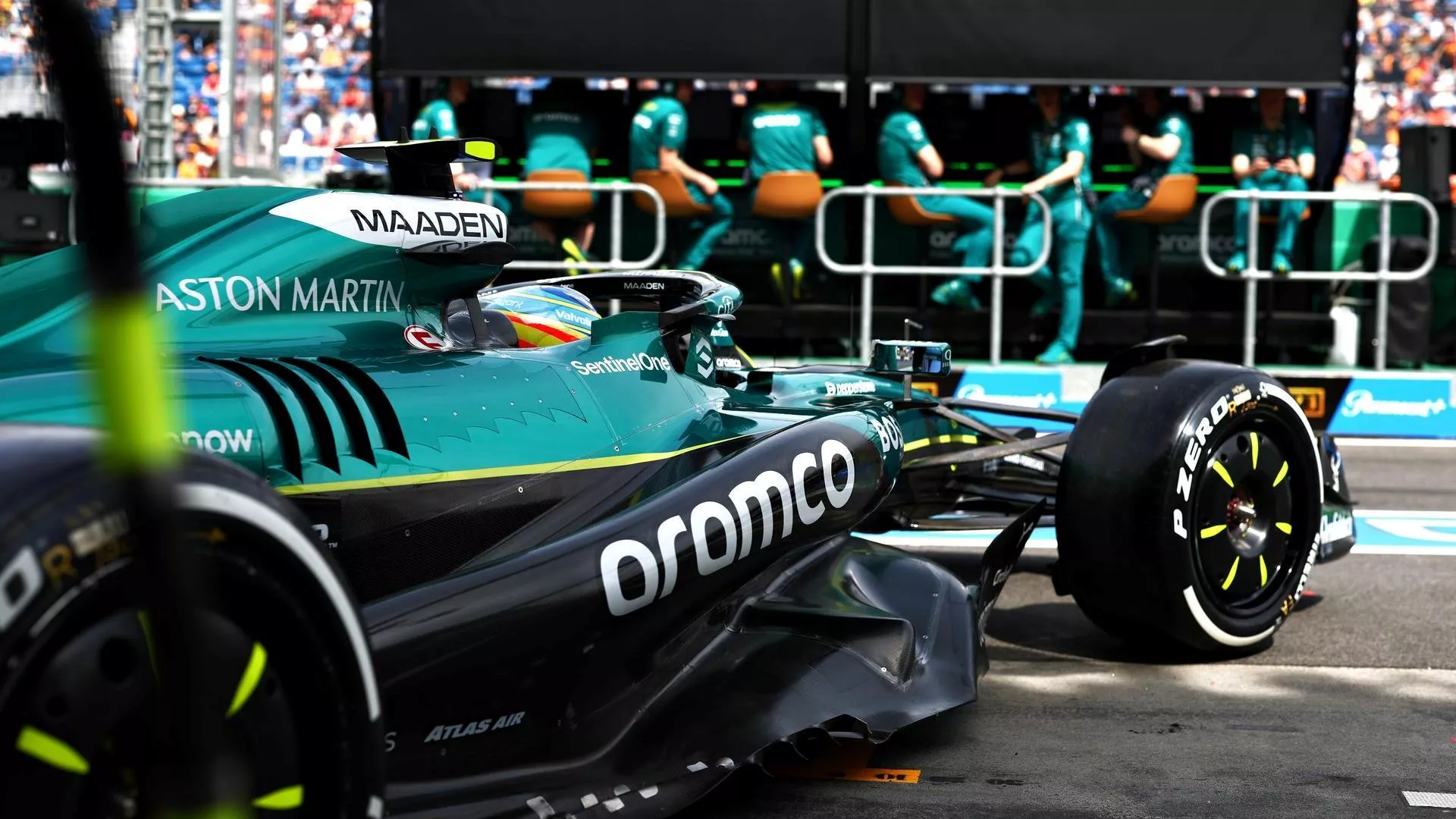
After a period of gardening leave, Fallows joined Aston Martin to head up its aerodynamics department. The April 2022 move to Aston Martin was, as he puts it, always a risk.
“It was slightly frustrating to leave at the point where it all started to deliver [at Red Bull], but on the other hand… a big chunk of my job was done at that stage.
“I knew going to Aston Martin was always a risky move for me personally, because it is a very exposed position. It's very public.
"Would I have done it again if given the chance? 100%. Having been given the opportunity to mess things up in my own unique way, but also to help build something at the same time, is a really powerful thing.”
He points to measurable progress - the team moving from last in the constructors' standings to fifth during his tenure.
"I left Aston Martin in a better place than it was."
After leaving, he admits he seriously considered stepping away from F1 entirely.
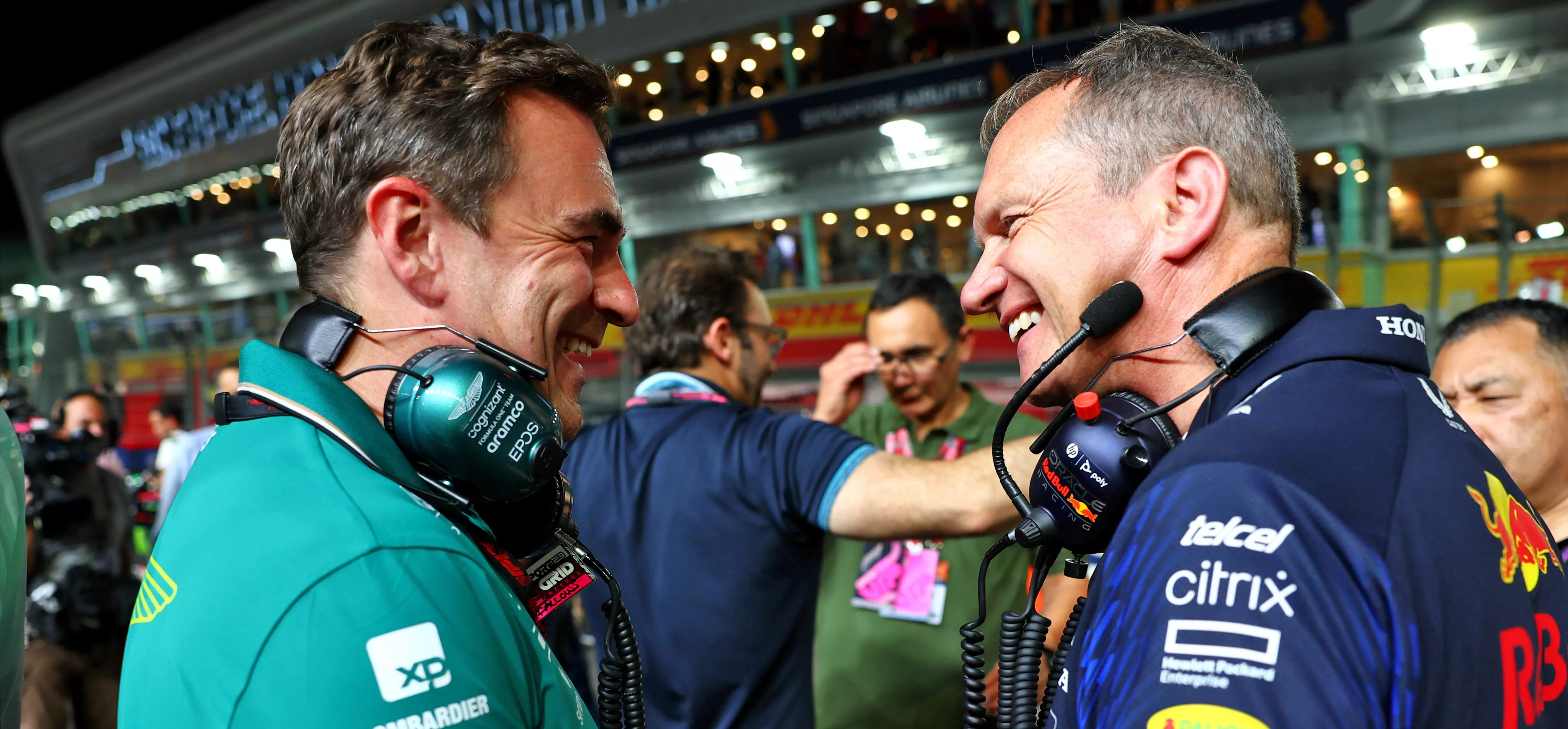
Fallows and Red Bull’s head of car engineering, Paul Monaghan, on the grid in 2023
Sign up for a newsletter and we'll make sure you're fully up-to-date in the world of race technology
Why I’m returning to Racing Bulls
So, what brought Fallows back to F1 as Racing Bulls’ technical director?
"What I've really missed about F1 is the way that you work,” he says.
“The conversations with people who are super bright, highly motivated, and focused in the same direction. It's really energising and motivating working in that kind of environment."
He expresses some concern about the increasingly long hours and stresses being piled onto F1 team members - but early conversations with Racing Bulls’ chief technical officer Tim Goss, he says, are evidence that the hierarchy is on the same page.
“We think in a very similar way about how a team should be formed, what it's there for: the fact that it is primarily there to look after its people as well as produce the cars.”
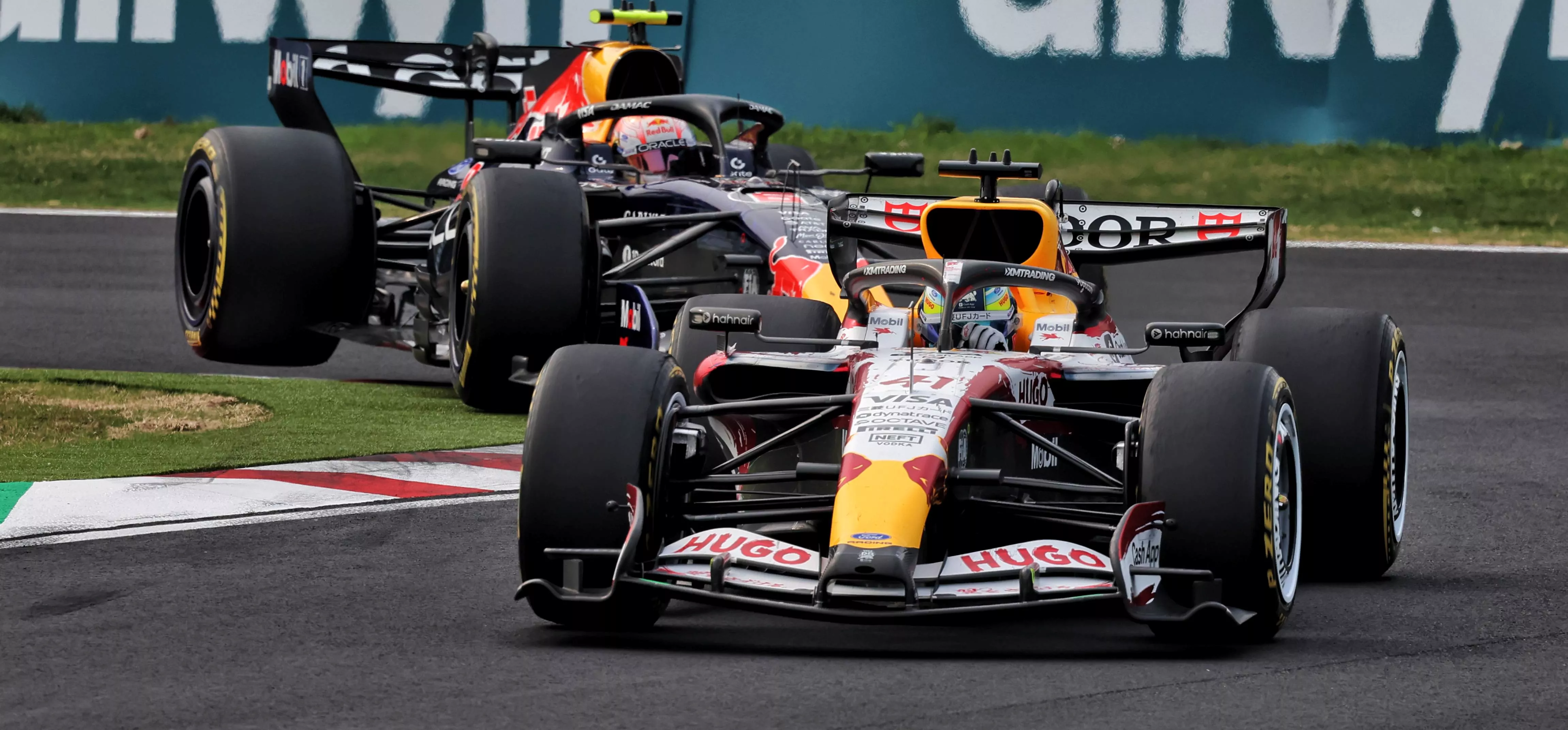
Racing Bulls is Red Bull’s ‘feeder’ team in F1 - and much of the methodologies are shared by the two squads
Fallows adds that his role will focus on the “day-to-day development” of the Racing Bulls F1 car, complementing the management skills of Goss and Racing Bulls team principal Alan Permane.
An awkward mid-season start at Racing Bulls means Fallows anticipates his first days being a learning experience.
"I'm going to try and sit on my hands and not say anything for the first couple of weeks," he said before joining. "You can learn a huge amount if you try not to get involved straight away.”
Yet, returning to a team in the Red Bull fray - where similar processes, the same wind tunnel, and familiar faces await - means that Fallows won’t have to wait too long to get back into gear.
"I don't have to explain what good looks like again,” he says. “They know that already."
.webp?cx=0.5&cy=0.5)