Car
Metrology, not meteorology – The measurement technology that has redefined precision engineering in F1
by Samarth Kanal
6min read
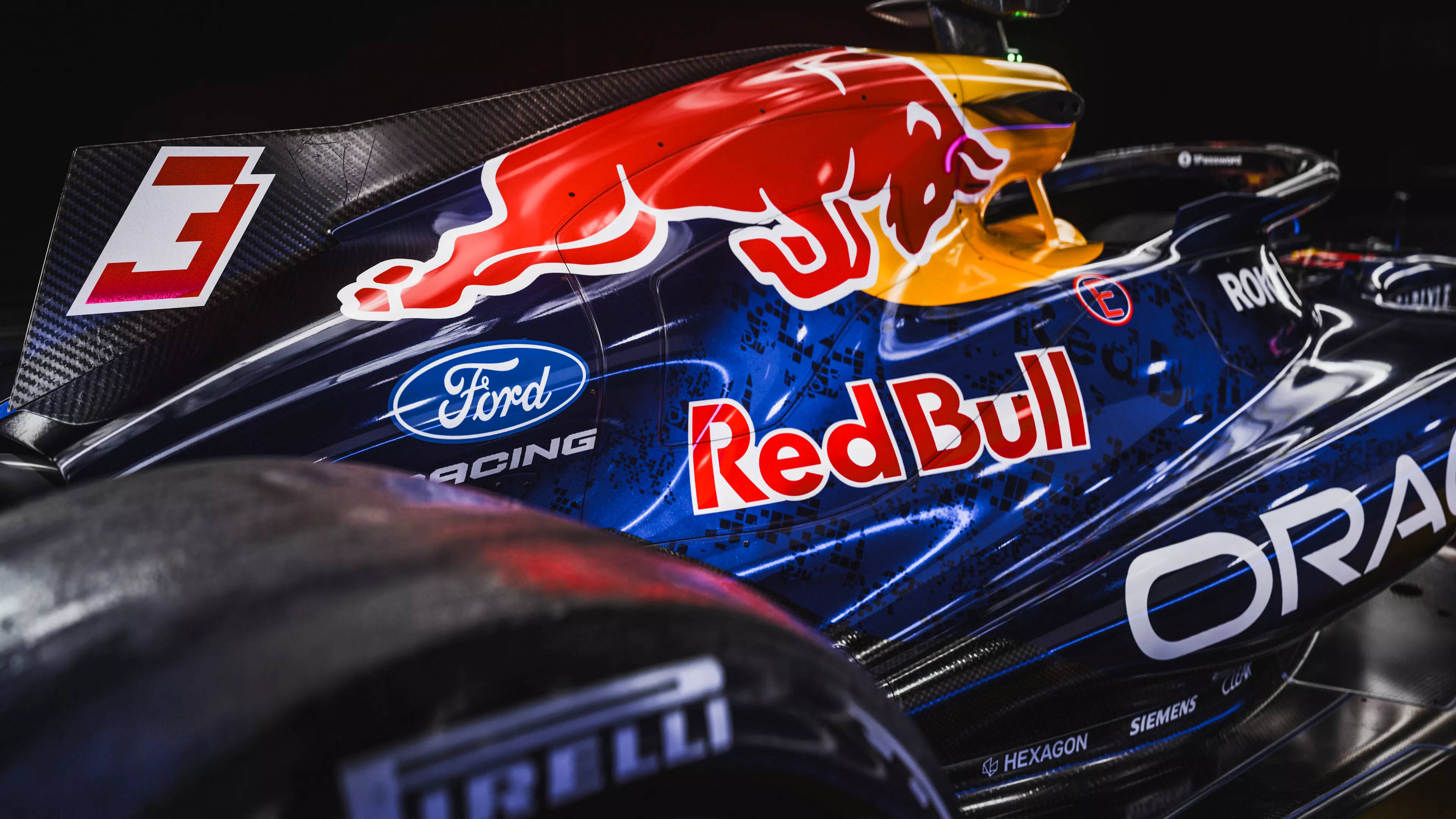
Measure twice, cut once. In a sport where margins - tenths of seconds, fractions of degrees, thousandths of millimetres - are make or break, measurement itself is under a microscope. Metrology is the science of measurement, and here’s how Red Bull used it to build the 2026 RB22 Formula 1 car.
Sign up for a newsletter and we'll make sure you're fully up-to-date in the world of race technology
What is metrology?
Metrology can be illustrated by measuring things with a ruler, but in motorsport it includes achieving and verifying extreme precision in manufactured components - and doing so with consistency, traceability and speed.
In a high-precision manufacturing context like F1, metrology tools include coordinate measuring machines (CMMs), which use a physical probe or laser to map the geometry of a component to sub-micron accuracy. They also include 3D laser scanners, which capture millions of data points per second across complex surfaces, and laser trackers - tripod-mounted devices that can track the exact position of a handheld scanner in three-dimensional space.
The data captured by these tools is fed into specialist software that compares physical parts against their digital designs, flags deviations, and informs decisions throughout the production process.
In short, metrology encompasses the tools, techniques and standards used to ensure that a part is exactly the shape, size and tolerance it needs to be – and is what stands between a design on a screen and a part that performs as intended in the real world.
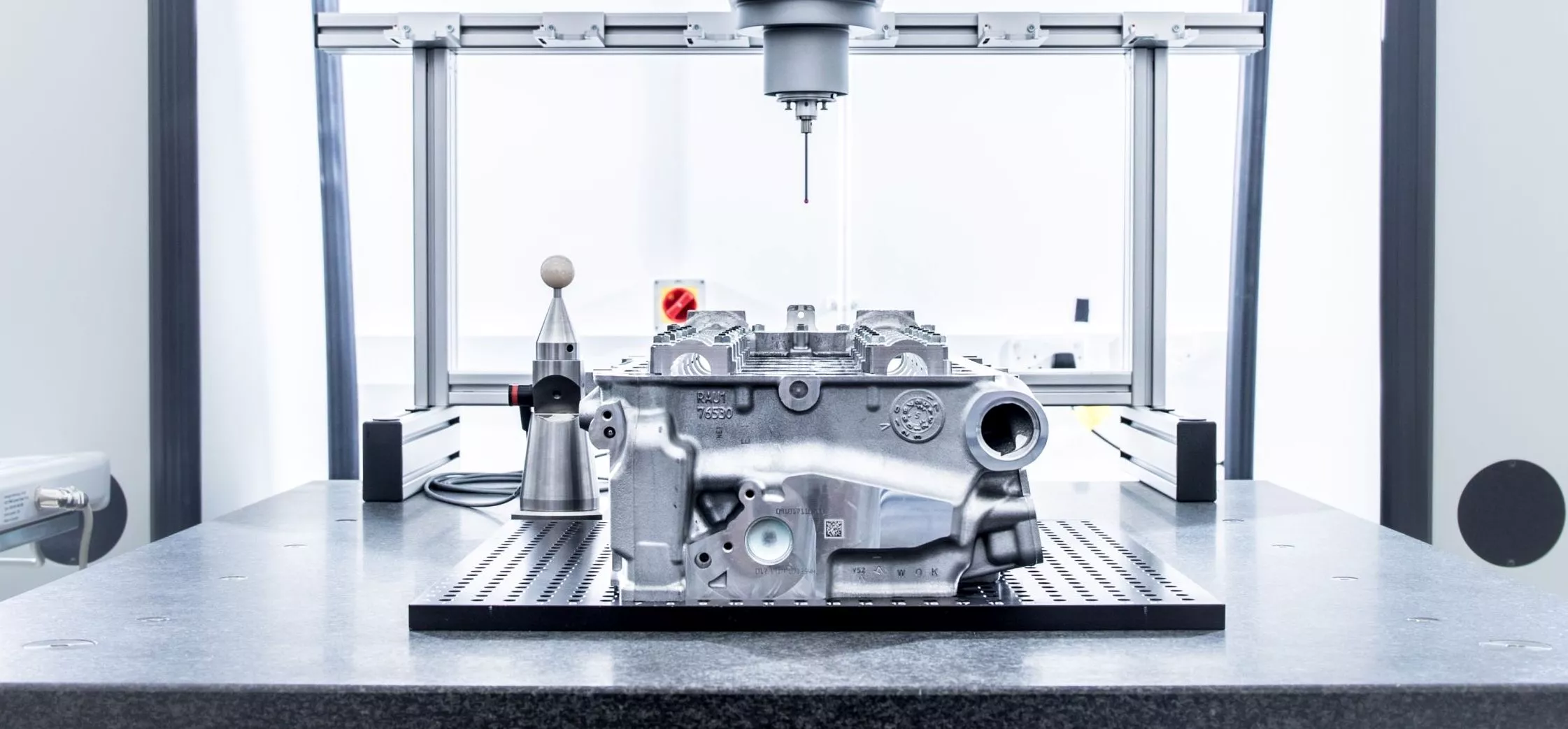
A coordinate measuring machine (CMM) at work
Building an engine from scratch
For the 2026 season, F1's governing body, the FIA, introduced the most sweeping rule changes in the sport's history. Cars must now be smaller and lighter, with simplified aerodynamics that reduce downforce, and powertrains that place far greater emphasis on electrical power. For this, every team on the grid was essentially given a blank canvas.
Red Bull faced an additional challenge. Having previously relied on engines supplied by Honda, the team made the bold decision in 2021 to design and manufacture its own powertrain from the ground up at its technology campus in Milton Keynes.
Ford Racing joined as a technical partner in 2023, and the resulting unit - the DM-01 - became the first engine ever produced by Red Bull Ford Powertrains from its factory in Milton Keynes, United Kingdom.
Building a Formula 1 power unit from concept to race-ready hardware in just a few years is a staggering undertaking.
A modern F1 powertrain contains around 5,000 dynamically moving components, all of which must work together with absolute precision. And crucially, the RB22 is the only car on the grid to have its chassis and power unit designed and built on the same campus, giving the team a unique integration advantage - but also a unique set of manufacturing demands.
Where metrology comes into building an F1 car
Hexagon is the company tasked with this science at Red Bull, having worked with the team for nearly two decades.
From the very beginning of engine production, Hexagon's measurement technologies were embedded across every stage of development - from early R&D and prototyping through test-rig evaluation and final production.Ben Hodgkinson, technical director at Red Bull Ford Powertrains, says: “With every element built from scratch, Hexagon's metrology expertise has enabled us to achieve the tolerances and the levels of quality we require in a cutting-edge piece of engineering to perform at the top level of motorsport."
Red Bull deployed a CMM machine (specifically the Leitz PMM-C Precision CMM) across Red Bull Ford Powertrains' manufacturing and build areas.
These machines are capable of the accuracy, repeatability and flexibility demanded by F1 powertrain manufacture, mapping component geometries to tolerances measured in thousandths of a millimetre.
The portable Leica Absolute Scanner AS1 was used alongside an articulated measuring arm to scan the outer surfaces of crankcases and Energy Recovery System installations for quality control.
Data from these systems is transferred to another piece of software, allowing engineers to monitor CNC (Computer Numerical Control) machines - automated, computer-driven tools designed for high-precision subtractive manufacturing performance - and detect deviations before they become problems.
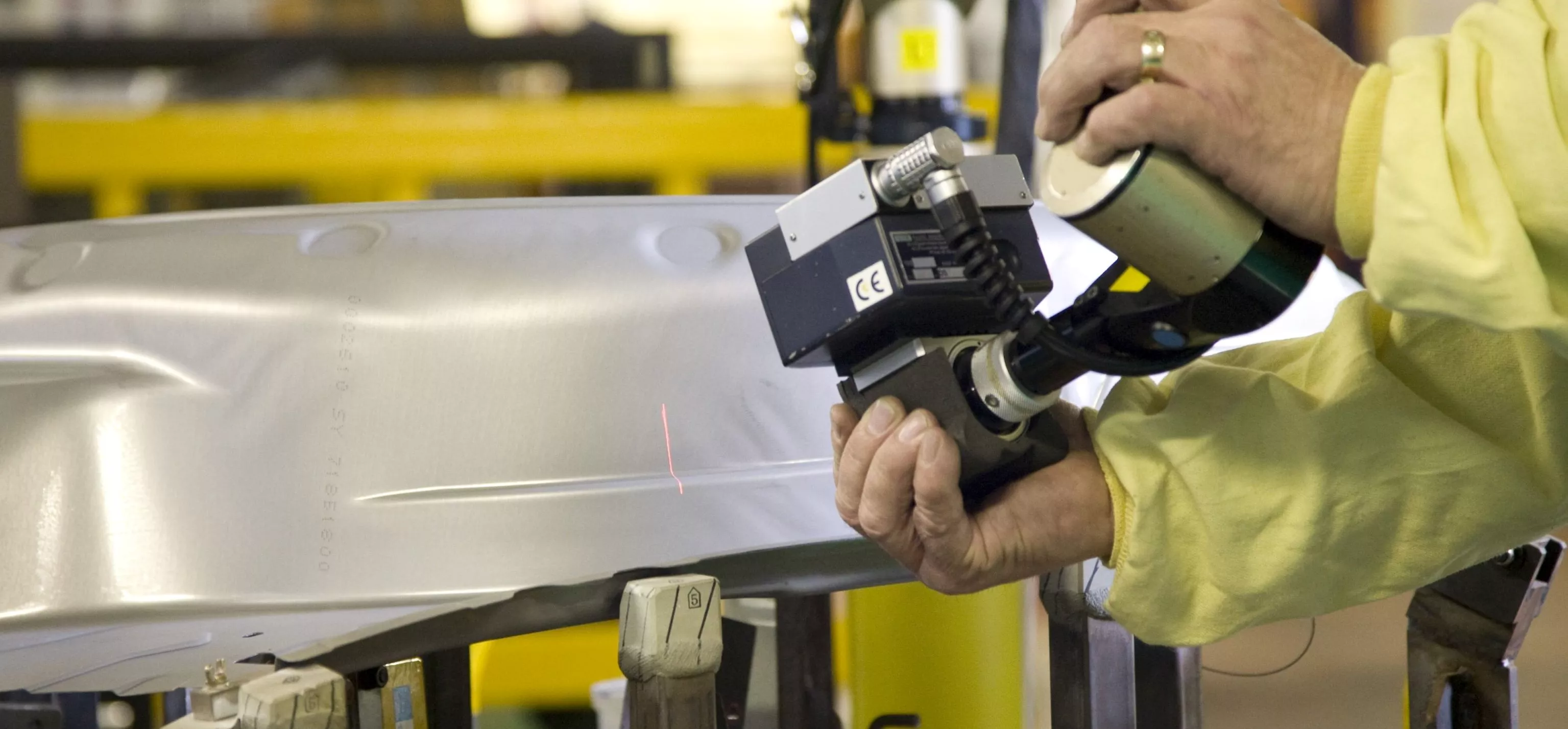
An engineer using a hand-held laser scanner on a car part
.webp?cx=0.5&cy=0.5)
Metrology and the F1 chassis
For the chassis side of the operation, laser trackers and 3D scanning systems have transformed how the car is measured, assembled and refined throughout a racing season.
Before high-precision metrology, measurement in the F1 pitlane was a largely static and manual process, reliant on traditional metrology blocks that were time-consuming and limited in precision.
Red Bull was among the first teams to introduce laser tracker technology into the pitlane environment in 2012, enabling real-time, high-accuracy measurements that directly influence race-weekend decisions.
The team manages around 30,000 design changes across a single season.
Laser scanning allows new parts to be validated against their digital models rapidly, and for composite aerodynamic components that are painted and reflective, Hexagon's SHINE (Systematic High-Intelligence Noise Elimination) technology delivers reliable data at 1.2 million points per second, regardless of surface finish.
At every race, the car is stripped down to approximately 8,000 parts for transport and then rebuilt, with numerous components substituted from car to car.
Hexagon's metrology equipment ensures that every reassembly is verified to the required standard, and that any replacement parts meet specification before they go near the track.
The cumulative effect of embedding these checks throughout the manufacturing and race-operation process has been a 50% reduction in on-track faults over two years.
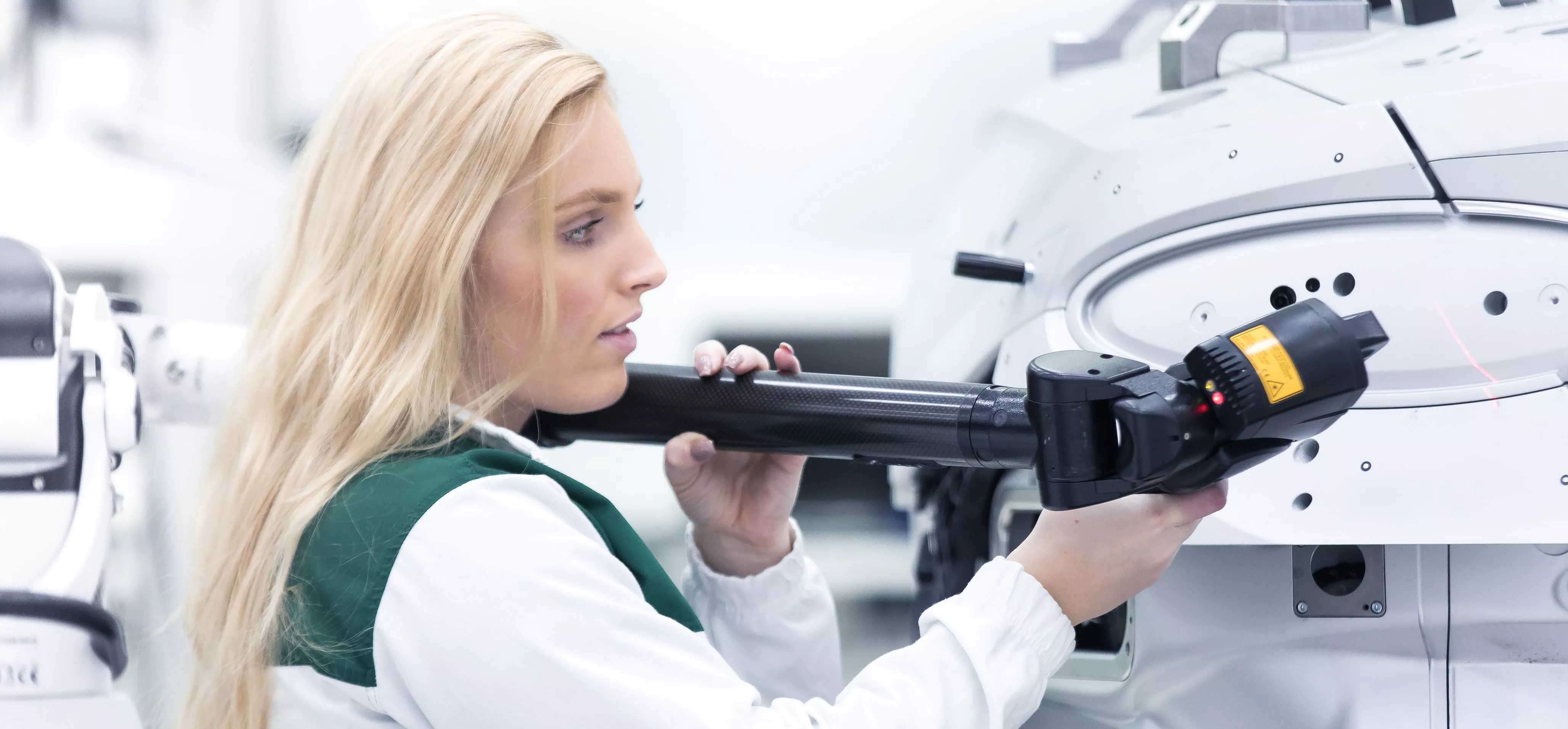
Hand-held laser scanners are a portable, fast way to ensure accuracy - but numerous measurements need to be taken in F1 where there is little room for error

Precision under a budget cap
There is one more dimension to metrology's value that often goes unnoticed: cost control. Formula 1 now operates under a stringent cost cap - set at €215 million in 2026.
In this environment, manufacturing errors are technical and financial failures. A part that doesn't meet tolerance has to be remade, costing time, materials and cap spend.
By ensuring components are built right the first time, metrology reduces waste and rework at every stage. It accelerates the production of new cars, which in turn maximises the testing time available before races - itself a significant competitive advantage.
As Alexander Aime, VP of global marketing at Hexagon Manufacturing Intelligence explains, the team's engineering mantra is simply "quality at speed." In a sport where those two demands have traditionally been in tension, metrology is what reconciles them.
Emanuel Viklund, president of the portable Metrology Division at Hexagon, captures the stakes as he adds: "Together, we have engineered and built a powertrain unit under immense pressure. Designed for peak performance, the DM-01 powertrain is now ready to prove itself on the track.
“But nothing in F1 stands still - there is always a new challenge to tackle, a fraction of a second to gain and an opportunity to refine the car to push the limits of precision and performance."
The last micron
The next time you watch Max Verstappen or Isack Hadjar fire the RB22 out of the Red Bull garage, it’s worth considering what went into making every component on the car, from bolts to bargeboards.
Thousands of parts, each measured and verified to tolerances invisible to the naked eye. Millions of data points captured, analysed and acted upon.
Metrology won't appear on any timing screen, but the minutes and seconds do - down to the thousandth. F1 performance at this level would simply not be possible without metrology.