Car
Classic looks and a unique composite body: how Lola has reinvented its iconic T70
by Samarth Kanal
5min read
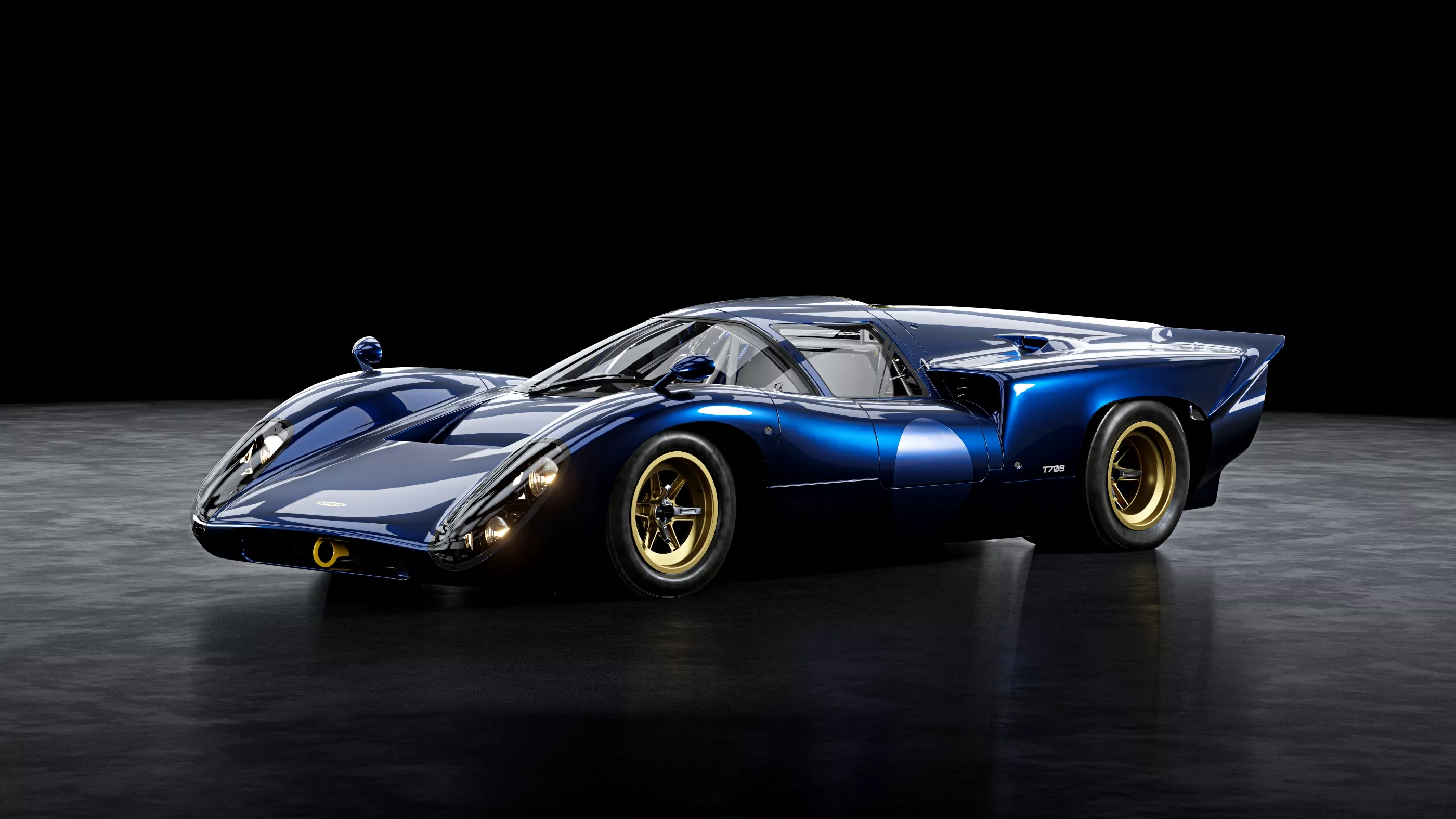
The Lola T70S is one of motorsport's most legendary racers - reborn with a material the industry has never seen before…
Sign up for a newsletter and we'll make sure you're fully up-to-date in the world of race technology
You might never have seen a Lola T70, but if you have, you’ll instantly recall its evocative design and the Doppler shift of its roaring V8 as it streaked across hallowed racetracks.
The drivers who have taken the wheel of the T70 are a rollcall of racing royalty: the likes of John Surtees, Jackie Stewart, Graham Hill, Denny Hulme, Mario Andretti, and Phil Hill come to mind.
Now the T70 is back. And what Lola has changed is something you might never see. And what it has changed is an incredible engineering innovation.
Why the T70 matters
Lola’s T70 doesn’t often make it to the pantheon of roadgoing nor racing royalty. Yet it has certainly earned a place of its own.
Surtees put the T70 on the map by winning the inaugural, prestigious, and hotly-contested 1966 Can-Am Championship, while Mark Donohue immortalised the T70’s blue and yellow colour scheme with victory as Team Penske took a one-two in the 1969 24 Hours of Daytona.
Steve McQueen also tested it at Riverside in California. Those photos were featured in the pages of Sports Illustrated, and on bedroom walls, for years to come.
It also found fame on the silver screen: in McQueen’s Le Mans, Lola Chassis were used for the Porsche 917 and Ferrari 512s that were crashed on screen; in George Lucas’s directorial debut, THX 1138, the T70 had a prominent role as the police vehicle of the future.
Now, it’s back, and it still evokes that late ‘60s and ‘70s charm.
Ex-Formula 1 driver Johnny Herbert, who has helped develop the new T70S reincarnation, said: "To hear that roar from the V8 sitting right behind you is something that always gets your emotions going."

The old Lola T70 (L) with the new T70S (R)
The LNCS: Lola’s transformative new composite
Back in the 1970s, the T70s was famed partly for its lightweight aluminium monocoque.
Fast-forward to 2026 and its long, swooping nose, wide rear haunches, and roof that barely clears a racing helmet isn’t made from fibreglass - nor carbon fibre. Lola has constructed the T70s’s panels from something that did not, prior to this T70s project, exist.
Lola calls it LNCS: the Lola Natural Composite System. It is, Lola believes, the world's first 100% natural bodywork system for a performance vehicle, and it is entirely the racing car company’s own intellectual property.
Peter McCool, Lola’s technical director, tells Raceteq that the brief was to use innovative materials and not settle for the “standard” when developing a new T70 successor.
Standard carbon fibre/epoxy composite - the reflex choice for any performance bodywork - was reconsidered, because the company wanted to own what it built.
"It was just through the drive to find the right materials that we came across the particular laminate format," McCool says. "It ticked all the boxes. It started to work, components came out, looked great."
What LNCS actually consists of is elegant in its construction. The reinforcement uses a unique combination of laminated plies - plant fibres produced via Northern European agriculture, combined with basalt fibres derived from volcanic rock.
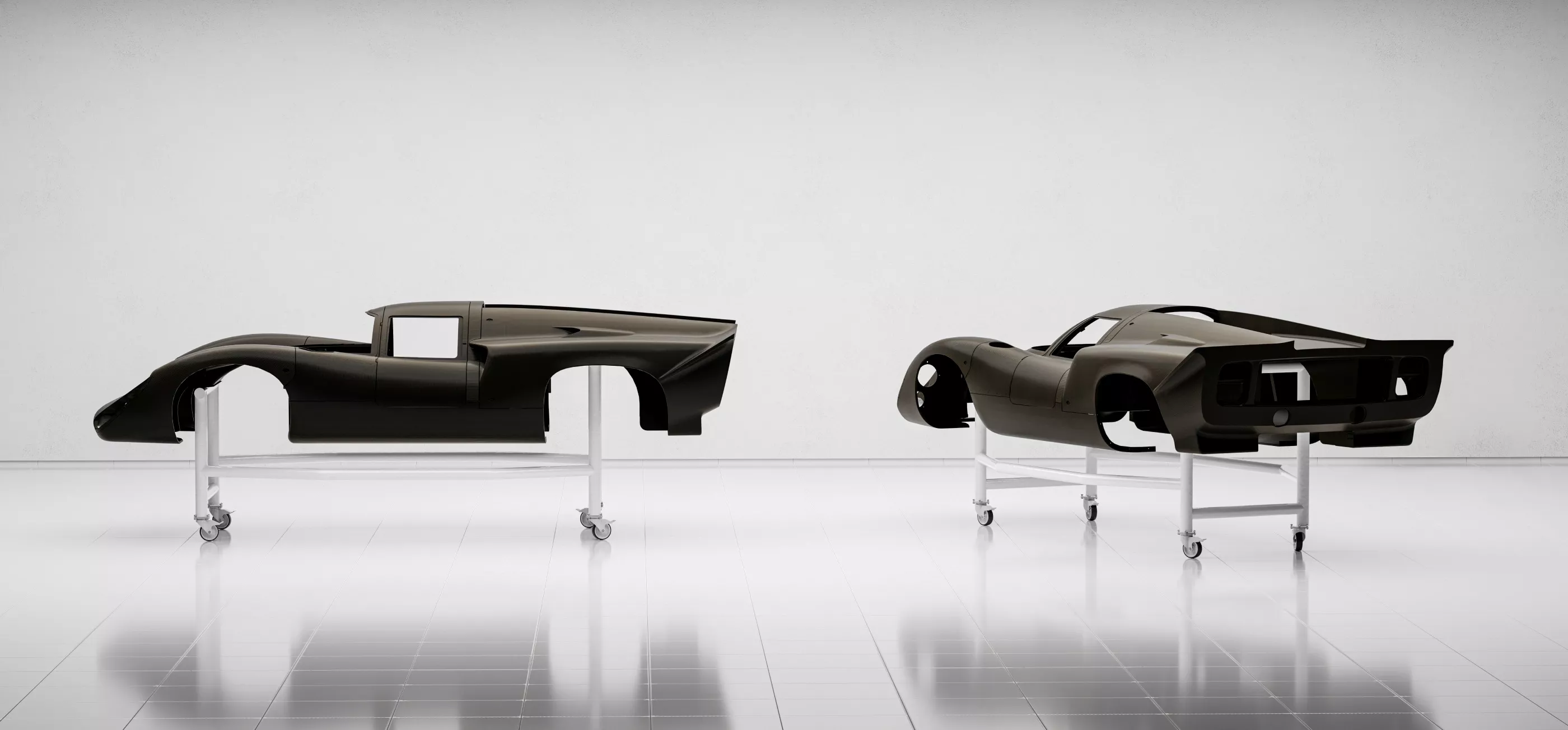
The new T70S uses LNCS - the Lola Natural Composite System

The resin system bonding them together is a polyfurfuryl alcohol (PFA) formulation synthesised entirely from sugarcane food crop processing waste. The result is a composite that contains no petrochemical ingredients.
Mechanically and characteristically, LNCS sits between glass fibre and carbon fibre - which, as McCool is quick to point out, is a lot better than it sounds. "We are [LNCS is] stiffer and stronger than glass fibre. Slightly lighter, as well, for the equivalent."
He adds that nothing can really compare to carbon fibre in the strength-lightness stakes but LNCS is entirely fit for purpose in this retro-reborn project.
"Our bodywork panels are the right stiffness and the right strength for a motorsport application or a hypercar or a supercar," McCool says. "If you used LNCS, you would drastically reduce its footprint and you wouldn't notice [it] on the car. It's just appropriate."
Where it meaningfully outperforms carbon fibre/epoxy composites is in impact damage tolerance and acoustic and vibration damping - useful qualities in a car designed to be driven hard without rattling too many teeth.
The surface quality is striking too: LNCS produces a dark, close-grained finish not entirely unlike exposed carbon fibre, and Lola has worked with BASF to develop in-mould and out-of-mould paint systems specifically to complement it.
Lola went to market for laminating partners who could not only produce the work but fully account for every unit of energy consumed in doing so - autoclaves, CNC [Computer Numerical Control] machines, and factory power supply.
It chose suppliers with solar installations and rigorous energy reporting. Even the tooling blocks used to create the moulds for its composite plies are a novel, lower-temperature formulation with a smaller manufacturing footprint than current Formula 1 tooling. Every stage of the process was interrogated, and Lola has decided to publish its LNCS reporting to back up its sustainability claims.
The process and the material combination are patented. Lola owns the IP. And it intends to make it available - licensing LNCS to other manufacturers who want composite bodywork that is lightweight, robust, finishes well, and has a small manufacturing footprint

Design drawings and files for the new T70S
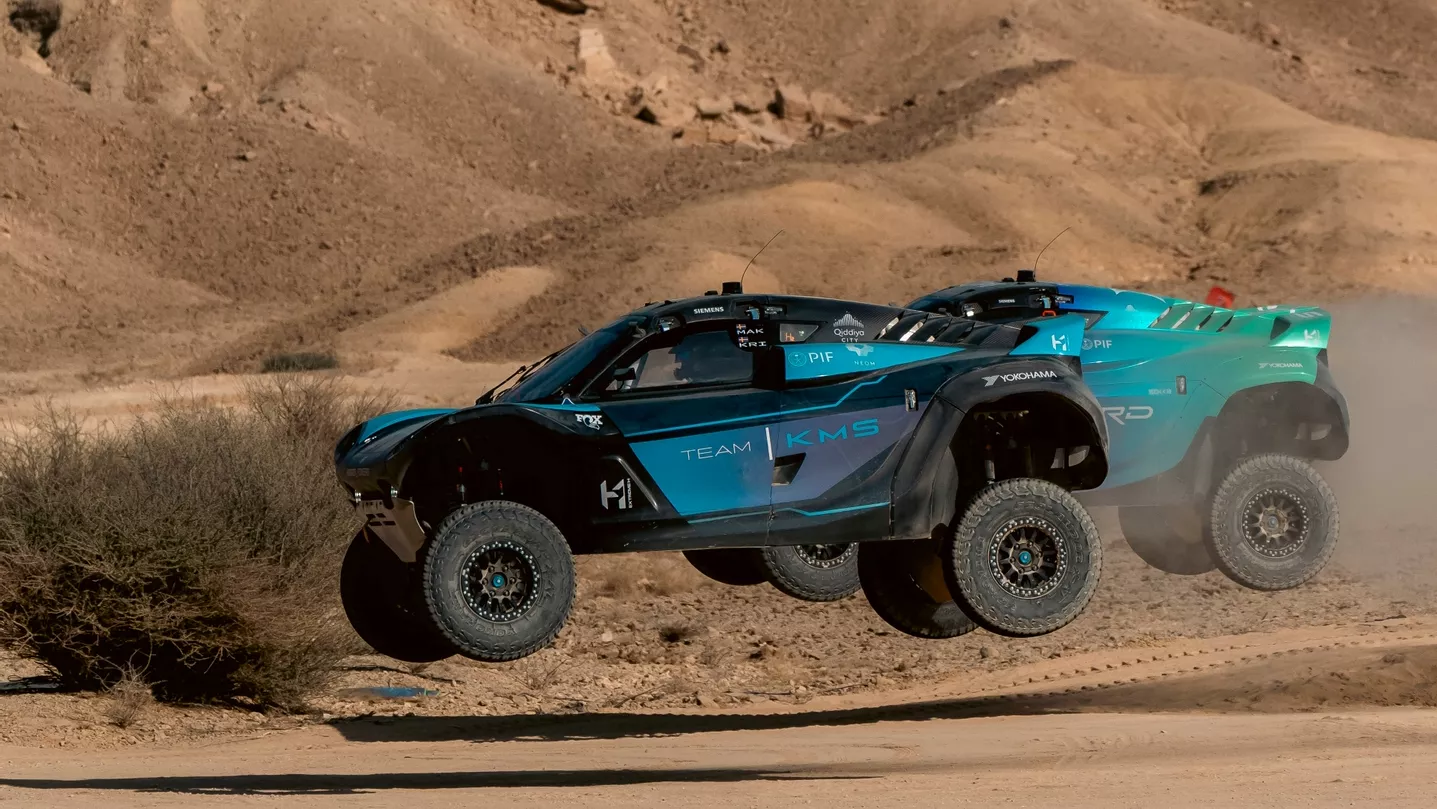
Two cars that share an old soul
The T70S has a trackgoing version - with 530bhp sitting on an 860kg chassis and an FIA Historic Technical Passport that allows it to compete in prestigious historic racing events.
The T70S GT is the road car, due to complete testing later in 2026, and has a larger 6.2-litre Chevrolet engine.
Critically for the road car, McCool and his team have engineered what appears to be a deception - just the kind that will be welcomed by the kind of buyer who would dare to drive this car through a bustling metropolis.
"We're maintaining the H-pattern gearbox lever, but actually it goes to some electronics… that then go to a sequential gearbox so that we can make it feel like a T70."
Therefore, the driver might be enjoying the theatre and tactile nature of a retro H-pattern gearbox, but the car will prevent them from being caught in the wrong gear through clever electronics that essentially hide a modern sequential gearbox (with which the driver shifts either up or down instead of selecting a gear).
Both versions carry the LNCS bodywork. The same panels. The same natural fibres and volcanic rock and sugarcane resin.
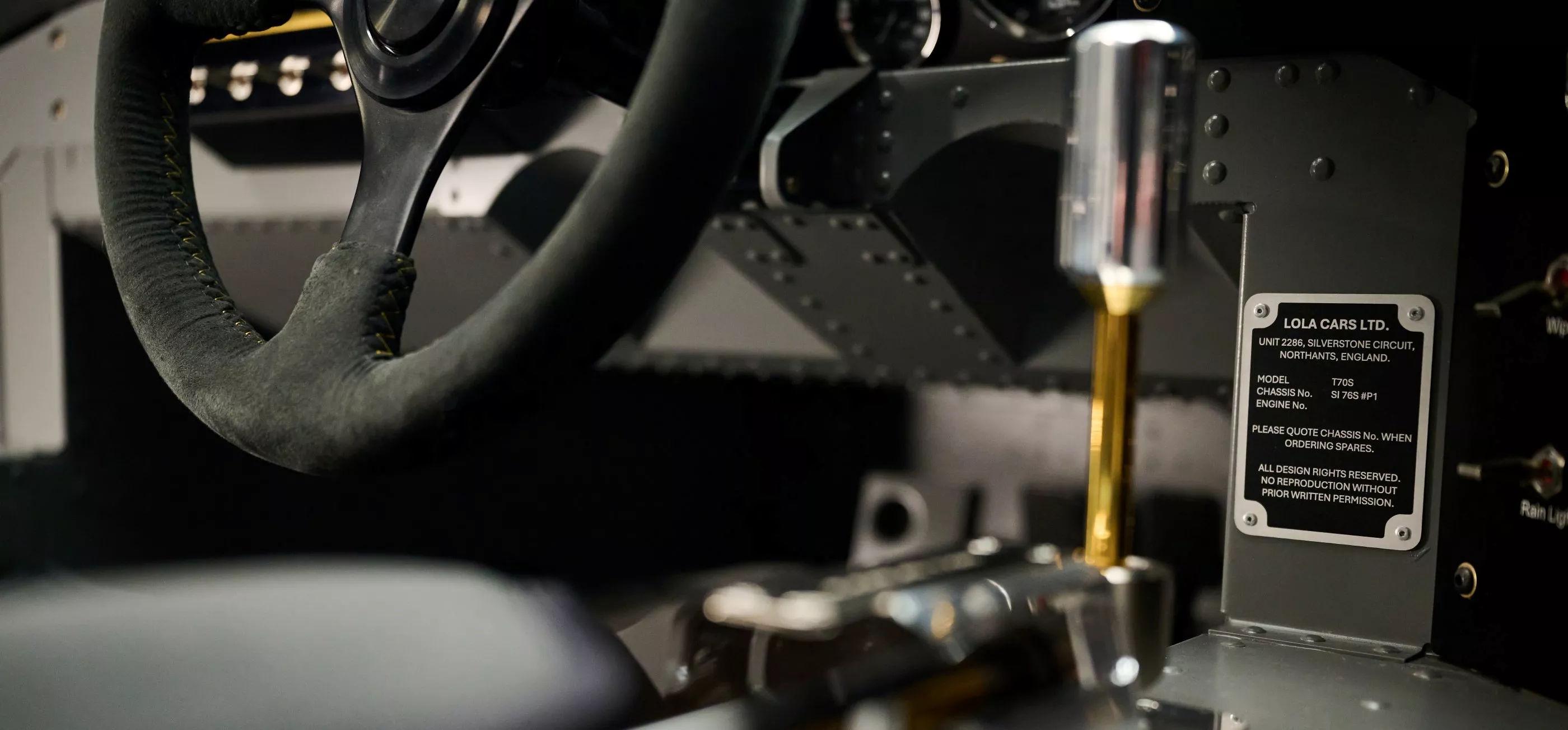
The gearshifter in the Lola T70S shifts in an H-pattern, but actually works like a sequential gearbox

McCool is clear about the brief for the track car.
"I haven't tried to update the suspension. I haven't tried to change the geometry. I haven't tried to take weight out of it. I haven't tried to do anything that changes its original character other than build it really well using the modern supply chain."
What the modern Silverstone, UK-based, supply chain does deliver is a level of precision the original cars never had. Every component has been laser-scanned. Every drawing has been loaded into a complete three-dimensional model. Lola holds a step file and a PDF drawing of every single part.
The result, as the brochure describes it, is "the ultimate” T70 Mk3B - built to exacting original specifications, but with the consistency and repeatability that only modern manufacturing can provide.
With a 5.0-litre small-block Chevrolet V8 producing 530bhp, spinning to 7,300 RPM, Lola quotes a 0-100km/h time of in 2.5 seconds and 203mph flat out for its trackgoing T70S.
From inside, at 7,000rpm with the V8 filling the cabin and the nose weaving over the road, it feels exactly as it should, to those who can get the most out of it.
From the outside, the T70S looks exactly as it should: one of the great shapes in racing history, unchanged in the ways that count. Only the engineers know what those bodywork panels are made from - and now, so do we.