Career
Acknowledging the 20,000 volunteers keeping Formula 1 running
by Samarth Kanal
5min read
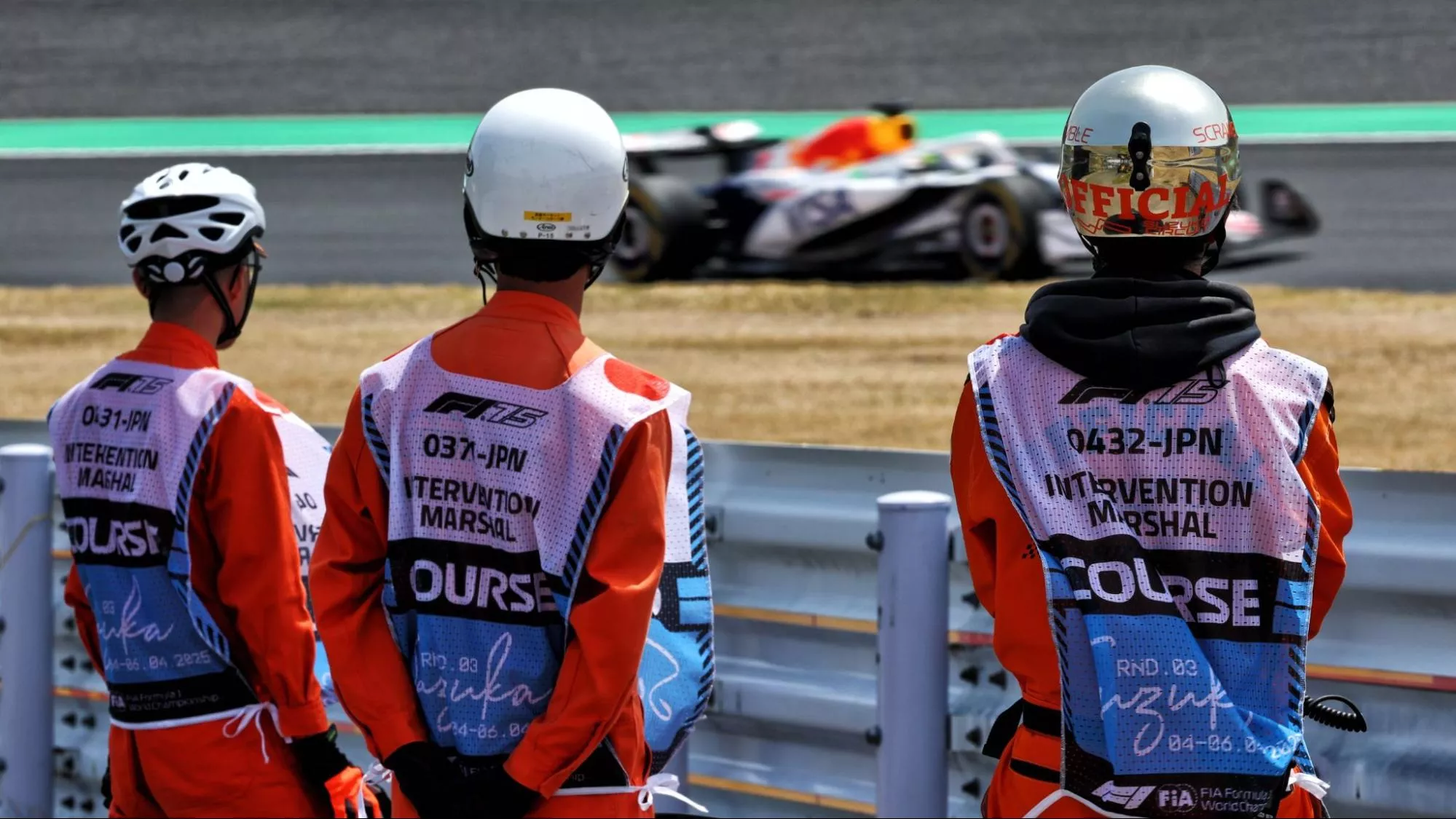
While 22 drivers battle for victory at 200mph every grand prix weekend, another story unfolds out of frame. This is the story of the thousands of volunteers dressed in orange. Without them, the race simply could not happen.
Sign up for a newsletter and we'll make sure you're fully up-to-date in the world of race technology
A landmark report published by the FIA has finally put hard numbers to the contribution made by volunteer officials across the Formula 1 World Championship.
The findings are remarkable in their scale and sobering in what they reveal about the growing pressures on a workforce that underpins one of the most commercially powerful sports on the planet.
838 reasons a grand prix exists
The headline figure is 838 - the average number of motorsport volunteers required to safely and efficiently organise a single round of the F1 championship. Often, those volunteers ensure that the Formula 2 and Formula 3 championships also run smoothly.
Across a 24-race calendar, that adds up to a minimum of 20,112 trained individuals recruited and deployed by race organisers.
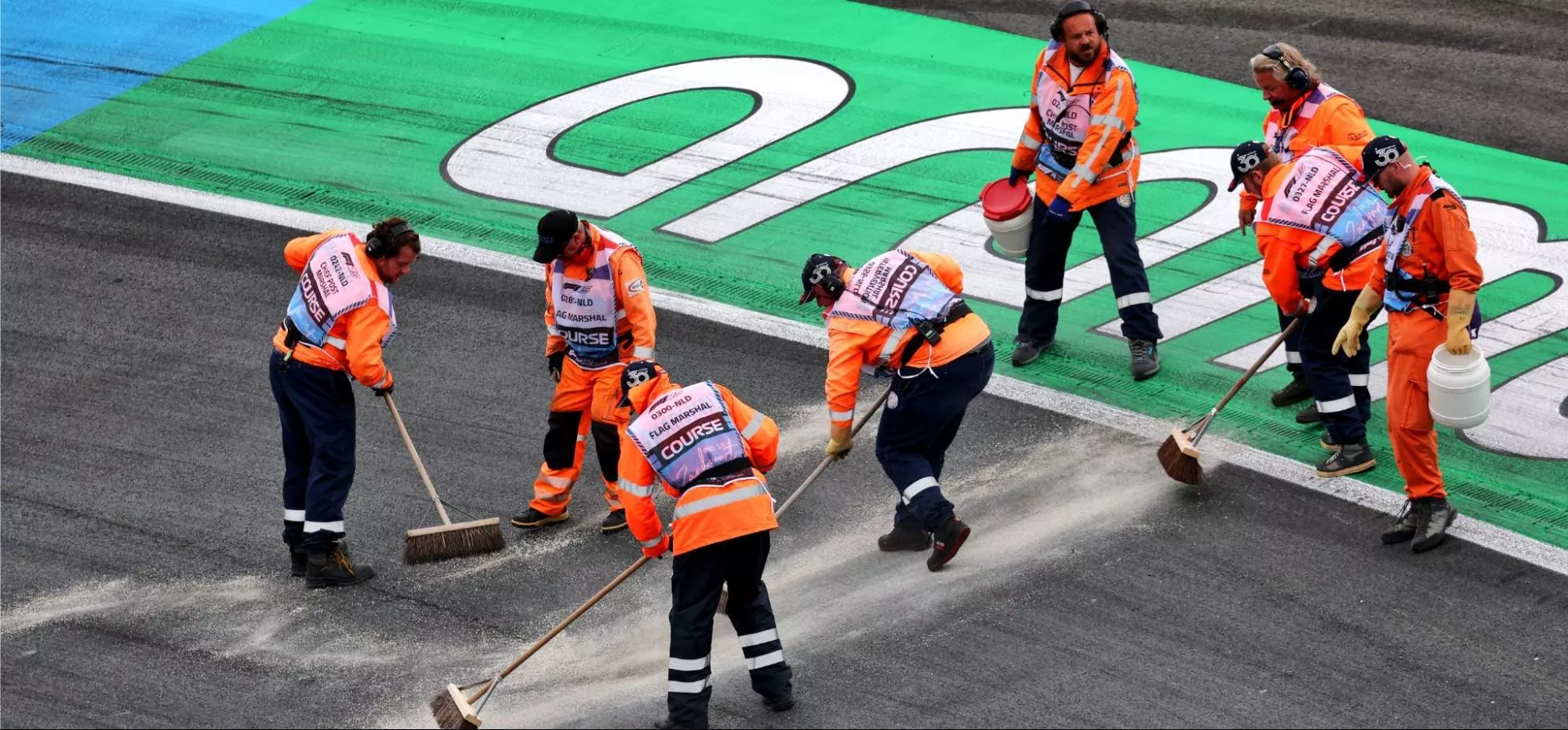
Volunteers sweep the Zandvoort circuit during the 2025 Dutch Grand Prix weekend
At present, 42 volunteers are needed for every driver. The FIA says that figure compares to the FIA World Rally Championship, in which 39 volunteers are needed for each competitor. Other sporting events, such as the FIFA World Cup, manage 0.31 officials per competitor - and the National Football League (NFL) at 0.08.
In motorsport, a volunteer’s job is far more technical. Scrutineers need deep technical knowledge of aerodynamic regulations; medical personnel are capable of handling trauma in high-speed incident scenarios; fire marshals are trained to international standards, and logistics coordinators manage the movement of complex equipment across international borders.
The FIA’s report notes that many of these roles require both written and practical competency assessments - requirements that have only recently been formalised, and which reflect a shift toward a more professional model of officiating.
The cost of volunteers in F1
Over the course of a race weekend, each volunteer commits an average of 48 hours. Multiplied by 838 and 24 races, that amounts to 965,376 hours of volunteer time per annual F1 championship. The FIA’s report says this may be an underestimated figure, as it doesn’t capture the training and lead time ahead of each grand prix.
The FIA has calculated the economic value of its volunteers’ contribution at €13.2 million per season, and the investment from organisers in recruiting, training, accommodating and supporting its volunteers at €11.1 million.
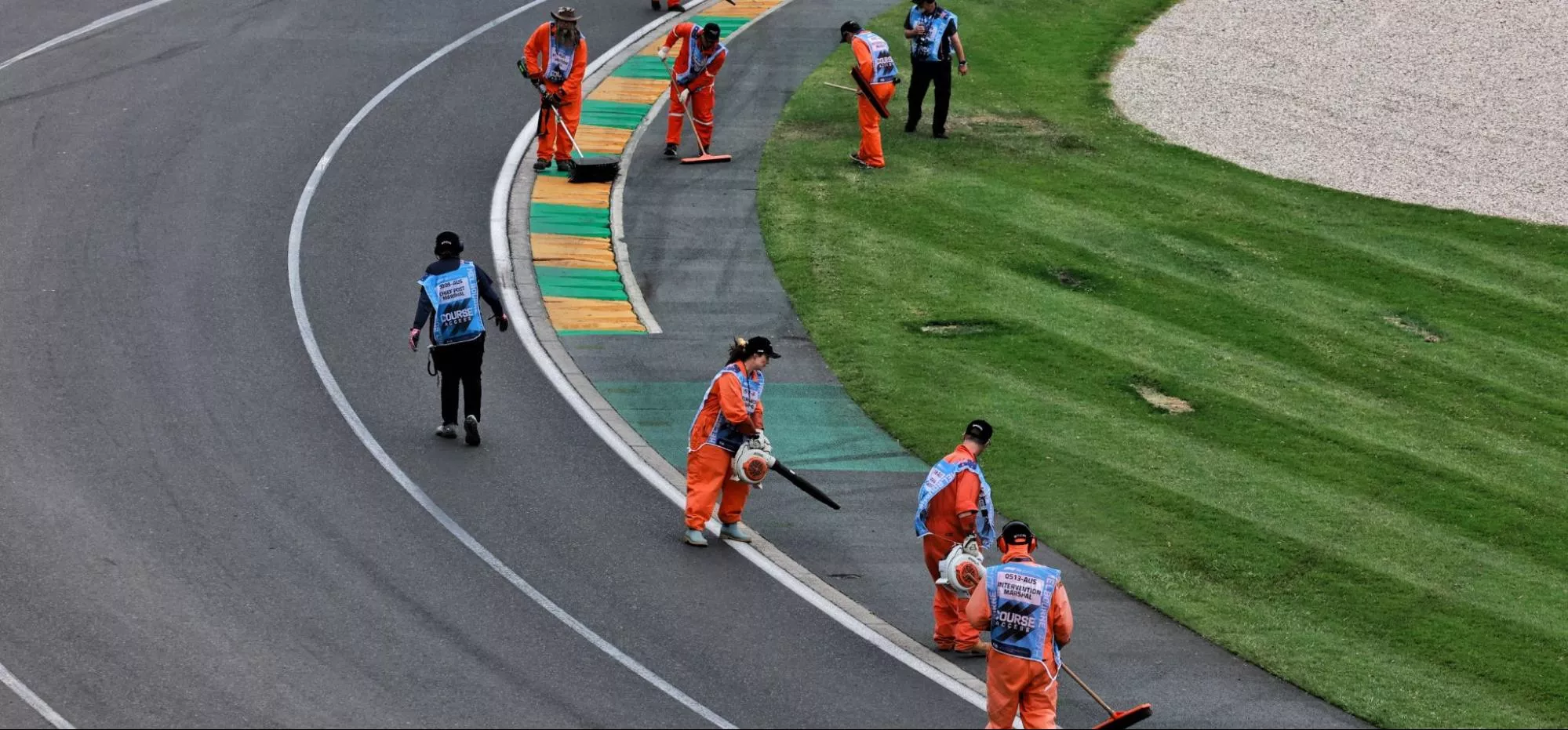
FIA volunteers sweep Melbourne’s Albert Park for debris. The FIA found that the value of its volunteers amounts to more than €13m per season
The survey also found that 65% of volunteers took annual leave or unpaid holiday to attend a grand prix.
Two in every three officials have been volunteering for at least five years, and nearly a third for more than a decade. The FIA estimates that, in the past five years, the workload placed on each volunteer has grown by an estimated 20% - a figure corroborated by each organiser.
The hardest roles to fill
As mentioned, each volunteer role demands some technical expertise. As per the FIA’s report, scrutineers are the hardest roles to fill.
This role involves technical officials who are responsible for verifying that each car complies with the incredibly detailed (and frequently updated) technical and sporting regulations, whether in F1, or its support series, including F2, F3 and the F1 Academy series that also supports F1 races around the world.
Scrutineers are required to understand aerodynamic bodywork tolerances, fuel system specifications, tyre parameters, and dozens of other technical domains. The pool of people qualified to do this work at the highest level is small.
While roles in event organisation remain easier to fill, roles where professional expertise derived from outside motorsport, including engineering, medicine, or technical industries, are also challenging to fill.
And the demand for highly qualified technical officials continues to rise.
The FIA’s current solutions
The FIA’s report arrives at a moment when structural reform is already underway. In 2025, the FIA launched its inaugural Officials Department, consolidating what had previously been a fragmented, regionally distributed system of volunteer coordination into a single, centralised framework.
The new department handles licensing, appointments, and training across a common structure - while still allowing regional bodies to respond to local requirements.
Alongside this, the FIA's High Performance Programme (HPP) for officials - launched in 2023 - provides an accelerated development pathway for talented stewards and race directors.
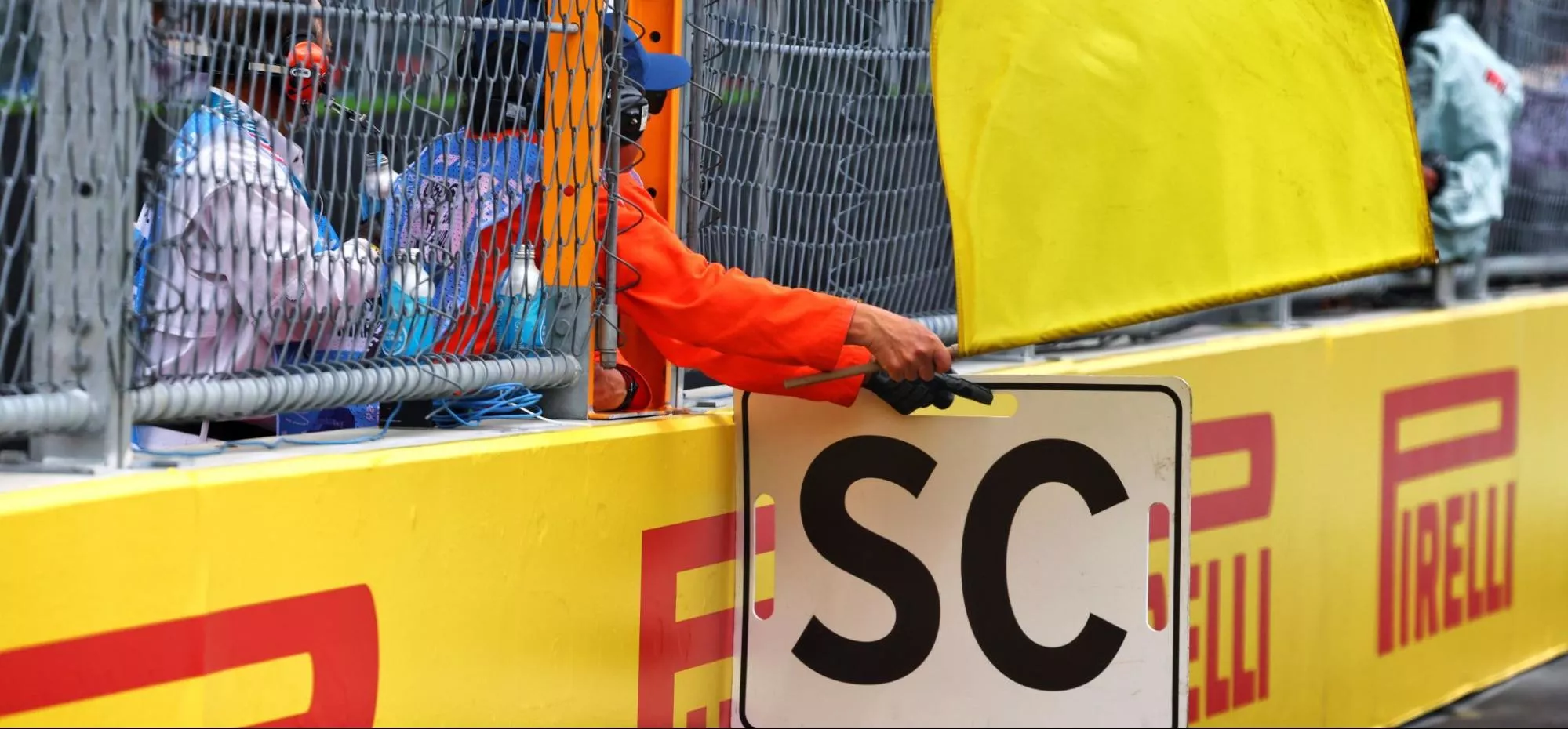
A volunteer holds up an ‘SC’ board denoting the presence of a safety car
The current HPP cycle involves 12 participants from 11 countries, representing all five of the FIA's affiliated regions, with equal gender balance and an average age under 40. The FIA has committed over €350,000 to the programme. In 2025, six HPP stewards were appointed across FIA championships; a majority are expected to join the 2026 F1 and regional rosters.
The third major initiative is the United Against Online Abuse (UAOA) campaign, launched by FIA President Mohammed Ben Sulayem in 2023 following an incident in which an official was targeted on social media during a race weekend.
The campaign addresses an increasingly serious welfare concern: the report found that 19% of officials had had an incident of online abuse reported to them while performing their duties. Over 68% of officials surveyed said that education and awareness were the two most critical interventions. Over 50% identified legal frameworks and reporting mechanisms as equally essential.
The road ahead for volunteers
The FIA envisions a ‘Centre of Excellence’ that would solve its dependence on volunteers.
This Centre of Excellence would pivot around organisation, development, and research and technology, functioning as a learning hub, a talent pipeline, a research engine, and a standards body, all in one.
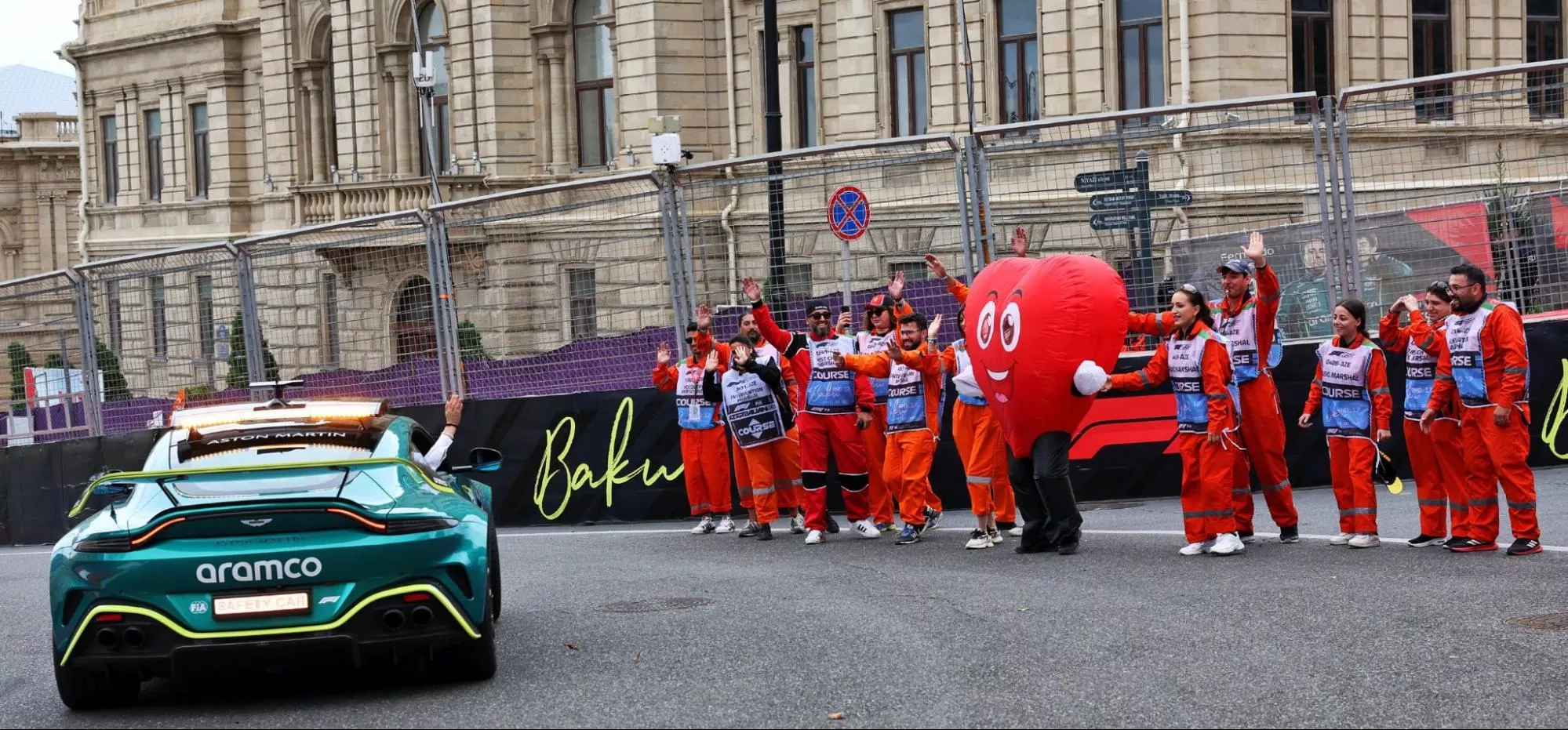
FIA safety car driver Bernd Maylander waves at volunteers at the Baku City Circuit, Azerbaijan
It would provide the infrastructure to move F1's volunteer workforce from a model dependent on goodwill and institutional memory toward one grounded in professional development, transparent assessment, and long-term career pathways.
Two additional officer roles are recommended for each event organiser: a Welfare Officer to monitor the physical and mental health of volunteers - addressing the burnout risk that a 20% increase in workload over five years inevitably creates - and a Climate Liaison Officer, recognising that extreme heat complicates event delivery in several parts of the calendar.
The report also calls for a Volunteer Charter: a defined minimum standard of volunteer provision that any host organiser must demonstrate before staging a grand prix. It is a small but meaningful shift in how the sport formally values the people who make it possible.
F1 is the pinnacle of motorsport, but now we’re seeing the results of a move to acknowledge - in data-driven terms - the work of thousands of people who are keeping the sport they love going.
With the numbers laid bare, that work is now being counted.
/xpb_1418541_hires-(1).webp?cx=0.5&cy=0.5)