Power
Formula 1’s V8 legacy: Lancia’s D50, DFVs, and the modern F1 V8
by George Wright
6min read
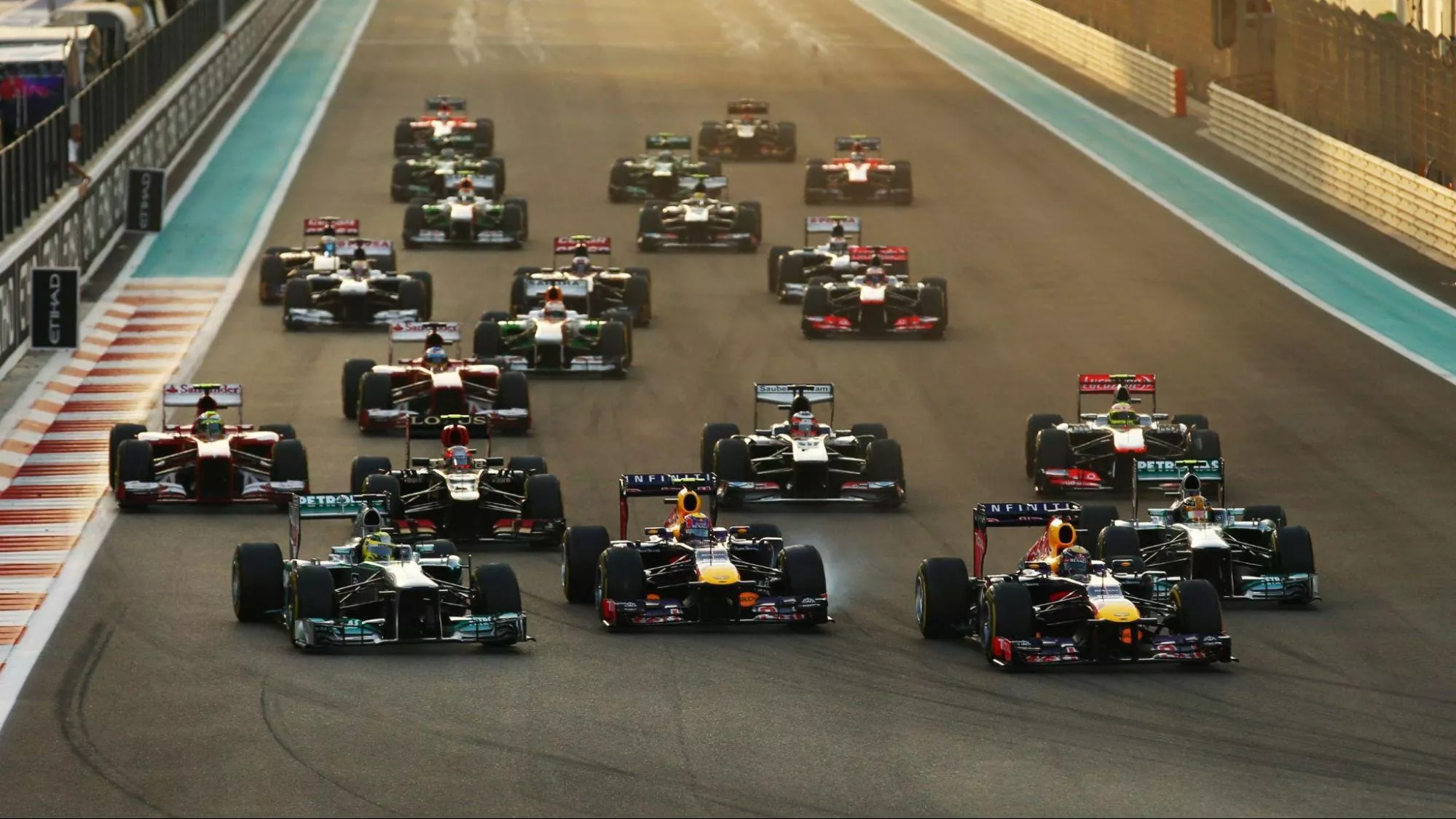
The rapturous choir of V8 engines is cause for celebration in any motorsport, and reports that Formula 1 could return to V8 engines as early as 2030 have reignited that fervour. This wouldn’t be the V8 engine’s first foray into F1 - far from it.
Sign up for a newsletter and we'll make sure you're fully up-to-date in the world of race technology
When did V8 engines first appear in F1?
Unlike the similarly revered V10 engine, the history of V8s in Formula 1 stretches back almost to the category’s genesis. As early as 1952, V8-equipped Formula 2 cars were running in world championship races.
The first true F1 car
to use a V8 came two years later, in 1954, in the form of Lancia’s
cutting-edge D50. It was powered by a 250-horsepower 2.5-litre
naturally aspirated V8 with a 90-degree bank angle.
Perhaps the engine’s most notable attribute was its use as a stressed structural component of the car, removing the need for a heavy subframe to support it. This was made possible by the inherently greater rigidity of V-configuration engines compared to the inline units used by the majority of teams at the time, and is a standard construction technique in F1 to this day.
Ferrari’s
modifications to the Lancia engine included an improved exhaust
system, which increased the engine’s power output to between 265
and 285 horsepower. This enabled it to win five of the seven races it
entered in 1956, and helped Juan-Manuel Fangio to his fourth world
championship title. In doing so, the D50 also became the first
V8-equipped car to claim F1 world championship glory.
Despite the success of the D50, it took a major rule change for V8s to truly take off in F1.
In 1961, a new 1.5 litre engine formula was introduced, which coincided with a widespread move towards rear-engined cars. V8s proved ideally suited to this technical landscape, with two engines quickly emerging as the best of the era.
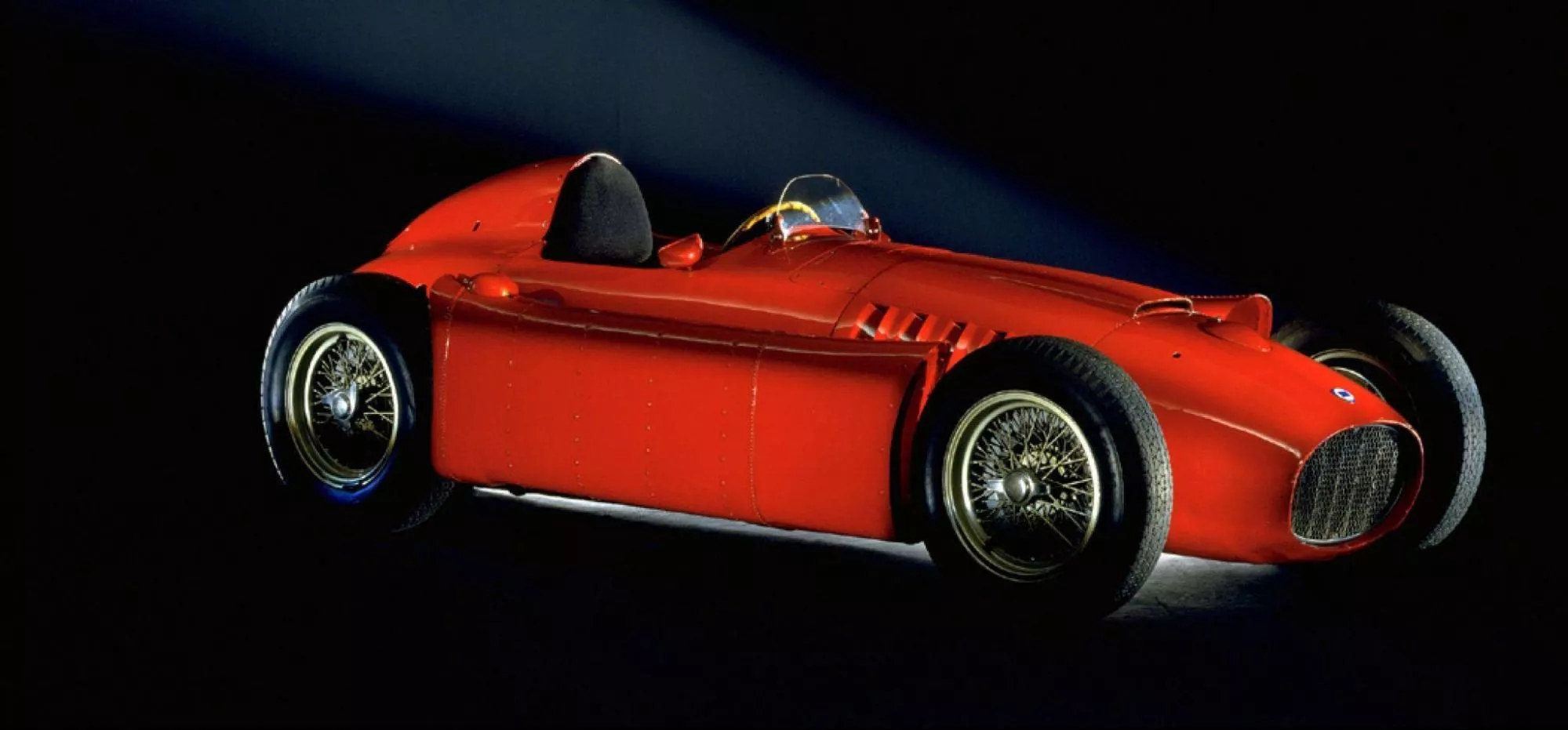
The Lancia D50 sported a 2.5-litre naturally aspirated V8 engine
The first of this new generation of V8s to arrive was the Coventry Climax FWMV, which debuted at the 1961 German Grand Prix. This was a markedly simple engine, following many of the conventions that had been set by the earlier Lancia unit, such as a 90-degree bank angle, chain-driven camshafts and an aluminium alloy engine block.
This conventional design did not keep the FWMV from being competitive, with Jack Brabham using it to claim pole position in only its third race. However, at least initially, the FWMV suffered reliability issues due to problems with thermal expansion of the cylinder lining.
These issues were largely rectified by 1962, and that season the FWMV powered the Lotus of Jim Clark and Cooper of Bruce McLaren to a combined four grand prix victories.
In 1962, the rival BRM P56 V8 emerged and it was in many ways a more advanced engine than the FWMV. It notably featured fuel injection as standard, and used timing gears instead of a timing chain to run the camshafts, negating reliability concerns caused by the chains breaking or stretching.
The BRM proved a triumph right out of the gate. Its advanced design allowed it to rev to 11,000 rpm, while the FWMV topped out at just 8,500. This gave it up to 15 horsepower more than the Climax, while being equally reliable, allowing Graham Hill to claim the 1962 world championship.
Both firms sought to develop their engines in the years that followed, but as the more conservative design, the FWMV arguably had more room to grow. 1963 in particular saw major leaps, with fuel injection replacing the earlier version’s carburettors.
A flatplane crankshaft was also introduced, which placed the crank pins for each cylinder at 180 degrees from each other, rather than the 90 degrees (crossplane) used by all previous Formula 1 V8s. The traditional downside of this was greater vibrations, but it also reduced weight and increased power. With these modifications in tow, FWMV-powered cars won both the 1963 and 1965 world championships in dominant fashion.
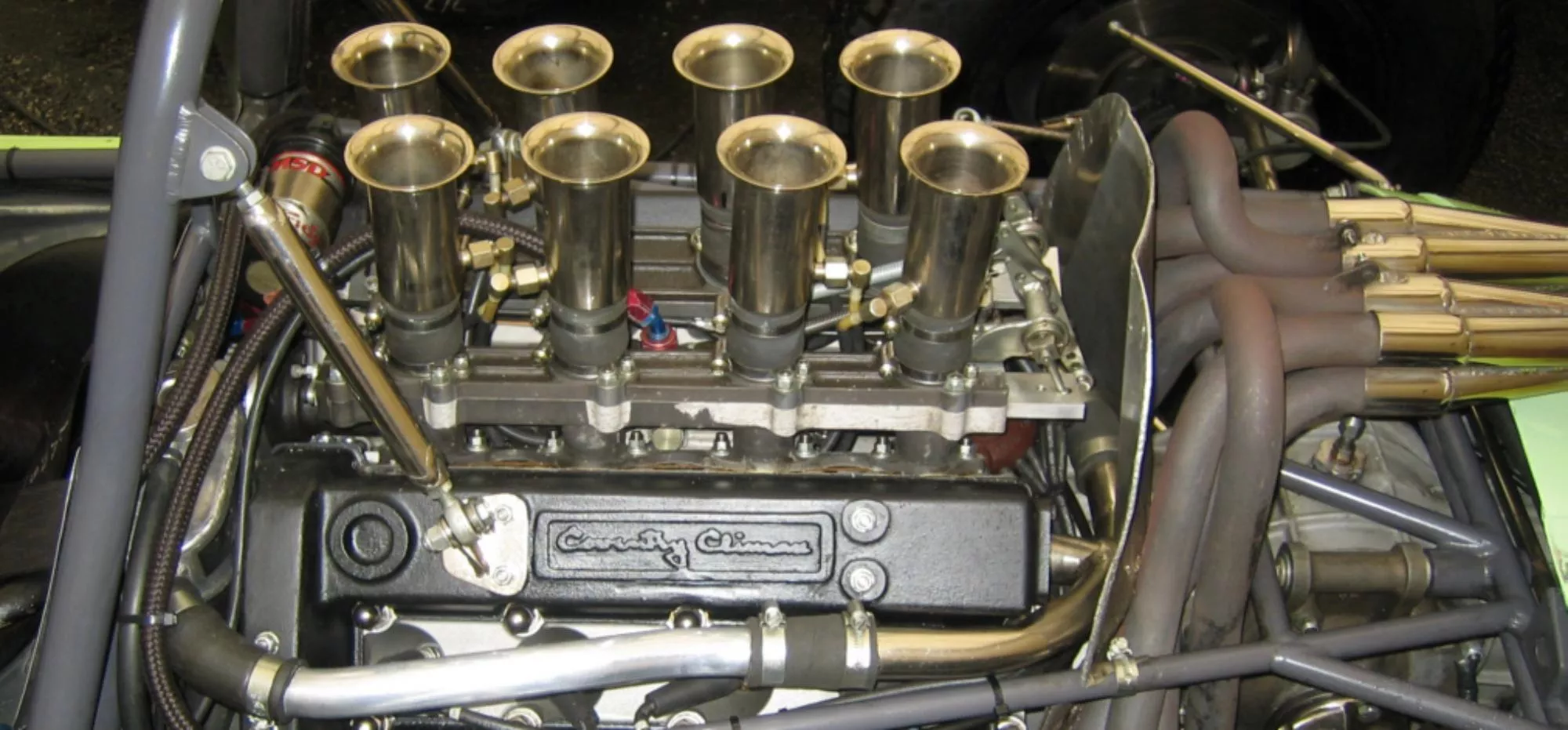
The FWMV engine on a Lotus 24, photograph by Duke le Palois
DFV - birth of a legendary engine
In 1966, major rule changes put an abrupt end to the reign of the Coventry Climax and BRM V8s. Three-litre engines were now mandatory, though provision was given for teams to turbocharge or supercharge their old 1.5-litre engines if they wished to continue using them.
Despite the changes, V8 engines remained competitive, and a year after the regulations overhaul, a truly legendary F1 V8 arrived on the scene.
That engine was Cosworth’s 3-litre DFV, which was specially commissioned by Lotus using funds provided by Ford of Europe.
Designer Keith Duckworth incorporated many of the best features of previous engines into the DFV. Direct fuel injection and a flatplane crankshaft were fitted as standard, while the engine was also the first since the Lancia unit of over a decade before to be designed for use as a stressed chassis member.
Perhaps the engine’s defining characteristic was its use of four valves per cylinder (two intake, two exhaust), which gave the engine its name of DFV - or Double Four Valve. This improved breathing, particularly at high RPM, and contributed to giving the DFV a healthy 410 bhp output.
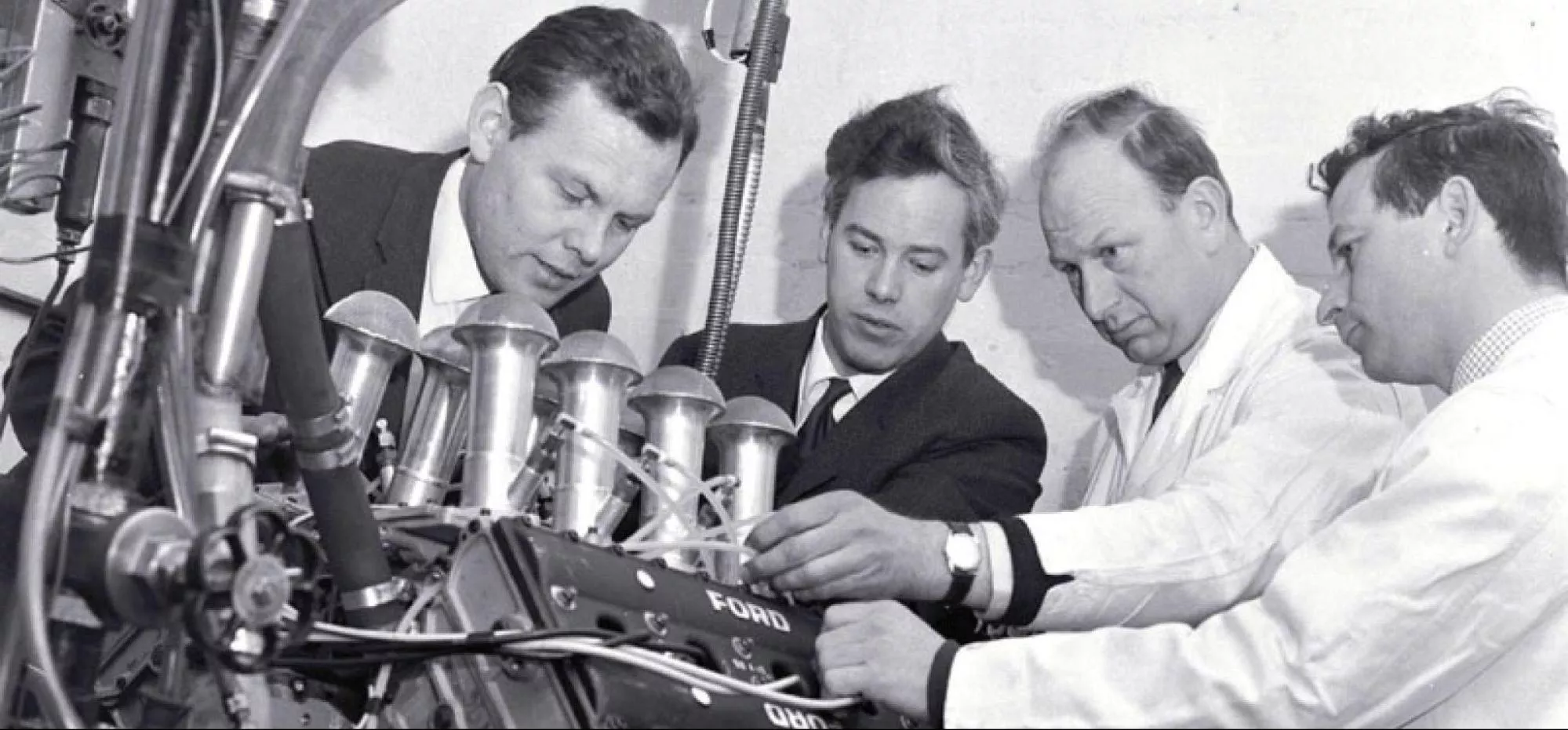
(Left to right) Bill Brown, Keith Duckworth, Mike Costin and Ben Rood working on the Cosworth DFV engine
The DFV proved competitive immediately, with Jim Clark winning the engine’s very first race at the 1967 Dutch Grand Prix. Initially, reliability issues kept Lotus from the world championship, which was won by Brabham using simpler Repco V8s based on Oldsmobile road car engine blocks.
The following year though saw Cosworth solve the DFV’s reliability hiccups and expand the supply of the engine to teams beyond just Lotus. This marked the point when the engine really came into its own.
The easy availability of such a dependable, competitive engine ushered in a golden era for small garagiste Formula 1 teams. For a mere £7,500 per unit (as of 1973), they could get their hands on the very same engine used by the most well-funded teams in Formula 1, and use it as a platform to bring innovative aerodynamic ideas to the table. Teams such as McLaren, Tyrrell and Williams all experienced their first major successes with DFVs powering their cars.
Perhaps the most remarkable trait of the DFV was its longevity. Thanks to continual improvements from Cosworth and specialist tuners such as John Nicholson and John Judd, the trusty 3-litre was still winning championships some 15 years after its introduction.
12 cylinder engines were still being used by the likes of Ferrari but the comparatively slender DFV was ideally suited for use on a ground effect car, nestling perfectly between the venturi tunnels used to generate downforce where the bulky flat-12 Ferrari engine obstructed them. With the aid of this advantage, the DFV remained the engine of choice into the 1980s.
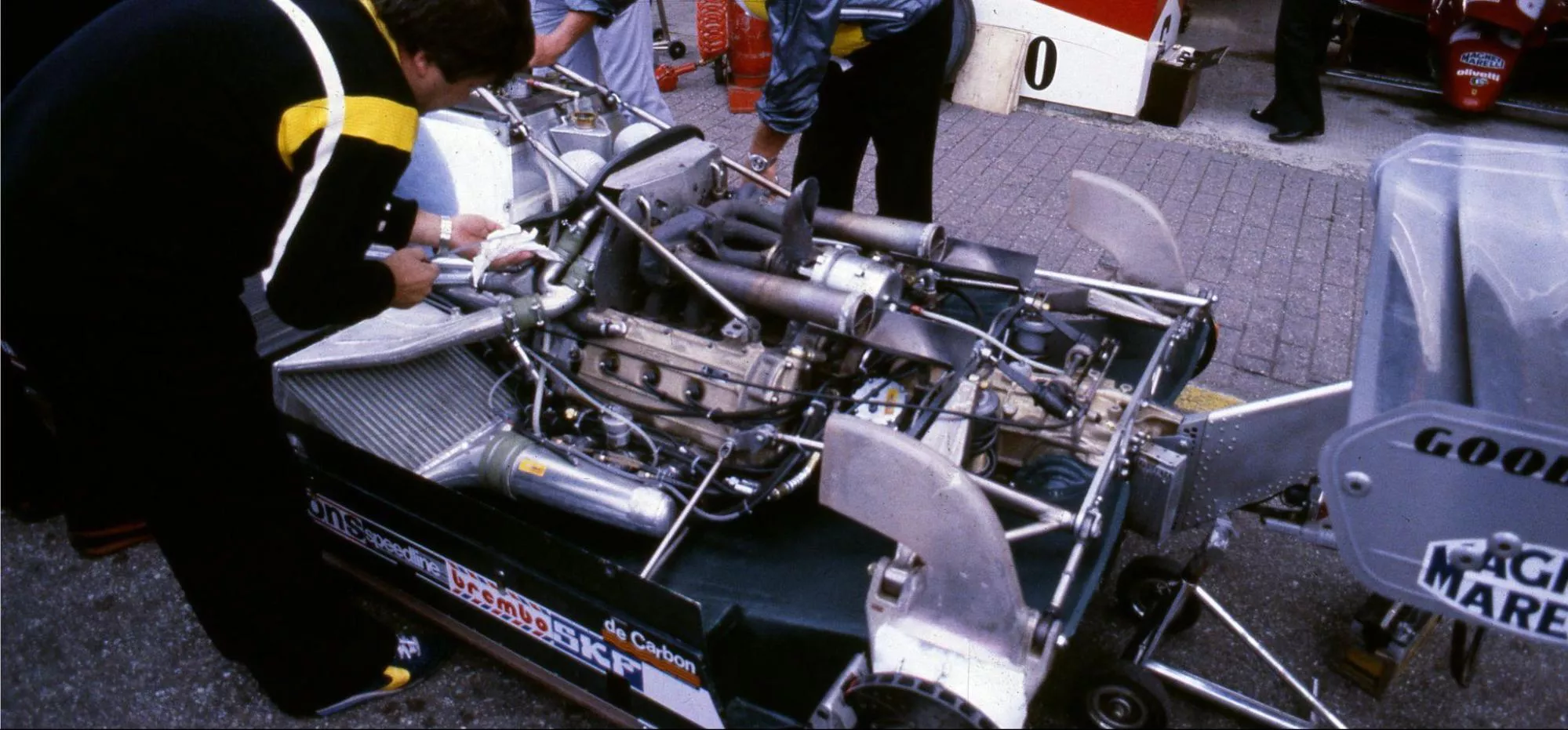
The bulky Ferrari engine - pictured here in the 1982 126C2 - hampered its ground effect credentials
In the end, the DFV’s reign was brought to an end by a section of the regulations which had stayed dormant ever since the 3-litre era began in 1966 - the provision for a 1.5 litre turbocharged engine.
Renault entered Formula 1 with a 1.5 litre turbocharged V6 power unit in 1977. Over time, the power of Renault’s engine increased, reliability improved, and other teams began joining the turbocharging revolution.
Cosworth’s response to this situation was a new revision of the DFV called the DFY. developed by engineer Mario Illien. This featured enlarged 90mm cylinder bores, a shortened piston stroke and a redesigned cylinder head, yielding some 510 brake horsepower.
By the time the DFY became available in 1983, it was too little, too late. With turbocharged engines achieving power outputs of over 650 bhp in race trim, the DFV and its variants were simply outmatched. A new turbocharged era had begun.
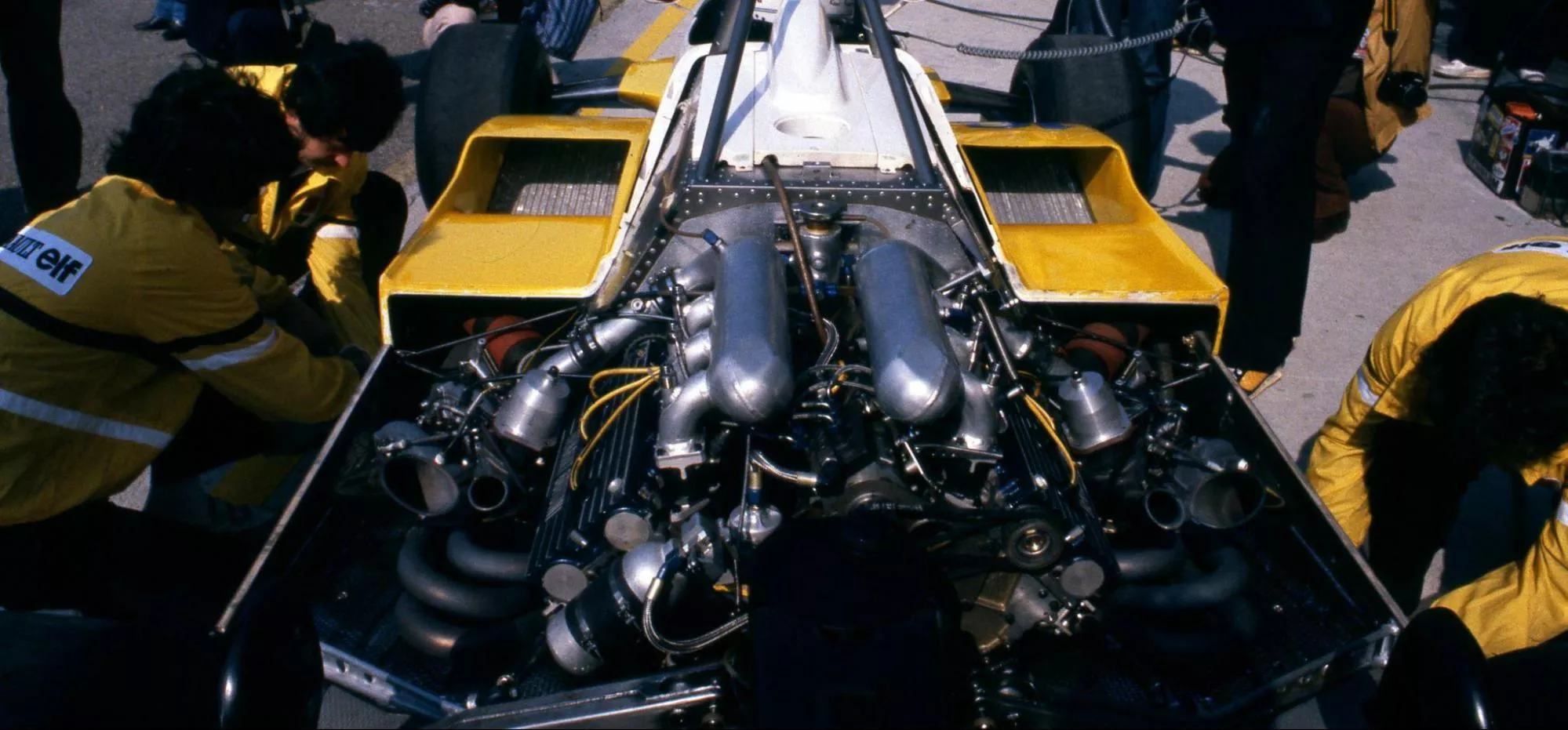
The turbocharged Renault V6 engine in the bay of the RE30B in 1982
When V8 became the underdog
Formula 1’s turbo era was largely devoid of V8s, save for a few underfunded teams who stuck with the DFY. The only notable exception was Alfa Romeo, which fielded a turbocharged V8 starting in 1983.
This unit proved decidedly crude, with only mechanical fuel injection at a time when most other manufacturers were moving to computerised systems. The introduction of fuel restrictions in 1984 particularly hurt the V8 turbo, with more efficient V6s and straight-fours proving dominant.
A reprieve for V8s soon came in the form of new technical regulations in 1986, as turbo engines began to be phased out by the FIA in favour of 3.5 litre naturally aspirated units.
The majority of engine manufacturers responded to the new rules by developing either V10 or V12 engines, which were believed to be best suited to a 3.5-litre displacement.
Some chose to return to the faithful V8 though.
Starting in 1987, Cosworth provided revisions of the old DFV, which were bored out to 3.5 litres. It also developed a more advanced V8 called the Cosworth HB, which was provided to the Benetton team starting in 1989. The HB featured a narrow 75-degree bank angle rather than the 90 degrees used by all previous F1 V8s. This served to keep the engine light and compact and enable the kind of tight aerodynamic packaging which was rapidly becoming en vogue at the time.
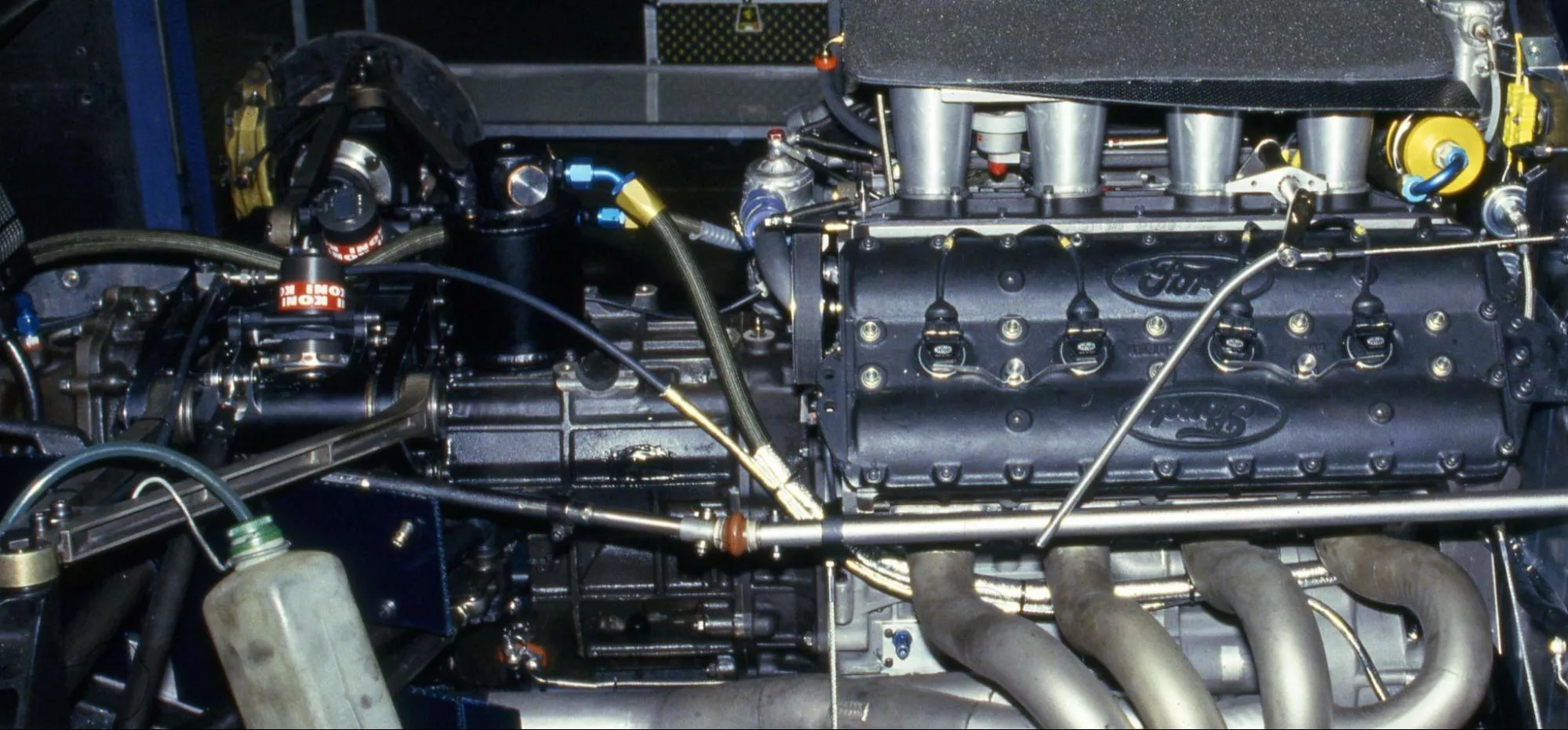
The Cosworth DFZ engine on the Minardi M188 in 1988
V8s in this period typically struggled to keep pace with the more powerful V10s and V12s, but they nevertheless proved that the configuration was not yet dead and buried. Benetton won races with the HB every year from 1989 to 1993, with Cosworth continually developing the engine to keep it competitive. Additions included pneumatic valve gear, which raised the engine’s rev limit and allowed it to produce more horsepower. In 1993, the frontrunning McLaren team even adopted the HB, winning five grands prix with it.
Cosworth heavily revised the HB for 1994, using larger bore cylinders and proprietary lightweight alloys. The resultant engine was dubbed the Ford Zetec-R, which revved to 14,500rpm and produced some 745 horsepower.
This still represented a power deficit compared to the top V10 engines at the time, but the Zetec-R was lighter, and quickly proved highly competitive. With Michael Schumacher at the wheel, Benetton romped to eight grand prix wins in 1994, and, despite some controversy, secured the world drivers’ championship. It was the twentieth such title secured using a V8 engine since the configuration’s first back in 1956.
The last V8 era in F1
Immediately after
Benetton and the Zetec-R’s triumph, Formula 1’s engine
regulations shifted once again in response to the tragedies which had
marred the 1994 season. For 1995, engine displacements were reduced
from 3.5 to 3 litres, just as they had been in the heyday of the
Cosworth DFV.
However, far from
rekindling a period of V8 dominance, these new rules actually proved
to favour V10 engines. No V8-equipped car would win a race in this
new 3-litre era, let alone a championship, and by 1998 the entire
grid had moved over to 10-cylinder engines.
Over time, the development of these V10 engines began to go out of control, with both spending and horsepower outputs reaching unsustainable levels.
The FIA looked to control this situation by turning to the faithful V8 engine, which would be made mandatory starting from the 2006 season.
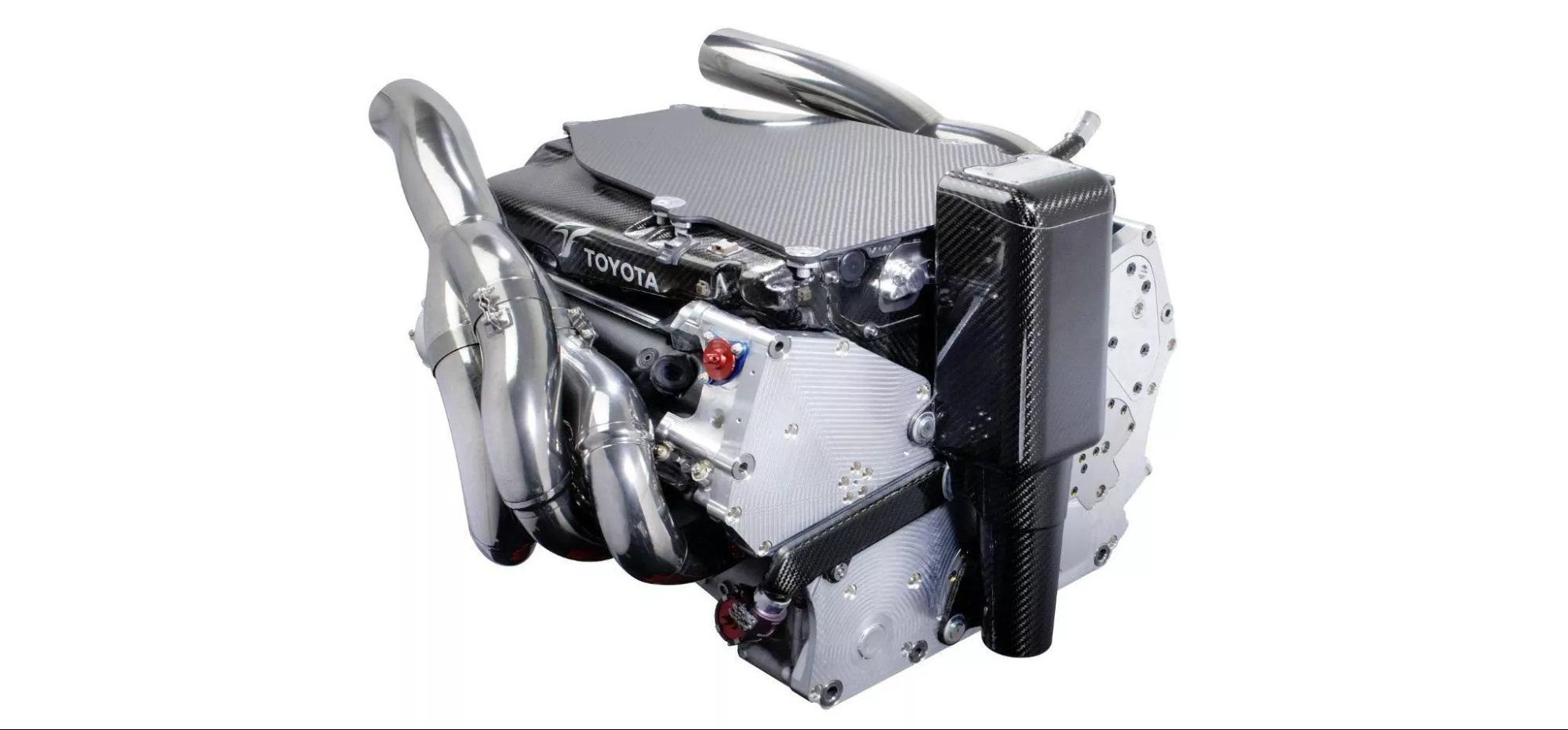
V8 engines returned to F1 in 2006 and remained until 2014. Pictured is the 2008 Toyota RVX-08
Unlike V8s of years past though, the design of these new engines would be tightly constrained by a 2.4-litre maximum displacement, mandatory 90-degree bank angle, a maximum cylinder bore of 98mm, a minimum weight limit of 95kg, and a ban on exotic materials such as beryllium, which had been used during the V10 era.
Despite these stipulations, teams still found room to differentiate themselves during the new V8 era. Cosworth’s initial 2006 engine was noted for its ludicrously high 20,000 RPM rev limit, though this was curtailed by the introduction of a mandatory 19,000 RPM limit in 2007.
That same year, engine development was frozen as a way to further cut costs.
Once again, wily teams
found ways to introduce improvements under the guise of reliability
upgrades. Perhaps the most notable of these was Renault’s
introduction of engine mapping software, which cut the fuel supply
but kept the throttle open to blow air through the diffuser and
generate downforce even when the driver lifted off the accelerator.
This practice was known as cold blowing and was used to devastating
effect by the Red Bull team.
Despite the relatively prescriptive design rules, the V8s of the mid 2000s to the 2010s were generally well-liked by fans and drivers. Some clamoured for a return to V10s or an unrestricted engine formula but, in 2014, F1 moved to hybrid V6 engines in search of greater road relevance.
If history has proven anything, it’s that V8s are an engine that just won’t stay dead, and recent reports do more than suggest that yet another return to this simple, symphonic era, could well be on the cards...
.webp?cx=0.5&cy=0.5)