Innovation
The sensor that withstands 2,500G: The F1 Tyre Pressure Monitoring System
by Samarth Kanal
5min read
Imagine being shrunk to the size of a golf ball and placed inside a Formula 1 tyre. The pressure inside is immense; at high speed, the centrifugal force pulling the tyre inward equates to around 2,500g. That’s 2,500 times your weight, pulling you towards the outside of the wheel.
Sign up for a newsletter and we'll make sure you're fully up-to-date in the world of race technology
Since 2022, the TPMS (Tyre Pressure Monitoring System) has been a standard component across the F1 grid, supplied by bf1systems. It’s the size of a car key fob, and it supplies critical data to the drivers, the teams, and the FIA.
What does the F1 TPMS do?
The TPMS is the 5x3x2cm fly on the wall that F1 teams depend on throughout the weekend, whether in free practice, qualifying, or during a race.
Mounted to a single M5 fixing on each rim of the car, this sensor measures air temperature and pressure inside the wheel, plus the inner tyre carcass temperature.
It would be unfair to equate this to a simple thermometer; however, the TPMS uses an infrared camera to build an in-depth picture of the temperature inside the tyre.
Using this data, the teams can see on their screens whether their tyres are up to the temperature they need to stick to the track - crucial to knowing whether they’re adequately prepared for a rapid qualifying lap - or whether they have a puncture.
Trackside, engineers use the data to know whether their set-up is helping the tyres stay in their optimal temperature window, whether it’s too cold to run hard compounds, or too hot to run soft compounds, and whether the driver is pushing too hard. The same data is fed back to the team at the factory to make even deeper observations on the car, its behaviour, and forecast strategy.
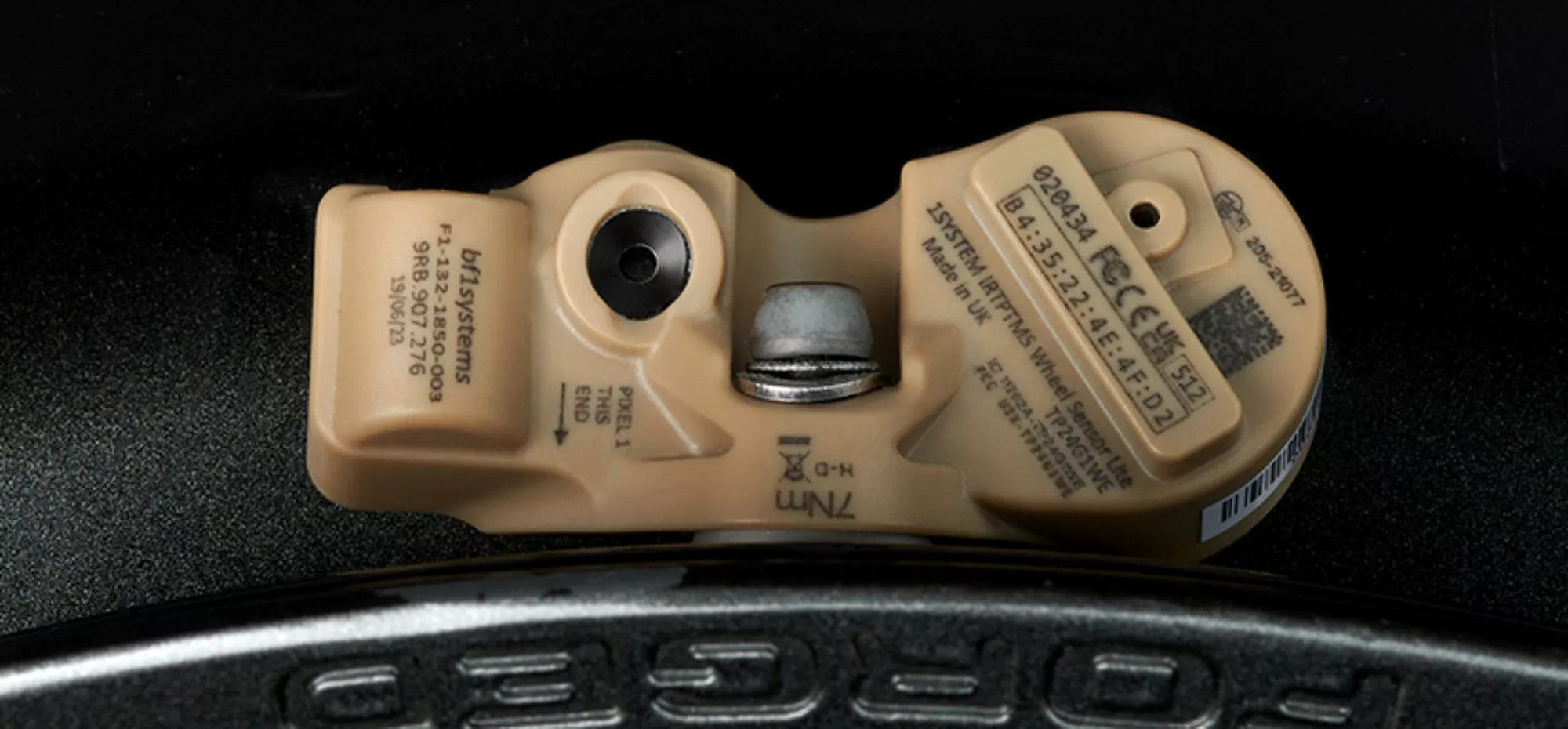
The TPMS is a single-specification part attached to every wheel rim of every F1 car

Beyond the race-day sensor, bf1systems also supplies an optional sensor that bonds directly to the rim and measures temperature at five points across the rim width. It's used in development testing - not on Sunday afternoons - to map the thermal relationship between brake heat, rim temperature, and tyre carcass temperature.
Teams use brake heating specifically to manage rim and therefore tyre temperature; this sensor lets engineers see exactly what that intervention is achieving.
A humidity sensor inside the tyre is also now coming to market, extending potential measurement capabilities yet further.
Engineering to survive
An F1 car encompasses extreme engineering made to withstand extreme conditions - and the TPMS is no different.
In fact, it’s built to withstand more than what occurs on the F1 track.
bf1systems’s Business Development Director, James Shingleton, uses one of the fastest road cars ever built as an example.
"On the Bugatti Chiron at top speed - over 300 miles an hour - the effective force on a wheel sensor is 3,500G. Your 30-gram sensor hanging on by a single M5 bolt has an effective mass of approximately 100 kilos trying to fly off, and out of the wheel."
Formula 1 is slightly gentler.
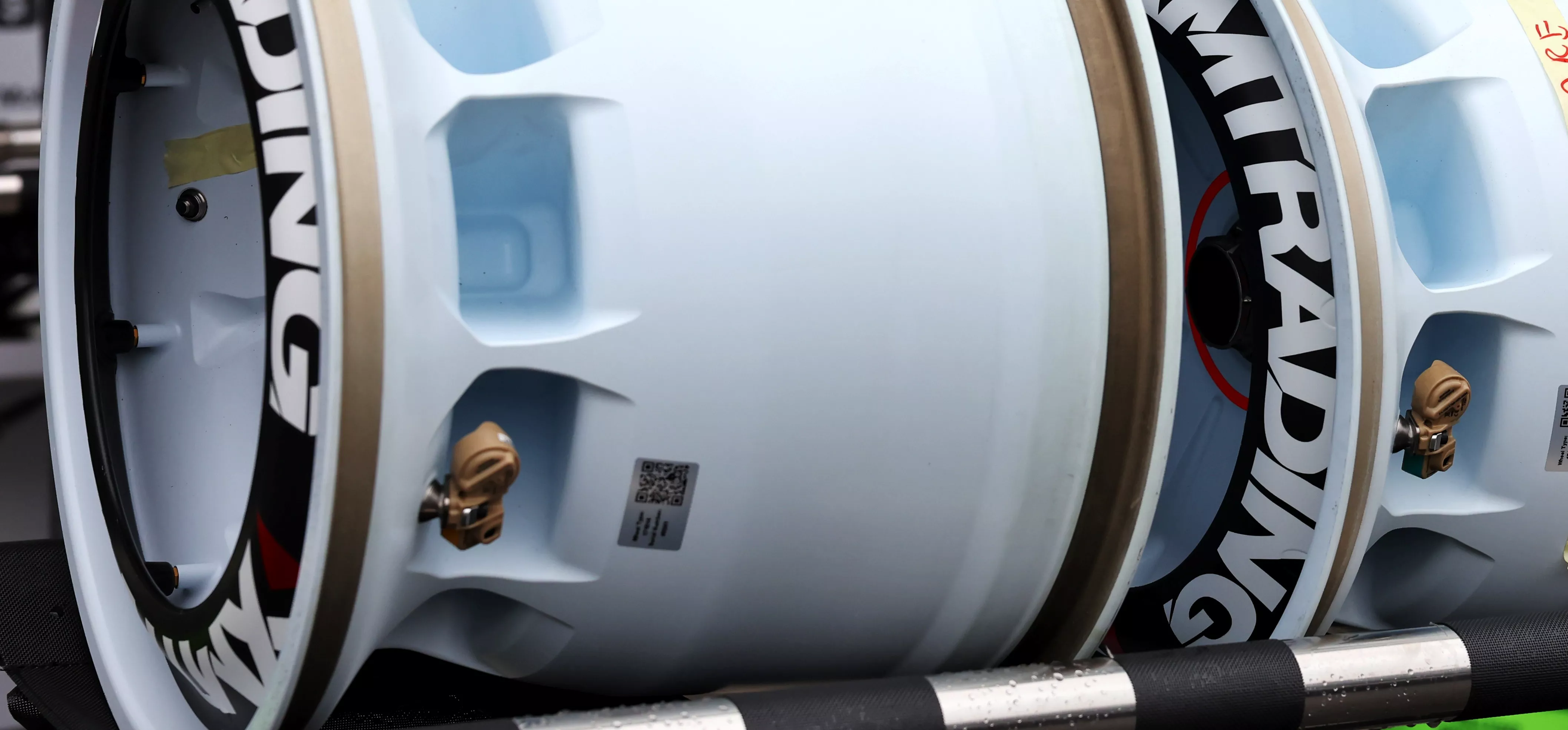
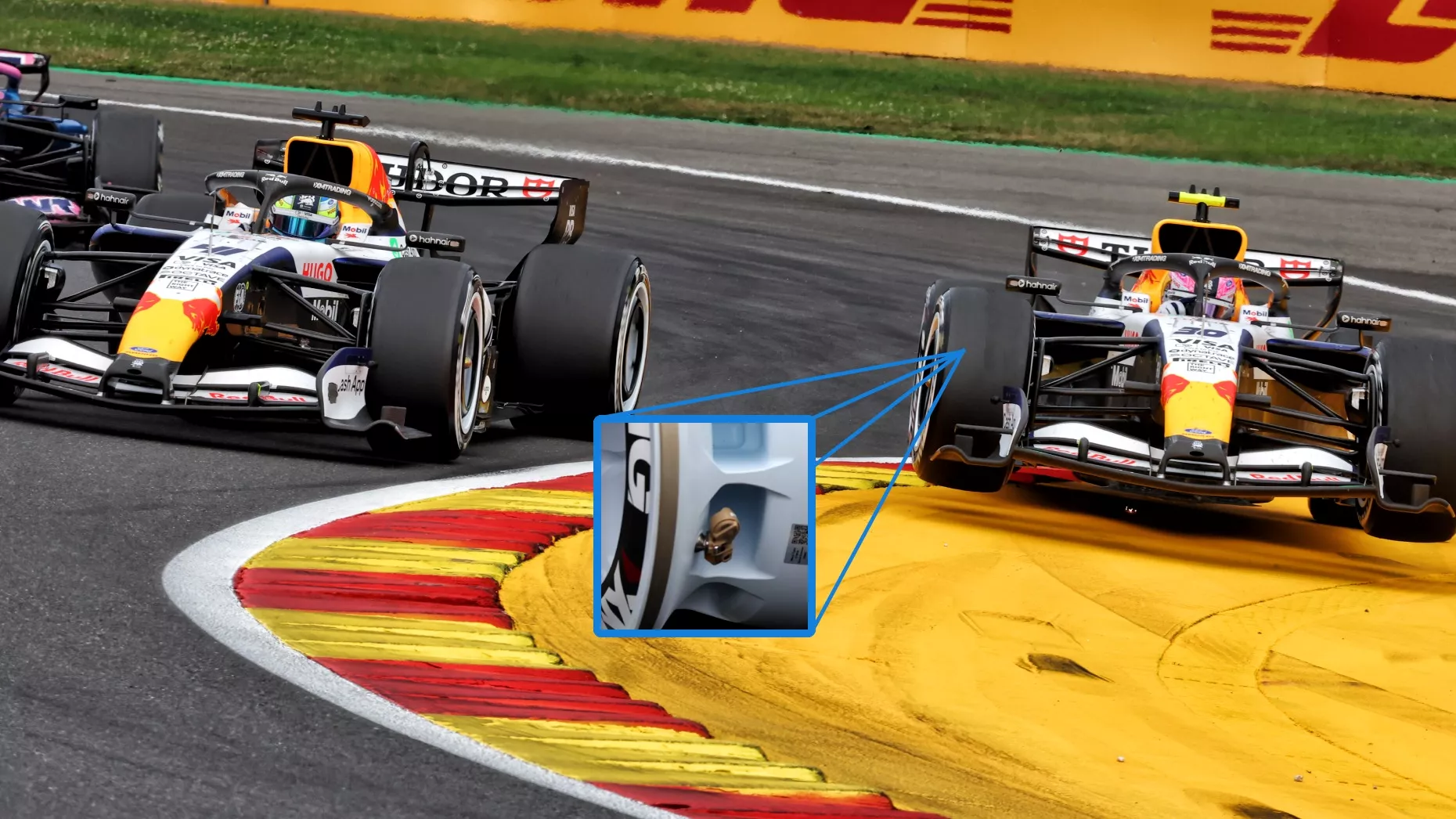
The TPMS visible on a Racing Bulls F1 wheel rim in 2026

Shingleton says the TPMS undergoes "probably 2,500G" inside an F1 wheel - "So quite a bit less."
The TPMS can withstand a maximum centripetal acceleration of 4,700g, giving a comfortable margin in all but the most extreme road car applications.
The housing is moulded from PEEK - polyether ether ketone - a glass-filled polymer chosen specifically because it retains its structural integrity at high temperatures rather than softening like conventional plastics. The electronics inside are fully encapsulated, sealed not only against heat, brake cleaner, water, and the cold of aircraft cargo holds, but also to prevent any tampering.
That last point is deliberate, and not incidental to F1's requirements.
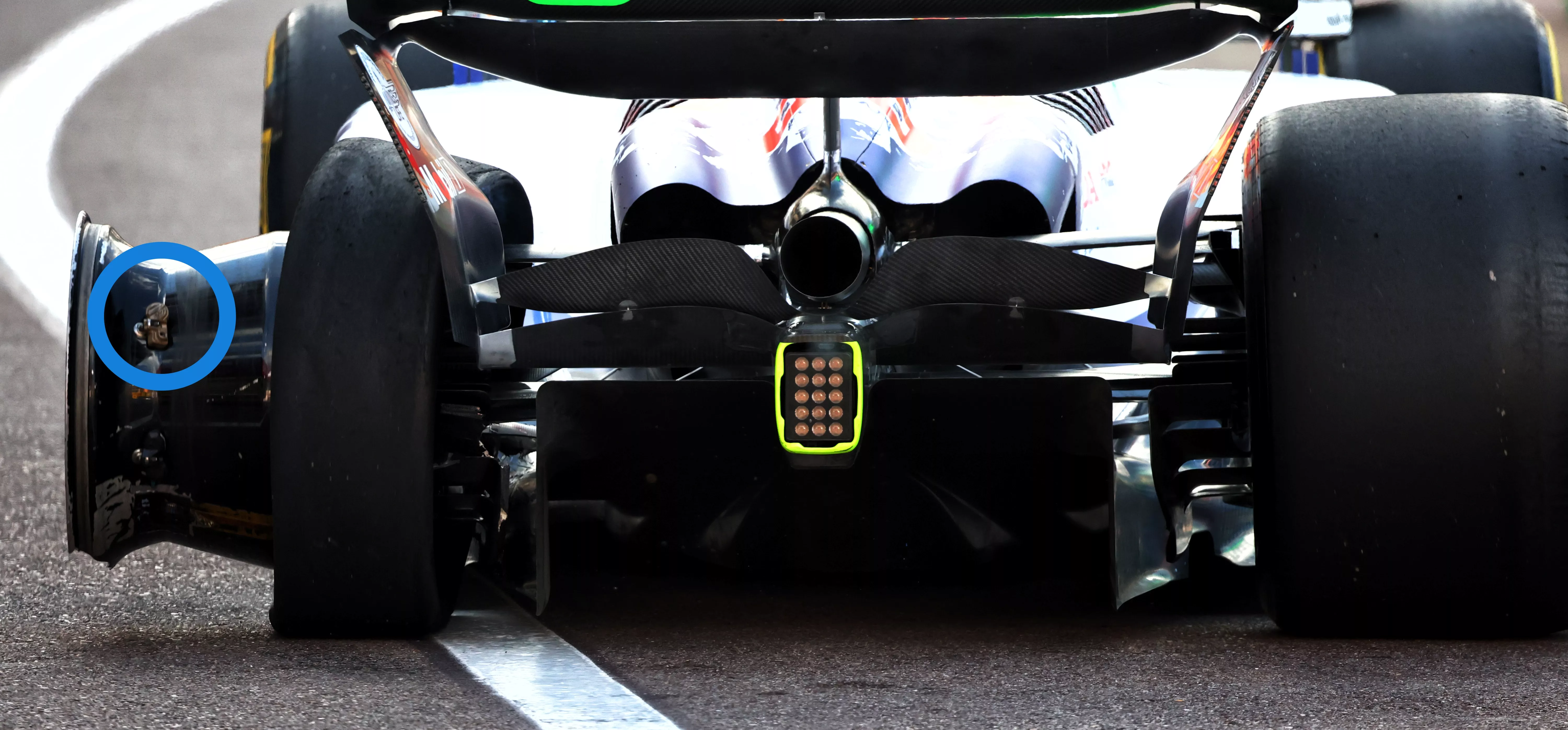
The stricken Racing Bulls of Liam Lawson at the 2025 Dutch GP with the TPMS visible and circled in blue (left)

Security and the FIA
The latest TPMS from bf1systems,1SYSTEM operates on 2.4 GHz, with the wireless transmission from wheel sensor to car-mounted ECU fully encrypted. Once received, the data travels via the CAN bus (Controller Area Network - an internal communications network) to the car's standard ECU (Engine Control Unit - the ‘brain’ of the car).
Teams can access certain channels. The FIA can access others - encrypted separately - to verify the integrity of what's being measured.
The reason this matters or is significant becomes clear when you consider what a team might theoretically gain from manipulating the data.
In most racing categories minimum tyre pressures are mandated, and if teams wanted to gain an advantage by running under this Shingleton says, “They could try to intercept the data from the TPMS, manipulate it and then reconstruct it so it doesn’t look like it’s been touched.”
It's a theoretical scenario, but not a purely academic one. The Meyer Shank Racing disqualification at the 2023 Daytona 24 Hours brought the question of TPMS data integrity into sharp focus across multiple series.
Since then, the FIA, WEC, IMSA, and DTM have all significantly hardened their approaches to encryption. "They all basically now want to know the quality and integrity of the data," says Shingleton.