Car
IndyCar's DW12 successor revealed: Lighter, safer, faster
by Matthew Somerfield
8min read
A ground-up redesign for an iconic single-seater series. IndyCar has announced an all-new car for 2028 in a safer, lighter, and faster package.
Sign up for a newsletter and we'll make sure you're fully up-to-date in the world of race technology
The IR-28 will be IndyCar’s first new car in 16 years by the time it hits the track in 2028, making the DW12 chassis extremely long in the tooth, having been in use by the series since 2012.
The car will look and behave very differently to the outgoing DW12 too, as it could be likened to a house with a handful of extensions that needed to be torn down and completely rebuilt.
After all, the outgoing DW12 has gone through various iterations over its extended lifespan, including the first generation aero solution that made way for a new manufacturer aero kit between 2015-17, before a universal approach was taken again in 2018 until present day.
It’s not only a new chassis and aerodynamics that will be introduced in 2028, as both Honda and General Motors are working on new engines for the series. These will use a 2.4-litre V6 turbocharged internal combustion engine (up from 2.2-litres) capable of producing up to 760 horsepower with a new hybrid system.
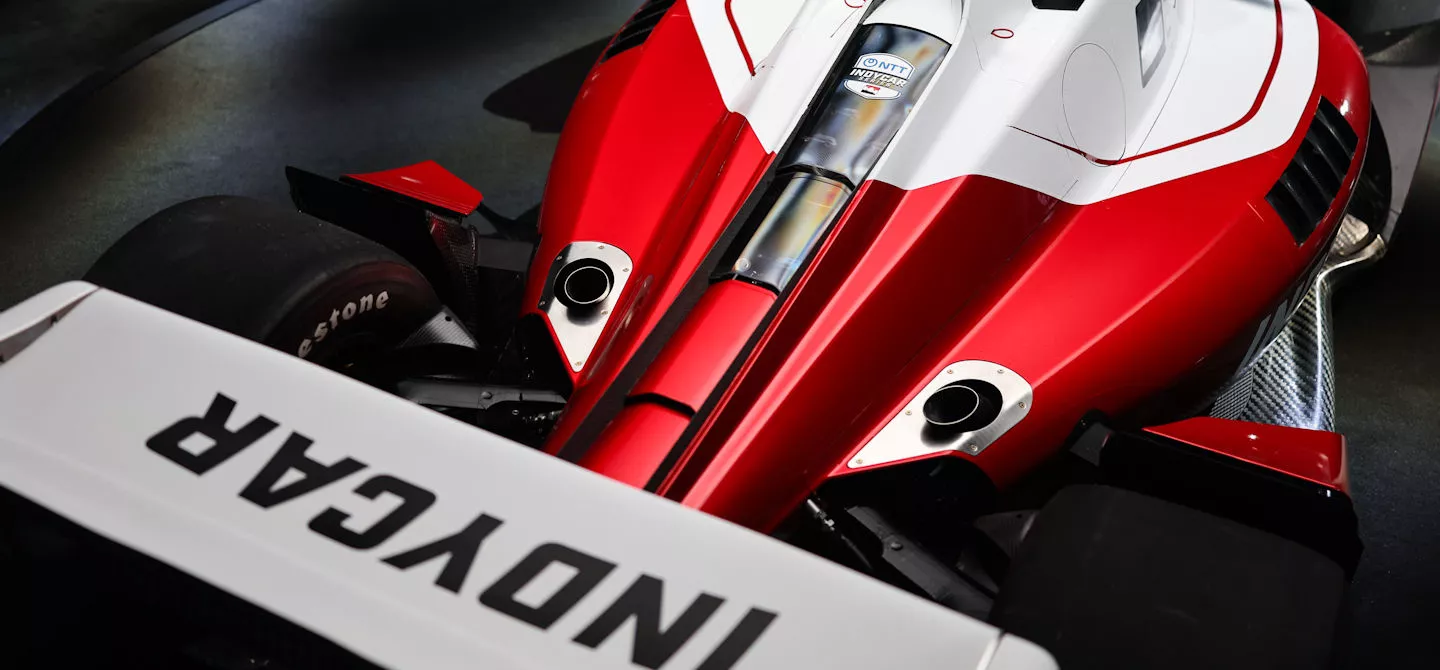
The engine cover has a viewing window on the spine to reveal the engine installed beneath - Image Credit: Penske Entertainment - Chris Owens
This new hybrid system is developed in collaboration with Helix Hybrid and BOLD, with the latter set to supply the battery-based Energy Storage System (ESS), which is slated to offer up to 14 times more storage than the current capacitor-based system.
The hybrid system will still be packaged inside the bellhousing but given this has been designed from the ground up, in conjunction with the rest of the car, they’ve been able to save a considerable amount of weight too, with the new package being around 9kg lighter than the previous generation.
This is just one area in which weight has been shaved from the overall package, with the gearbox, which will still be supplied by Xtrac, expected to be around 11kg lighter, whilst IndyCar is suggesting that the car in total will be around 45kg lighter.
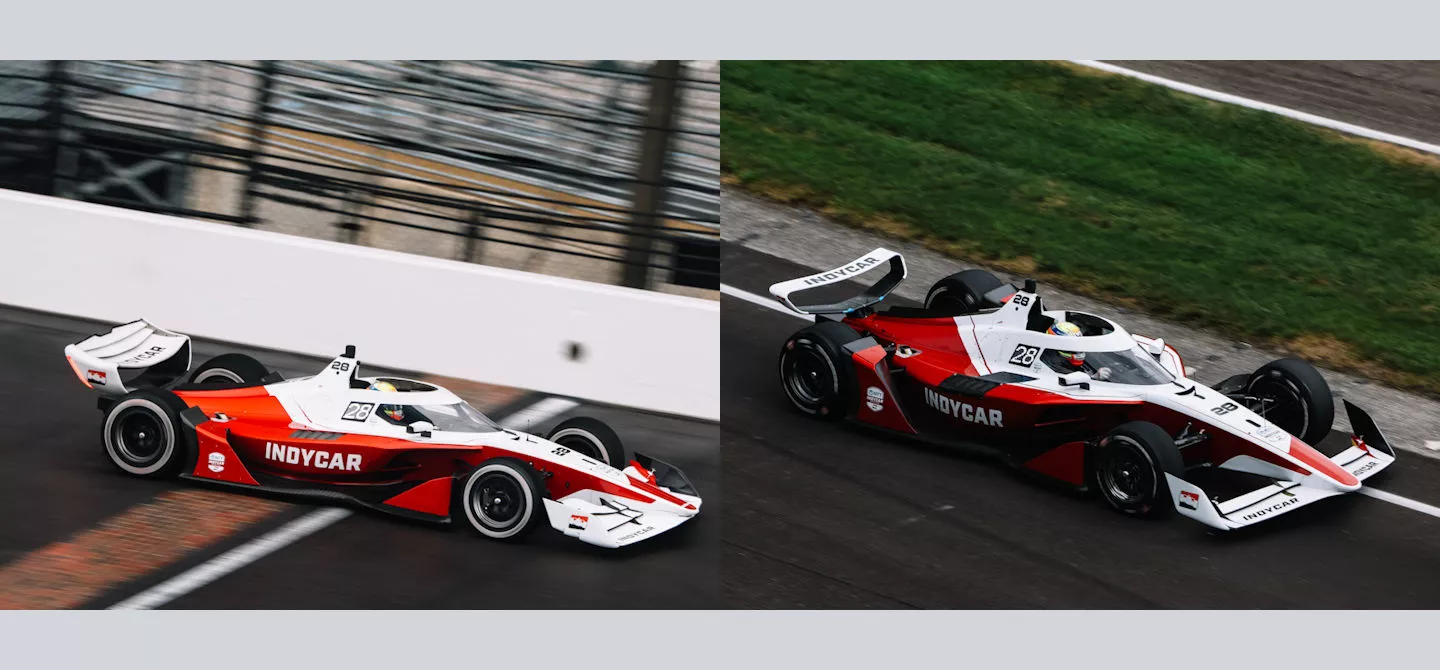
A side-by-side view of the different aerodynamic configurations for road courses (left) and speedways (right) - Image Credit: Penske Entertainment -Joe Skibinski

Same, same, but different
As you’d expect, there are two main aerodynamic configurations to consider too, one for high downforce on the road courses and one for low downforce on the speedways, with the main difference being the design of the front and rear wings.
For the road courses we can expect to see the 3-element front and rear wing arrangements, whilst there is a single-flap variant for speedways.
There’s adjustability for both downforce trims, with both upper flaps on the high downforce front wing connected to the mechanical adjuster, whilst the same can be said for the single element flap on the low downforce configuration.
Meanwhile, there is clearly some flexibility in terms of adjusting the rear wing angle too, not only in terms of the three elements but also the Gurney flap on the trailing edge of the upper flap.
The wings aren’t the only story though, as the rear wheel pods also differ depending on the aerodynamic configuration, with their size and shape altered to suit the requisite demands.
Furthermore, there’s a removable section at the rear of the diffuser, which will be taken off the car for speedways.
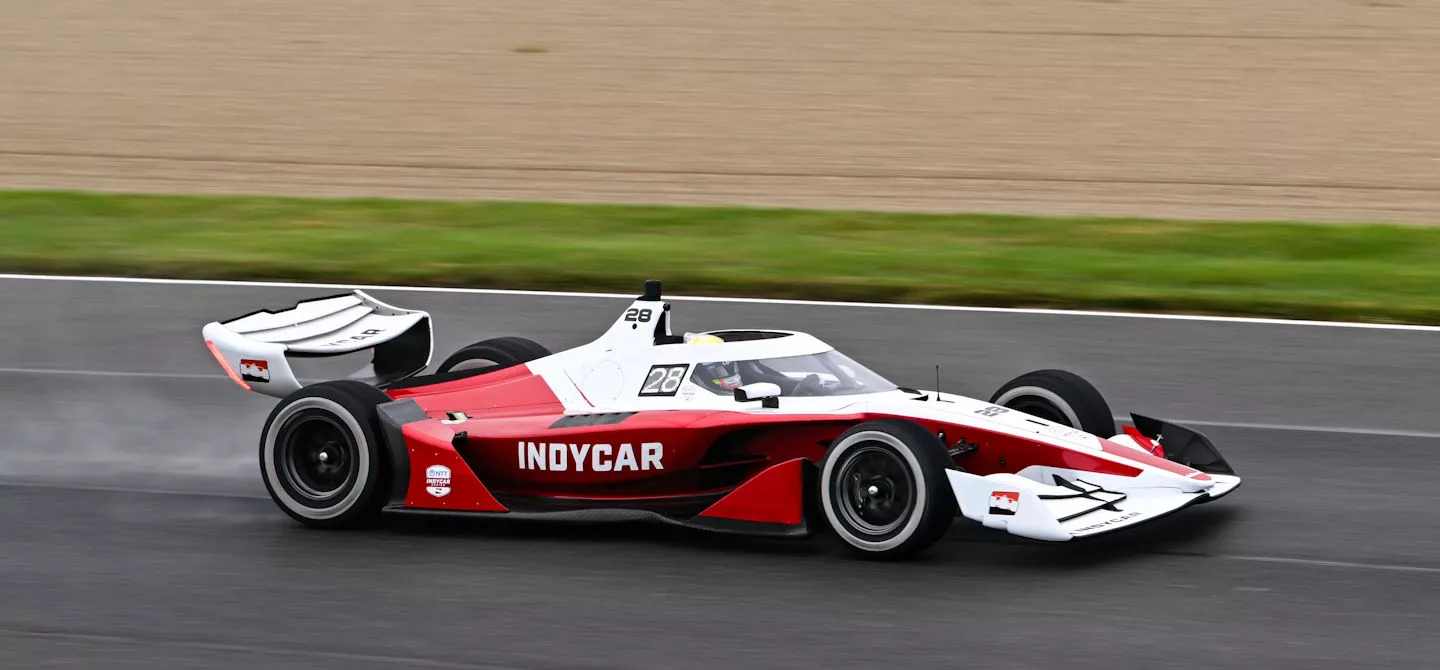
The IR-28 has already been put through its paces at the Indianapolis Motor Speedway - Image credit: Penske Entertainment - James Black
It’s about more than just different aero packages though
The shape of the front wing mainplane and how it interacts with the nose has also changed quite significantly, with a more uniform height across the wing’s span but it also sits slightly higher overall. This should result in a car that’s less ride height sensitive in and out of traffic when compared with the current car.
The sidepods are also higher on the IR-28, which will not only help in terms of safety, in the event of a side impact, there’s also some gains in terms of functionality, whilst that’s all wrapped up in a shape that helps to achieve some of the series’ overall aerodynamic goals.
From a functionality point of view, there are two intakes on either side of the car, with the upper feeding the engine’s heat exchangers, whilst the lower intakes help with driver cooling and feed ancillaries and the hybrid system and gearbox.
Sticking with cooling, there’s more driver cooling to be found under the keel, with air blown up towards the driver’s chest from there, whilst the opening ahead of the aeroscreen has also been optimised.
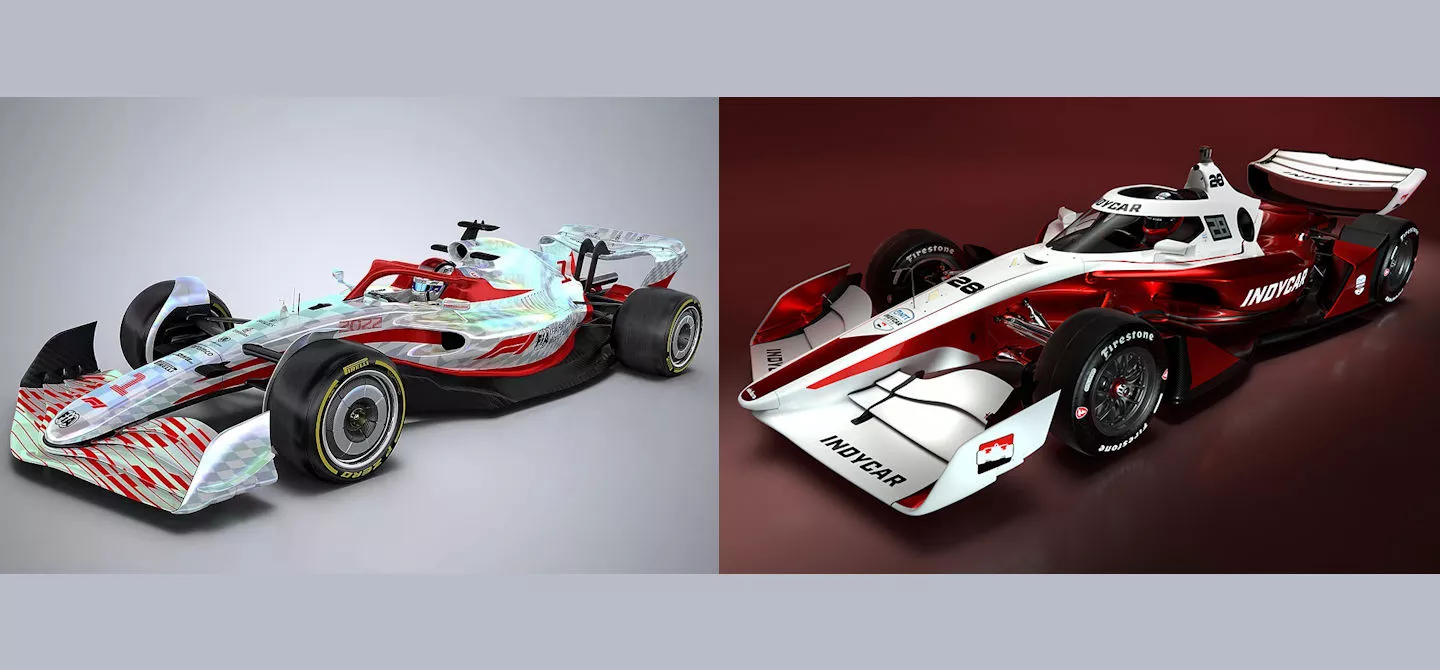
A comparison of the 2022 F1 car render and the IR-28 reveals some conceptual similarities
Familiar look
The IR-28 is clearly a very different machine to the DW12 but, if you’re thinking ‘I’ve seen this somewhere before’, it does have more than a passing resemblance to Formula 1’s last generation of car, which was designed to reduce the perennial issue posed by aerodynamic turbulence.
The integrated flap and endplate design of the high downforce front wing, with its inwardly rolled tips is straight out of the F1 playbook, whilst the rear wing also has the same rolled endplate aesthetic, with a lack of vortex-inducing bodywork above the flaps.
Both of these features were employed by F1 as a means to reduce the aerodynamic wake that might otherwise be generated by traditional solutions, which explains why IndyCar and Dallara have been inspired to follow suit.
And, given the constant development updates in these regions, IndyCar should be in good stead when it comes to reducing the aerodynamic turbulence being generated by an open-wheel car.
You may also see another familiar F1-style design element on the IR-28 too, as the wing mirrors feature a stalk and surround that many teams used in one form or another following Ferrari’s initial foray in 2018.
These aren’t going to make a huge difference in terms of performance but they do follow the same logic that IndyCar and Dallara have made elsewhere when it comes to improving the car’s overall efficiency.
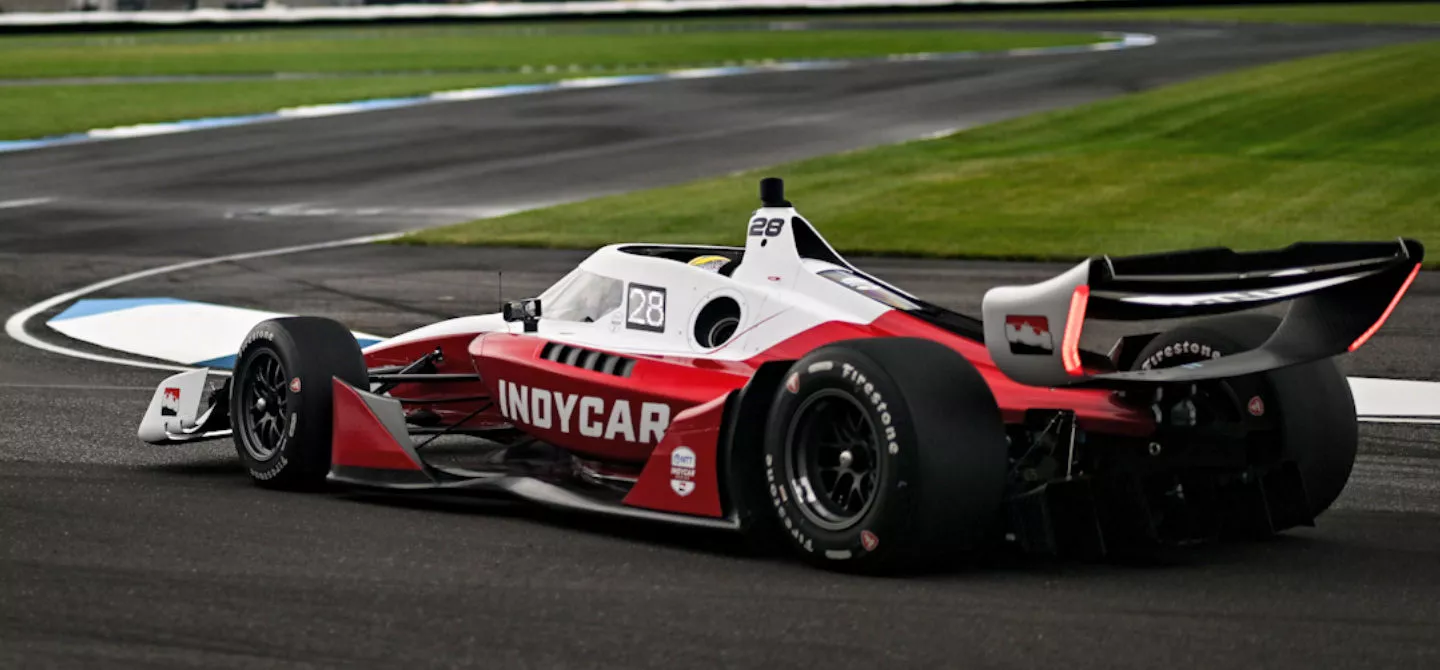
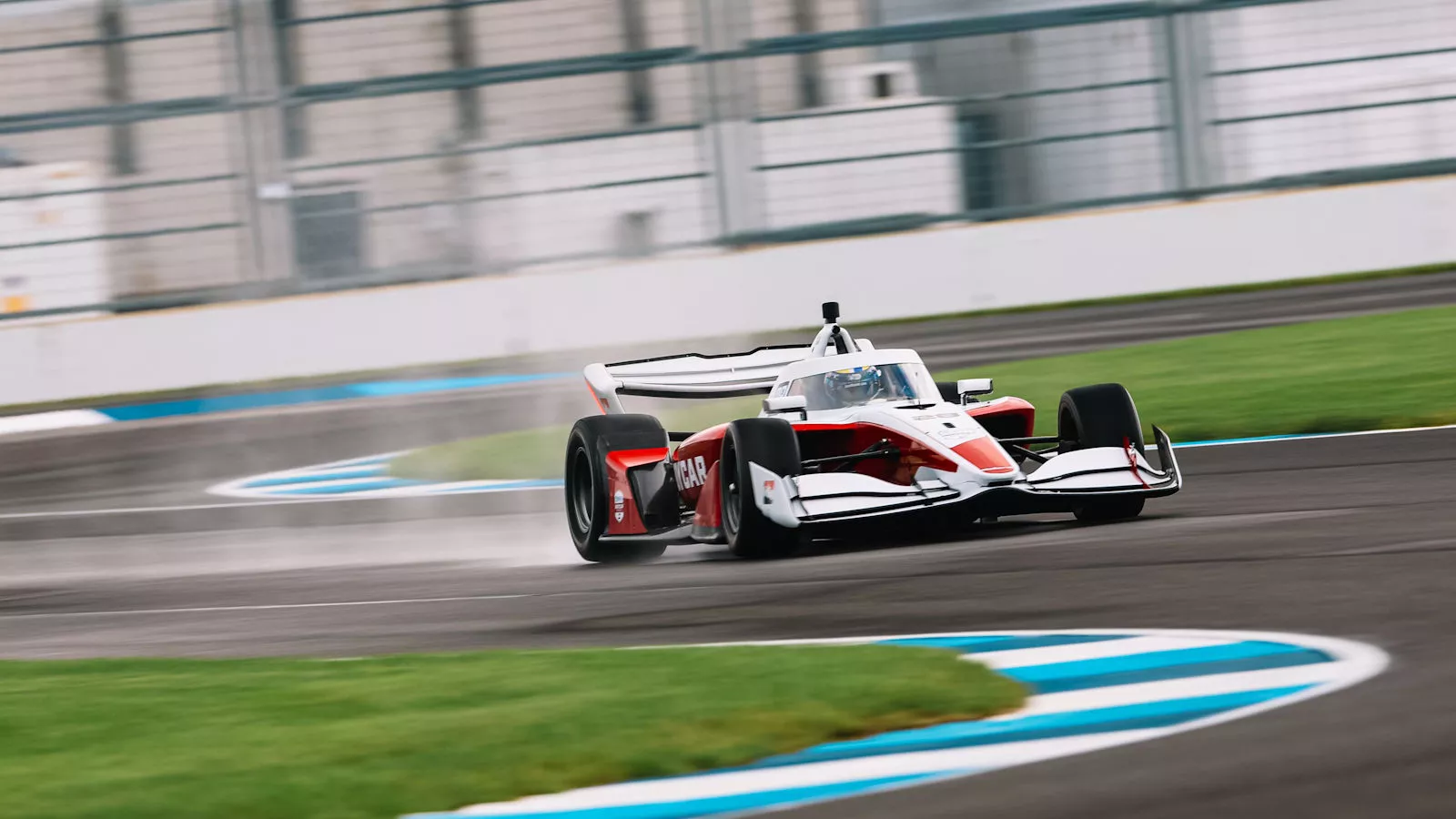
Alexander Rossi took to the wheel of the IR-28 for its maiden laps around Indianapolis Motor Speedway - Image Credit: Penske Entertainment - James Black
Tidying up the wake
F1 inspiration aside, the IR-28 has another feature that should prove pivotal in cleaning up the turbulence created by the front wheel assembly and improve how the cars race wheel-to-wheel.
The aerodynamic wake, which is quite wide on the current car, makes it difficult for drivers to follow and can result in them getting stuck trying to pass once alongside.
As part of their work to resolve these issues with the IR-28, Dallara conducted Computational Fluid Dynamics (CFD) simulations with two cars to mimic these conditions and find a best case solution.
Known internally as the TWC (Tyre Wake Conditioner) this aerodynamic fairing placed behind the front wheel is designed to attend to the turbulent, dirty air that might otherwise be damaging performance to a trailing or passing car.
It also features an aerodynamically shaped but robust brace to prevent it becoming dislodged too easily, whilst there’s also a metal stay connecting the TWC to the tub so that teams can make changes to its height to suit the rest of their setup.
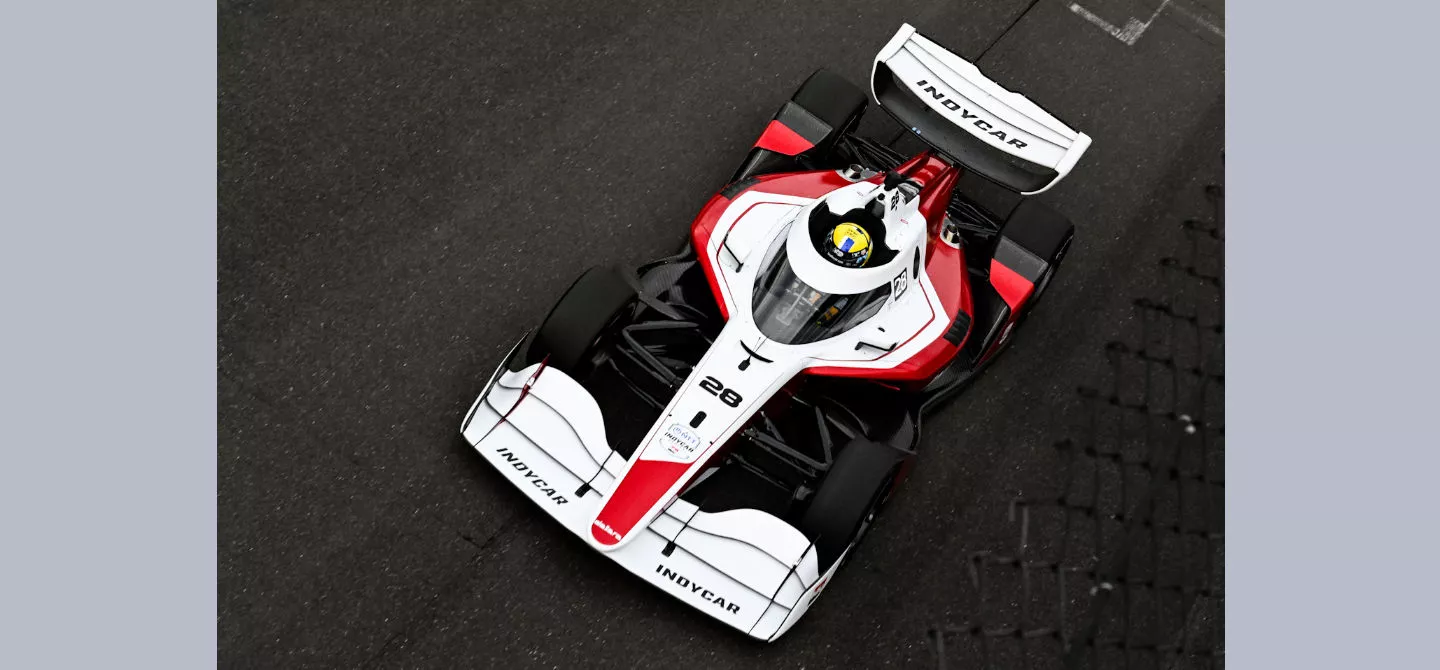
A look at the IR-28 from above as it laps the Indianapolis Motor Speedway - Image credit: Penske Entertainment - James Black
Safety first
IndyCar first added the Aeroscreen safety feature to the DW12 in 2020, having originally been designed by Red Bull Advanced Technologies for use in Formula One before the series opted for the ‘Halo’ solution instead.
Whilst the safety structure and screen have had numerous updates during that lifecycle, a ground-up redesign of the tub was always going to result in the solution being integrated into the car’s core architecture and allow for a further weight reduction.
The tub, which is now wider than before, will accommodate a wide range of driver heights and body types, whilst the aforementioned changes to the cooling system will also provide more comfort when behind the wheel.
There’s also been a focus placed on side-impact protection, to help absorb energy in high-impact crashes. Meanwhile, the overall design of the IR-28 will result in the car staying grounded during nose-up, sliding and spinning incidents.
Space inside the cockpit will also be increased by the removal of physical knobs and handles that are used to adjust the anti-roll bars, etc, as those functions are going to be electronically controlled and handled by buttons or rotaries on the steering wheel.
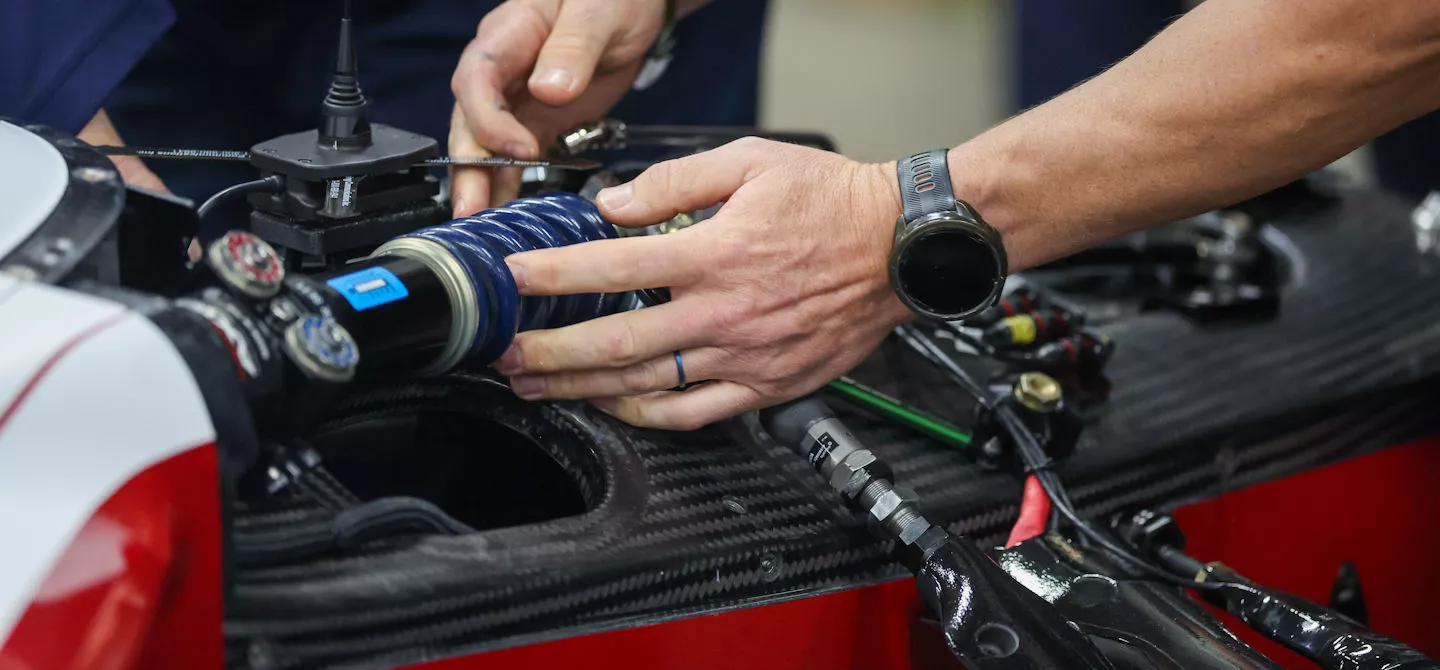
Adjustments being made to the front suspension on the IR-28 - Image credit: Penske Entertainment - Chris Owens
The IR-28 will also feature an all-new suspension setup from Custom AXIS, which is built around a lightweight, shared damping architecture and will give the drivers and teams many more options when it comes to extracting performance from the car.
The DW12’s suspension has a damper on each corner but the new system will add central inerters that connect the two front dampers together and the same at the rear, which will help to control how quickly the car pitches and will further reduce any ill effect posed by following another car due to a shift in aero balance.
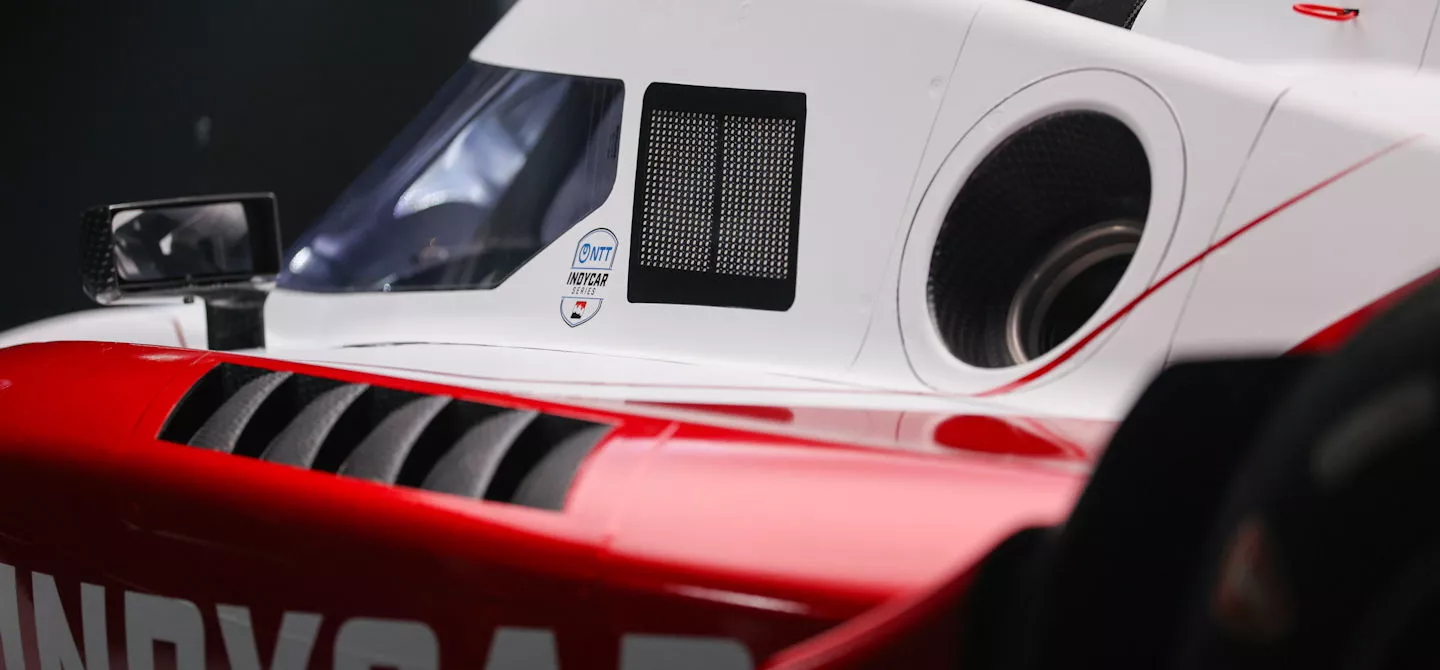
The IR-28 features a fully integrated LED information panel on the side of the cockpit - Image credit: Penske Entertainment - Chris Owens
New and returning features
The digital car position display makes a return to the side of the car a little over a decade after it first debuted and was subsequently removed in 2019, owing to issues with the system.
The new system is integrated into the car this time around though, rather than being an add-on, meaning it’ll be lighter and more efficient than its predecessor, whilst being able to deliver the information that the fans want to see.
Meanwhile, there are larger lights embedded in the rear wing endplate to alert other drivers of issues or to improve visibility in certain track conditions.
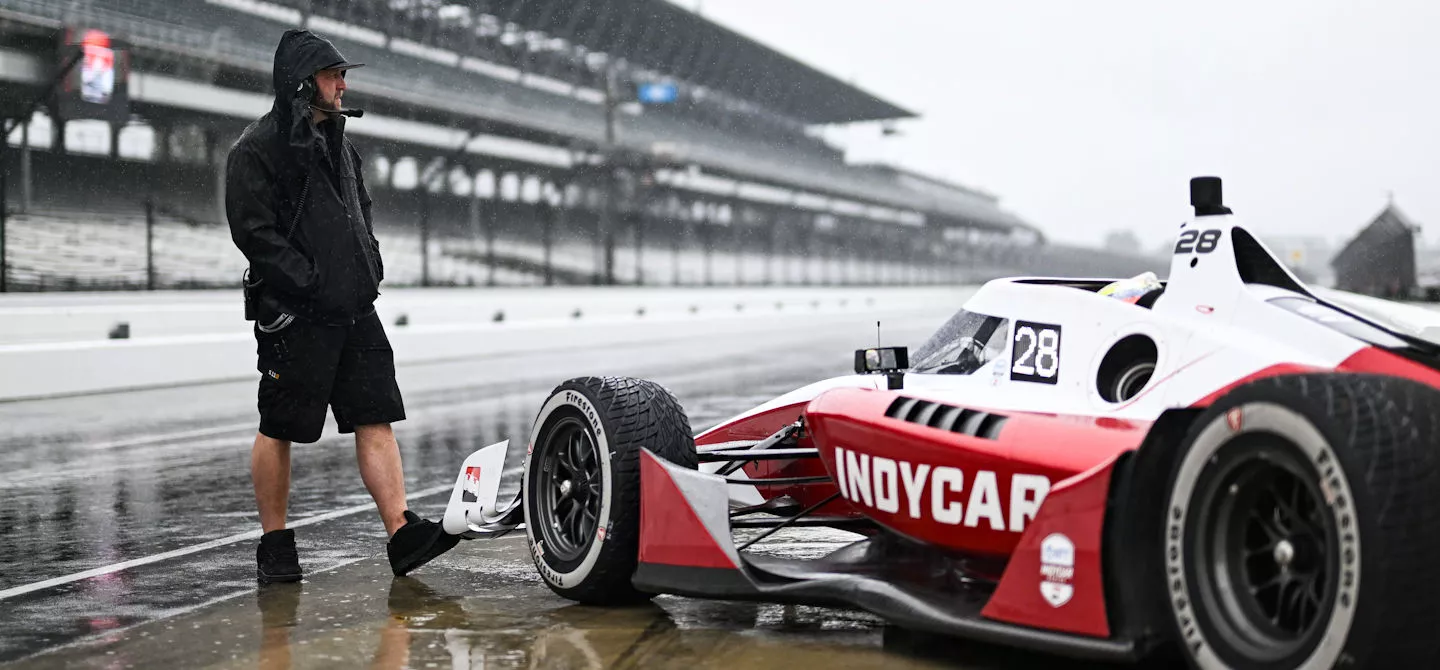
Alexander Rossi waits for clearance to go out on a wet track during testing - Image credit: Penske Entertainment - James Black
Testing times ahead
Interestingly, shortly after releasing the renders of the IR-28, the series rolled out a development car at Indianapolis Motor Speedway’s road course to start putting the chassis, suspension and aerodynamics through their paces.
Sporting a mule engine, as the manufacturers continue to work on their 2028 offerings, and ballast in place of the hybrid system, which is also still under development, there’s still a significant amount to learn about the car but this was all about validating the work that’s been done by IndyCar, Dallara, Custom AXIS, Xtrac, Firestone tyres, and other parties.
Alexander Rossi was the first driver to get behind the wheel of the IR-28 and gave it a glowing report, despite being hampered by the weather conditions.
“The car has a lot of incredible qualities that we haven’t even scratched the surface of yet. It was an incredible start and just a joy to drive.”
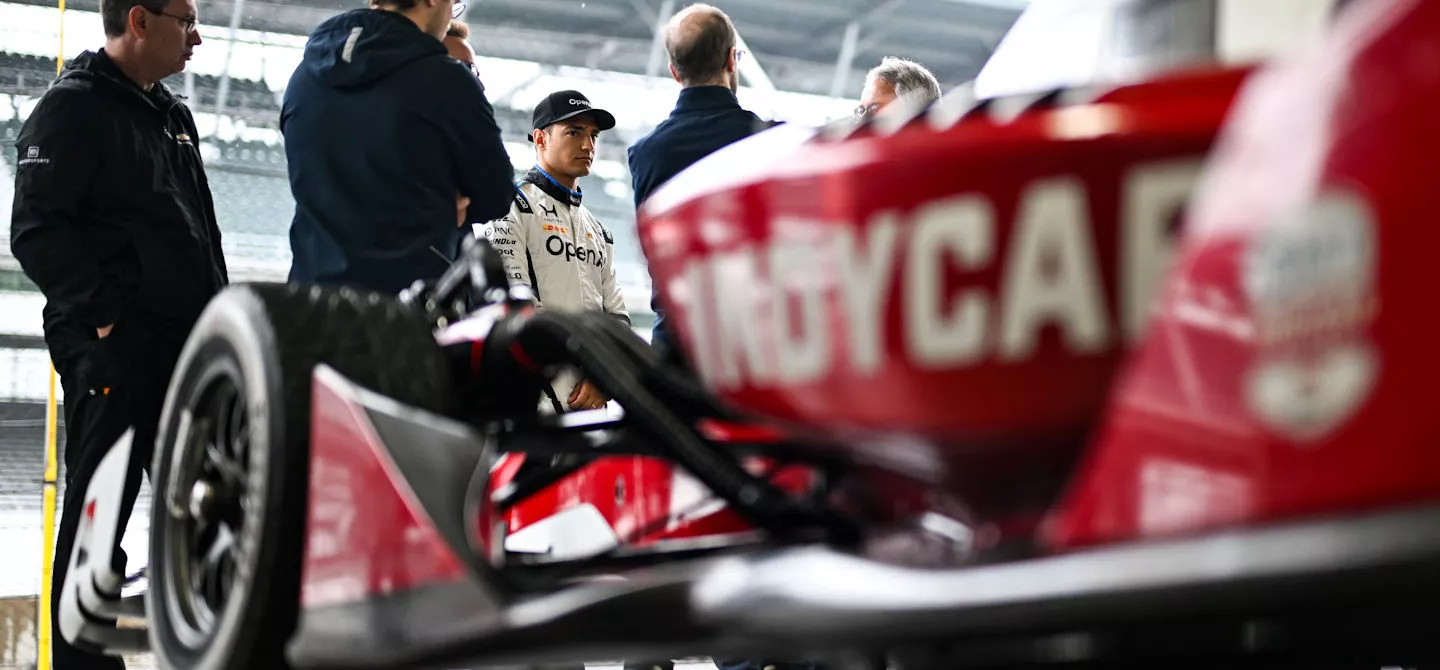
Alex Palou, waiting in the wings to get his first taste of the IR-28 - Image credit: Penske Entertainment - James Black
Five-time IndyCar champion, Alex Palou, jumped in the car for the afternoon session, which only set to whet the appetite, as conditions continued to hamper running. But, he would return to the cockpit just a few days later, in dry conditions to sample the IR-28 and provide more feedback to the development team.
"The new car is awesome," Palou said. "It basically feels like the current car, but it's built better. Everything just feels refined. When you lean on it, all the shifts, everything just feels really good."
Everyone involved will now use the data gathered to initiate the next phase of development for the IR-28, with the expectation of having a second car ready to go, in order that they can validate their expectations against the real world aerodynamic challenges.
However, before that they’re sending the car off to the Windshear wind tunnel facility in North Carolina, in order to do some full-scale testing to help correlate against the baselines that Dallara have from their scale tunnel and simulations.
Honda and General Motors are expected to join the party in the first quarter of 2027, as both are still developing their engines and are on a different timeline to those around them, whilst the hybrid system should be added a short time thereafter, as the series looks to take a step-by-step approach, rather than running before it can walk.
IndyCar and their partners clearly have a distinct timeline for the development of the IR-28. With a trip to Windshear’s tunnel, a second development car in the pipeline and the arrival of the Honda/General Motors engine and the hybrid system to come, the IR-28’s development is still in its infancy.
But, between the enthusiasm shown by Rossi, Palou’s open praise, and the raw numbers already captured, IndyCar’s first clean-sheet chassis in 16 years looks to be shaping up to deliver exactly what’s been promised: safer, lighter, quicker - and ready to rewrite the record books.