Career
Technical leadership - how senior engineering operates in an F1 team
by Xevi Pujolar
8min read

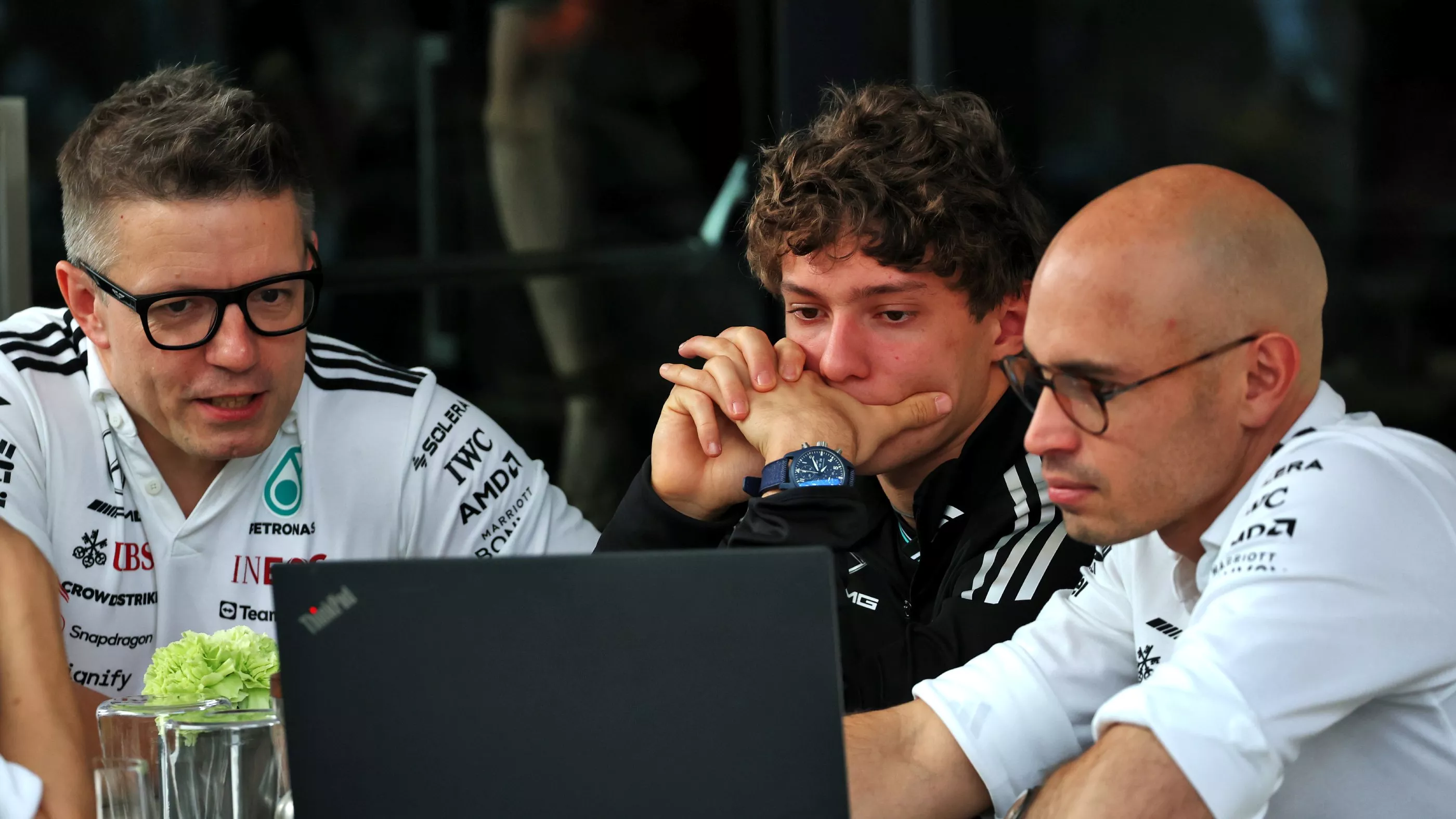
Xevi Pujolar has spent more than two decades in Formula 1, having formerly served as Sauber’s racing director and trackside engineering head. He also worked closely with numerous Formula 1 drivers including Max Verstappen, Charles Leclerc, and Juan Pablo Montoya. Now, he contributes his extensive knowledge to Raceteq.
Sign up for a newsletter and we'll make sure you're fully up-to-date in the world of race technology
Twenty-three years. Five teams. Hundreds of race weekends. Drivers who became world champions and drivers who never found what they were capable of. Calls that won races and decisions I still think about.
None of it looked the way people imagine from the outside.
This is where races are actually won and lost.
The seldom-seen architecture
Spend a week inside an F1 team at a race weekend, and the first thing that strikes you is the density. Not the noise, not the speed. The density of information flowing in every direction simultaneously.
Telemetry. Tyre data. Competitor analysis. Sector times. Weather feeds. Fuel and Energy models. Factory engineers connected live from thousands of miles away. And in the middle of all of it, a driver who just came off a fast lap and is telling you, in a handful of words, what he felt.
Three roles sit at the centre of that environment. From the outside, they appear interchangeable. Inside the team, they represent completely different modes of operating, and the distinction between them is where the performance architecture actually lives.
The Race Engineer is the primary driver/team relationship in the technical system. The radio is the visible part of the job. The real work is everything underneath it: the debrief, the direct conversation, the full management of the loop between what the driver feels, what the car is doing, and what the team needs to execute. Set-up. Tyres. Run plan. Legality. Reliability. Confidence.
This work shows up in lap times, in braking points, and corner entries, and it plays a critical role in determining a driver’s ability to maintain optimal pace throughout a stint, particularly when faced with uncertain conditions. If the driver is not confident, the performance is already compromised before the lap even begins. The race engineer is, at its core, a trust architect.
Working alongside him is the Performance Engineer, operating on a different axis. Where the race engineer manages the system, the performance engineer diagnoses it. Data. Telemetry. Input from multiple specialists across aero, vehicle dynamics, tyres, and power unit. The job is finding the real limitation inside an enormous volume of information. Not two reference laps. Every lap. Out-laps, tyre preparation, degradation trends, our data mapped against direct competitors, patterns across track layouts and conditions.
Something shifted significantly here over the past decades. With testing now severely restricted and regulations so tightly controlled, the performance gap between cars at the front has compressed dramatically. What used to live purely in car development now increasingly lives in the driving itself. Milliseconds in corner entry behaviour. Consistency across a stint. How a driver loads the tyre. The performance engineer today is analysing the driver-car system, not just the car. That changes what good analysis looks like.
Above both sits the Chief Race Engineer. When I stepped into that role, the nature of the job changed completely. It is no longer about one car. It is about two cars, two engineering crews, the entire trackside operation, and the live connection back to the factory. The responsibility shifts from managing performance to ensuring alignment. Making sure the two sides of the garage are working toward a common objective. Making sure information flowing to the factory is clear, honest, and actionable. Making sure decisions are being made based on what the data actually shows rather than what a department wants to believe.
Three roles, three distinct functions. Supported by domain specialists, they collectively define the car’s decision architecture throughout an F1 race weekend.
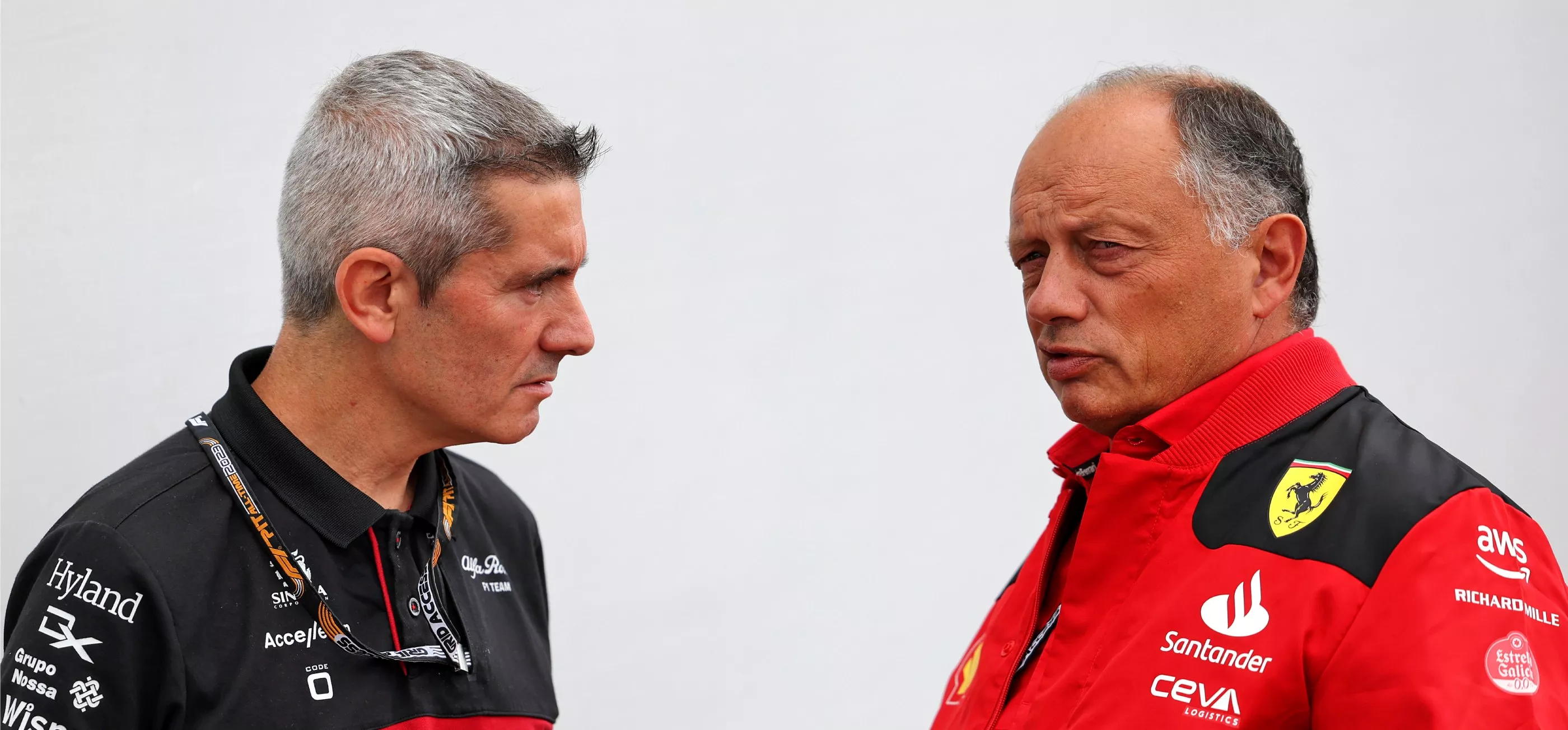
Xevi Pujolar (L) with Ferrari’s team principal, Fred Vasseur
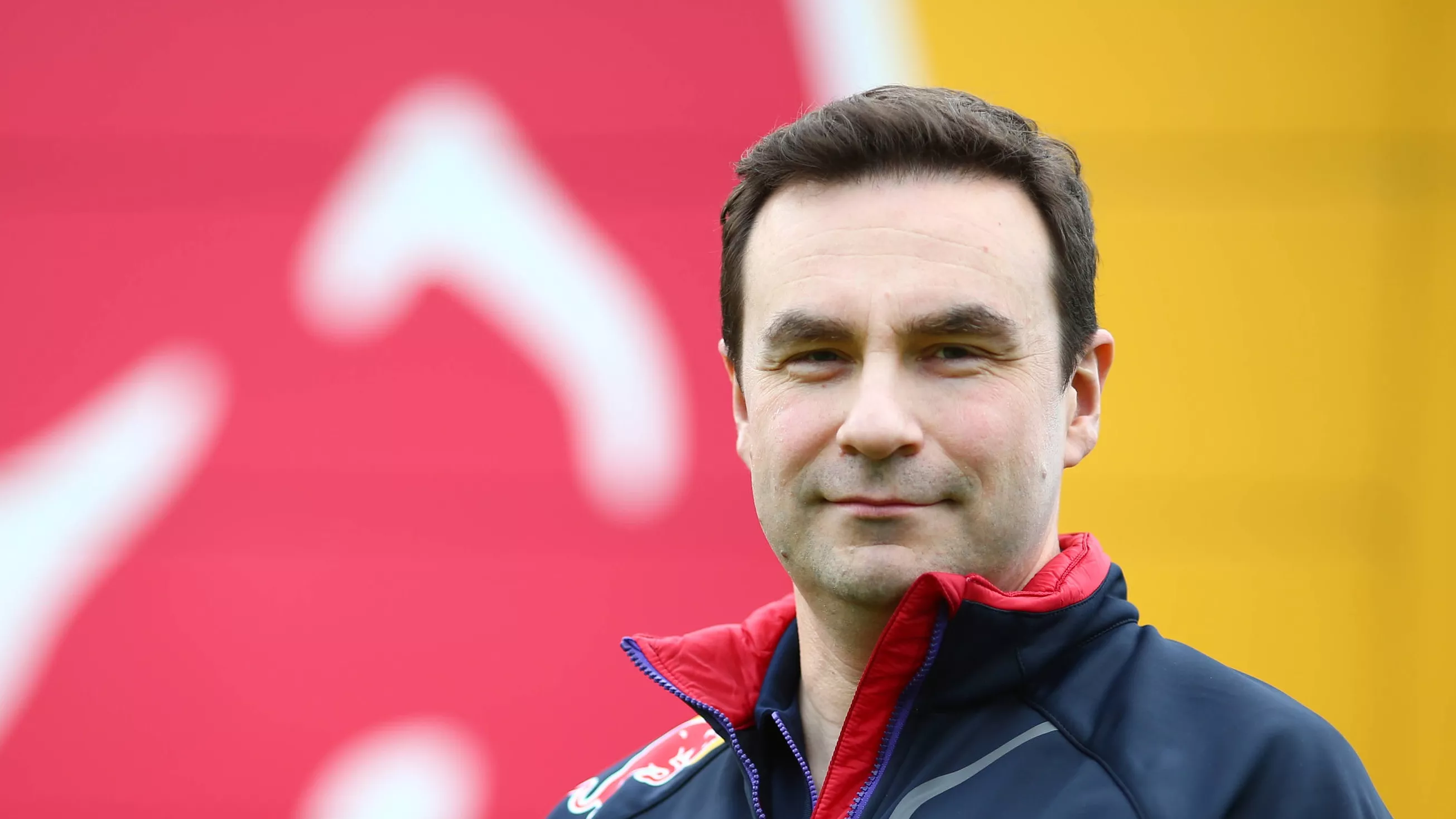
The translation problem
Understanding the roles is one thing. Understanding what they actually do in practice is another.
A driver comes off a fast lap. In the debrief, he says: rear instability on entry. No confidence through the high-speed section. That sentence contains real performance information. It does not contain a solution.
The senior engineer's job is to translate one into the other.
That means cross-referencing subjective feeling against the full data set. Not looking for confirmation of what the driver described; looking for the root cause underneath it. Is the problem due to an aerodynamic sensitivity? A mechanical platform inconsistency?
Each of those has a different solution. Misidentify the dominant contributor, and you invest resources in fixing the wrong thing. In F1, under the budget cap, with limited windtunnel allocation and finite development capacity, that is a serious cost. Not just financially. In time, in race results, in championship points that do not come back.
Once the direction is identified, it travels back to the factory through structured debrief cycles. Multiple areas may need improvement simultaneously. They cannot all be pursued with equal resources.
Choosing what to prioritise is a leadership decision, not a technical one. It is one of the highest-leverage calls a senior engineer makes.
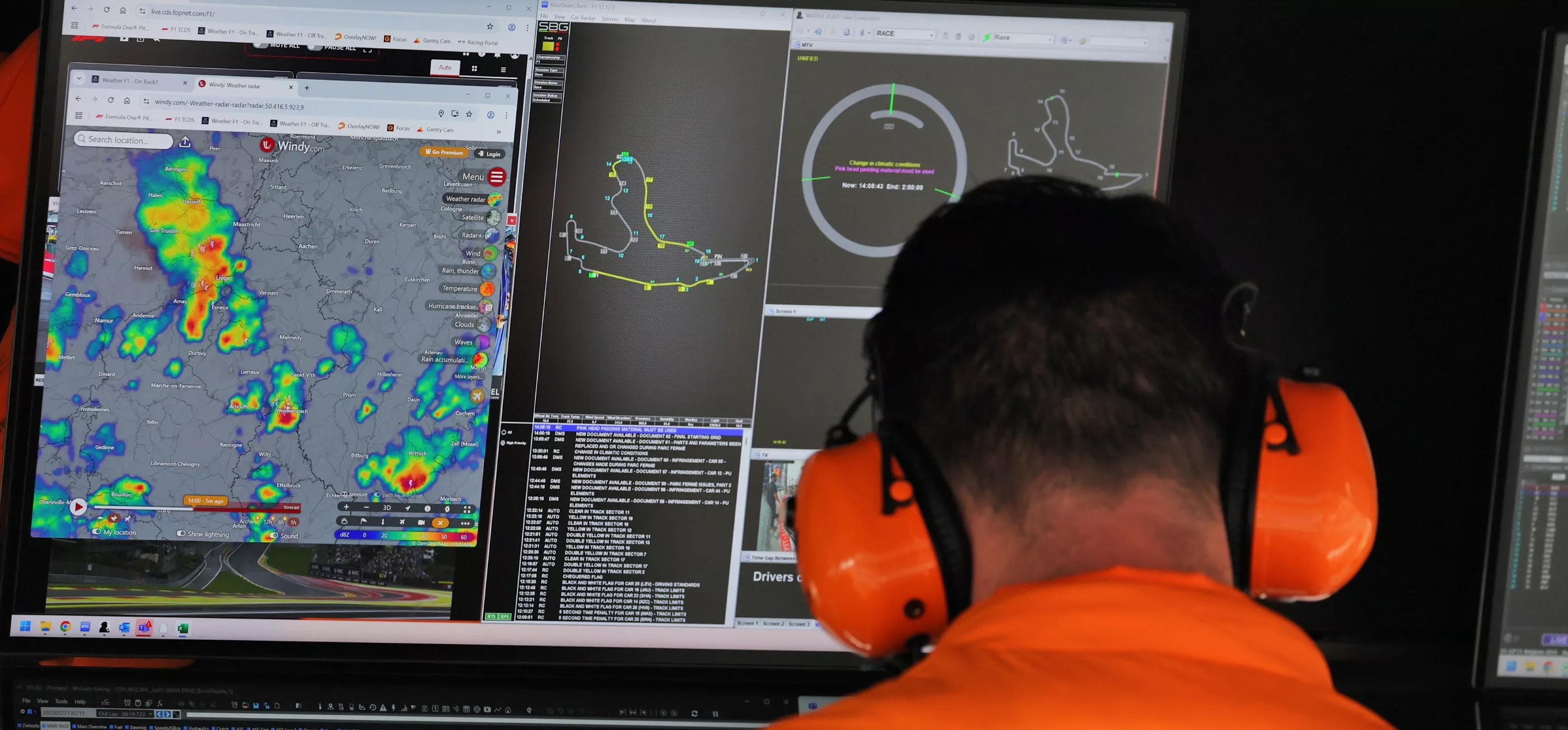
A McLaren engineer looking at live weather data on the pit wall at Spa-Francorchamps
.webp?cx=0.5&cy=0.5)
The variable simulation problem
Modern F1 teams arrive at a circuit having already explored hundreds of setup configurations in simulation. The theoretical direction is often locked before the car is unloaded from the truck.
But simulation has a hard limit that no amount of computing power resolves. It cannot fully model the driver.
I have worked closely across a career with drivers including Verstappen, Leclerc, Montoya, Pastor Maldonado, Kimi Raikkonen and Valtteri Bottas. Each brought something distinct. Not just in driving style, but in what configurations they could extract full performance from and what configurations quietly worked against them.
A direction that delivers superior numbers on paper may not translate into lap time if the transient behaviour on corner entry creates something that a specific driver finds inconsistent or difficult to manage. Some drivers adapt across a wide range of configurations. Others have genuine sensitivities to suspension stiffness changes, to aero balance shifts, to energy deployment mapping, that make certain directions untenable regardless of what the simulation shows.
We have seen this at major regulation resets. New tyre constructions. Significant aero overhauls. Some drivers adapt quickly. Others need time and workarounds. Neither is right nor wrong. It is information.
The senior engineer's job is to know which category their driver is in and to factor it into every decision about development direction, car set-up, and what the simulator programme is actually testing for.
Two criteria confirm a direction before committing to it. Correlation with track data. And whether the driver can actually extract performance from it. The second one gets skipped far more often than it should. The cost shows up months later in race results that never quite arrive.
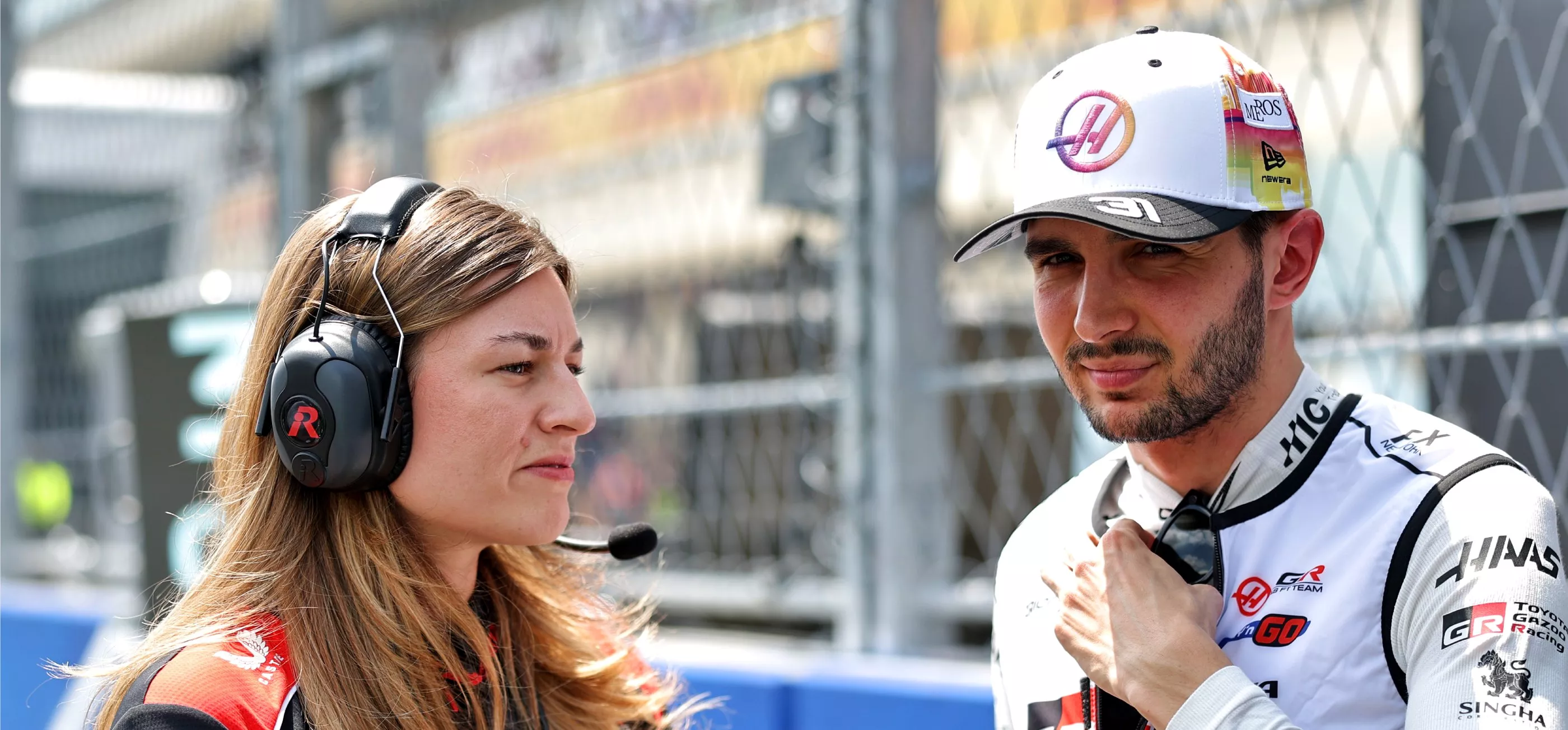
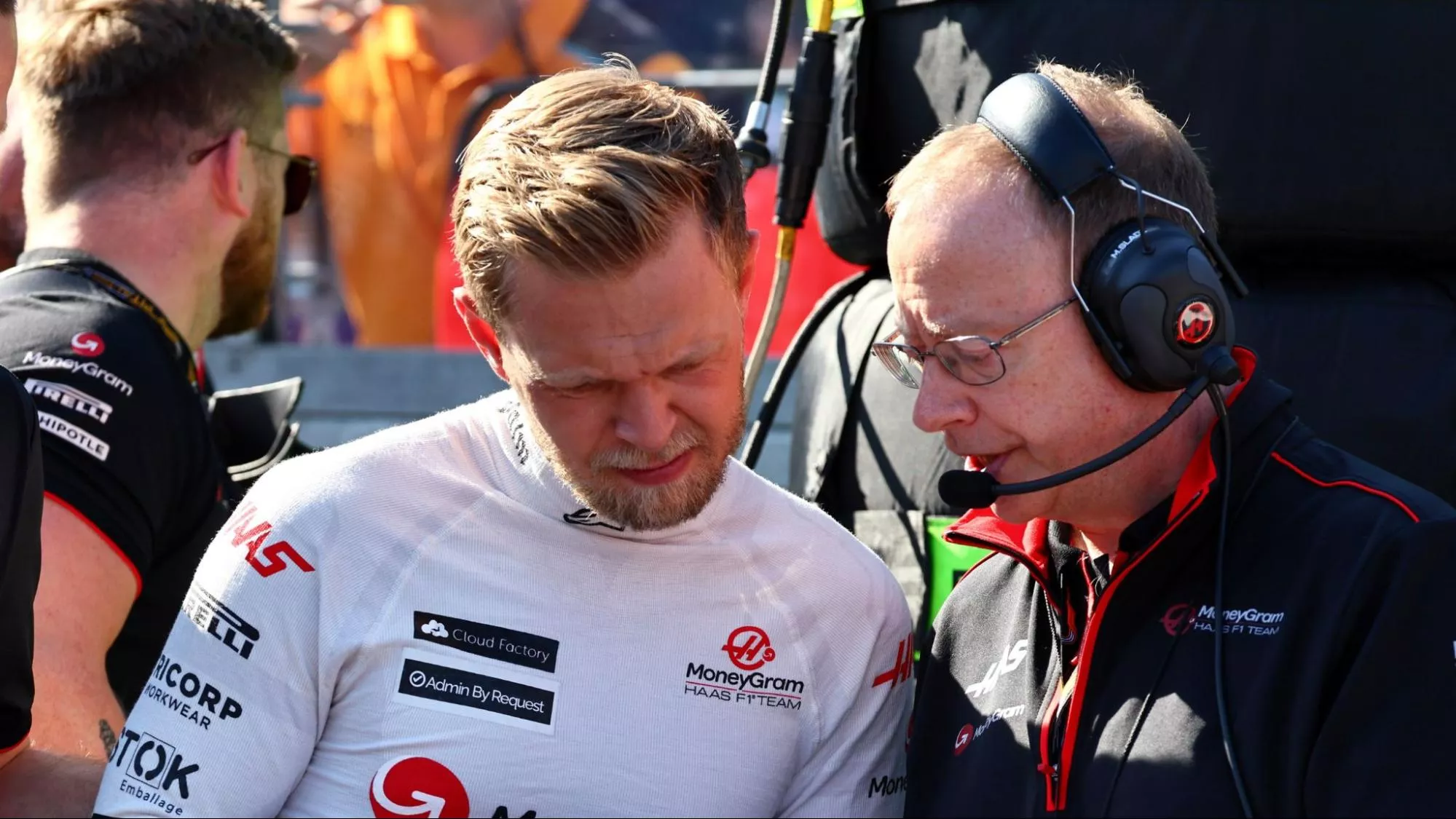
Esteban Ocon with his Haas race engineer, Laura Mueller
The internal competition within an F1 team
F1 teams are built from highly specialised groups, each with deep expertise and strong conviction about what matters most.
Aerodynamics wants downforce. Vehicle dynamics wants mechanical balance and grip. Tyre engineers want thermal consistency. Strategy wants race position. These objectives constantly pull in different directions, and the people who have spent their careers optimising each one argues for their domain with conviction.
Senior engineering leadership has to arbitrate between them. Not through politics. Not through whoever argues loudest in the debrief. Through a methodology that is visibly anchored in overall car performance and race outcome.
When the pressure is high and departments are in genuine disagreement about development direction, it becomes surprisingly easy to forget.
There are also periods where the direction is genuinely unclear. Where no single answer is obvious. Where a compromise is required and more reference data is needed before committing. Those moments demand something specific from leadership: the ability to hold steady, communicate honestly, and to ask the team for their patience without losing momentum.
The teams that fragment are not usually the ones that lack talent. They are the ones where internal friction was allowed to grow unchecked. Where departments started optimising against each other instead of against the real opponent.
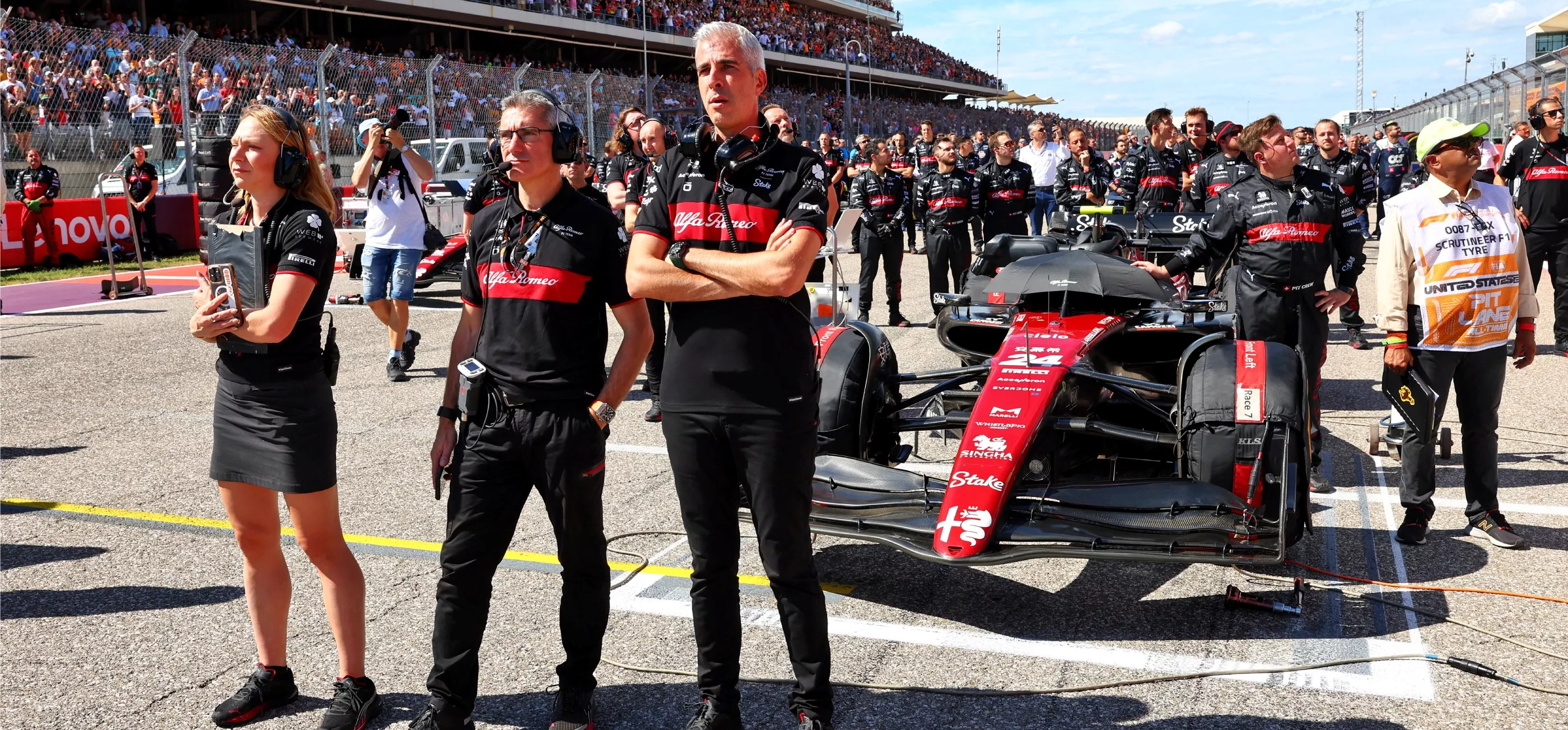
Alessandro Alunni Bravi (R), with Xevi Pujolar and Ruth Buscombe (L) on the grid with Alfa Romeo
How the weekend plays out
From a senior engineering perspective, a race weekend is not a sequence of sessions. It is a continuous decision process that began weeks before the car arrived at the circuit.
By Friday morning, most decisions are already framed. The simulation work is complete. The scenarios are mapped. The competitor analysis is built. The weekend is not about figuring out what to do. It is about validating assumptions, refining direction as new data arrives, and executing with precision.
Between sessions, analysis cycles run in parallel across trackside and factory, with decisions being prepared asynchronously, built, tested, and structured before the moment they are needed.
Then, during the race, they execute synchronously. In the high-pressure moments – such as a safety car, a weather shift, or a strategic inversion - there is no time for deliberation. The decision architecture has to already be in place. The confidence in the direction has to already exist. The team has to already know, without discussion, what the call is.
When that preparation is complete, execution becomes immediate. Clean. Without friction.
This is what elite performance in F1 actually looks like. Not reacting faster. Preparing so completely that reaction is no longer required.
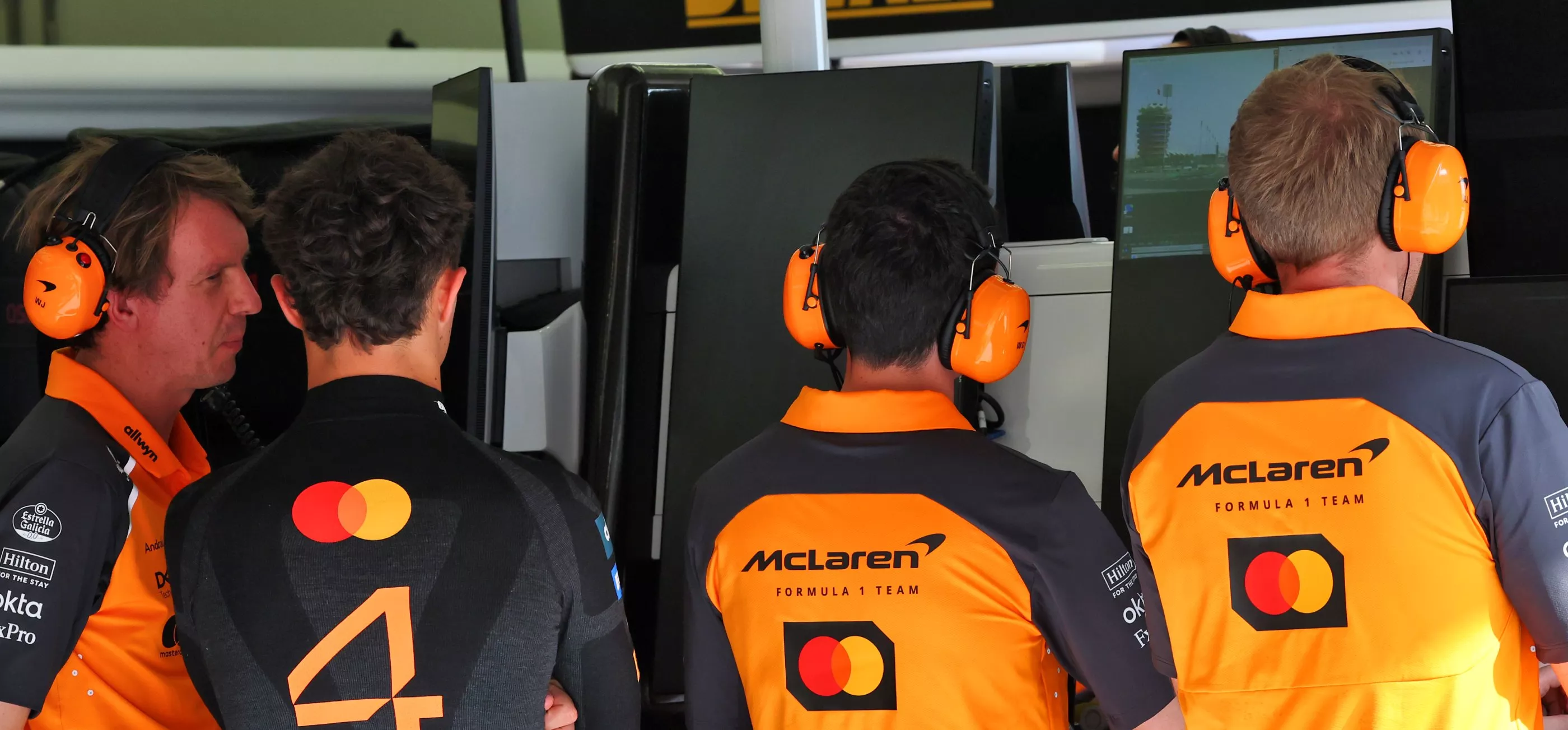
Lando Norris examines the data before entering the cockpit of his McLaren
What 23 years in F1 actually means
The technology in this sport changes every season. The computational power available to engineering teams today would have been unimaginable when I started. The next shift is already underway.
AI-enhanced analytics are beginning to compress what currently requires large teams into something a smaller, more concentrated core can execute with far greater precision. Operations rooms will be reduced in size.
Not because decisions get simpler. Because the tools become capable of supporting a smaller group of senior decision-makers with more analytical power than any current team can access.
The differentiator in that environment will not be data. Every team will have data.
It will be decision speed. The ability to process information and act on it without hesitation, under pressure, when the stakes are highest.
That has always been the variable at the front of the grid. The technology is simply making it more visible.
What does not change, across every era of this sport, is the human system underneath it. The clarity of roles. The quality of the driver relationship. The internal alignment. The ability to make high-stakes decisions with speed and confidence because the architecture supporting those decisions was built before the pressure arrived.