Car
The F1 technical battle erupts: how Ferrari, McLaren, Mercedes and Red Bull changed in Miami and Montreal
by Rosario Giuliana
5min read
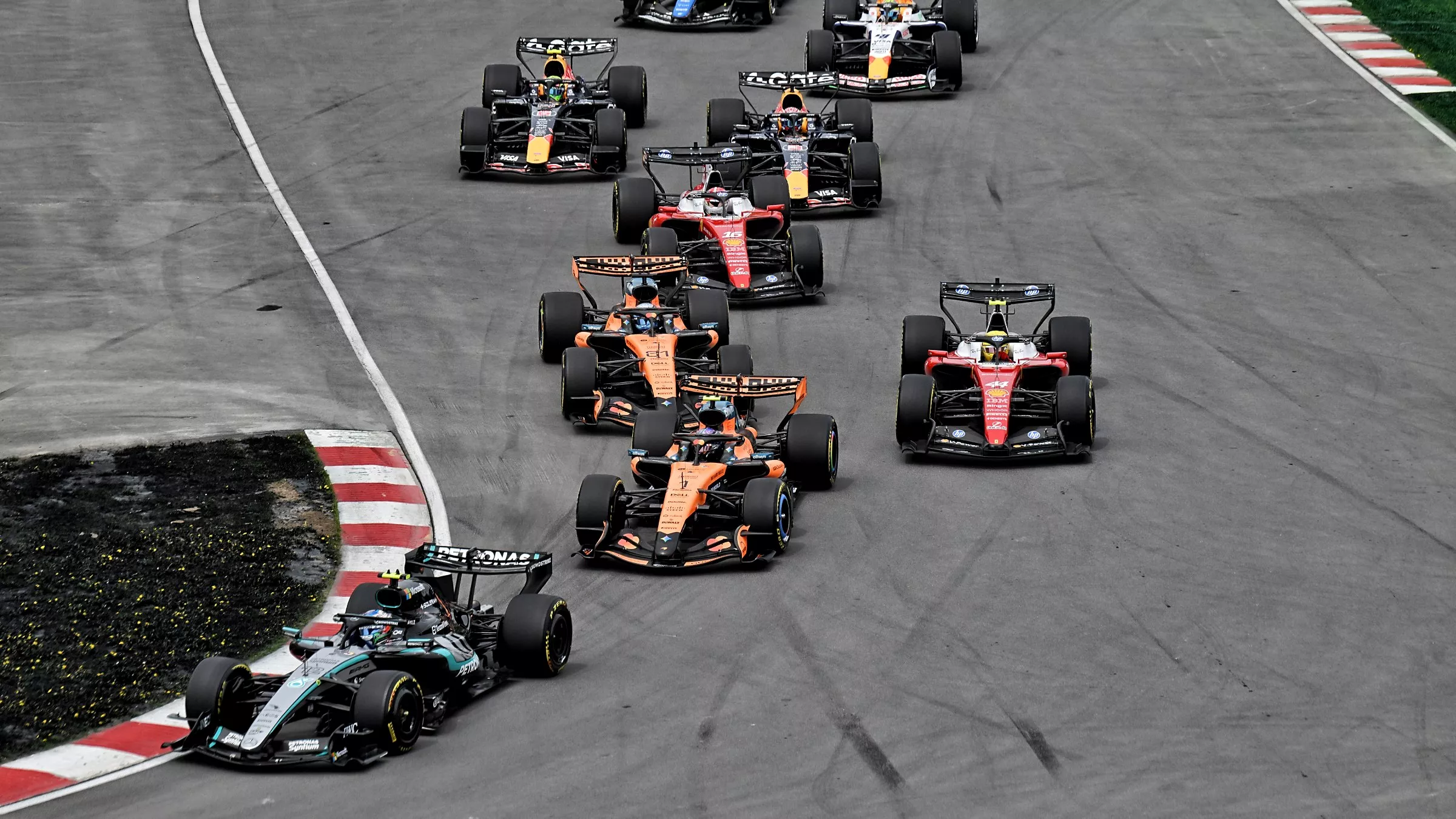
The Miami and Montreal Grands Prix represented the first real technical turning point of the 2026 Formula 1 season with upgrades across the board - and the ‘big four’ teams of Ferrari, McLaren, Red Bull and Mercedes led the way.
Sign up for a newsletter and we'll make sure you're fully up-to-date in the world of race technology
Between new front wings, increasingly sophisticated floors and aerodynamic solutions pushed to the limits of the regulations, the technical landscape of the championship is changing rapidly.
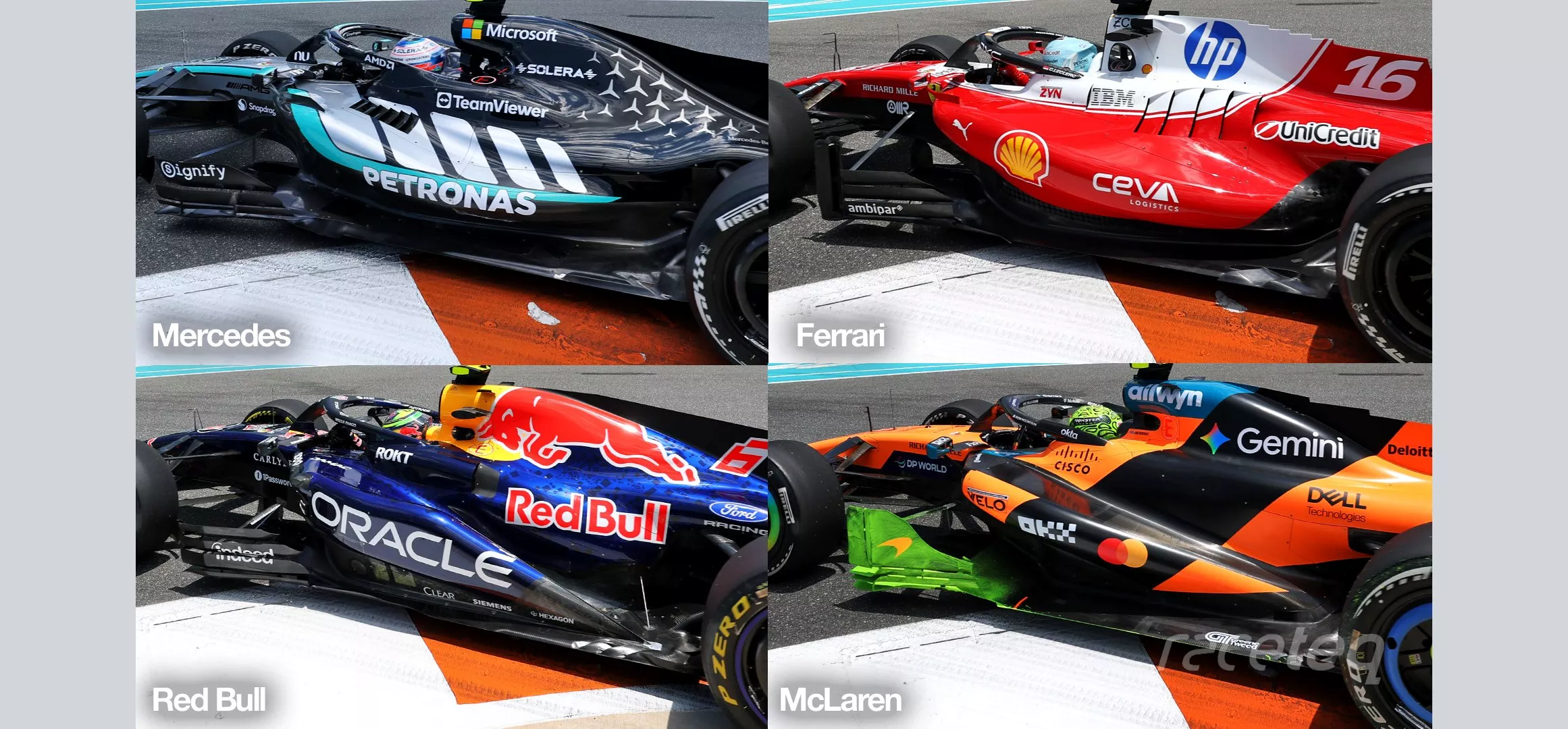
An image showing the four leading teams - Mercedes, Ferrari, Red Bull and McLaren as their sidepods and floors appeared in Montreal
Mercedes: the first real package arrives in Canada
Mercedes was the only top team not to introduce significant upgrades in Miami, preferring instead to focus all resources on the package brought to Montreal.
The main work focused on the floor and especially on a completely revised front wing concept from an aerodynamic standpoint. A solution that, in some ways, recalls Red Bull's philosophy: the main plane is much flatter and less curved outward, while the endplates have also been completely redesigned with different connections.
In 2026 the front wing has become one of the most complex elements to develop due to the integration with active aerodynamic systems. It is no longer just about generating downforce, but also about ensuring proper airflow management in the different dynamic configurations of the movable flaps.
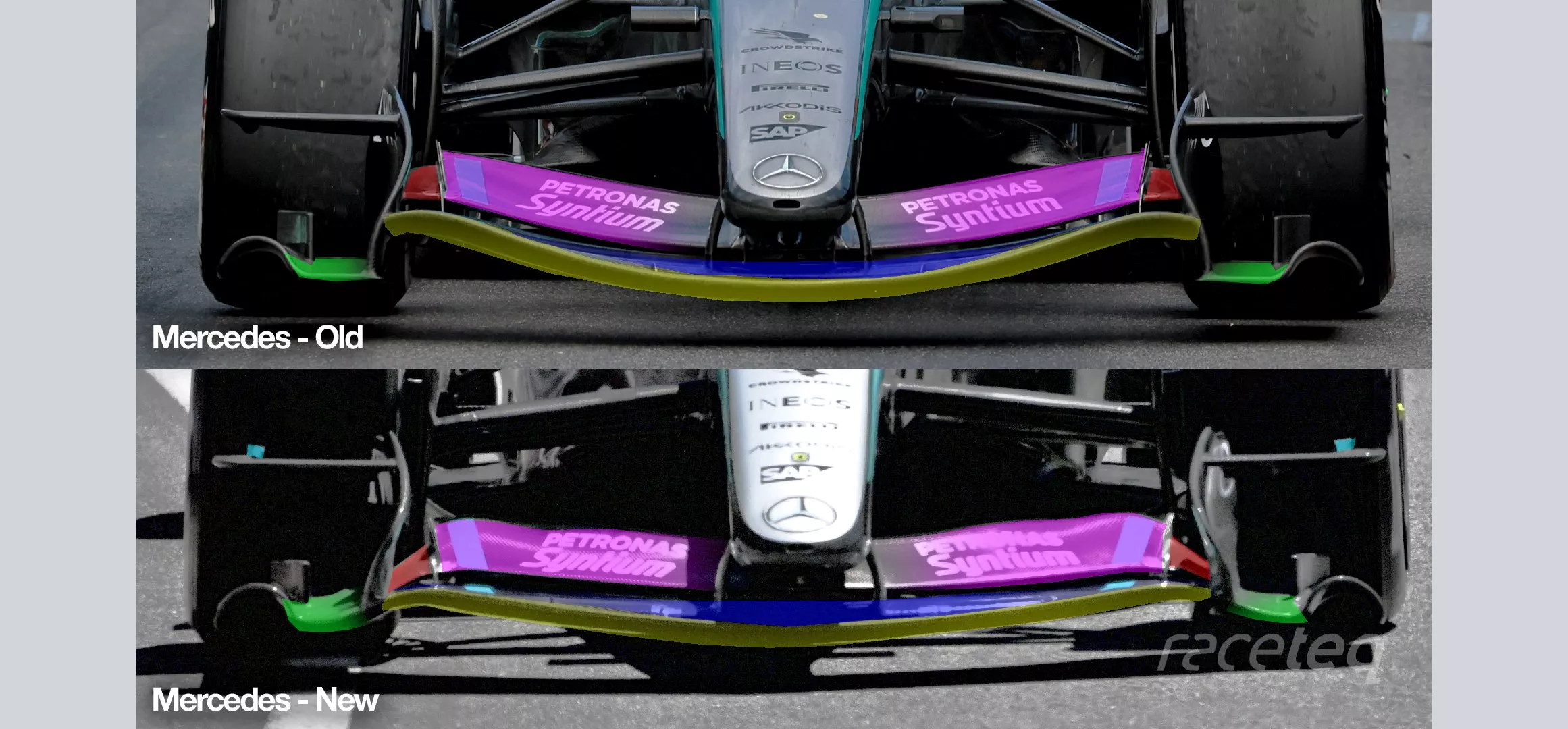
Mercedes’s new front wing (below) saw almost every surface change
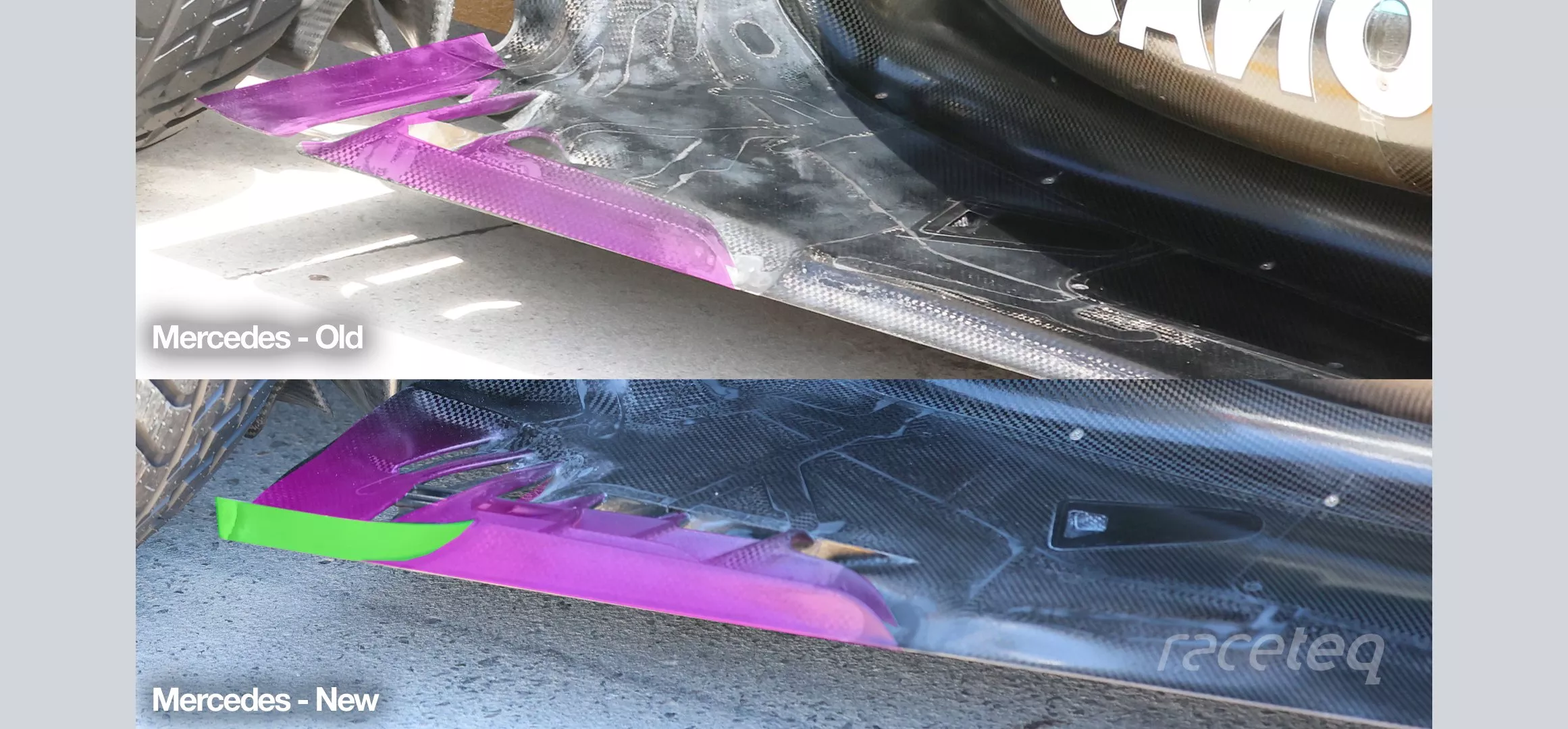
New slots and channels (bottom image) channel airflow to the diffuser and work air around the rear tyre
McLaren: updates in Florida and Canada with a new front wing but some ‘issues’
McLaren also worked extensively on the front wing, introducing a specification very different from the one used since the start of the season, similarly to Mercedes in Canada.
The Woking team modified the position of the actuator: now the mechanism that opens the front wing in Straight Mode acts on the second flap instead of the third, radically changing the system’s kinematics.
A seemingly small modification, but actually a very important one for load management during the various opening and closing phases of the wing.
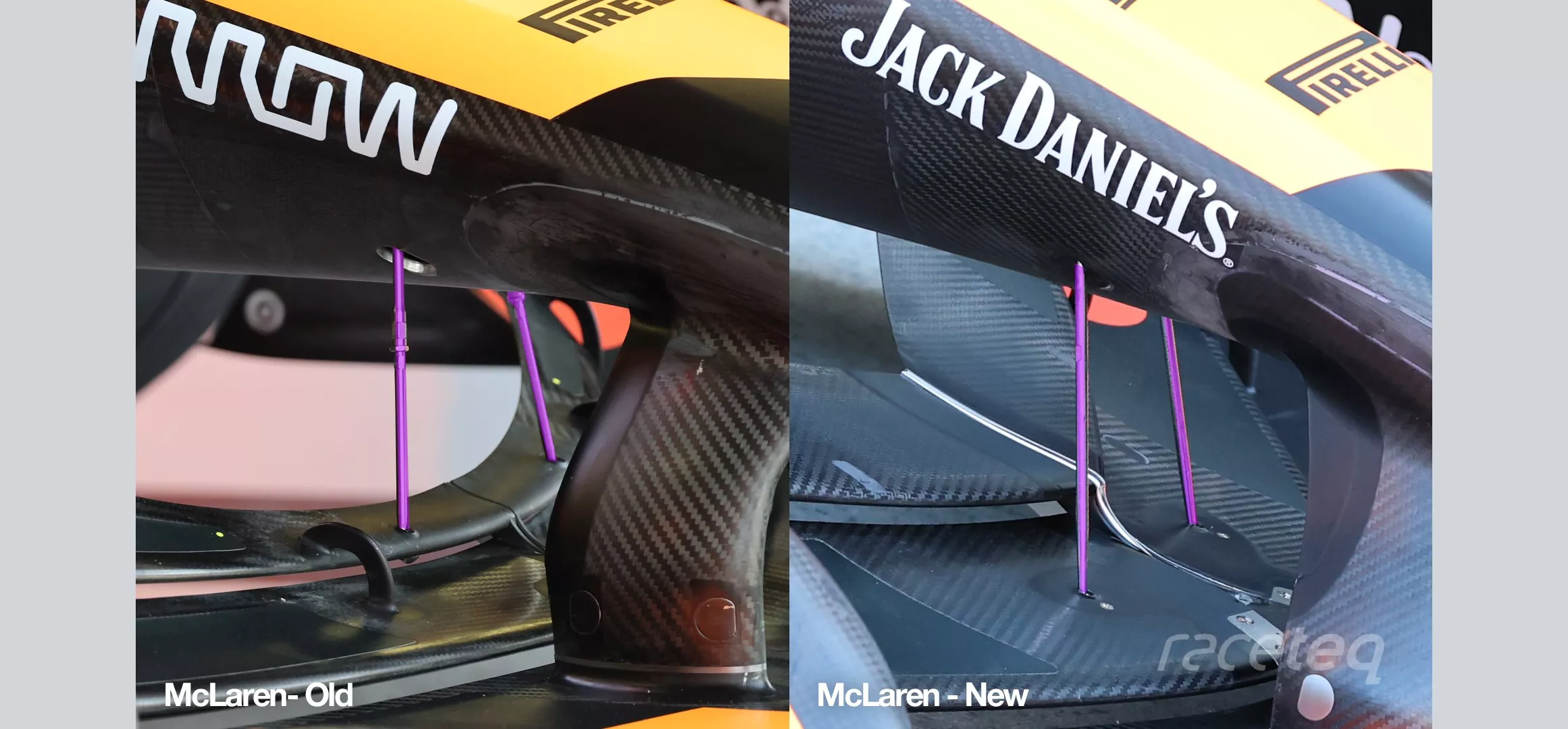
The actuator on the McLaren front wing changes which flap opens in Straight Mode (right)
/xpb_1408348_hires-(1).webp?cx=0.5&cy=0.5)
However, in Canada, the new specification was temporarily set aside. The data collected on track did not yet show optimal correlation, especially in the phases where the flap tends to close completely.
Previously in Miami, the MCL40 had received its first new parts after the car had remained virtually unchanged during the first part of the championship.
The encouraging performance in Florida was the result of a package that overall, allowed the reigning world champion car to take a step forward, with Norris fighting for victory. The most important upgrade concerned the floor and the area ahead of the rear wheels, now a crucial zone in the current generation of Formula 1 cars.
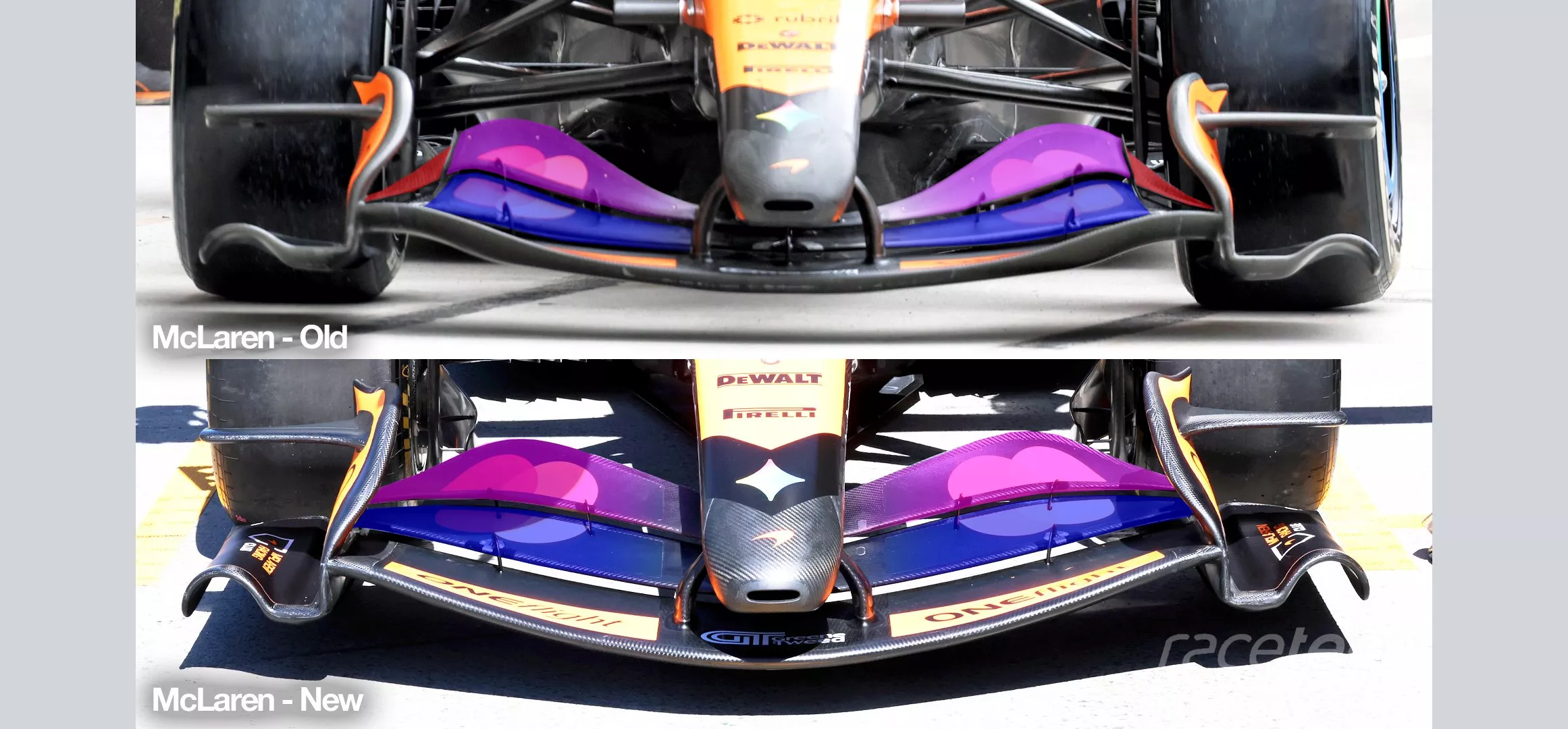
Another look at the new McLaren front wing (below) where the topmost and second flaps were reshaped in Montreal
Red Bull: the RB22 is almost a completely different car
The goal is to direct airflow towards the rear with greater energy, improving diffuser feeding.
But the real revolution came with the new tilting rear wing.
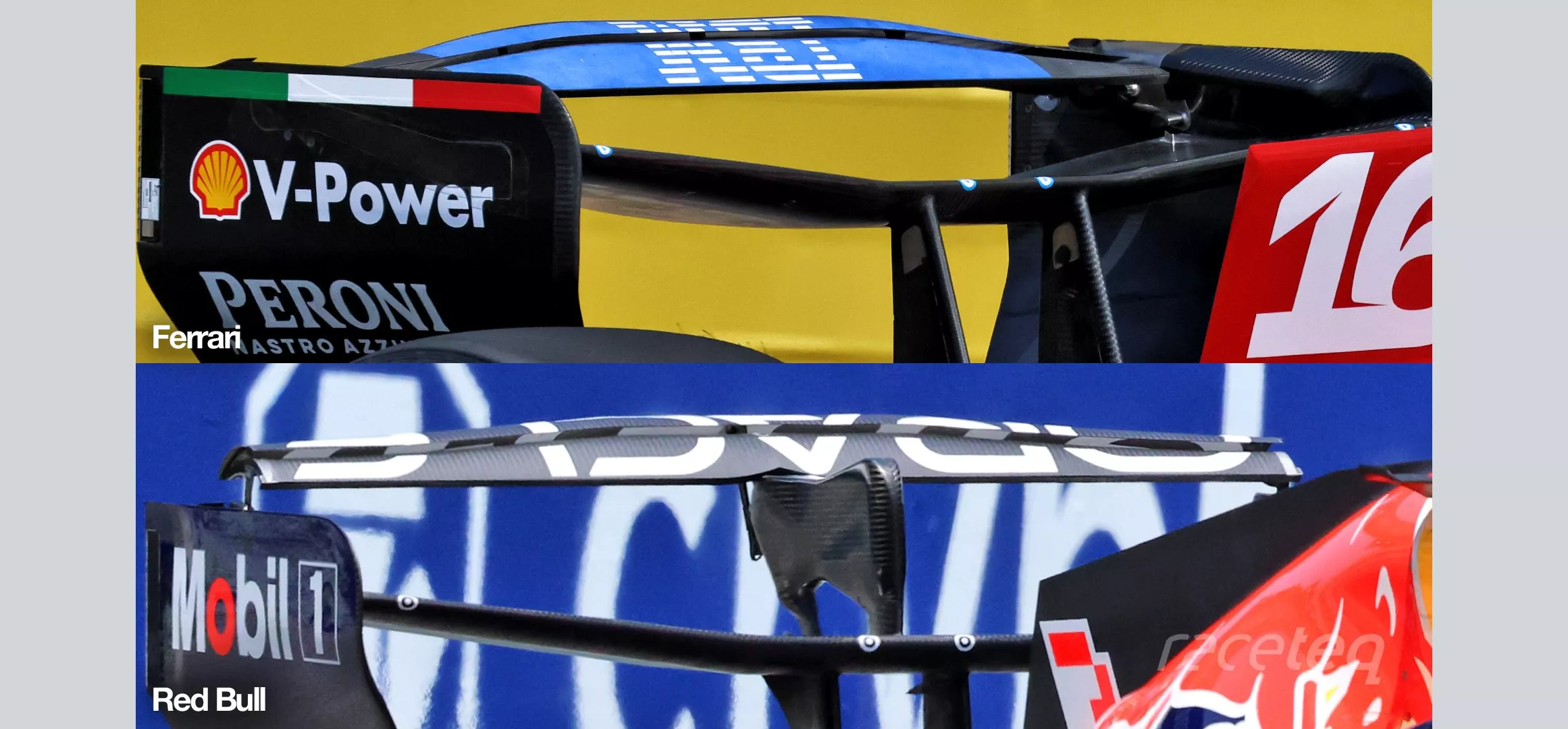
A comparison showing the upside-down or ‘Macarena’ rear wings introduced by Ferrari (above) and Red Bull (below) in 2026
However, the operating principle is completely different. Red Bull retained the central actuator, and the flap movement occurs through a rotation opposite to Ferrari’s system.
A very sophisticated solution that demonstrates how central drag reduction has become under the 2026 regulations.
Red Bull also introduced an extremely complex area ahead of the rear wheel on the floor, with highly elaborate channels and slots designed to control tyre wake disturbance and improve airflow quality towards the diffuser.
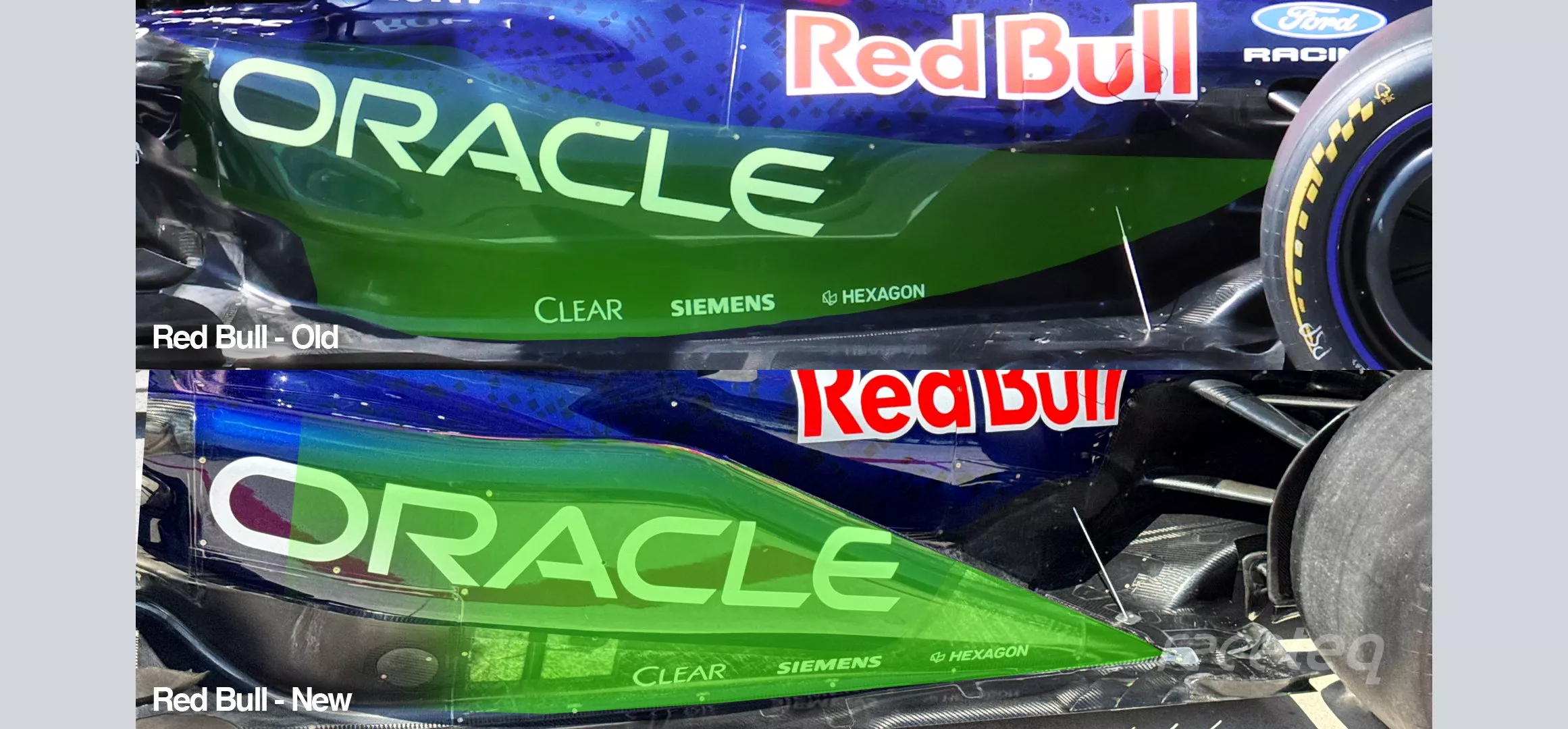
Red Bull reshaped its sidepods to channel air ahead of the rear wheel

Ferrari: benchmark-setting developments while waiting for the engine
Ferrari is interpreting the 2026 regulations in a very aggressive way from an aerodynamic standpoint.
One of the clearest examples is the ‘Flick Tail Mode’ system, introduced by the Scuderia already in the opening races and now being closely observed by all rivals.
The solution features a particular wing positioned ahead of the exhaust, designed to manage airflow in the rear area and improve aerodynamic efficiency.
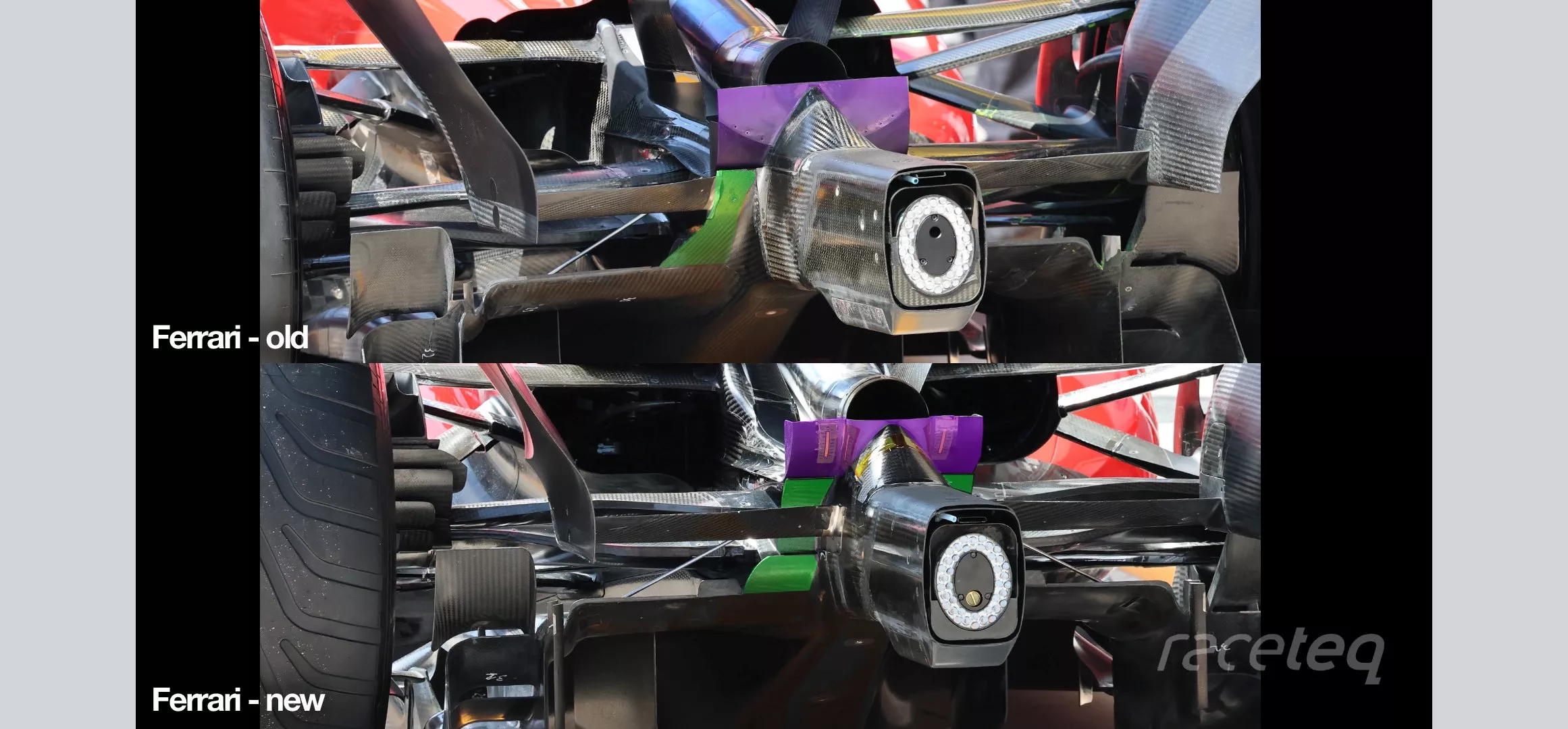
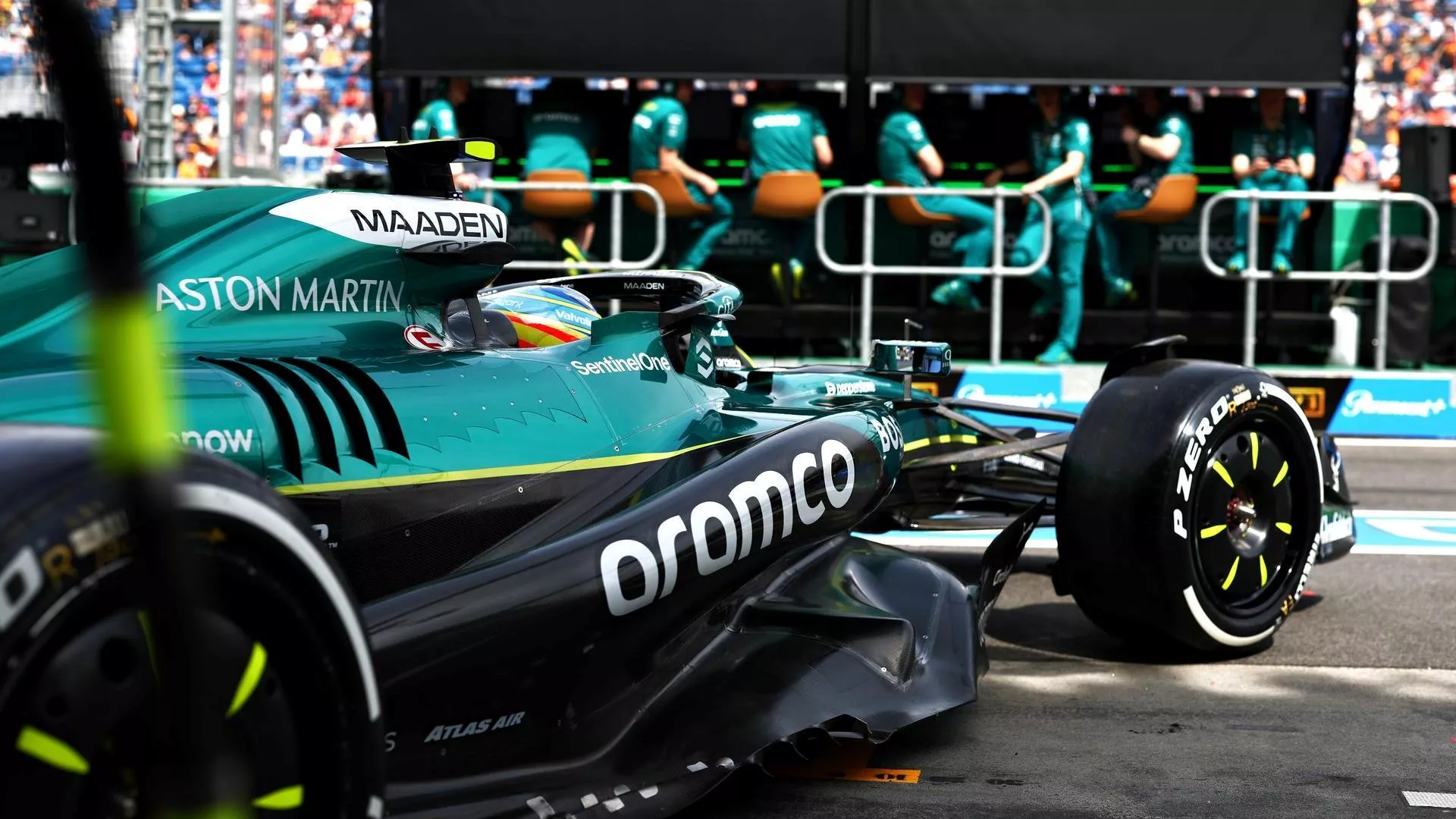
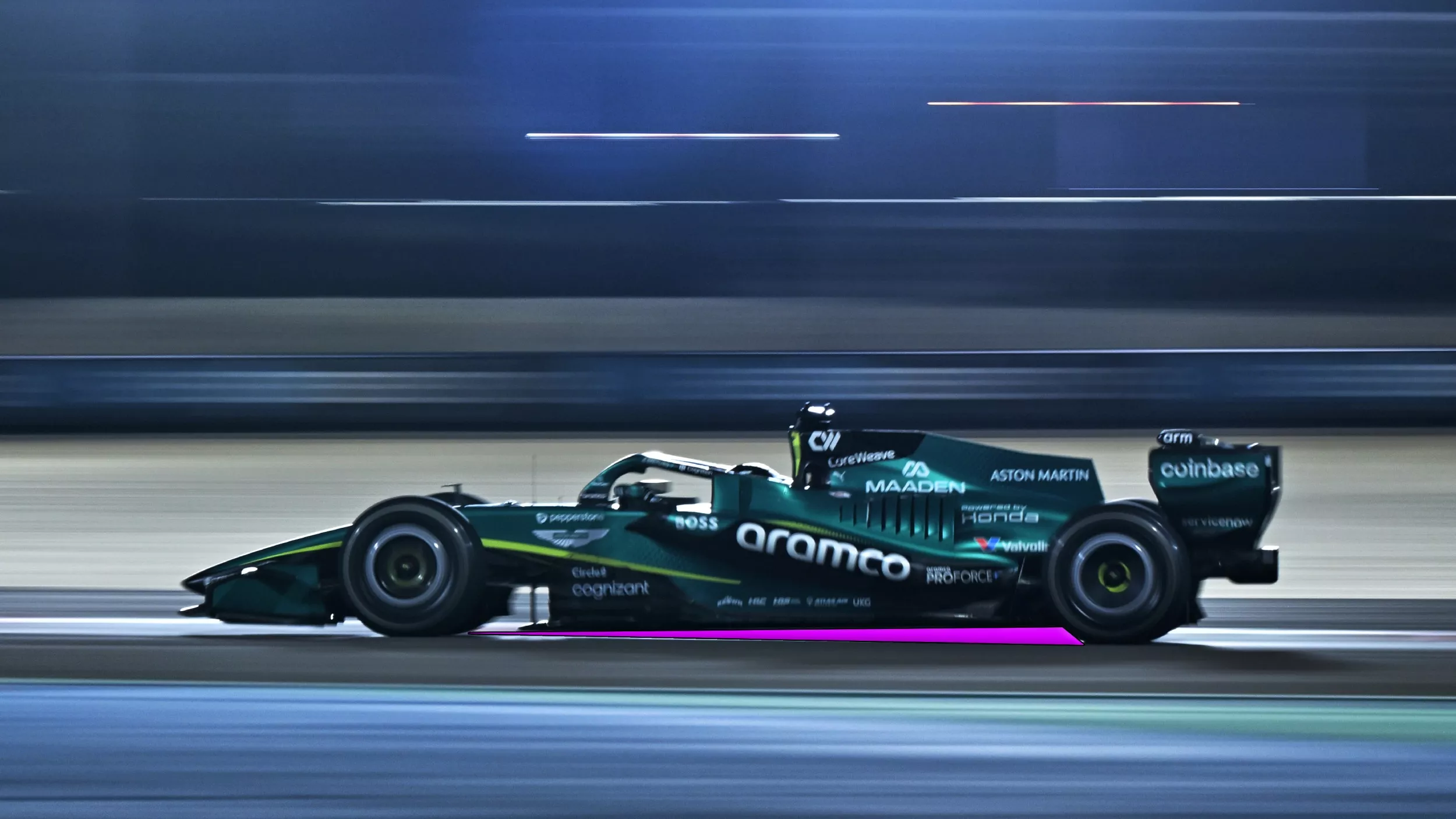
‘Flick Tail Mode’ - the wing that sits just behind the exhaust (highlighted) is a concept being explored and honed primarily by Ferrari
In Miami, Ferrari brought a major evolution of this system, exploiting the design freedom obtained by moving the differential rearward and therefore freeing up volume in the tail box. This choice allows the SF-26 to have more useful space around the terminal section of the bodywork compared to its rivals.
Mercedes, McLaren and Red Bull tried to replicate the concept, bringing their own interpreted versions with significant limitations for the American weekend. Ferrari’s rivals worked around the exhaust support bracket and could not exploit the same available space as Ferrari.
The Miami package for the SF-26 also included updates to the floor, diffuser and front wing.
Ferrari did not revolutionise the bodywork like Red Bull did, maintaining a fairly stable sidepod philosophy. The most important interventions instead focused on the lower part of the car. The front wing was updated in the outer section to improve airflow management towards the floor, while the diffuser and floor received a very extensive revision aimed at increasing overall efficiency.
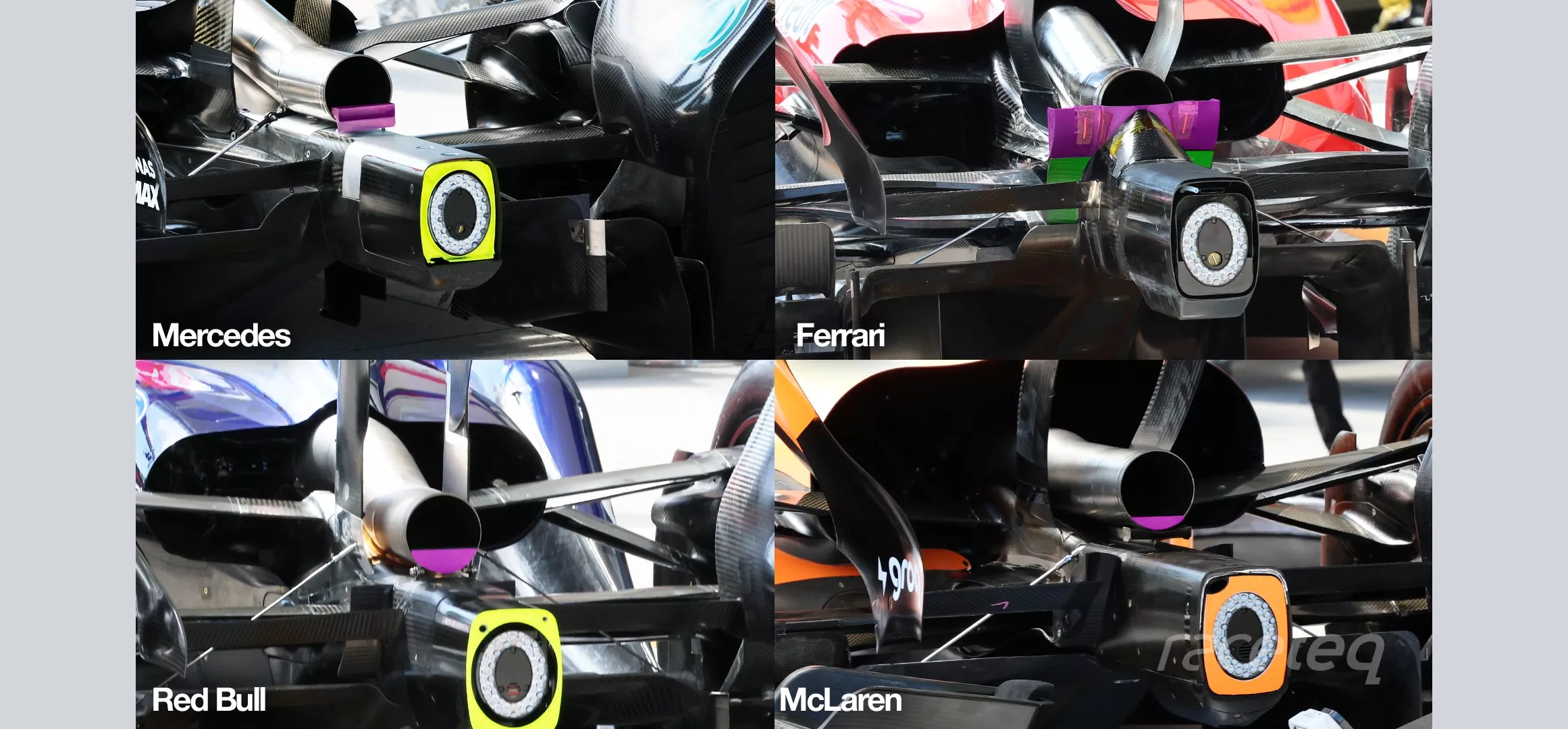
After Ferrari introduced ‘Flick Tail Mode’, rivals followed suit
Ferrari and Red Bull chose more aggressive and visually evident approaches, while Mercedes and McLaren appear more focused on aerodynamic refinement and behavioural sophistication.
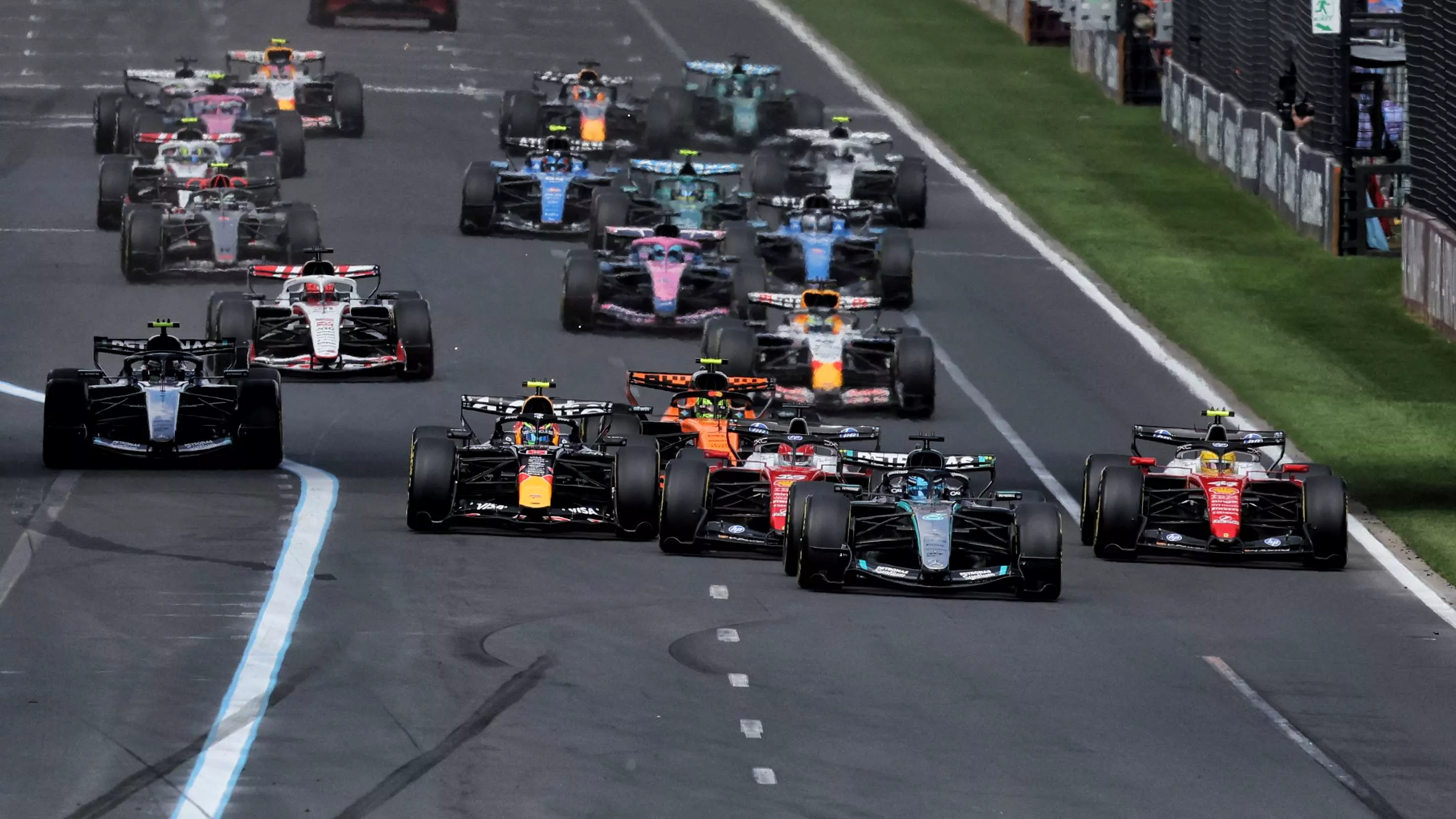
The feeling is that the real development race has only just begun, as the 2026 cars have shown a steeper development curve than expected, something only the budget cap may slow down.
.webp?cx=0.5&cy=0.5)