Formula 1 technical analysis: Ferrari, McLaren and Mercedes among teams to make major strides in Hungary
by Matthew Somerfield
6min read
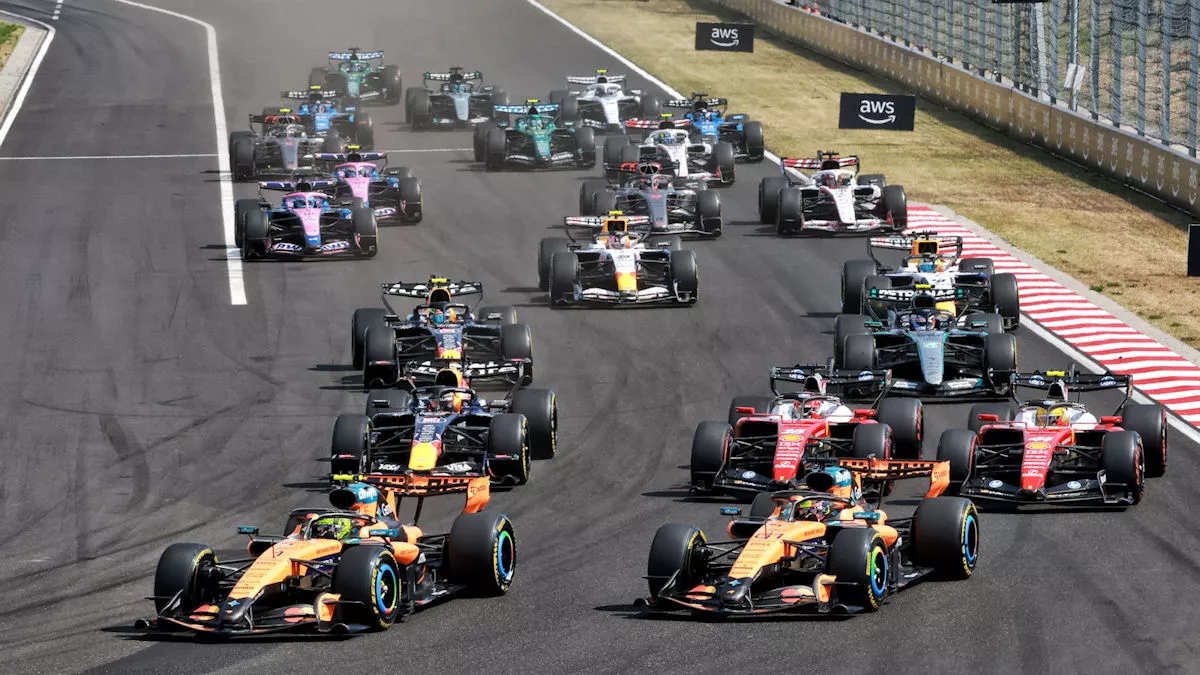
Formula 1’s teams arrived in Hungary with a smorgasbord of new parts as they prepared to do battle at the last race before the summer break.
Sign up for a newsletter and we'll make sure you're fully up-to-date in the world of race technology
The Hungaroring, which celebrated its 40th consecutive year on the Formula 1 calendar, poses a number of questions for the teams, with a heavy emphasis placed on a high downforce setup, which is why it’s often described as Monaco without the barriers.
This led to a batch of solutions to meet those demands with ideas from Monaco making a return - albeit in a slightly different guise given that active aero was available at the Hungaroring.
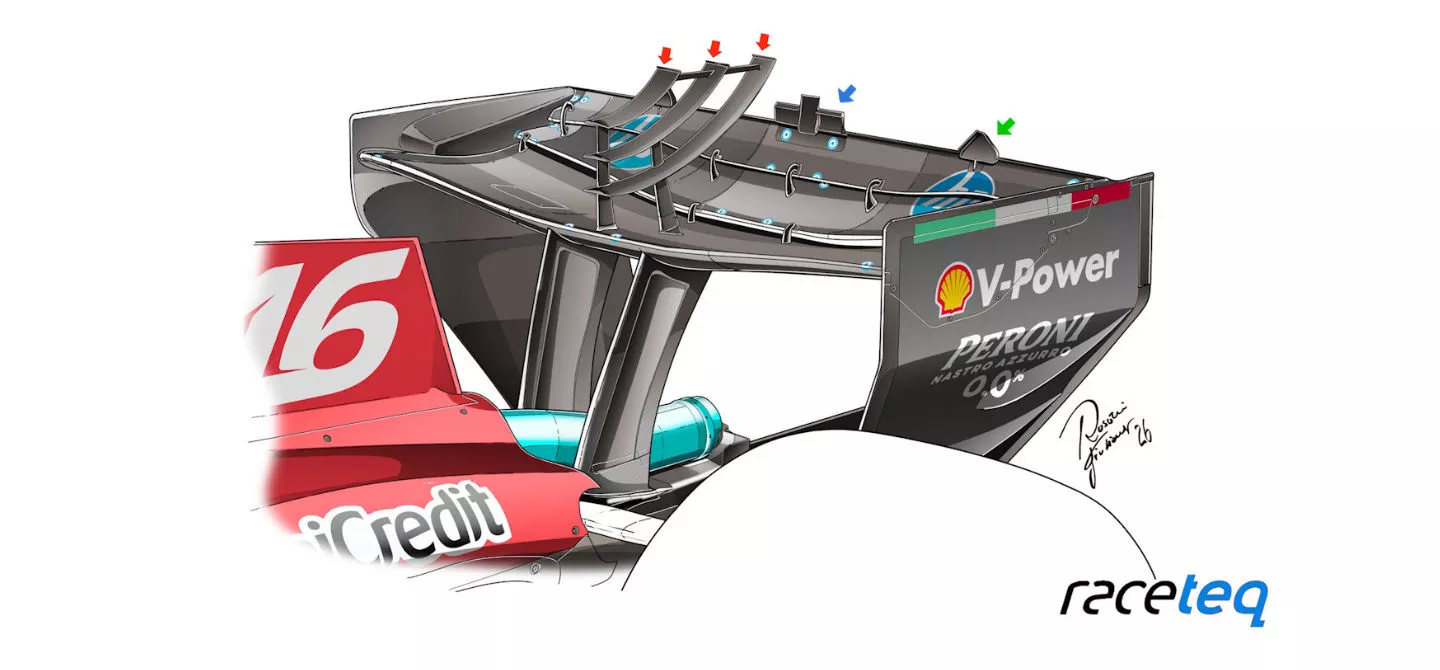
An illustration of Ferrari’s rear wing in a closed position. This wing is dubbed the ‘macarena’ wing for its eye-catching mechanism that sees the upper flaps invert
‘Macarena’ wing development continues
Ferrari led the charge in this respect, as a revised version of its ‘macarena’ wing was installed on the SF-26, which took advantage of the wing’s lack of central actuator.
A triple element winglet array (red arrows), similar to a design McLaren had raced in Monaco, could be found mounted on top of the mainplane and is made possible by the installation of their actuators being housed within the endplates.
There were further changes as well, with the central hanger flap (blue arrow) now flanked by two shorter flaps, whilst a triangular hanger flap arrangement can be found on either side of the upper flap too (green arrow).
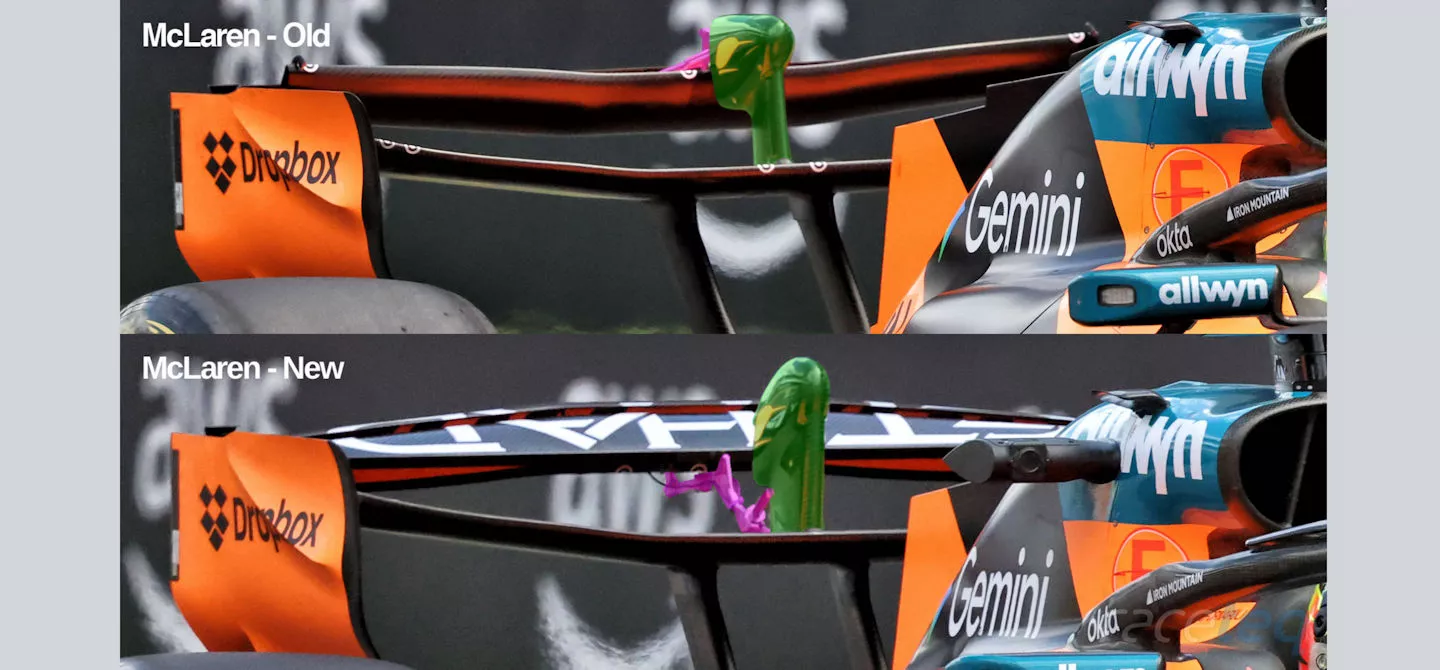
A comparison of McLaren’s conventional active aero solution (top) and McLaren’s ‘macarena’ version (bottom)
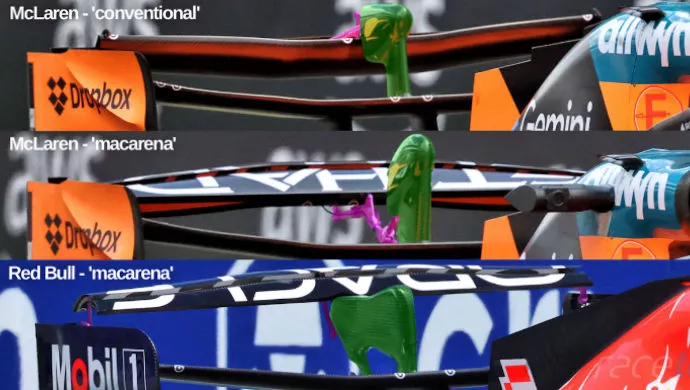
A comparison showing McLaren’s conventional rear wing (top) compared to its inverted specification (middle) and Red Bull’s version at the bottom
Eventual race winners, McLaren, also tested its version of the ‘macarena’ wing during free practice on Friday, but opted to shelve the solution in favour of something it had experience using.
A look at McLaren’s wing shows that it is different from Ferrari’s solution, and has more in common with the Red Bull variant.
Both the McLaren and Red Bull variants retain the central actuator and rotate in a similar way, which is contrary to the Ferrari arrangement. However, McLaren’s solution remains within the footprint of the rear wing when it’s fully open, whereas Red Bull’s sits above the endplate, widening the gap between the elements.
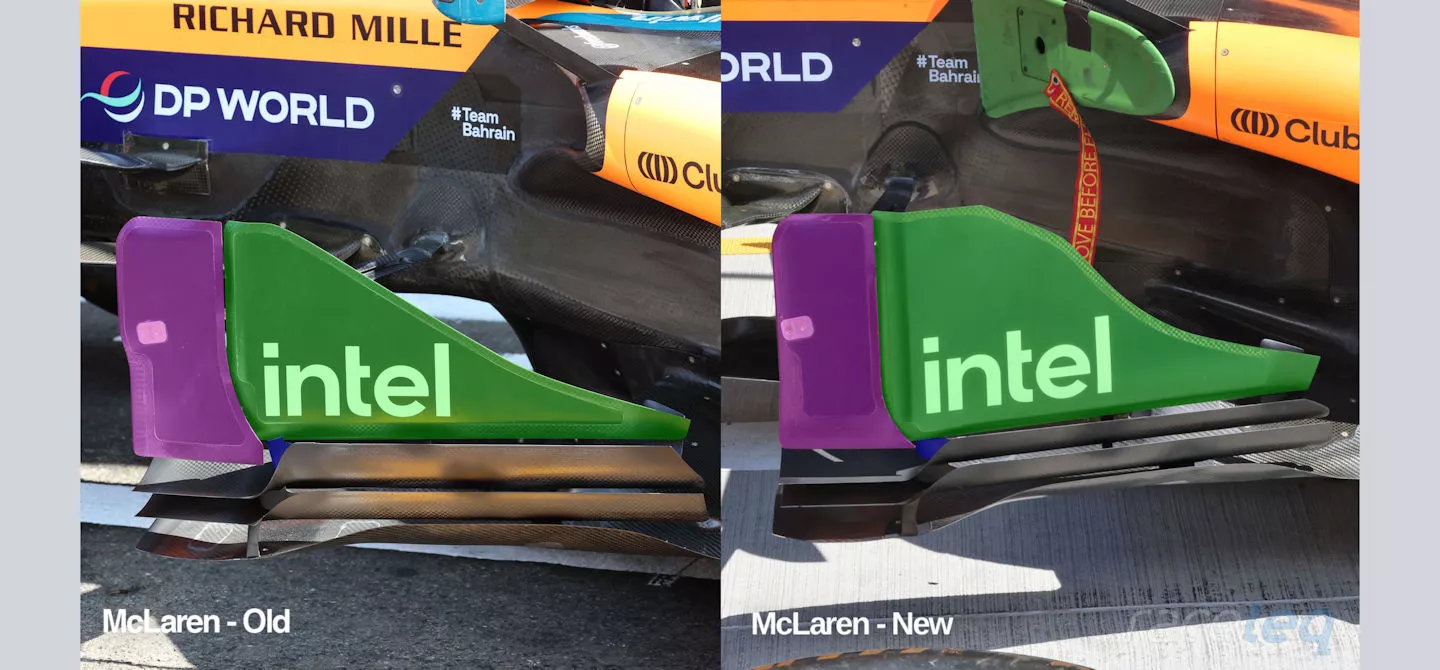
Comparison of the floorboard and floor ‘foot’ arrangement on the McLaren MCL40 with the Hungarian GP version on the right
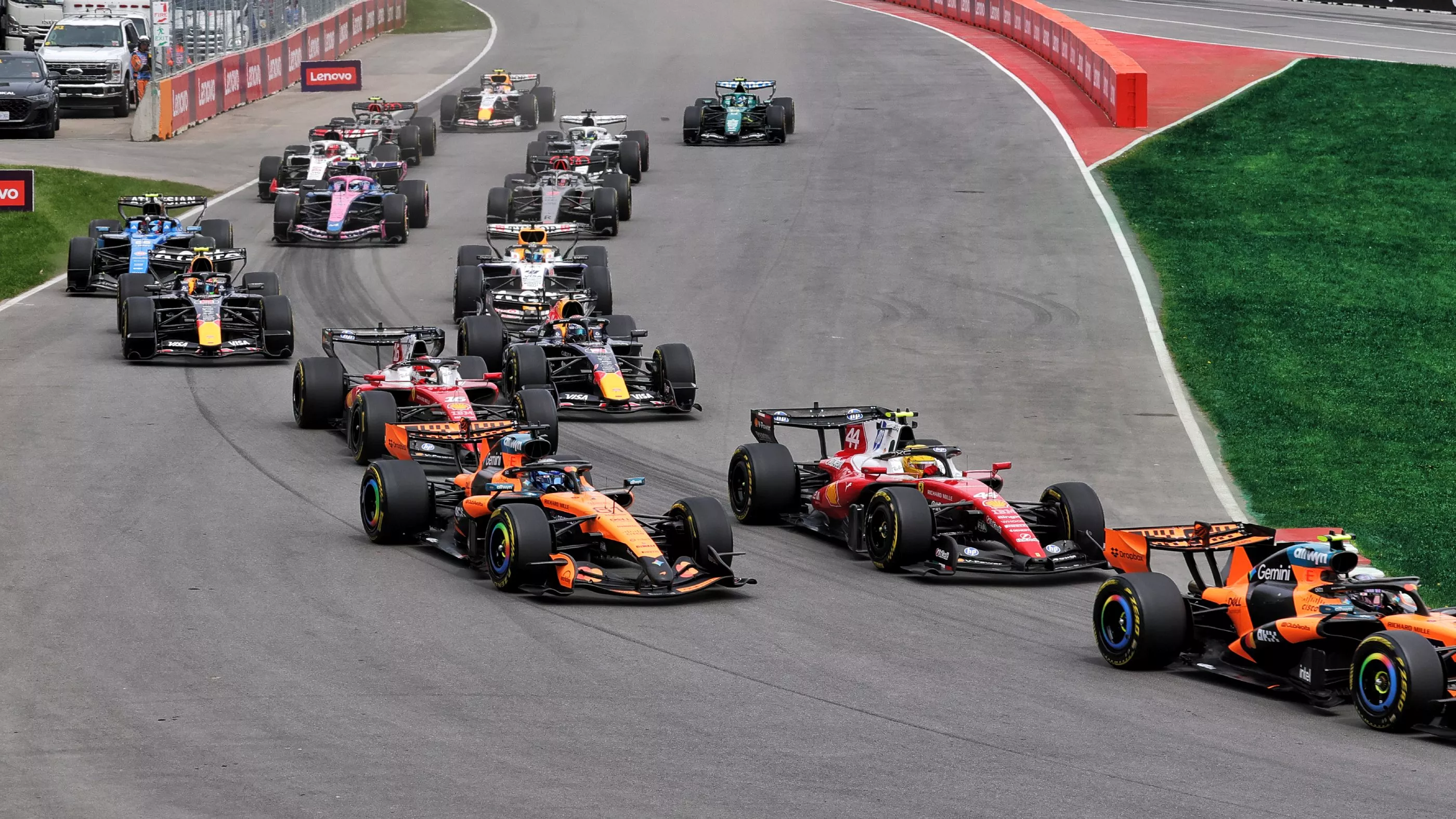
McLaren pushing elsewhere
McLaren also made a sizable update to the floor and its ancillary components in Hungary, starting with the floorboards.
Conceptually the new parts remain very similar to the outgoing components, albeit the upper elements have been reprofiled.
The new, skyscraper element (highlighted in purple) now has a straighter leading edge, rather than the almost two-part profile of its predecessor.
Meanwhile, the sail-like section at the rear of the assembly has a multi-step contour along the top line, rather than the more sinuous outline employed with the old design.
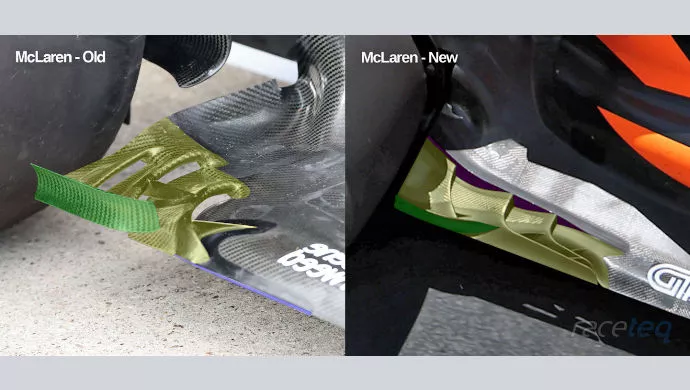
Comparison of the floor region ahead of the rear tyre on the McLaren MCL40 with the Hungarian GP version on the right
The area of the floor ahead of the rear tyre was always going to be targeted by teams for development this season, given the relative freedoms afforded and how much performance that can be garnered from it.
Already pretty busy in design terms, McLaren increased the complexity of its solution with the update in Hungary.
Now featuring a design akin to the one used by Mercedes since Canada, McLaren has stretched the slotted arrangement further forward, with an ever-increasing slot width employed along the floor’s length.
A guide vane on the perimeter of the floor remains (highlighted in green), albeit it’s now shaped a little different in concert with the other alterations that have been made.
Tied into these changes though is the inclusion of a raised profile on the inner edge of the slots (highlighted in purple), which not only defines the boundary of the section but will strengthen the surrounding features’ aerodynamic properties.
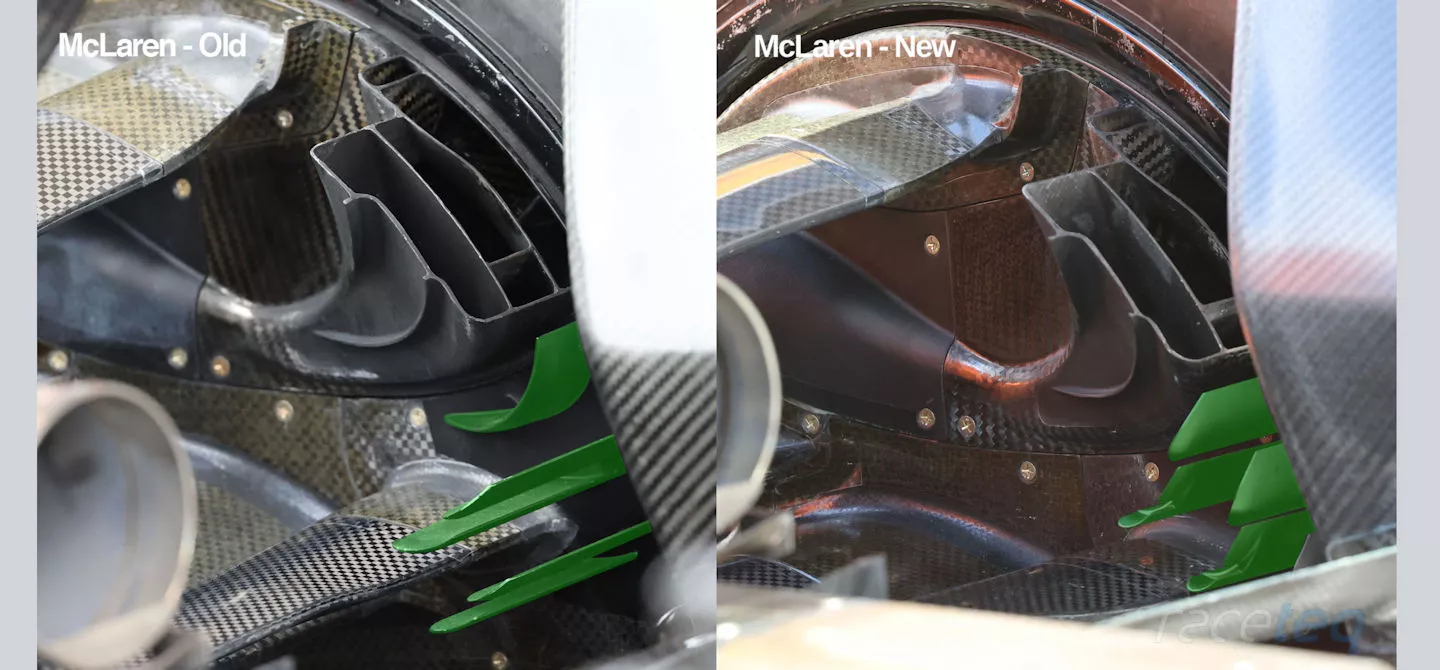
Comparison of the rear brake duct winglet arrangement on the McLaren MCL40 with a new arrangement (right) spotted in Hungary
At the rear of the car, the team also revised the winglets that are attached to the brake duct (highlighted in green), with their frequency and size increased in order to provide more aerodynamic assistance.
And, whilst no changes have been made to the outlet ahead of them, it’s worth noting how it has incorporated small winglets in the side of the structure to help draw the heat out of the assembly in a way that conspires with the surrounding airflow structures.
In that respect, it’s also worth paying attention to the more extremely curved tip section of the wishbone ahead of the outlet, which also primes the airflow to improve how the heat is expelled from the brake duct outlet.
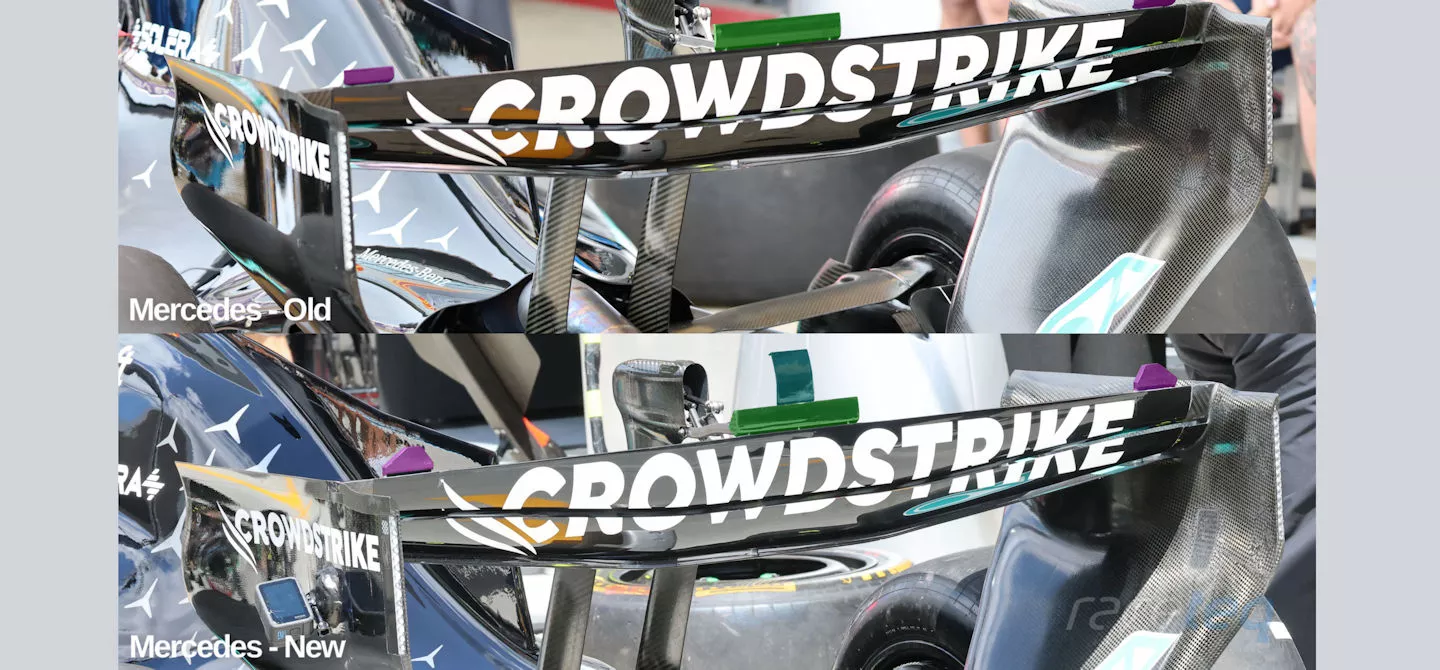
Comparison showing the revised ‘hanger flap’ arrangement on the trailing edge of the Mercedes W17’s rear wing with the new version for Hungary on the bottom
Mercedes keeps its eye on the competition
Mercedes was the first team to introduce ‘hanger flaps’ this season and have made several changes to their size, shape and position since then.
The latest change that’s been made saw the team add endplates to the central flap (highlighted in green), whilst an additional, taller flap (highlighted in blue) was mounted on top of it.
Meanwhile, the outer flaps (highlighted in purple) have been revised too, taking on a shape similar to the one first seen on the Red Bull RB22, more triangular in shape and complemented by a Gurney flap of their own on their periphery.
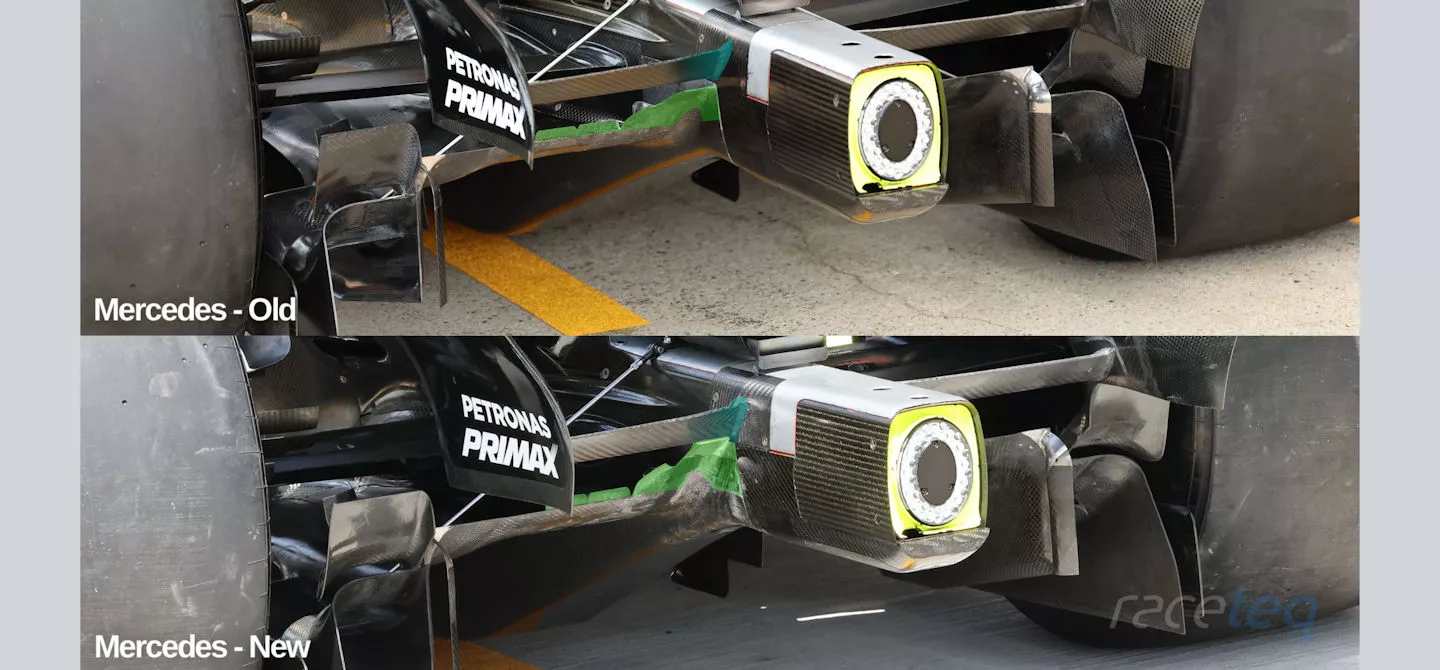
Comparison of the diffuser extensions and rear wing support brace on the Mercedes W17 with the new version on the bottom
Mercedes also made changes to its diffuser extensions in Hungary (highlighted in green), increasing the height of the innermost section in order for it to connect with the rear wing brace (highlighted in blue).
As a consequence of the change to the diffuser extension, the shape of the brace was also altered, reducing the sharpness of the tip section where it meets with the crash structure.
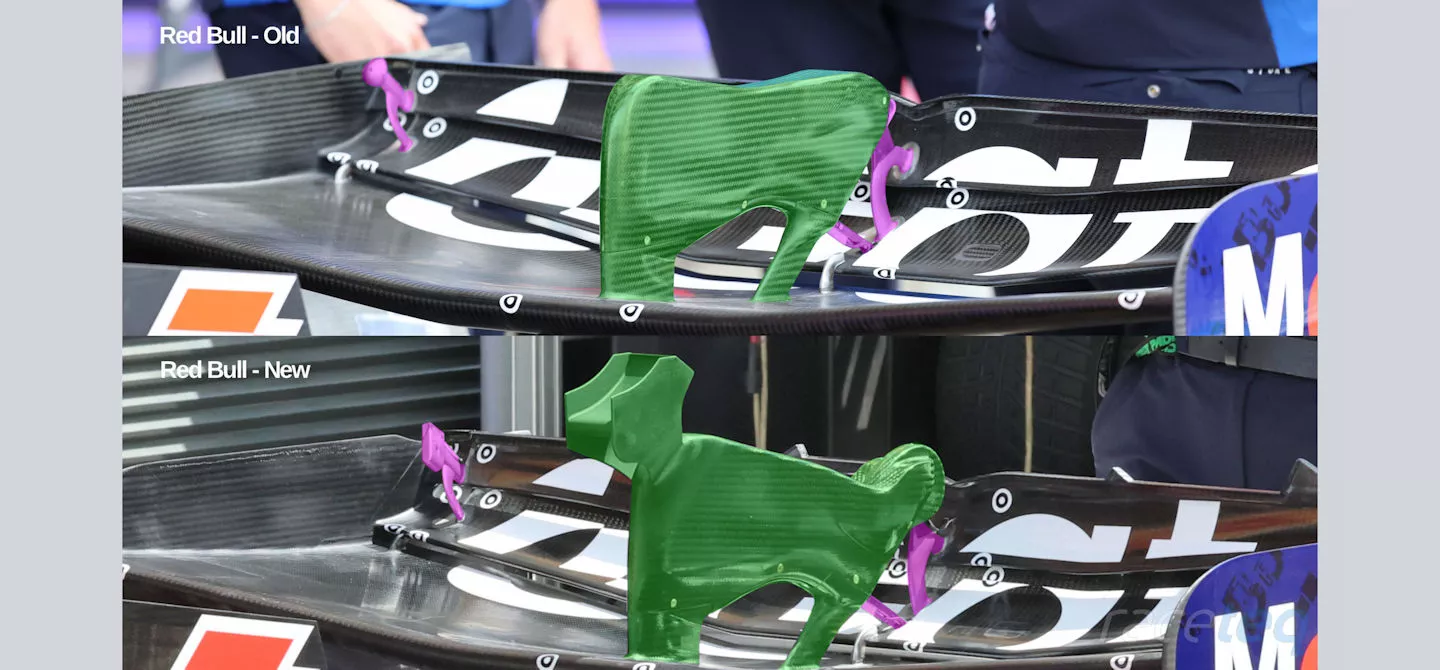
Comparison of Red Bull’s ‘macarena’ rear wing from Silverstone (top) and Hungary (bottom)
Red Bull revisit abandoned solution and make further changes to the RB22
Red Bull abandoned its ‘macarena’ wing at the Belgian Grand Prix, having experienced issues with the design following incidents involving Max Verstappen in Austria and Great Britain.
The wing did, however,
make a return in Hungary, albeit with a number of revisions made to
the mechanism that controls the flap rotation.
Notably, the shape of the pod covering the actuator was different, suggesting the internal mechanism had been modified, whilst it’s clear that the outboard flap pivot (highlighted in purple) has been revised to help manage the issues it has previously encountered.
It’s also worth mentioning that the forward winglet on the active aero pod also returned, having been used at higher downforce venues alongside the ‘macarena’ wing before.
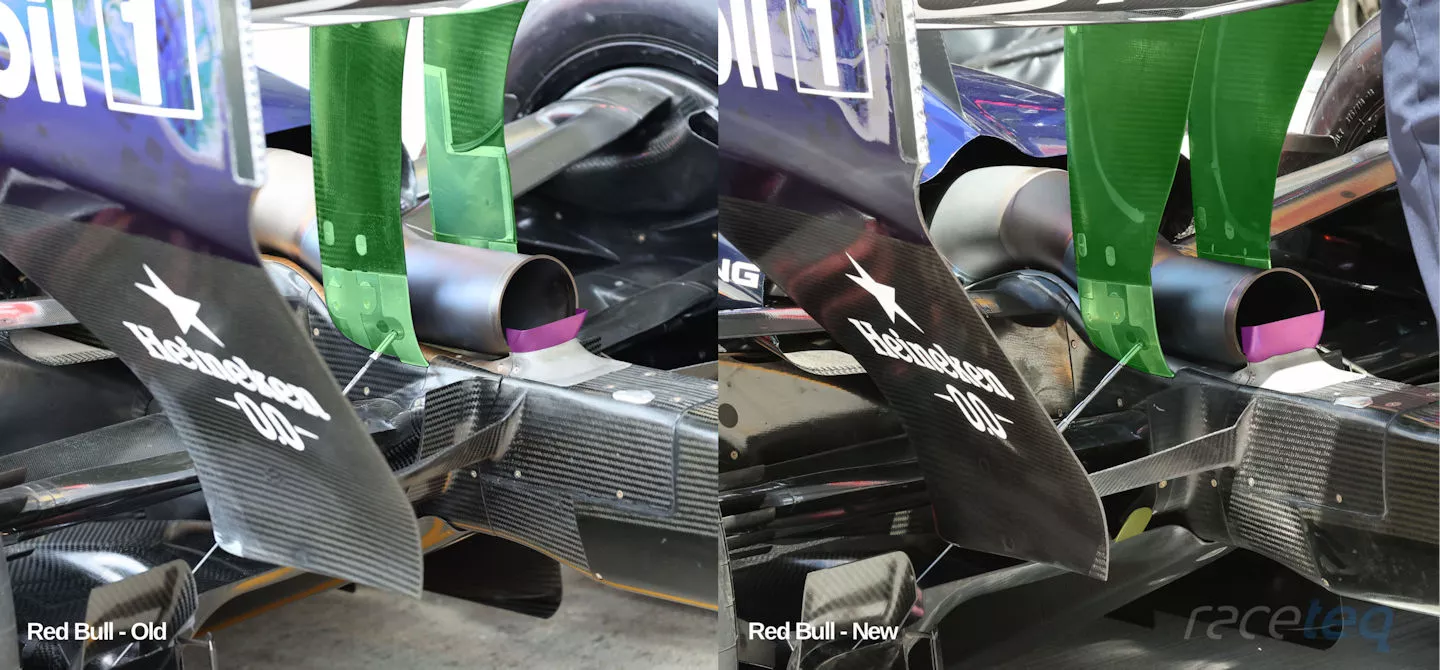
A comparison of the changes made to the Red Bull RB22’s rear end, including the wing pillars, exhaust bracket and diffuser extensions - with the new version on the right
The changes by Red Bull in Hungary extended beyond the fixes required for its ‘macarena’ wing too, as it also increased the length of the rear wing pillars (highlighted in green), which will not only serve as a means to increase rigidity, but also have an aerodynamic impact.
The size of the exhaust bracket (highlighted in purple) was also increased, whilst the angle at which it sits behind the exhaust tip was reduced.
These modifications will have a two-fold effect, as they change the exhaust’s back pressure and alter the trajectory of the exhaust plume as it’s ejected from the pipework.
Meanwhile, Red Bull has also added an extension to its diffuser (highlighted in yellow), following suit from a number of their rivals who have already implemented similar designs this season.
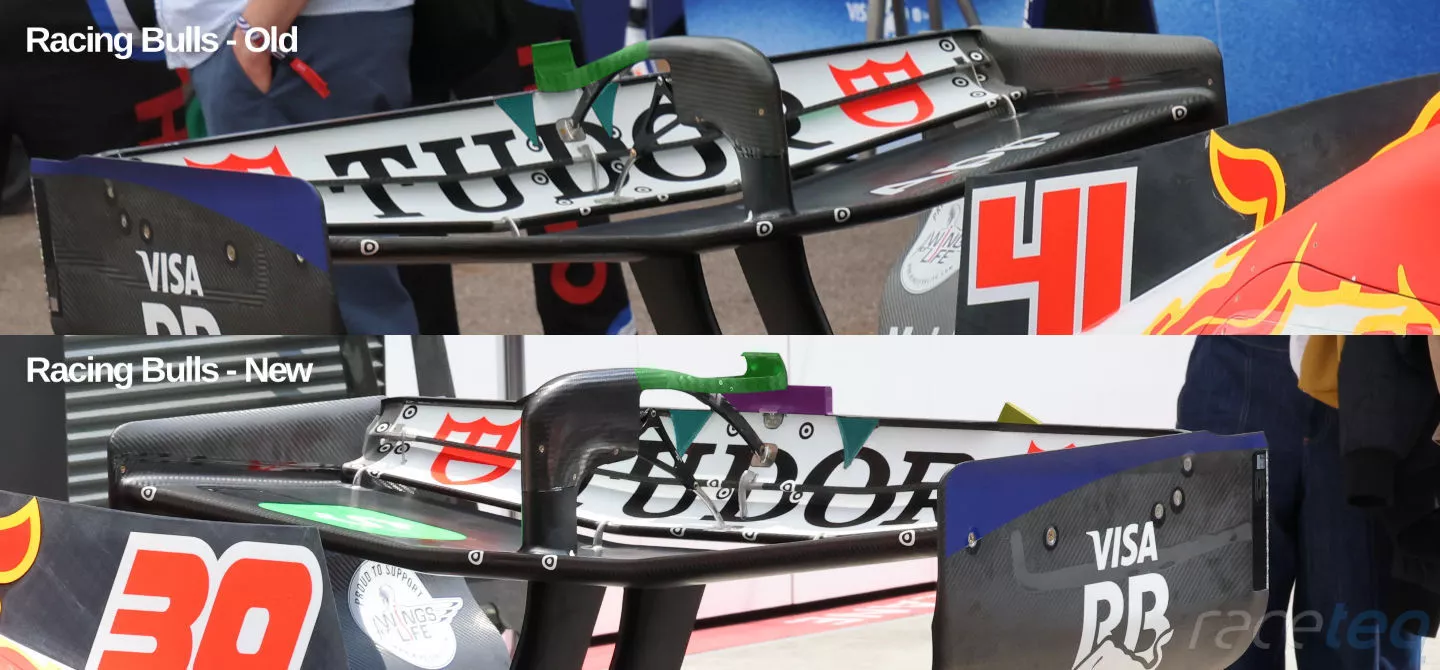
A comparison of the different specification rear wing solutions seen on the Racing Bulls VCARB03
Racing Bulls keeps up development pace
Racing Bulls has been one of the most proactive teams on the grid this season when it comes to updates, with more to be found on the VCARB03 in Hungary.
Notably, some of the changes seen at the Hungaroring build on elements it has already updated, whilst its designers have clearly taken onboard solutions seen elsewhere too.
The team added a swan-neck support and hanger flap arrangement to the car at the Monaco Grand Prix (highlighted in green), which returned in Hungary, albeit revised in order to fit atop the additional flap section in the rear wing’s centreline (purple highlight).
Notably though, the additional height at which the hanger flap has been positioned has resulted in the flap being tilted forward.
Flanking the hanger flap and mounted on the rear wing’s upper flap are a pair of bump ramps, which have increased in size owing to their additional displacement from the centreline and the installation of the wider hanger flap.
Also added on the trailing edge of the upper flap are two triangular hanger flaps (yellow highlight) imitating the design feature first seen on the Red Bull RB22.
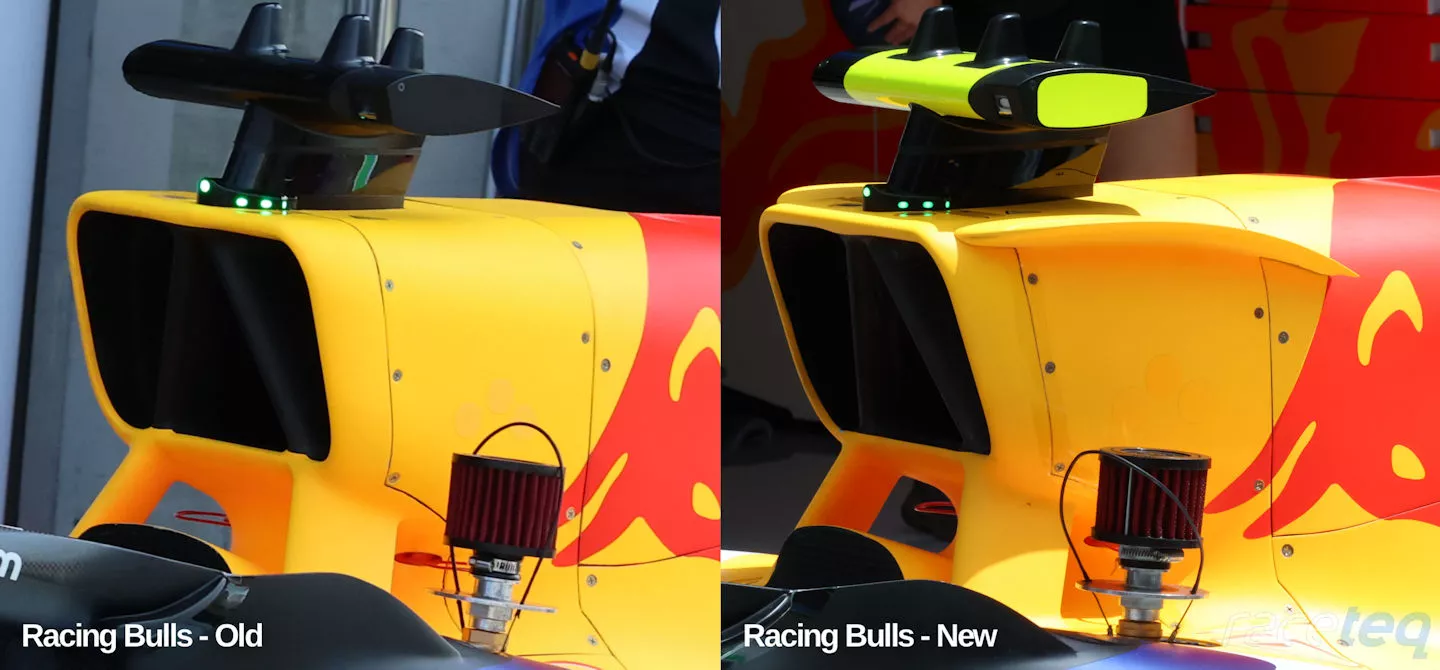
Comparison of the Racing Bulls VCARB03’s airbox region with the new version on the right
Racing Bulls also made further changes to the region around its airbox at the Hungarian Grand Prix, following on from the narrowing of the airbox in Belgium.
A quite distinctive winglet now sits astride the airbox (right), occupying the space that’s been created by the narrowing of the bodywork.
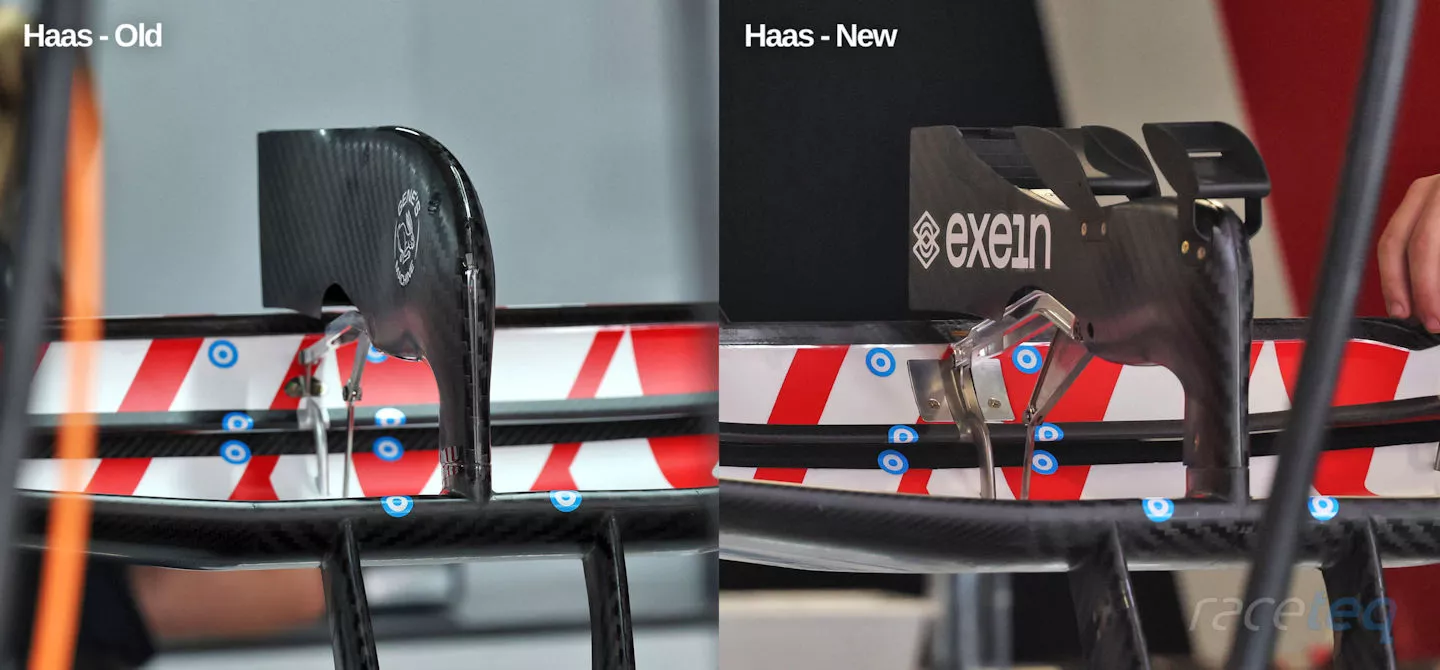
Comparison of the active aero actuator pod design on the Haas VF-26 with the new version on the right
Haas add more winglets
Haas introduced a fresh design for its active aero actuator pod on the VF-26’s rear wing in Hungary.
The solution which also sits above the rear wing, as its predecessor had, incorporates two crane winglets in the forward section, whilst another row of winglets has been installed in between the walls of the pod at the rear of the assembly in order to help generate more downforce.
/xpb_1408348_hires-(1).webp?cx=0.5&cy=0.5)