Car
Could a micro-roughness breakthrough help shed drag from Formula 1 cars?
by Samarth Kanal
6min read
Formula 1 requires precise science to turn millimetres and microns into hundredths and thousandths of a second in laptime - and a new study on micro roughness could change the game again.
Sign up for a newsletter and we'll make sure you're fully up-to-date in the world of race technology
F1 teams have long since stripped away paint and wrapping, applying only microns of material to their cars to shave mass. But what if the physical finish of the cars could be used to manipulate the air at microscopic levels?
A paper published in the Journal of Fluid Mechanics by researchers at Tohoku University, Japan, has revealed a method of surface manipulation that somewhat defies conventional aerodynamic wisdom.
Led by Aiko Yakeno, this study proves that applying "Distributed Micro-Roughness" (DMR) to a streamlined body can reduce aerodynamic drag by a staggering 43.6%.
That is a massive amount - so how does DMR work, and what are the caveats that could stop it being applied in F1?
Friction drag and T-S waves
This is a significant breakthrough, and tying it to F1 requires a basic explanation of how an F1 car reacts with the air.
When an F1 car punches a hole through the air at 200 miles per hour, it is fighting two types of drag: form drag and friction drag.
Form drag is resistance created by the physical shape and frontal area of the car pushing air out of the way.
Friction drag is the resistance caused by the air physically rubbing against the surfaces of the car.
The air touching the chassis forms a thin envelope called the boundary layer. At the front of the car, this boundary layer is laminar - smooth, ordered, and producing very little friction. F1 engineers spend hours in the windtunnel, striving for laminar flow along the length of their car’s bodywork.
As the air travels further down the bodywork, microscopic instabilities begin to form. In fluid dynamics, these are known as Tollmien-Schlichting (T-S) waves, which ripple through the boundary layer and grow in amplitude until they break into vortices.
These vortices break down into turbulent flow and, once this happens, friction drag increases considerably.
Preventing T-S waves from forming can delay the transition to turbulent air, maintaining that low-drag laminar layer that is so covetable.
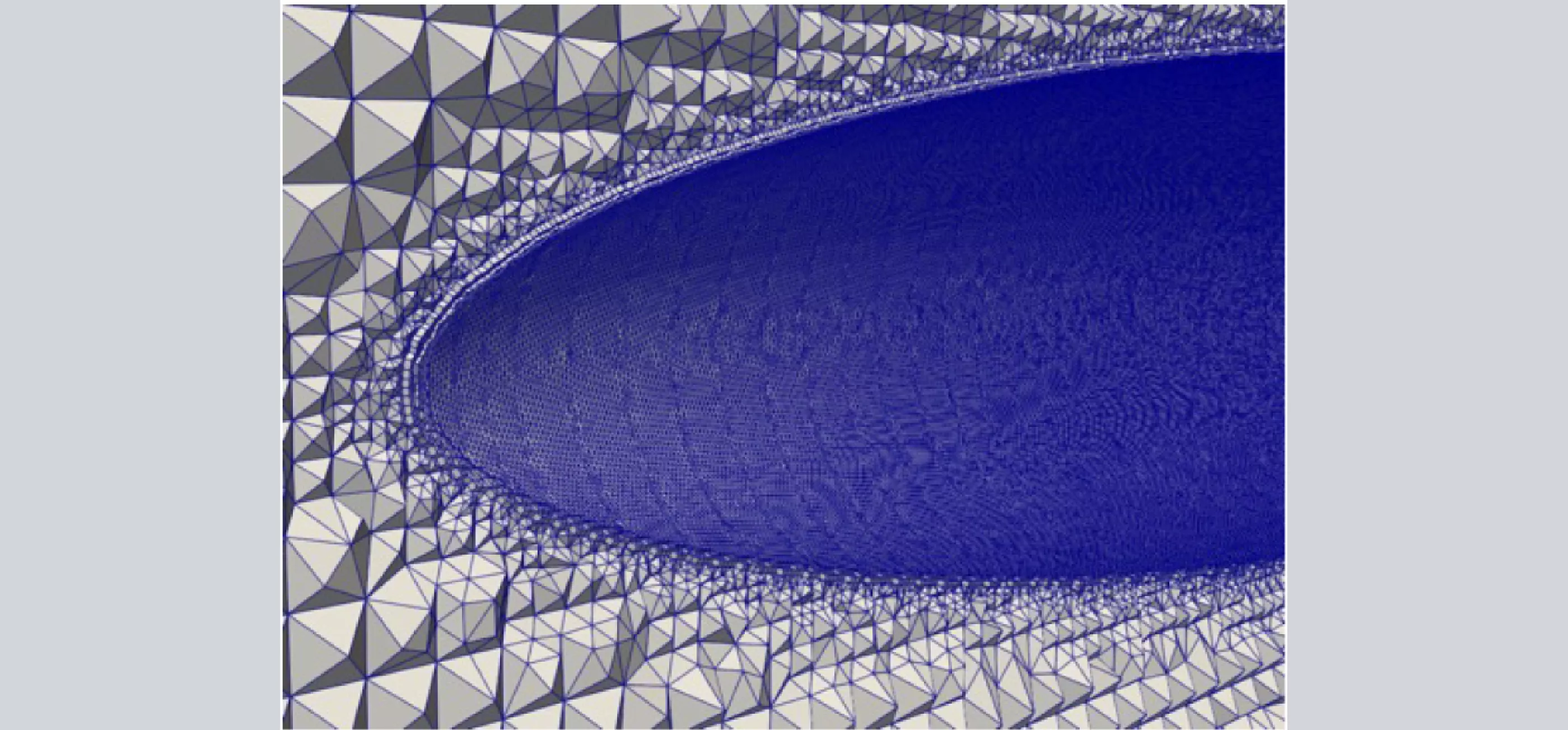
An enlarged view of the leading edge of the streamlined model in a CFD simulation. Inline images courtesy of Aiko Yakeno, Hiroyuki Okuizumi, Kento Inokuma and Yoshiyuki Watanabe, Journal of Fluid Mechanics
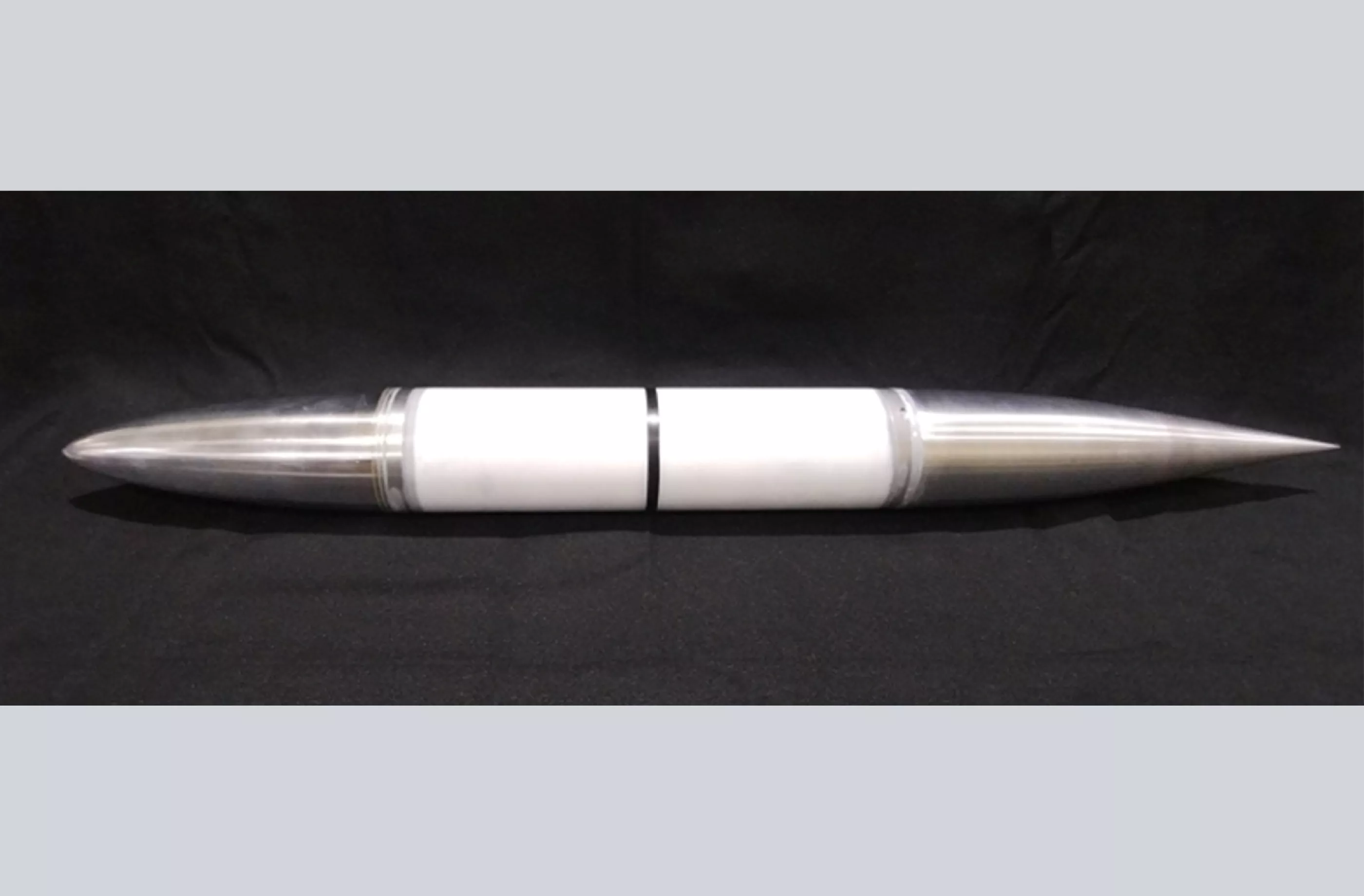
The streamlined test body used by Tohoku University in its DMR experiments
The DMR breakthrough
The team cited previous experiments on micro-roughness as its reasoning for forgoing the traditional windtunnel.
Instead, it suspended its model in the air using high-powered electromagnets in “the magnetic suspension and balance system (MSBS)”, to avoid any interference caused by mechanical support systems.
Using the MSBS, the team recorded a direct aerodynamic drag reduction of up to 43.6% on the coating of DMR.
The researchers also used Computational Fluid Dynamics (CFD), specifically Large Eddy Simulations (LES), and dynamic oil-flow visualisation (similar to the effect of flow-vis paint used in F1) to prove that the microscopic roughness disrupted T-S waves, changing the state of the boundary layer, and drastically reduced friction drag.
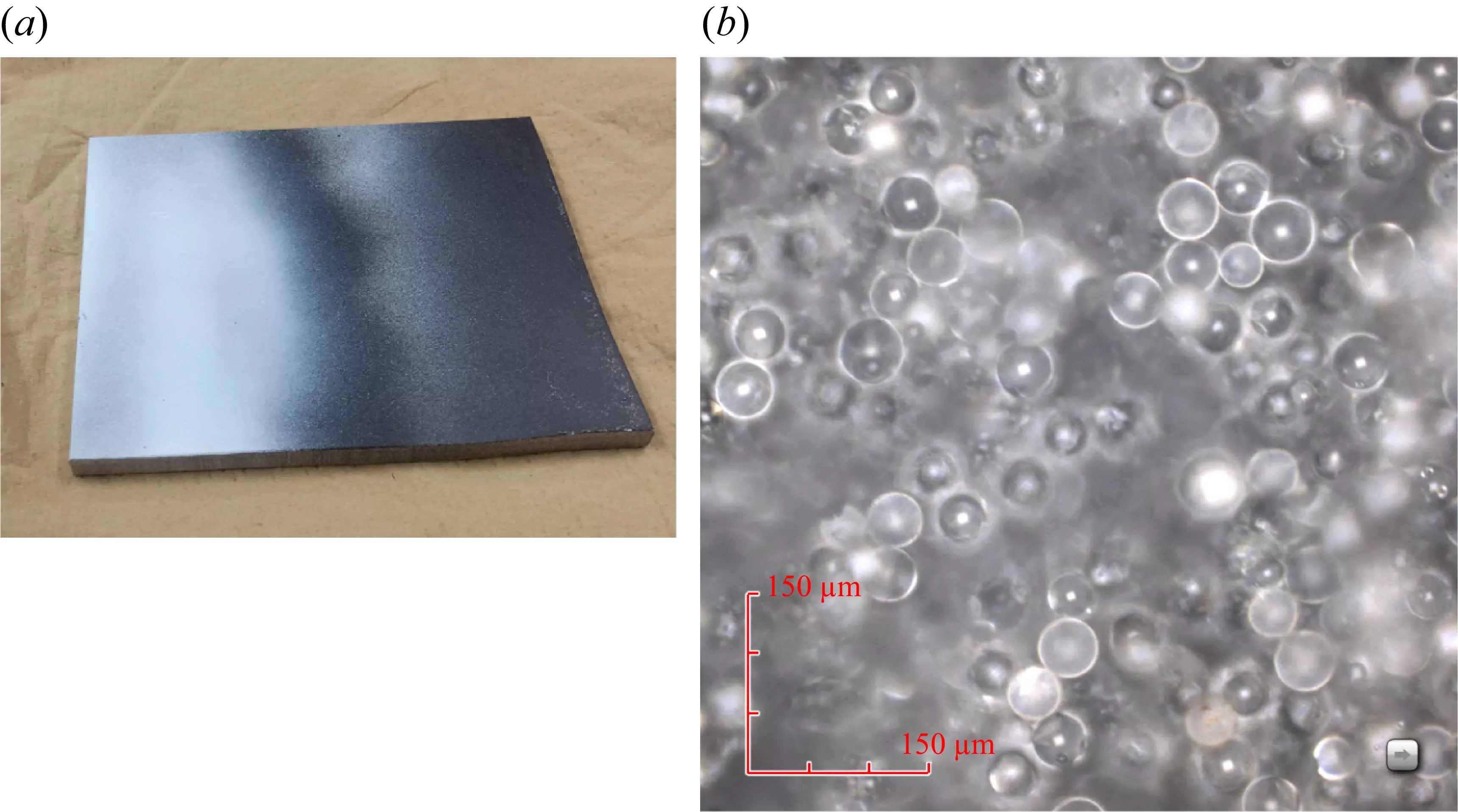
Characteristics of the glass-DMR-coated test piece surface and an enlarged microscopic view of the DMR surface
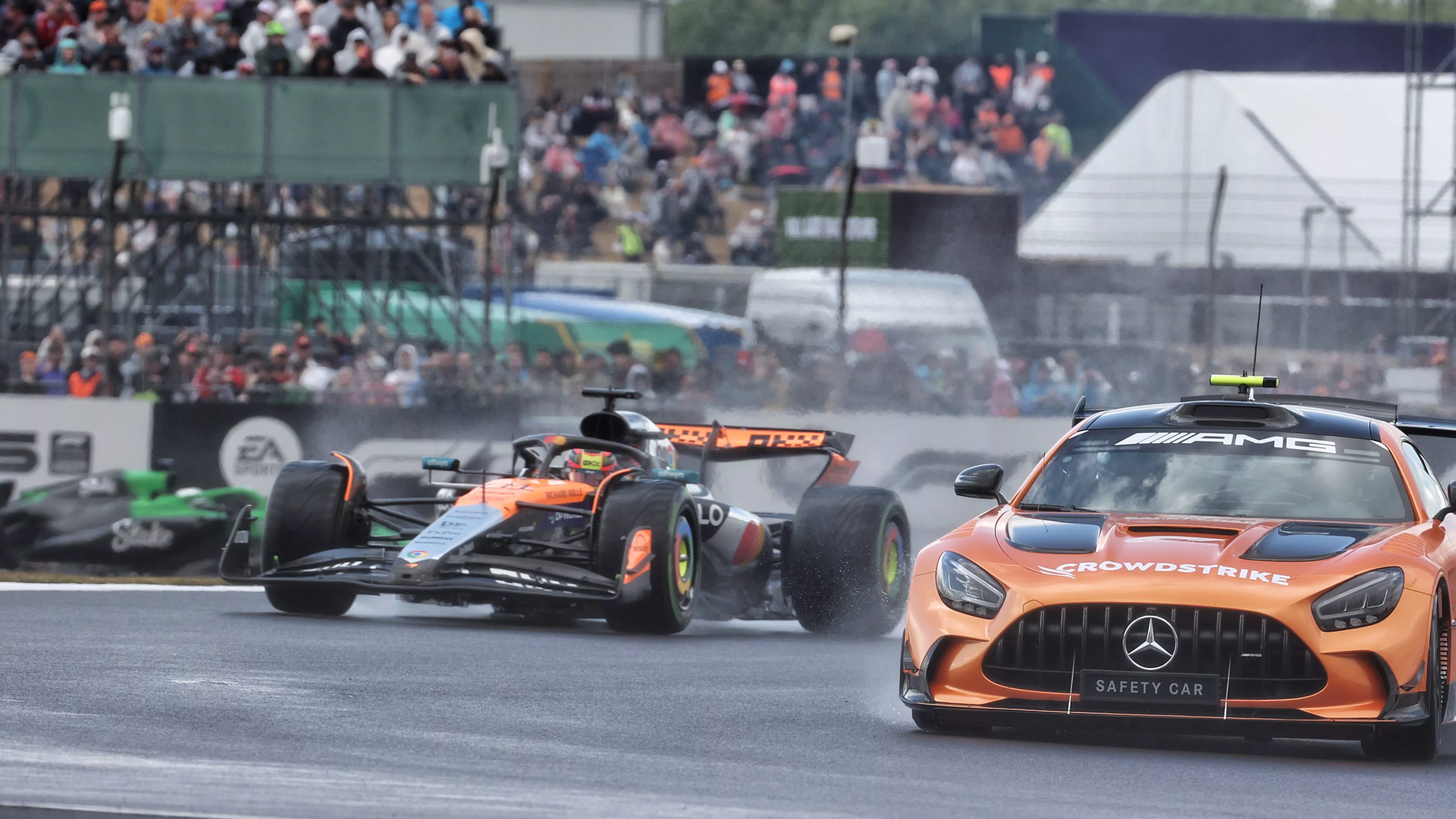
Could DMR translate to the F1 track?
It might seem a stretch to draw conclusions from a streamlined test model suspended by electromagnets and apply them to a Formula 1 car - but there are some parallels to be drawn.
The baseline aerodynamic efficiency of an F1 car’s chassis, sidepods, and floor, is arguably more critical than ever as batteries run out of charge towards the end of straights.
Teams could therefore run high-downforce wings for maximum cornering grip without worrying about the associated drag penalty as the DMR surface sheds drag along the straights.
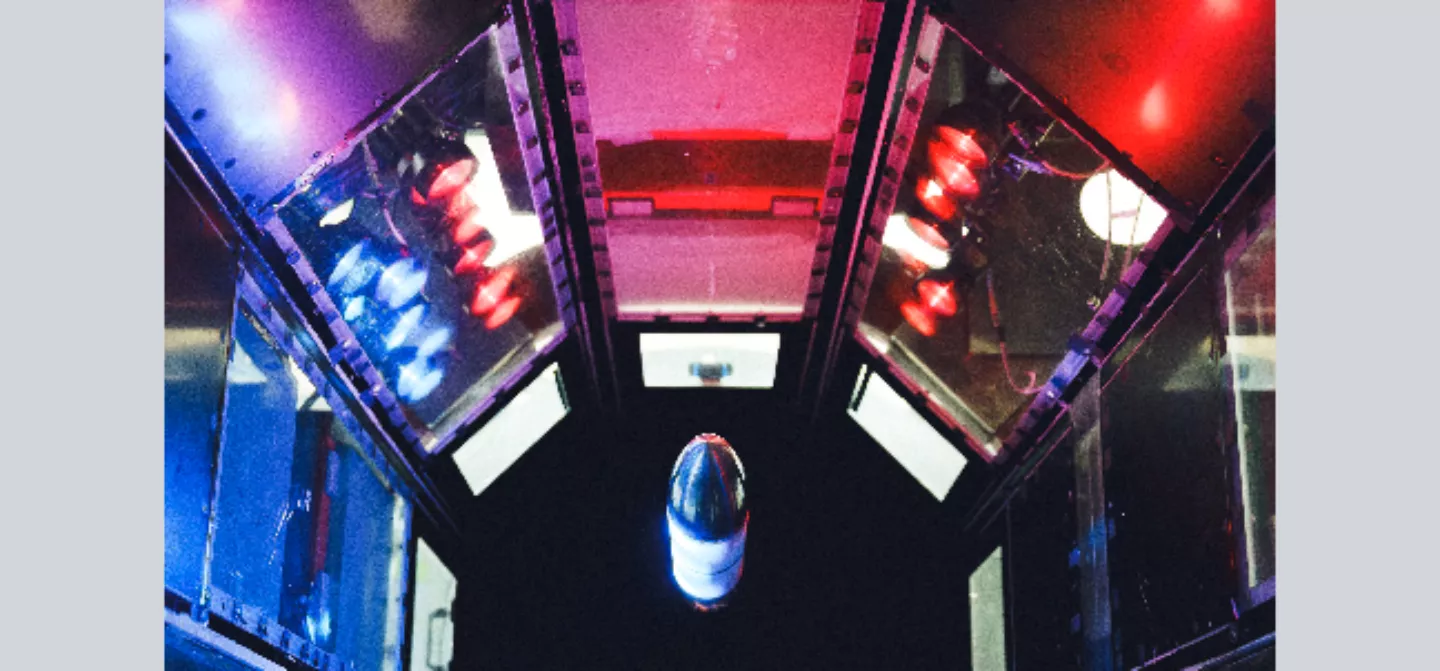
The DMR-applied model suspended inside a windtunnel with electromagnets