Career

10 Questions With… John Barnard

by Raceteq

5min read

John Barnard

John Barnard is credited with designing and implementing two of the most crucial features in Formula 1 car design - and the ex-Ferrari and McLaren F1 car designer is the latest guest on Raceteq’s 10 Questions series.
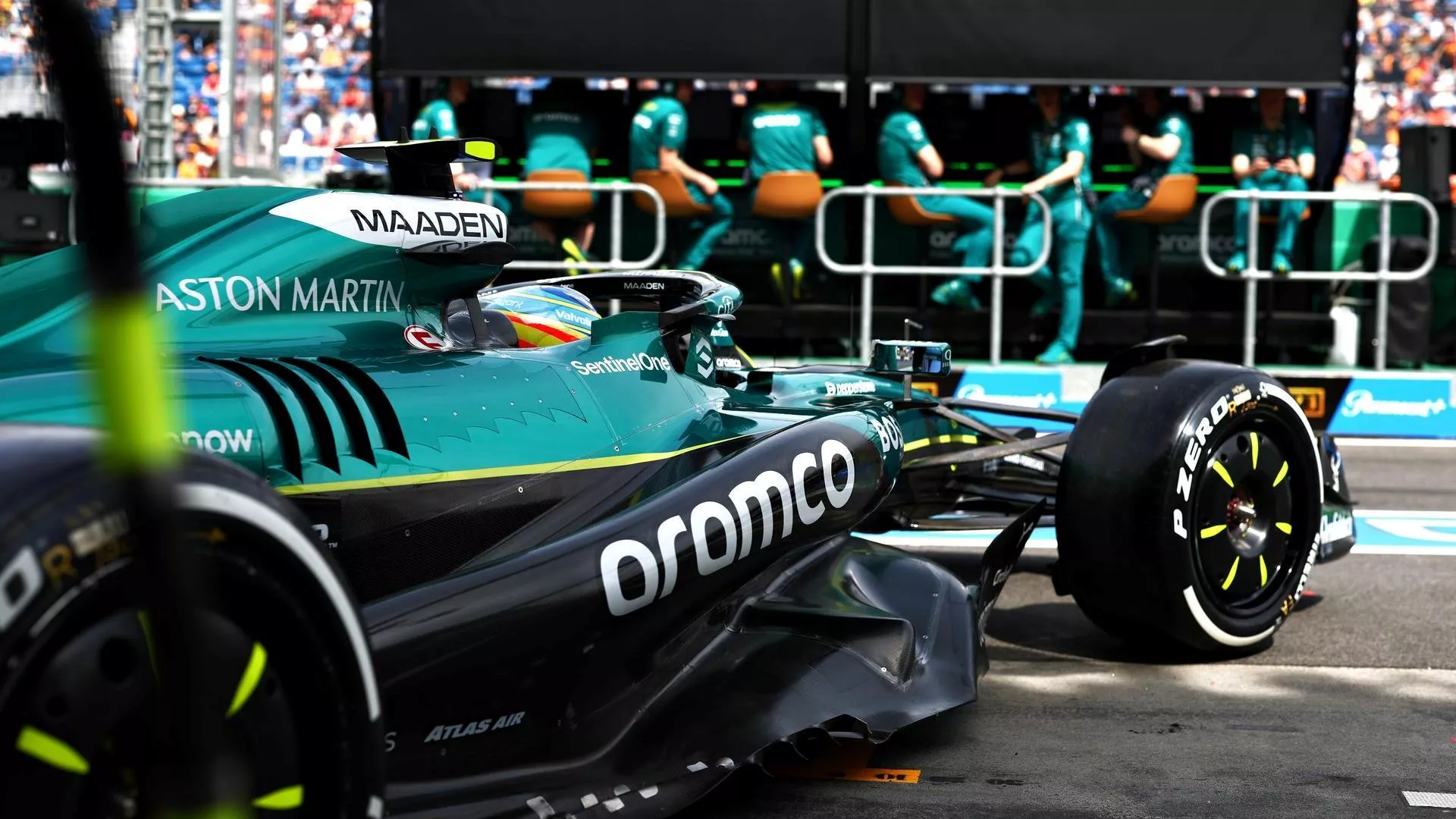
Aston Martin F1 car exiting garage

Sign up for a newsletter and we'll make sure you're fully up-to-date in the world of race technology

Barnard is credited with introducing the carbon fibre monocoque in 1981 with McLaren and the paddle-shift semi-automatic gearbox with Ferrari in 1989.
 
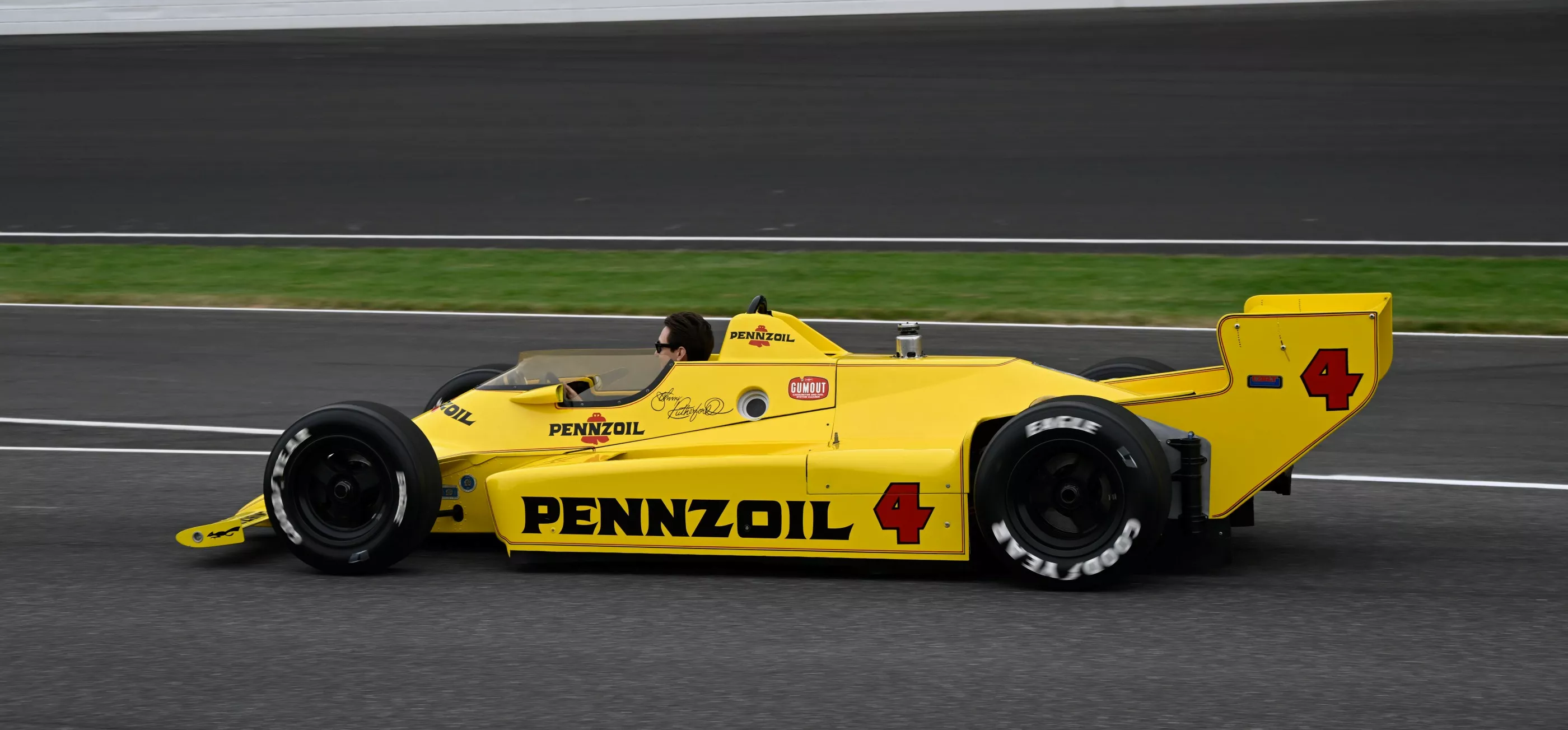
He found success Stateside with the Chaparral 2K, which utilised ground effect to win the 1980 Indianapolis 500 and that year’s Indycar title too.
 
Barnard then revolutionised F1 car design with McLaren - which became a dominant force in the mid-1980s as Niki Lauda and Alain Prost won titles at the team - before joining Ferrari in 1987. This is his take on our 10 Questions.


What is your greatest career success?

It has to be my years at McLaren when I won three drivers' championships and two constructors’. That would be it, success-wise.
 
One of my greatest achievements, strictly speaking, was, apart from things well-known like the carbon chassis and the paddle-shift gearbox and all that stuff, was the Chaparral, the Indycar that I did back in 1978-79, which I built. I designed and built all in the UK for Jim Hall and then followed it through initial testing to Indianapolis and so on.
 
That, strictly speaking, was my greatest achievement because it was a full ground-effect car, the first proper ground-effect car at Indianapolis. It was a completely new car, clean-sheet of paper, everything on it. It was based around a Cosworth V8, a Turbo V8, which was running in Indycar at the time, although I even modified all the inlets on that.
Johnny Rutherfords 1980 Indy 500 winner

The Chaparral 2K in which John Rutherford won the 1980 Indianapolis 500 and Indycar title was designed by John Barnard. It utilised ground effect, with sideskirts that created a seal beneath the car. Image courtesy of Penske Entertainment: Doug Mathews
Gary Ekerold

Career

10 Questions With… Gary Ekerold

Basically, I designed all that in my father's front room with two other guys helping me - we called them ‘pencils’ - and then it was fabricated in Luton (UK), then shipped to America in 1979. 

That really was my biggest achievement because when I look back at it, it was a huge project to undertake. I had to draw well over a thousand drawings with two other pencils [colleagues] helping - all on a drawing board, long before CAD (Computer Aided Design).
 
Then, of course, the carbon chassis, which is well known. The carbon chassis went on to be the most successful, but then, of course, the Ferrari days came and I persevered, instigated and carried through the paddle-shift gearbox, which raced on the 1989 car.
 

What advice would you give to someone who wants to build a career in motorsport?

That's difficult because it's very different now. In terms of personnel, you’re talking around 1,000 people at some teams, and I find it hard to comprehend how many jobs are available. Everything is so specialised now; back in 1969 when I joined Lola Cars, there were just four of us designing everything on the outside and inside of the car.
Ayrton Senna and John Barnard

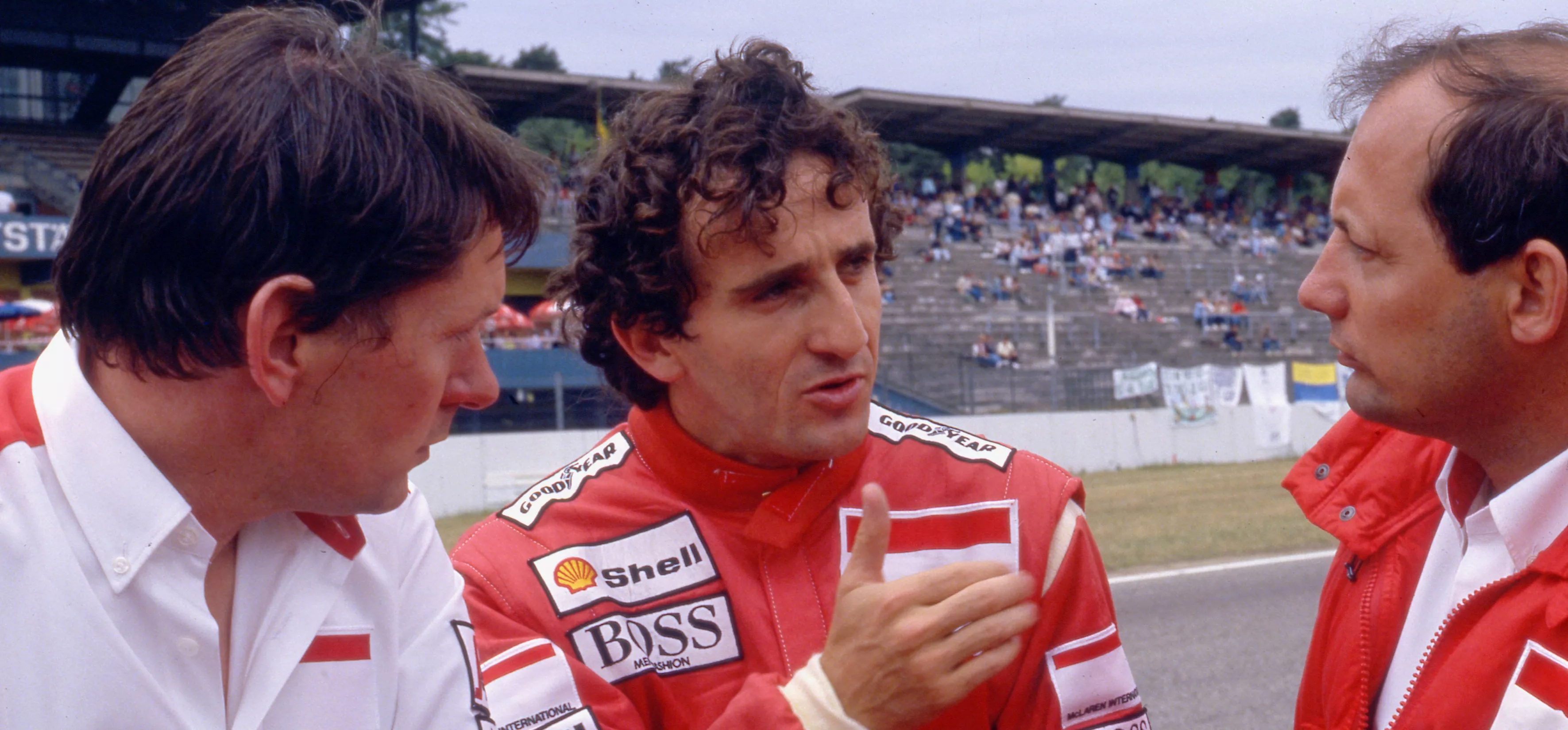
John Barnard with Alain Prost (centre) and McLaren boss Ron Dennis (R) in 1986
Kevin Magnussen and Mark Slade

Career

10 Questions With... Mark Slade

When I was at McLaren and Ferrari in the 1980s and ‘90s, I was a technical director/chief designer. Now, I suspect, you would be put into a department, and that will be your specialised area. 
 
The only thing I could suggest is to get an education in the area you want to deal with. You could be mechanically-focused if you’re going to deal with the chassis and suspension; aerodynamics if you’re going to deal with the bodywork. You need the qualifications for your specialisation. 
 

What was the day-to-day of your job?

 
At McLaren, there was Ron Dennis who looked after the commercial side and me who looked after the technical side. One example: we got to a point where I decided we had to have a turbocharged engine to be competitive, around 1981. 
 
And I was not satisfied with what was available - a BMW four-cylinder that was powerful, but not easy to build into a racing car as it required dedicated supports and all sorts. 
 
Then there was a Renault turbo, which was based on a roadcar block, and you had smaller operations. So I said to Ron, ‘no, I don’t want any of those, they aren’t good enough. This is what we need. So I set out the parameters of the engine I wanted. 
 
So we set about getting it. And Ron being Ron, he picked the phone up, got hold of Porsche, and said, ‘We're coming to see you’.


John Barnard's Career Highlights

1972: Joins McLaren and, alongside Gordon Coppuck, designs the M23 that would go on to win the ‘74 championship 
1980: Designs the Chaparral 2K, which wins the 1980 Indianapolis 500 and Indycar title
1981: One year after he returns to McLaren, the MP4/1 makes its debut - and debuts the carbon fibre monocoque in F1
1983: Pioneers the formative ‘coke-bottle’ sidepod shape with the McLaren MP4/1 C
1984: McLaren wins its first F1 constructors’ title in a decade while Niki Lauda wins the drivers’ title
1986: Having designed cars that won 31 grands prix and five titles, Barnard leaves McLaren
1987: Barnard joins Ferrari; Gerhard Berger wins the final two races of the season - Ferrari’s first in two years
1989: The semi-automatic gearbox makes its debut in the Barnard-designed Ferrari 640
1990: Joins Benetton and helps design the race-winning B191 and championship-winning B192
1995: Every F1 team is now using a semi-automatic gearbox and carbon fibre monocoque in F1
Mario Isola

Career

10 Questions With… Mario Isola

There was a very clear divide: I would be in charge of people at the racetrack and in the workshops, decide what machines we were going to buy and use and so on. 
 
Ron would then, fundamentally, come up with the money; it doesn’t just happen. That was the set-up - and other teams were similar such as Williams with Frank Williams and Patrick Head, and Brabham with Bernie Ecclestone and Gordon Murray. 
 
At Ferrari, it wasn’t quite as simple because there were decades of politics and structure at the team. Enzo Ferrari hired me and, to Enzo, the engine was the key issue.
 
But he then realised that he had to get on board with modern chassis and aerodynamics that were being forged in Britain at the time. Hence, he employed me.
 
So, that distinction between commercial and technical wasn't quite so straightforward at Ferrari. It was a little more difficult to have an input as a foreigner, as an outsider, even though I was theoretically technically in charge. It wasn't quite so straightforward to get everything I wanted. 
 
When I started working as a consultant for Alain Prost’s team in 2001, I didn’t have the power - fundamentally, being able to hire or fire people - and I was just a consultant. I was designing mechanical elements of the car, but not the aero elements and we were effectively a supplier.
 
And the problem for me is that by that time, I had a reputation of basically being in charge, and making things work better and go forward. And that was the reputation I'd had. So being in that position with Prost was quite a change for me. And I don't think it was a terribly effective way of doing it.
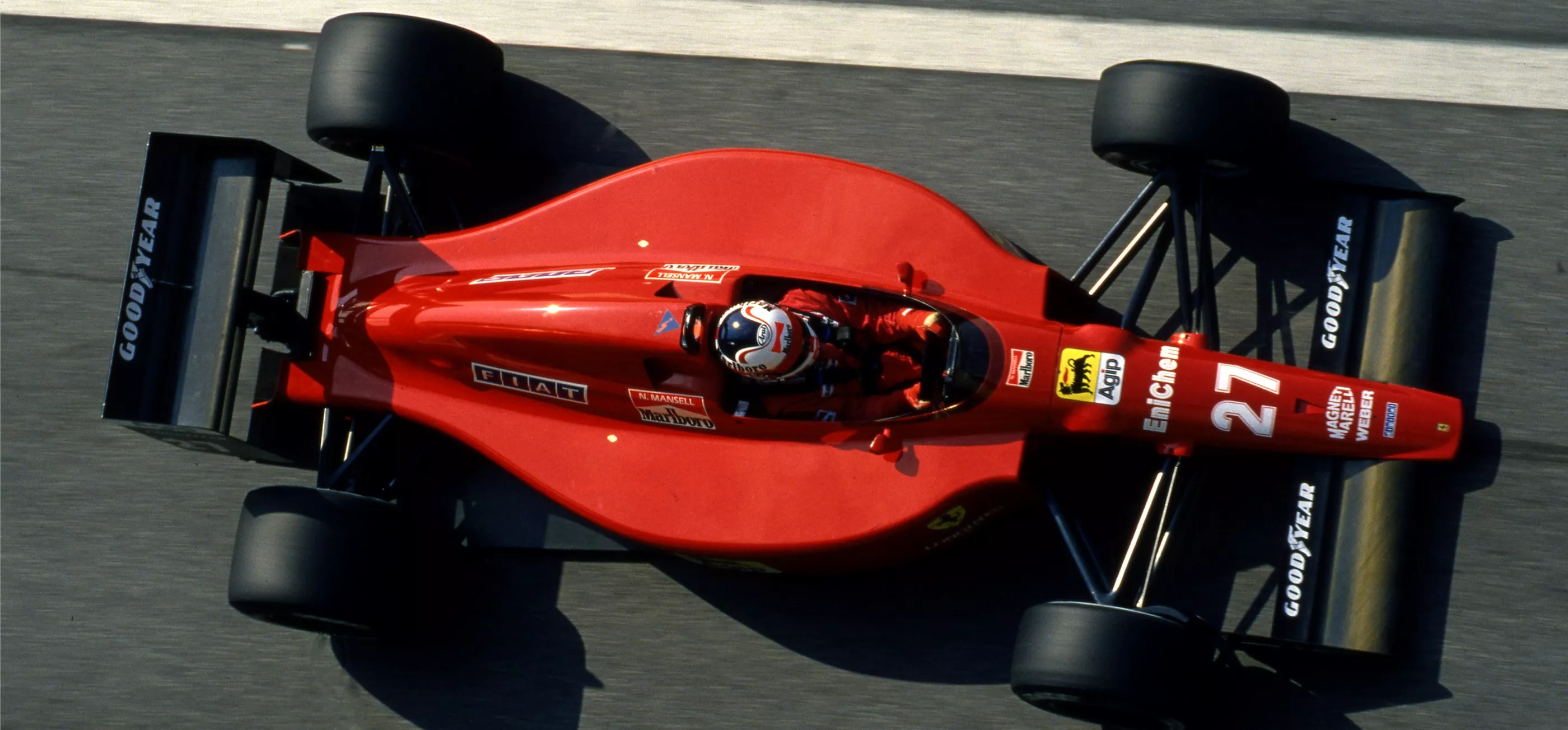
 

Ferrari F1 car

The 1989 Ferrari 640 is the first F1 car to use a paddle-shift semi-automatic gearbox

What’s one example of a time when you made a mistake and bounced back? 

There was one example at Ferrari that really annoys me to this day, and that was the 1994 car, which was quite a different shape. It had inlets that were kind of large NACA-duct-type inlets. And we put a lot of work into the cooling system by sacrificing a bit of the profile drag of the car for the induced radiator drag by having slightly larger radiator cores, small inlets and small exhaust.
 
Overall it was a lower-drag cooling system and I’m pretty sure that worked because we were always fast on track. Everyone said, ‘the V12, it’s got so much more horsepower’ - which it didn’t have. 
 
There were cooling problems because the radiators were asymmetric, with a large water radiator on one side and a small water and oil radiator on the other.  And we had to keep cutting the car around to try and get cooling down for the engine people who at that time wanted ridiculously low cooling temperatures, nothing like they are today. 
 
Later on, I discovered that the problem had been found - whereby the water flow wasn’t balanced. We had two-thirds of the water going through the small radiator and one-third through the big radiator. 
 
That car got chopped around to a more conventional cooling set-up and it did win races, so it wasn’t a bad car, but it annoyed me, because the original asymmetric design should have worked but the engine guys didn’t make it work.
 
It annoys me to this day, because it was a mistake I didn’t realise, and I didn’t spot. 
1989 Ferrari

The 1994 Ferrari 412 T1 had an asymmetrical cooling set-up

What’s your favourite motorsport innovation?
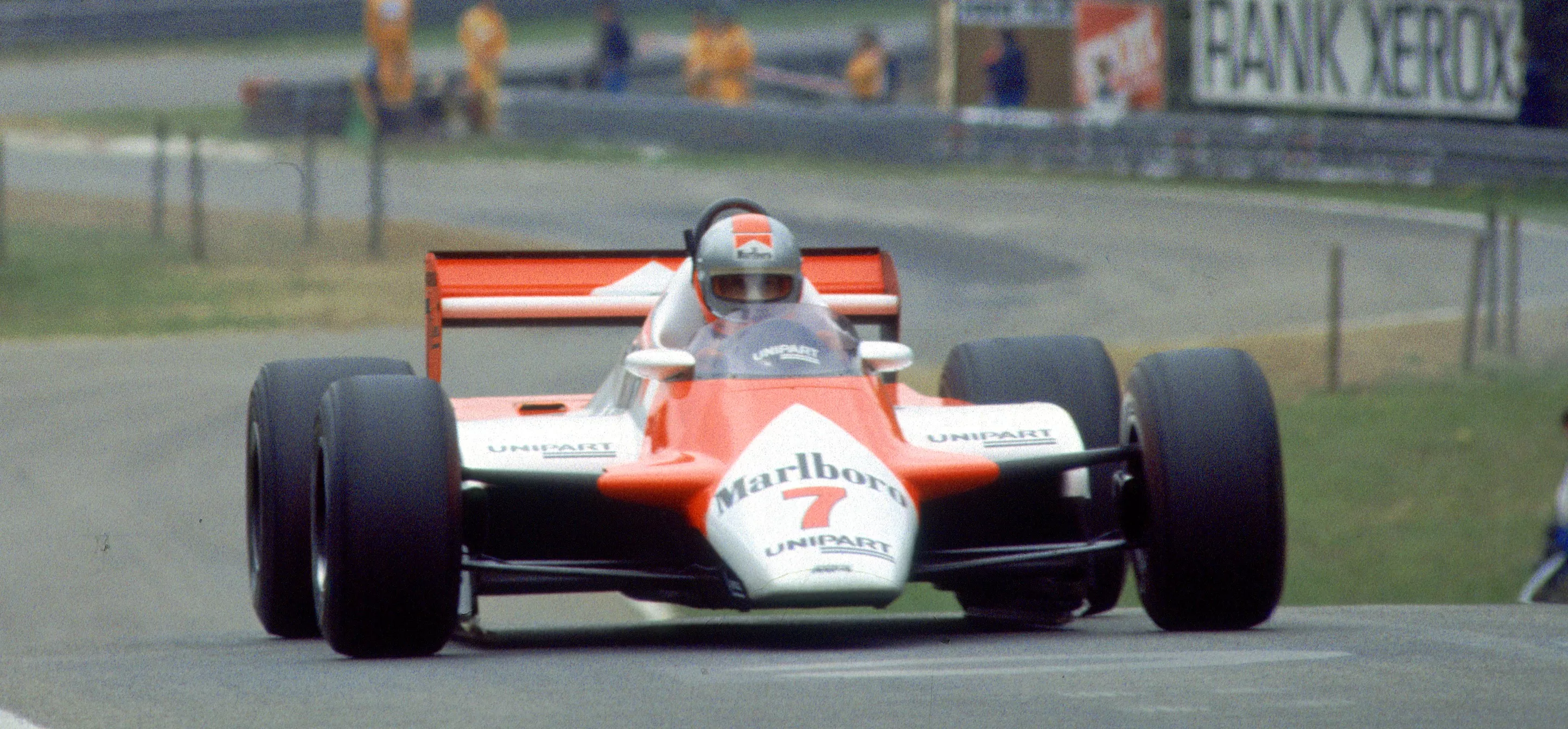
Ground effect. The proper ground effect cars I really liked. In 1982 at McLaren, we had plastic sideskirts. Before that we did try running sideskirts, briefly so on the Chaparral, but they’re a pain to make work. At McLaren, during 1982, we were allowed to use plastic skirts. We put a lot of testing into them and eventually made them work better than other teams, in my opinion.
 
They were moulded for us using high-density polyurethane and similar materials, and the stiffness differed by circuit. 
 
To be honest, the downforce that we could make with those cars was astronomic.
We could often run the car with no front wing at all.
 
We had to use extremely stiff road springs, often as much at three-and-a-half thousand pounds per inch (to manage extreme compression) instead of the six-or-seven-hundred pound per inch springs. 
 
There was us (McLaren) and Williams producing high downforce. I remember Niki (Lauda) coming in one time at Zolder, saying: “Don't worry, I know I can go around that high speed corner a lot quicker - but my brain hasn't connected with my foot yet.”
 
McLaren F1 car

The McLaren MP4 1B on track at Zolder, Belgium, in 1982. This car utilised ground effect with plastic sideskirts that created a vacuum underneath the car, sucking it to the ground

What’s your favourite motorsport vehicle? 

Top fuel dragsters are also mindblowing - they shake your insides apart - they’re just astonishing.
 
Then there are landspeed record cars - like the Napier-Railton in which John Cobb ran an average of 394.19mph in 1947. That’d probably be my pick.
Who is one motorsport personality that you would love to have dinner with, and why?
 
I suppose it would be Colin Chapman, who I did speak to on a couple of occasions. 
 
I remember meeting him in an airport one time, and he actually complimented me on the carbon chassis - that made my day. 
 
I have a lot of respect for Colin, I think he would have been an interesting character. 
 

If you wanted every motorsport fan to understand one facet of motorsport, what would it be? 

I’d like people to understand ground effect, but also the G-forces that drivers undergo. 

People see them strapped in the cockpit, the onboard cameras, and the wheels turning - but the G-forces they're going through, braking, cornering, accelerating, it doesn't come across. 
And I think, once you understand that, once you get to appreciate the forces that are going on, then you appreciate a lot more what those guys are doing. 
 
5G, 4G, they’re just numbers - but actually understanding how much force that is puts things into perspective. 
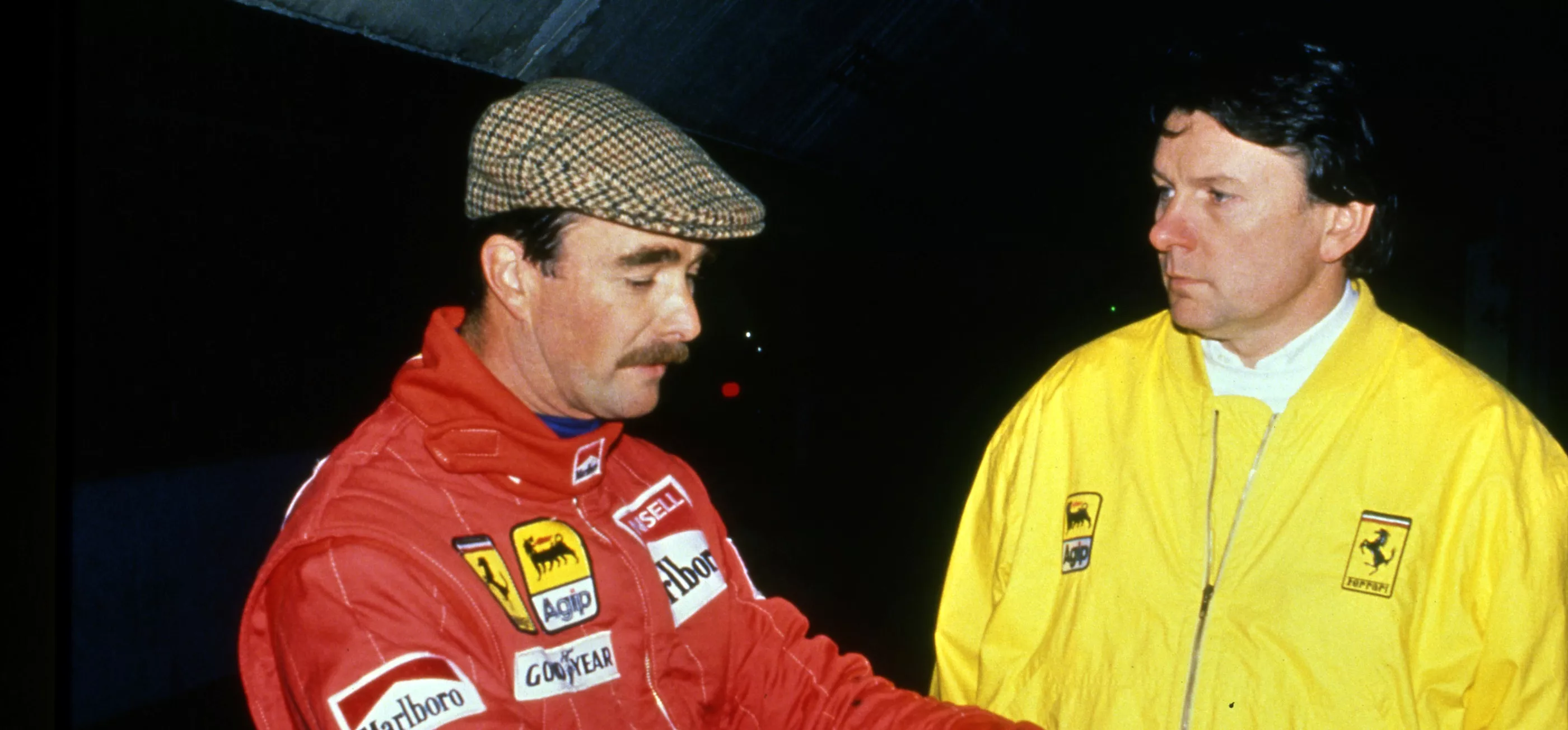
John Barnard and Nigel Mansell

Nigel Mansell (L) with John Barnard in 1989
What’s one racing circuit you’d urge every motorsport fan to visit (at least) once in their life?

 
Indianapolis. Go and see the Indy 500 at least once. We had some characters in those days with the Foyts and the Unsers and the Andrettis - they were larger-than-life, courageous. 
 
In 1979, we were lapping at 200 miles per hour on average with the Chaparral. 
 
It’s worth going to see now.
 
If you've ever had the privilege to stand next to the concrete wall of Indianapolis, coming out of Turn 2, for example, the cars are coming through there about 100 millimetres off the wall. And, it's just mindblowing. 
 

What’s one big change you’d make to the F1 regulations?

 
This doesn’t feel like the motor racing I used to watch, and the motor racing I used to work in.
 
I think we’d be better off going to a naturally-aspirated engine (without a turbocharger) and possibly run synthetic fuel, and get back to the proper noise and speed that I enjoyed - and take a different approach than the harvesting and regeneration games we have now. 

Related articles

Gary Ekerold

Career

10 Questions With… Gary Ekerold

Innovation, Technology

The evolution of Formula 1 tyres: cross-ply, radial, and slicks explained

Sign up to receive regular newsletters and ensure you stay ahead with exclusive articles on technological innovations and valuable insights into the world of motorsport

Make sure you're fully up-to-date in the world of race technology

By signing up, I acknowledge that I have read and understood the content of the Terms and Conditions